
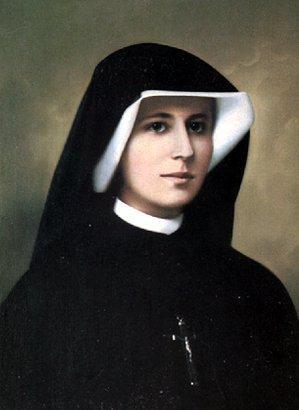
Fortunate Faustina and the Divine Mercy
Today we celebrate one of the newest of saints in the liturgical calendar, placed therein only a few years ago, with October 5th, the day she entered eternity, chosen as the memorial Saint Faustina Kowalska (1905 – 1938). She is the sister who received numerous visions of Our Lord manifested as ‘the Divine Mercy’, with the now-familiar red and white rays emanating from His Sacred Heart, a devotion to the Christ’s divine and human love, reminiscent of the divine message first given to another visionary four centuries earlier, Saint Margaret Mary Alacoque.
Helena Kowalska, as she was prior to her religious profession, first received her vocation at the age of seven, knowing she was one day to consecrate her life to God. The desire to give herself in religious life was still strong at 18, but her parents forbade her. Being poor, they needed help with her income as a housekeeper.
It was while at a dance with her sister in the city of Łódź, Christ appeared to her in a vision, wearing His crown of thorns, asking how long she was going to make Him wait; she fled from the dance, and ran to the cathedral, where Christ asked her, without taking provision for the flesh, to make true her childhood intention. In a quite literal apostolic ‘leaving everything and following Him’, Helena embarked on the next bus to Warsaw, with no luggage, wearing only the dress she had worn at the dance, and not telling anyone; a parish priest found her a room, whence she asked at various convents, all of them refusing the impoverished peasant, with no dowry. That is, until the Congregation of the Sisters of Our Lady of Mercy took, well, mercy on her, on condition that she work until she could pay for her own habit. Which she did, entering the novitiate one year later.
Although often ill – one wonders about Blaise Pascal’s dictum that sickness is the natural state of Christians – Helena found her home, taking the name in religion Faustina – the ‘fortunate one’, perhaps after the early martyr ‘Faustinus’ (+120) – and was gifted with continual visions of Christ. She found a sympathetic confessor, Father Michael Sopoćko, who, after ordering a psychiatric evaluation (which Faustina passed as perfectly normal) encouraged her to write down what Christ said to her, now her famous ‘Diary’.
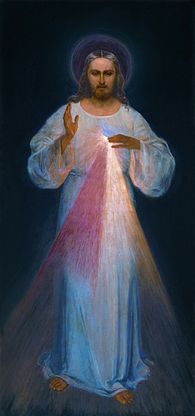
Christ also asked Faustina to have an image painted, the now familiar, and near-ubiquitous one by Eugene Kazimieroswki. The face matches up almost perfectly with that of the Shroud of Turin.
After just over a decade of a hidden religious life – following her own advice that patience, prayer and silence-these are what give strength to the soul, Sister Faustina died, likely of tuberculosis, on this day, October 5th, in 1937. Before her death, she had predicted that there would soon be a terrible war, a fulfilment of the prophecy first made to the young seers at Fatima if the world did not repent. But she also saw, in the midst of all the evil, the pouring out of God’s mercy and love on souls – where sin abounds, grace abounds all the more.
Father Sopoćko spread devotion to the ‘Divine Mercy’, which spread rapidly throughout the world. There was some opposition just before the Second Vatican Council, perhaps due to an imperfect translation and a misunderstanding of some of the limits of how far God’s mercy would extend, but Pope John Paul II, always a devotee as a bishop and cardinal, took things under his own pastoral direction as Pope, and instituted the Second Sunday of Easter as ‘Divine Mercy Sunday’ in the Jubilee year 2000. He himself was to pass into eternity of the same feast five years hence, and it was also the feast on which, in 2011 and 2014 he himself would, respectively, be beatified and canonized.
Saint Faustina exhorted us all to avail ourselves of the Divine Mercy, now open wide to receive as many souls as respond to God’s grace, before it’s too late – either at the end of their lives, or the end of time and history itself. As she exhorted us, we pray the Chaplet – and, we might add, the Rosary – to obtain mercy, to trust in Christ’s mercy, and to show mercy to others. What graces await those who immerse themselves in God’s infinite mercy will only be known in eternity – and the only limits to that mercy are the ones we ourselves place upon it, or, more to the point, on Him.
Christ desires that we respond to Him with faith, along with complete trust and love. It is with these small treasures that He will give us, in return, an infinite and eternal reward in the beatitude of His own overflowing Life.
Jezu, ufam tobie. Jesus, I trust in Thee.

Carney’s Amoral Majority
After five defections – euphemistically described as ‘crossing the floor’ – and three by-elections, Mark Carney and his Liberals how have their coveted majority. One wonders what bowls of pottage were offered in back-room deals. In the archaic monarchical system that is the Dominion of Canada, this majority allows the newly-minted Prime Minister to rule[…]Continue reading→

Saint Kateri , Canada’s Protectress
This was the title given to Saint Kateri Tekakwitha, by Pope Benedict XVI, when he canonized her on October 28th, 2012, along with six others, in Saint Peter’ Square (she had been beatified by Pope John Paul II back in 1980). With Saint Joseph as our protector, along with the Canadian martyrs, we seem to[…]Continue reading→
A Tale of Two Benedicts
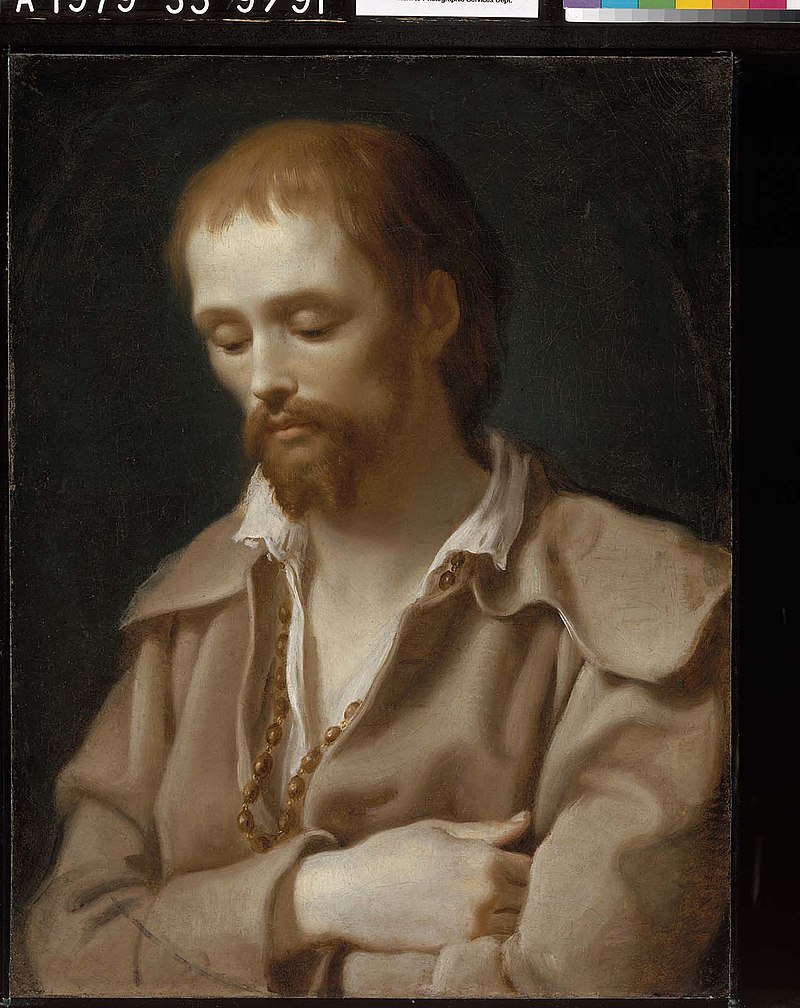
A grace-filled Holy Week to all our readers! As we await and prepare for the Resurrection about to dawn upon us, we might keep in mind two Benedicts: Pope Emeritus Benedict XVI, requiescat in pace, elected on this day in 2005; and today’s commemoration of the mystic pilgrim, Benedict Joseph Labre, who died on this[…]Continue reading→

My Name is Bernadette
April 16th is a propitious day, for besides the anniversary of Father de Valk’s death, who founded Catholic Insight in its print form decades ago, and the commemoration of the ‘two Benedicts’, mentioned in accompanying posts, today we also recall Saint Bernadette Soubirous, the young visionary to whom the Virgin Mary appeared numerous times at[…]Continue reading→
Saint Lydwina of Schiedam and Suffering Joyfully
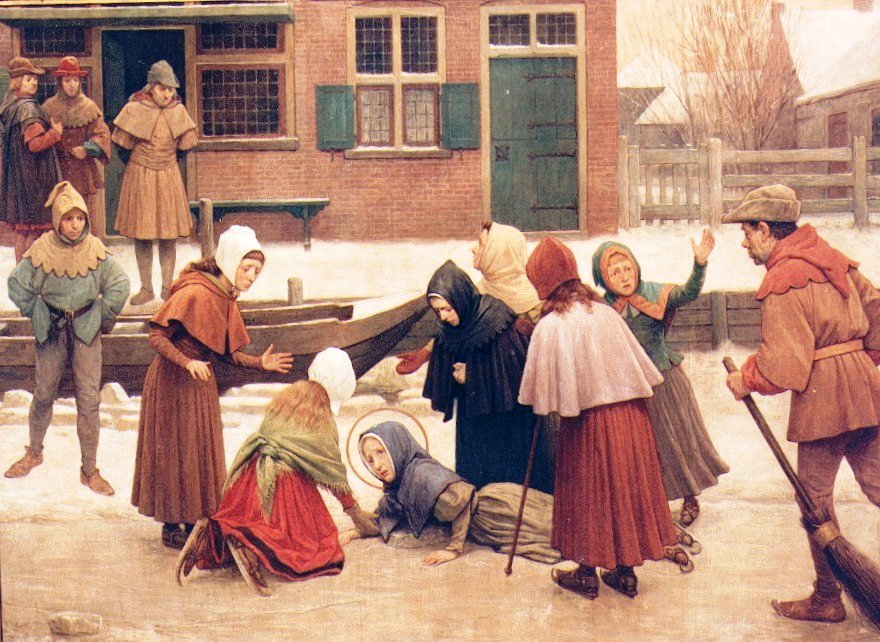
Saint Lydwina of Schiedam (1380 – 1433) was one of the countless and glorious ‘victim souls’ in the history of the Church, those whose lives are filled with suffering, often of an unimaginable intensity, but who suffer joyfully. She was a fifteen-year old Dutch girl, out skating one day, when she fell and broke one[…]Continue reading→
The Glorious Martyrdoms of Martin and Maximus
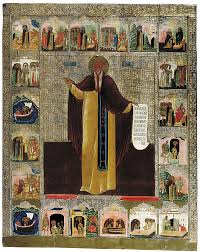
As we enter into Eastertide, we recall on this 13th of April Pope Saint Martin I (+655), one of the noblest, if most tragic, of the successors of Saint Peter. Born in Umbria, Italy, he was of noble lineage, with great intelligence combined with charity and love of the poor and the Church. While still[…]Continue reading→

Canonizing Sister Faustina and Divine Mercy
HOMILY OF THE HOLY FATHER MASS IN ST PETER’S SQUARE FOR THE CANONIZATION OF SR MARY FAUSTINA KOWALSKA Sunday, 30 April 2000 1. “Confitemini Domino quoniam bonus, quoniam in saeculum misericordia eius”; “Give thanks to the Lord for he is good; his steadfast love endures for ever” (Ps 118: 1). So the Church sings on the Octave of[…]Continue reading→

Saint Stanislaus of Szczepanów
We celebrate Saint Stanislaus today (+ April 11, 1079), in light of this Easter Octave, a bishop and martyr who accepted the episcopacy only at the direct order of Pope Alexander II. He proved a wise and courageous leader of his flock, put to death by his own king, Boleslaus, for rebuking the monarch’s ‘immoral[…]Continue reading→
Saint Gemma Galgani
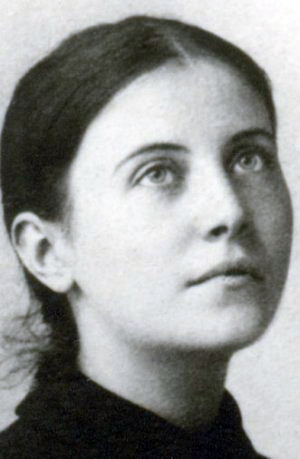
On this April 11th, in 1903 – the same year that the Italian Guiseppe Sarto was elected Pope later that summer as Pius X – a lovely, young Italian woman died, by the name of Gemma Galgani. She lived a brief life of 24 years, as did a number of other young saints, including Pier[…]Continue reading→
An Ideological and Improper Translation
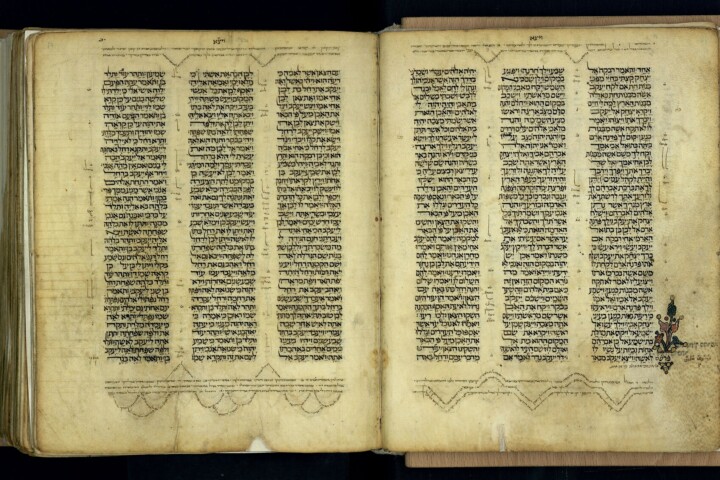
I noticed something odd with the psalm reading at Mass the other day. Our bishops’ conference here in Canada has decreed that the Mass in English – Novus Ordo – use the ‘NRSV’, the ‘New Revised Standard Version’, an ‘updated’ translation of the original RSV, first published in 1952. This ‘new translation’ has the tendency[…]Continue reading→