
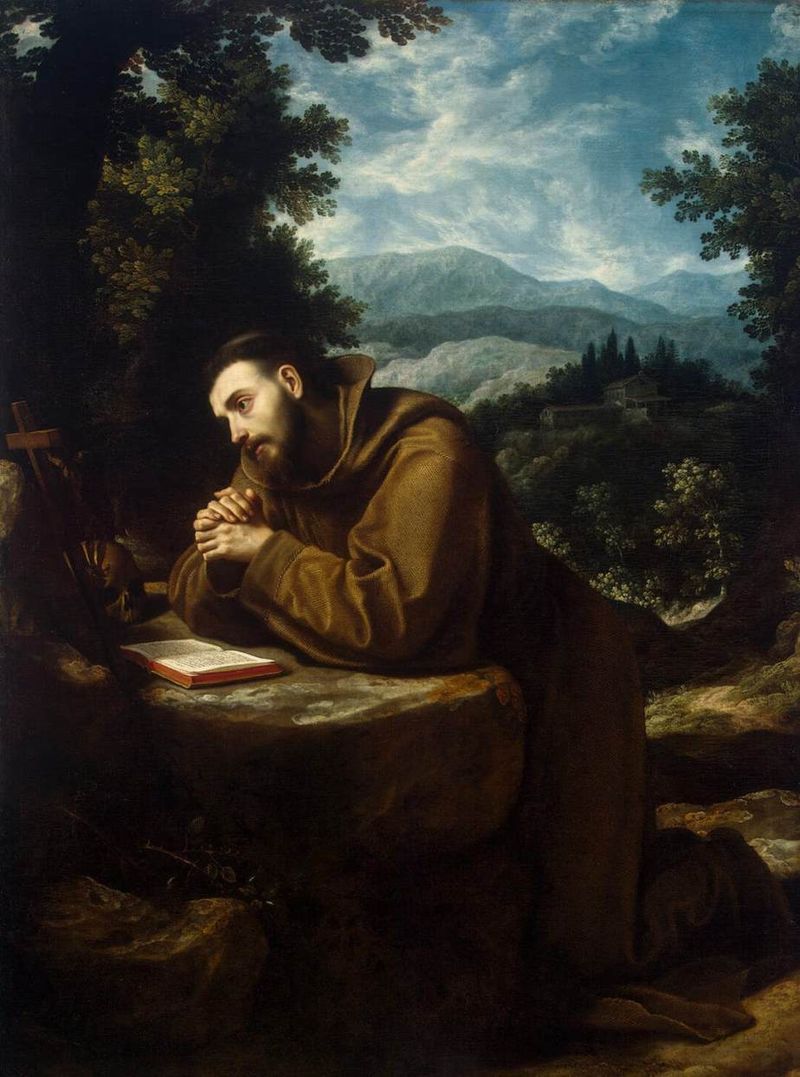
Saint Francis: A Most Radical Man
There are as many ways to follow Christ as there are humans beings, even if many seem not to avail themselves of the grace Our Saviour offers. Some amongst the paths to sanctity are more radical than others, and by ‘radical’ we mean ‘back to the very root’, as in, how did Christ Himself actually live? The closer to that ideal, the easier it is to attain the end that the Son of God Himself willed for us, eternal life with Him. Better to take the short-cut than the round-about way.
Saint Francis, need it be said, was one of the most radical of saints, a man who, once converted from his worldly ways in mediaeval Italy, could not compromise. It was all or nothing; hence, his utter poverty and obedience, his quite literal re-building of the church of the Portiuncula, stone by stone; his, to our worldly prudent eyes, reckless trust in God’s protective help, strolling into the very tent of the Sultan in Morocco to convert him; seeing God in all creatures, not least his fellow man, from the robbers who left him bloodied and beaten, to the leper whom he kissed, so that he might overcome his revulsion, so unnatural to one of his once-fastidious nature, with one swift blow; his clear perception of the Creator’s wonderful artistry in the Sun, the Moon, the wind, rain, animals and flowers; and his constant cheerfulness, whether feasting or fasting, cold or warm, wandering the earth or with his brethren to some quiet place to rest for a while. Yet his was a joy born from sacrifice, and two years before his own death, in 1224, while in prayer and penance on Mount Alvernia, he was graced to receive the stigmata and bear the wounds of Christ.
Many followed the charismatic Francis, eventually hundreds, even thousands, but he had no idea of starting an Order, nor how to do so, inimical to the free-spirited way he himself lived. But an Order did develop around him, eventually many Orders, for there are now many kinds of Franciscans.
Francis died on the evening of the third day of October, 1226, lying, as was his wish, on the dirt floor of his cell, as he sang Psalm 141, Voce mea ad Dominum:
I cry with my voice to the LORD,
with my voice I make supplication to the LORD,
I pour out my complaint before him,
I tell my trouble before him.
When my spirit is faint,
thou knowest my way!…
Il Poverello – ‘the Poor One’ – was canonized two years later in 1226 by Pope Gregory IX who, as a cardinal, had been the former protector of the Order. A few years after that, the
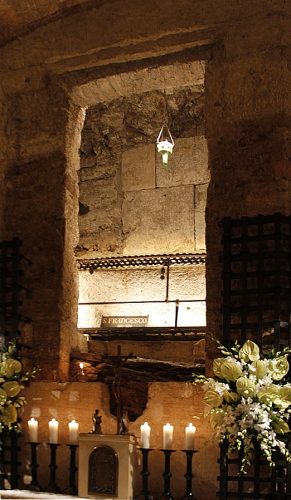
Source Own work Author José Luiz
Attribution © José Luiz Bernardes Ribeiro wikipedia.org
first stone was laid in Assisi for the magnificent basilica that bears his remains. Francis would have smiled from heaven that his body, hidden at the orders of Brother Elias to save it from desecration by the Muslims, was not rediscovered until 1818. After all, he loved to remain hidden, and would likely marvel at all the fuss made about his ‘donkey’, as he called his body. But God does exalt His lowly ones.
We could learn much form Saint Francis, that the world will be what it is, from political fiascos, ecclesiastical scandals, earthquakes and signs in the sky, but what matters most is the human soul and its relation to God, manifested in how it relates to His creatures.
Even a tinge of the love, spirit and enthusiasm of Francis would carry us a long way to heaven.
Ora pro nobis, Frater Francesco!
Carney’s Amoral Majority
After five defections – euphemistically described as ‘crossing the floor’ – and three by-elections, Mark Carney and his Liberals how have their coveted majority. One wonders what bowls of pottage were offered in back-room deals. In the archaic monarchical system that is the Dominion of Canada, this majority allows the newly-minted Prime Minister to rule[…]Continue reading→

Saint Kateri , Canada’s Protectress
This was the title given to Saint Kateri Tekakwitha, by Pope Benedict XVI, when he canonized her on October 28th, 2012, along with six others, in Saint Peter’ Square (she had been beatified by Pope John Paul II back in 1980). With Saint Joseph as our protector, along with the Canadian martyrs, we seem to[…]Continue reading→
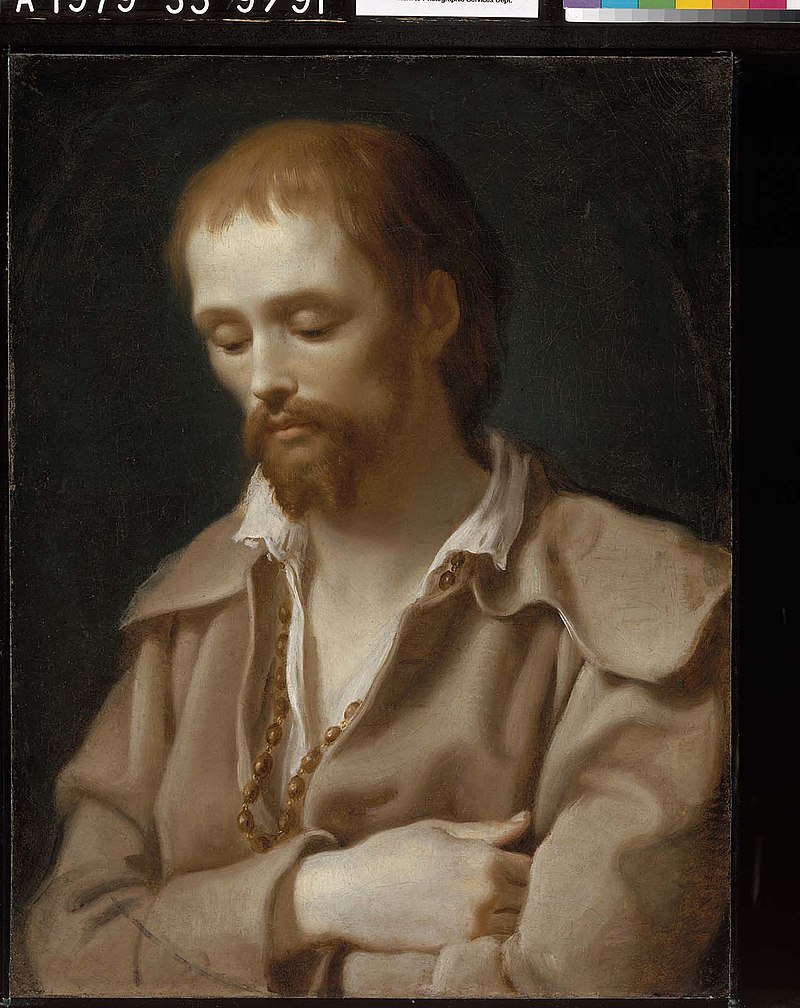
A Tale of Two Benedicts
A grace-filled Holy Week to all our readers! As we await and prepare for the Resurrection about to dawn upon us, we might keep in mind two Benedicts: Pope Emeritus Benedict XVI, requiescat in pace, elected on this day in 2005; and today’s commemoration of the mystic pilgrim, Benedict Joseph Labre, who died on this[…]Continue reading→

My Name is Bernadette
April 16th is a propitious day, for besides the anniversary of Father de Valk’s death, who founded Catholic Insight in its print form decades ago, and the commemoration of the ‘two Benedicts’, mentioned in accompanying posts, today we also recall Saint Bernadette Soubirous, the young visionary to whom the Virgin Mary appeared numerous times at[…]Continue reading→
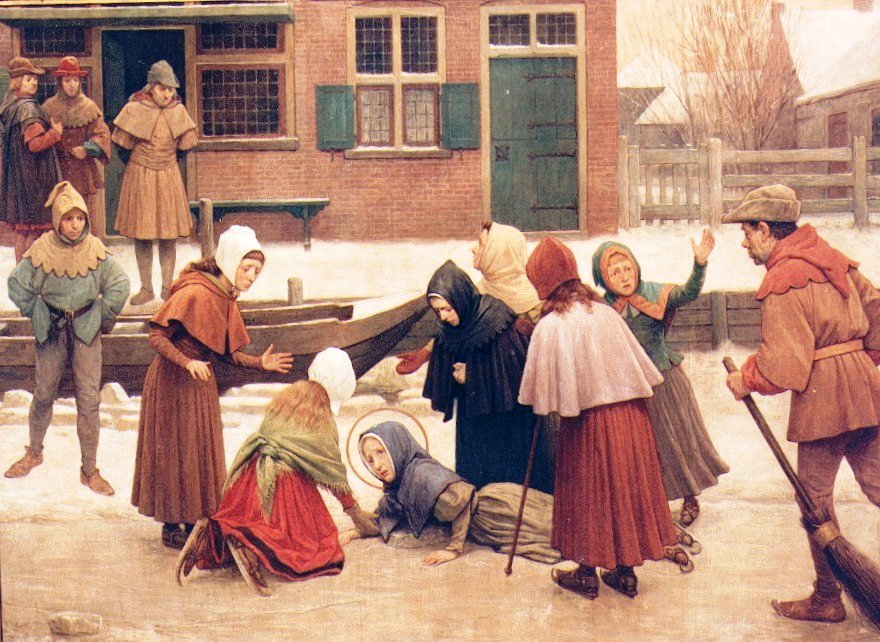
Saint Lydwina of Schiedam and Suffering Joyfully
Saint Lydwina of Schiedam (1380 – 1433) was one of the countless and glorious ‘victim souls’ in the history of the Church, those whose lives are filled with suffering, often of an unimaginable intensity, but who suffer joyfully. She was a fifteen-year old Dutch girl, out skating one day, when she fell and broke one[…]Continue reading→
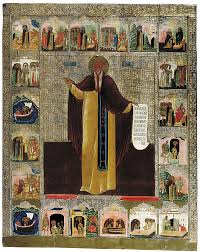
The Glorious Martyrdoms of Martin and Maximus
As we enter into Eastertide, we recall on this 13th of April Pope Saint Martin I (+655), one of the noblest, if most tragic, of the successors of Saint Peter. Born in Umbria, Italy, he was of noble lineage, with great intelligence combined with charity and love of the poor and the Church. While still[…]Continue reading→
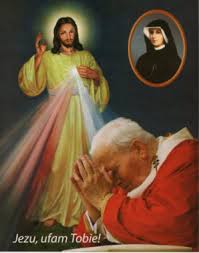
Canonizing Sister Faustina and Divine Mercy
HOMILY OF THE HOLY FATHER MASS IN ST PETER’S SQUARE FOR THE CANONIZATION OF SR MARY FAUSTINA KOWALSKA Sunday, 30 April 2000 1. “Confitemini Domino quoniam bonus, quoniam in saeculum misericordia eius”; “Give thanks to the Lord for he is good; his steadfast love endures for ever” (Ps 118: 1). So the Church sings on the Octave of[…]Continue reading→

Saint Stanislaus of Szczepanów
We celebrate Saint Stanislaus today (+ April 11, 1079), in light of this Easter Octave, a bishop and martyr who accepted the episcopacy only at the direct order of Pope Alexander II. He proved a wise and courageous leader of his flock, put to death by his own king, Boleslaus, for rebuking the monarch’s ‘immoral[…]Continue reading→
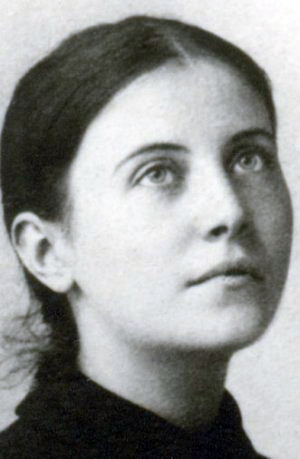
Saint Gemma Galgani
On this April 11th, in 1903 – the same year that the Italian Guiseppe Sarto was elected Pope later that summer as Pius X – a lovely, young Italian woman died, by the name of Gemma Galgani. She lived a brief life of 24 years, as did a number of other young saints, including Pier[…]Continue reading→
An Ideological and Improper Translation
I noticed something odd with the psalm reading at Mass the other day. Our bishops’ conference here in Canada has decreed that the Mass in English – Novus Ordo – use the ‘NRSV’, the ‘New Revised Standard Version’, an ‘updated’ translation of the original RSV, first published in 1952. This ‘new translation’ has the tendency[…]Continue reading→