
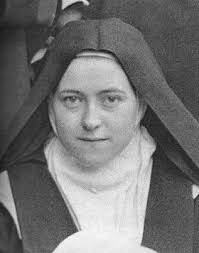
Thérèse of Lisieux of the Child Jesus and the Holy Face
On the first day of October we celebrate the Saint of the Little Way, Saint Therese of the Child Jesus and the Holy Face (1873 – 1897), also known after the place of her birth and upbringing, Lisieux. She was a cloistered nun who entered the Carmel at the age of sixteen, and died at the age of only twenty-four, having led a very simple and hidden life. After her death and the publication of her writings – especially her autobiography, The Story of a Soul, one of the most unexpected bestsellers of history, which she wrote under obedience – she quickly became one of the best known and loved saints. She has never stopped helping the simplest souls, the little, the poor, the ordinary, and the suffering who pray to her. She has also illumined the Church with her profound spiritual doctrine. In 1997, Pope St. John Paul II declared her a Doctor of the Church. Pope Pius XI had earlier called her the star of his pontificate and the Venerable Pope Pius XII said of her that she had rediscovered the heart of the Gospel. Pope St. John Paul II also described her as an expert in the scientia amoris, the science of love (Novo Millenio Ineunte, 42). She expressed this science, in which she saw the whole truth of the Faith shine out in love, mainly in the story of her life, The Story of a Soul, published one year after her death. It is a story of love, told with authenticity and simplicity and a burning desire for truth. This LOVE has a Face and a Name: it is JESUS.
We must note that Thérèse’s life was not easy. She lost her mother at the age of four, and , perhaps as a result, s a child she was affected by a serious nervous disorder, cured miraculously by Our Lady. Soon after she entered Carmel, her father began to suffer from a painful and humiliating mental illness, which may have been brought on by brain disease, although it was said by some that the loss of his youngest daughter to religious life – the rest had all become nuns as well – had been a blow to him . This caused her great anguish, leading her to contemplate the Face of Jesus in His Passion; hence her name in religion, expressing the program of her whole life in communion with the central Mysteries of the Incarnation and of the Redemption.
All the while, the defects of those around her also caused interior suffering:
Perfect love means putting up with other peoples shortcomings, feeling no surprise at their weaknesses, finding encouragement even in the slightest evidence of good qualities in them.
The scientia amoris was thus coupled with the scientia crucis, the science of the Cross that in time would be explicated in depth by another Carmelite, the brilliant philosopher and Jewish convert Edith Stein, whose own name in religion was Saint Teresa Benedicta of the Cross. With humility and charity, faith and hope, St. Thérèse continually entered into the heart of Sacred Scripture, which nourished her spiritual life. She carried a small book of the Gospels with her at all times. By her example she teaches us to love the Word of God and to enter into a loving dialogue with this living Word. Her spiritual life was also centred on the Eucharist, the Word made Flesh. She said of God in light of the Eucharistic Mystery, “I cannot fear a God who made Himself so small for me. I love Him. In fact, He is nothing but LOVE and MERCY.” Mercy is Love’s second name and she fully understood and taught that the scope of God’s mercy is universal. On the day of her religious profession she prayed that “no soul may be damned today.” She saw herself as a Bride of Christ and Mother of Souls. Indeed, she had entered Carmel to save souls and to pray for priests. Jesus, she would pray, help me to simplify my life by learning what you want me to be and becoming that person .Though she died at only twenty-four, her spiritual legacy continues to enlighten the Church. Saint Thérèse only left the region of her birth once, on a train pilgrimage at the age of fifteen to have a brief audience with Pope Leo XIII at the Vatican. She was told not to say anything as she lined up with many others; yet, as she knelt at the Pope’s feet, she asked him boldly if she might enter the Carmel before the required age. He gently replied that if it be God’s will, it would be so.
Yet, for all that she spent her adult years, from 16 to her death at 24, enclosed in the Carmel, she has been declared one of the primary patrons of the missionary work of the Church. Why? As the priest this morning mentioned in his homily, because she did everything for the salvation of souls. And as the Second Vatican Council’s declaration on the religious life, Perfectae Caritatis, states that those following the contemplative and consecrated path,
offer to God a sacrifice of praise which is outstanding. Moreover the manifold results of their holiness lends luster to the people of God which is inspired by their example and which gains new members by their apostolate which is as effective as it is hidden. Thus they are revealed to be a glory of the Church and a well-spring of heavenly graces
We too can take her offer to God a sacrifice of praise which is outstanding. Moreover the manifold results of their holiness lends luster to the people of God which is inspired by their example and which gains new members by their apostolate which is as effective as it is hidden. Thus they are revealed to be a glory of the Church and a well-spring of heavenly graces as our model as we live out our commitment to the Gospel, learning from her the scientia amoris and the scientia crucis, without which we cannot hope to progress along the path of authentic Christian discipleship. From St. Thérèse we can exercise a spiritual maternity or paternity and likewise pray that “no soul may be damned today”.
St. Thérèse died on 30 September 1897 of the tuberculosis that had so ravaged her body, saying these simple words: “My God, I love You.” Like Padre Pio in the next century, she promised she would do far more good after her death, than in her earthly life. May she continue to guide us along her Little Way of trust and love, of spiritual childhood. Truly she rediscovered the heart of the Gospel: “Unless you turn and become like little children, you will never enter the Kingdom of Heaven” (Mt 18:3).
On this her feast day, you might want to give a listen to Le cantique de l’amour de Sainte Thérèse (The song of love of St. Therese).
Pries pour nous, Sainte Thérèse!

Carney’s Amoral Majority
After five defections – euphemistically described as ‘crossing the floor’ – and three by-elections, Mark Carney and his Liberals how have their coveted majority. One wonders what bowls of pottage were offered in back-room deals. In the archaic monarchical system that is the Dominion of Canada, this majority allows the newly-minted Prime Minister to rule[…]Continue reading→

Saint Kateri , Canada’s Protectress
This was the title given to Saint Kateri Tekakwitha, by Pope Benedict XVI, when he canonized her on October 28th, 2012, along with six others, in Saint Peter’ Square (she had been beatified by Pope John Paul II back in 1980). With Saint Joseph as our protector, along with the Canadian martyrs, we seem to[…]Continue reading→
A Tale of Two Benedicts
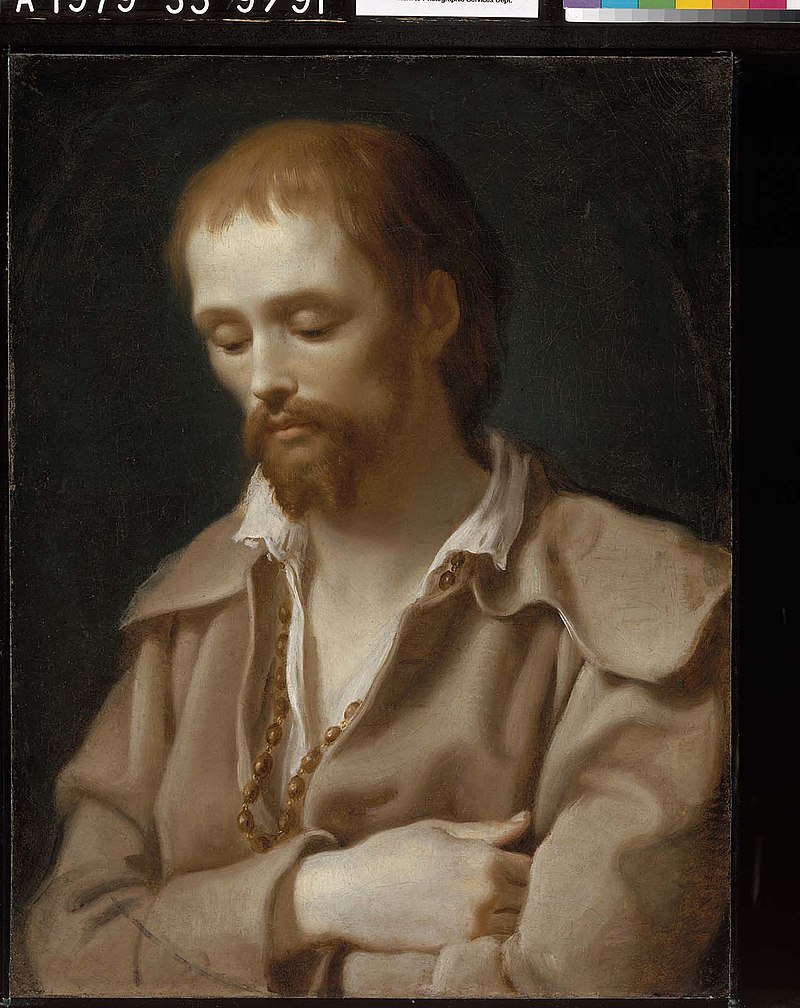
A grace-filled Holy Week to all our readers! As we await and prepare for the Resurrection about to dawn upon us, we might keep in mind two Benedicts: Pope Emeritus Benedict XVI, requiescat in pace, elected on this day in 2005; and today’s commemoration of the mystic pilgrim, Benedict Joseph Labre, who died on this[…]Continue reading→

My Name is Bernadette
April 16th is a propitious day, for besides the anniversary of Father de Valk’s death, who founded Catholic Insight in its print form decades ago, and the commemoration of the ‘two Benedicts’, mentioned in accompanying posts, today we also recall Saint Bernadette Soubirous, the young visionary to whom the Virgin Mary appeared numerous times at[…]Continue reading→
Saint Lydwina of Schiedam and Suffering Joyfully
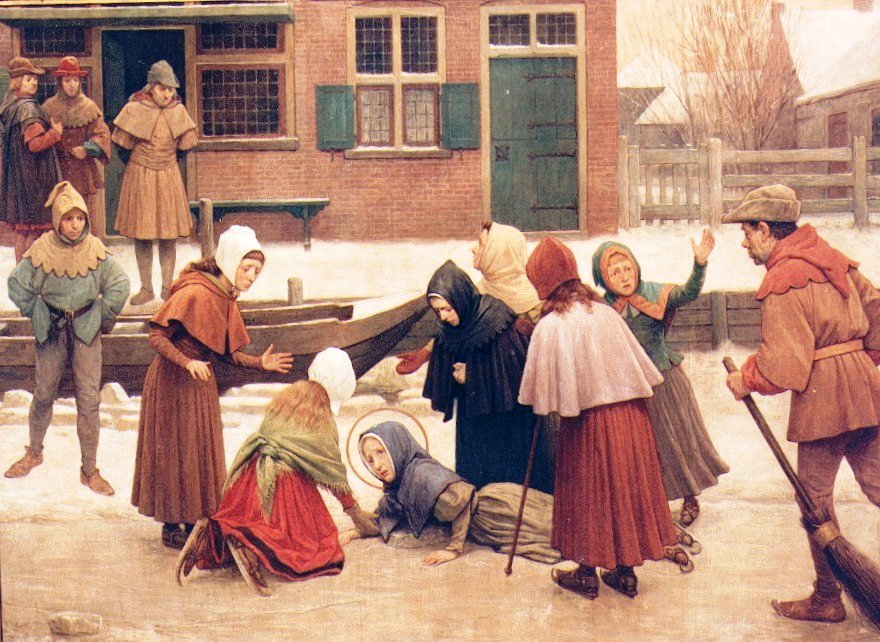
Saint Lydwina of Schiedam (1380 – 1433) was one of the countless and glorious ‘victim souls’ in the history of the Church, those whose lives are filled with suffering, often of an unimaginable intensity, but who suffer joyfully. She was a fifteen-year old Dutch girl, out skating one day, when she fell and broke one[…]Continue reading→
The Glorious Martyrdoms of Martin and Maximus
As we enter into Eastertide, we recall on this 13th of April Pope Saint Martin I (+655), one of the noblest, if most tragic, of the successors of Saint Peter. Born in Umbria, Italy, he was of noble lineage, with great intelligence combined with charity and love of the poor and the Church. While still[…]Continue reading→
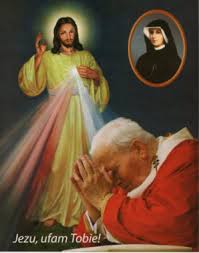
Canonizing Sister Faustina and Divine Mercy
HOMILY OF THE HOLY FATHER MASS IN ST PETER’S SQUARE FOR THE CANONIZATION OF SR MARY FAUSTINA KOWALSKA Sunday, 30 April 2000 1. “Confitemini Domino quoniam bonus, quoniam in saeculum misericordia eius”; “Give thanks to the Lord for he is good; his steadfast love endures for ever” (Ps 118: 1). So the Church sings on the Octave of[…]Continue reading→

Saint Stanislaus of Szczepanów
We celebrate Saint Stanislaus today (+ April 11, 1079), in light of this Easter Octave, a bishop and martyr who accepted the episcopacy only at the direct order of Pope Alexander II. He proved a wise and courageous leader of his flock, put to death by his own king, Boleslaus, for rebuking the monarch’s ‘immoral[…]Continue reading→
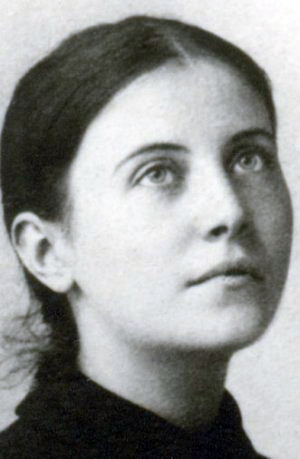
Saint Gemma Galgani
On this April 11th, in 1903 – the same year that the Italian Guiseppe Sarto was elected Pope later that summer as Pius X – a lovely, young Italian woman died, by the name of Gemma Galgani. She lived a brief life of 24 years, as did a number of other young saints, including Pier[…]Continue reading→
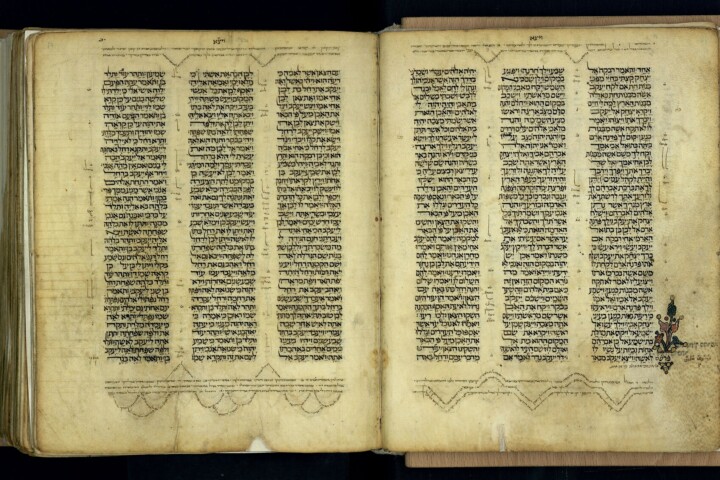
An Ideological and Improper Translation
I noticed something odd with the psalm reading at Mass the other day. Our bishops’ conference here in Canada has decreed that the Mass in English – Novus Ordo – use the ‘NRSV’, the ‘New Revised Standard Version’, an ‘updated’ translation of the original RSV, first published in 1952. This ‘new translation’ has the tendency[…]Continue reading→