
Twenty-Fifth Sunday and Using Wealth Wisely
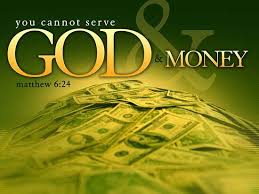
You cannot serve God and mammon (Lk. 16:13). ⧾
At face value, it would seem that that the Gospel text of the Mass appears to be in favour of dishonesty in business dealing. Yet, like all of Our Lord’s parables, there is a deeper meaning that can only be accessed by faith. At the theological level, that is, at the level of spiritual realities, by means of an allegory this parable teaches us how we are to relate to the material goods or resources that necessarily are part of our earthly existence. And his master commended the dishonest manager because he had acted shrewdly (Lk. 16:13). His shrewdness or business sense is praised by the master. Effectively, the manager considers his present circumstance in view of something more important or of a greater good. ‘I have decided what to do so that, when I am dismissed as manager, people may welcome me into their homes.’ What is of greater importance to the manager, is his relationship to others.
This, I believe, is the lesson of the parable for each one of us; whether we possess much or little of the goods of this world: do we place our material resources at the service of greater or higher goods, or do we make them an end in themselves? The reality of the human condition is such that material goods, whether tangible and quantifiable such as wealth and property; or skills and abilities that can cause us to work and prosper, engage each one of us. Our own personal relationship with material goods inevitably and necessarily influences our relationship with others, with God Himself, and at a very intimate level, with our very selves. It is not difficult for us to define ourselves by our possessions or perhaps even more so, by the quantity of these possessions, but St. Ambrose wisely observes that riches are foreign to us, because they are beyond nature, they are not born with us, and they do not pass away with us. But Christ is ours, because He is the life of man. (Catena Aurea, St Luke, Vol. III, p. 555).
It would be disingenuous to moralise about less materialistic times because the paradox of the human condition is such that we are neither fully spiritual in essence nor completely material: to over-emphasize one or the other results either in unrealistic spiritualism, or in an unsatisfying materialism. In praising the shrewdness of the dishonest steward, it seems that the parable is commending his ability to make friends with money. This is to say that he knows how to transform goods into relationships. And I tell you, make friends for yourselves by means of dishonest wealth so that when it is gone, they may welcome you into the eternal homes (Lk. 16:9). In other words, what benefit is it to someone to have an overabundance of wealth and yet be totally bereft of any human relationships? Such a person is condemned to a not-so-splendid isolation.
If you have not been faithful with dishonest wealth, who will entrust you with true riches (Lk. 16:11)? This is not a reference to ill-gotten gains. Some translations use the word, mammon, a Semitic word for money or riches. It is defined as dishonest not because wealth can be obtained in a dishonest manner; rather, when riches are placed above all other goods they become dishonest because they promise a happiness that they cannot possibly give. Wealth in itself or as an ultimate goal can never be the right choice for our life. What will ultimately make us truly happy and fulfilled is a good relationship with God, the Highest Good (Summum Bonum), and a good relationship with others. This leads us and causes us to be welcomed into the eternal homes. Such is the wisdom of the Gospel; and to appreciate this wisdom it is necessary for us to cultivate our hearts and to listen to the Gospel with what St. Benedict in his Rule calls the ear of our heart. Listen, my son, to the master’s instructions, and attend to them with the ear of your heart. This is the advice from a father who loves you; welcome it and faithfully put it into practice (Prologue, Rule of St. Benedict). This beautiful admonition invites us to grow in wisdom and to foster a receptive understanding, a trustful attitude towards the truth that is proposed to us by the wisdom of the Gospel: No slave can serve two masters; for a slave will either hate the one and love the other, or be devoted to one and despise the other. You cannot serve God and wealth (Lk. 999).
Our worship of God in the Holy Sacrifice of the Mass always includes the reading of the Gospel, the means by which we gain wisdom of heart and we learn to value our relationship with God above all else. Here too, all of us have an opportunity to share with others for the common good the blessings that God has given us. In all humility all of us can be equal in our willingness to give, however unequal we may be in earthly fortune; and this inequality is ultimately unimportant, provided we are equal in spiritual possessions (Pope St. Leo the Great, Sermo 95, 2-3). Here we learn to make our very own the love and wisdom of the Sacred Heart of Jesus. This is what we do when we come to Holy Mass. We come to be united to the Sacred Heart so that in our lives, individually and collectively, we become the love of the Sacred Heart. This relationship with the Heart of God is our highest good and the source and inspiration of all of our acts of charity. By uniting our hearts to the Sacred Heart of Jesus we become the love of the Sacred Heart at work in the world. By uniting our hearts to the Sacred Heart of Jesus, we gain wisdom of heart and like the steward in the Gospel we learn to use wisely the things of this earth; so that they may serve our ultimate good – our own salvation and that of our neighbour; for what does it profit a man, to gain the whole world, and forfeit his soul (Mk. 8:36)? ⧾

Remembering Father Alphonse de Valk
(Today marks the sixth anniversary of the death of Father Alphonse de Valk, C.S.B., a faithful, courageous and indefatigable Basilian priest, pro-life-and-family apostle, and the founder of Catholic Insight magazine. Here is what we wrote those on his entering into eternity five years ago, as we continue to remember him in our prayers and thoughts)[…]Continue reading→

Divine Mercy Sunday – An Echo of Every Mass
Reach out your hand and put it in my side. Do not doubt but believe’… ‘My Lord and my God!’ (Jn. 20:18)). Today is Divine Mercy Sunday, and as we celebrate the end of the Easter Octave, we contemplate the wounded side of our Saviour, the Church’s source of life. On Good Friday in the[…]Continue reading→

Saint Stanislaus of Szczepanów
We celebrate Saint Stanislaus today (+ April 11, 1079), in light of this Easter Octave, a bishop and martyr who accepted the episcopacy only at the direct order of Pope Alexander II. He proved a wise and courageous leader of his flock, put to death by his own king, Boleslaus, for rebuking the monarch’s ‘immoral[…]Continue reading→

First Holy Communion: Sermon from May 16, 1943
Here is a sermon from the good old days by +Rev. Msgr. Vincent Nicholas Foy (August 14, 1915 – March 13, 2017), from 1943. Readers may recall that Pope Saint Pius X, by the decree Quam Singulari in 1910, lowered the customary age of reception of Holy Communion – after the rigours of the plague[…]Continue reading→

In the Glorious Light of Easter, Alleluia!
Set your minds on things that are above, not on things that are on earth, for you have died, and your life is hidden with Christ in God. When Christ who is your life is revealed, then you also will be revealed with him in glory (Col. 3:3-4). The Resurrection of Our Lord and Saviour[…]Continue reading→

An Ancient Homily for Holy Saturday
The time between Good Friday and Easter Sunday is one of waiting, in silence, as the world wonders – anticipates – what will happen, after the death of Christ. We re-live this time each year in the anamnesis of our liturgy, and in turn look forward to the glorious re-creation of all things at the[…]Continue reading→

Europe’s Long Descent
(As we meditate on this day on Christ’s burial, and His descent into hell, it is fitting to ponder here with contributor Peter Marcus how the world seems to be heading there as well. The difference is that, although God cannot ‘redeem’ hell, nor those therein, He can and did redeem the world. There is[…]Continue reading→
Pope Saint John Paul II’s First Good Friday Homily
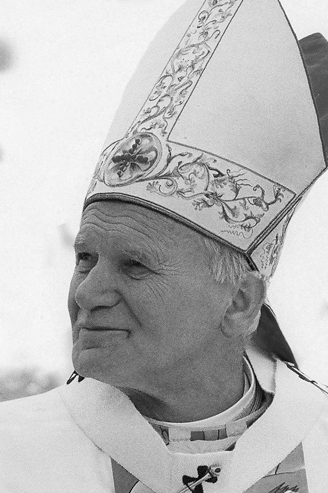
ADDRESS OF HIS HOLINESS JOHN PAUL II AT THE CONCLUSION OF THE STATIONS OF THE CROSS AT THE COLOSSEUM Good Friday, 13 April 1979 When we make the Way of the Cross from one station to the next, in spirit we are always at the spot wherethis journey had its “historical” place: where it[…]Continue reading→
A Meditation for Good Friday: How To Undo the Effects of Sin?
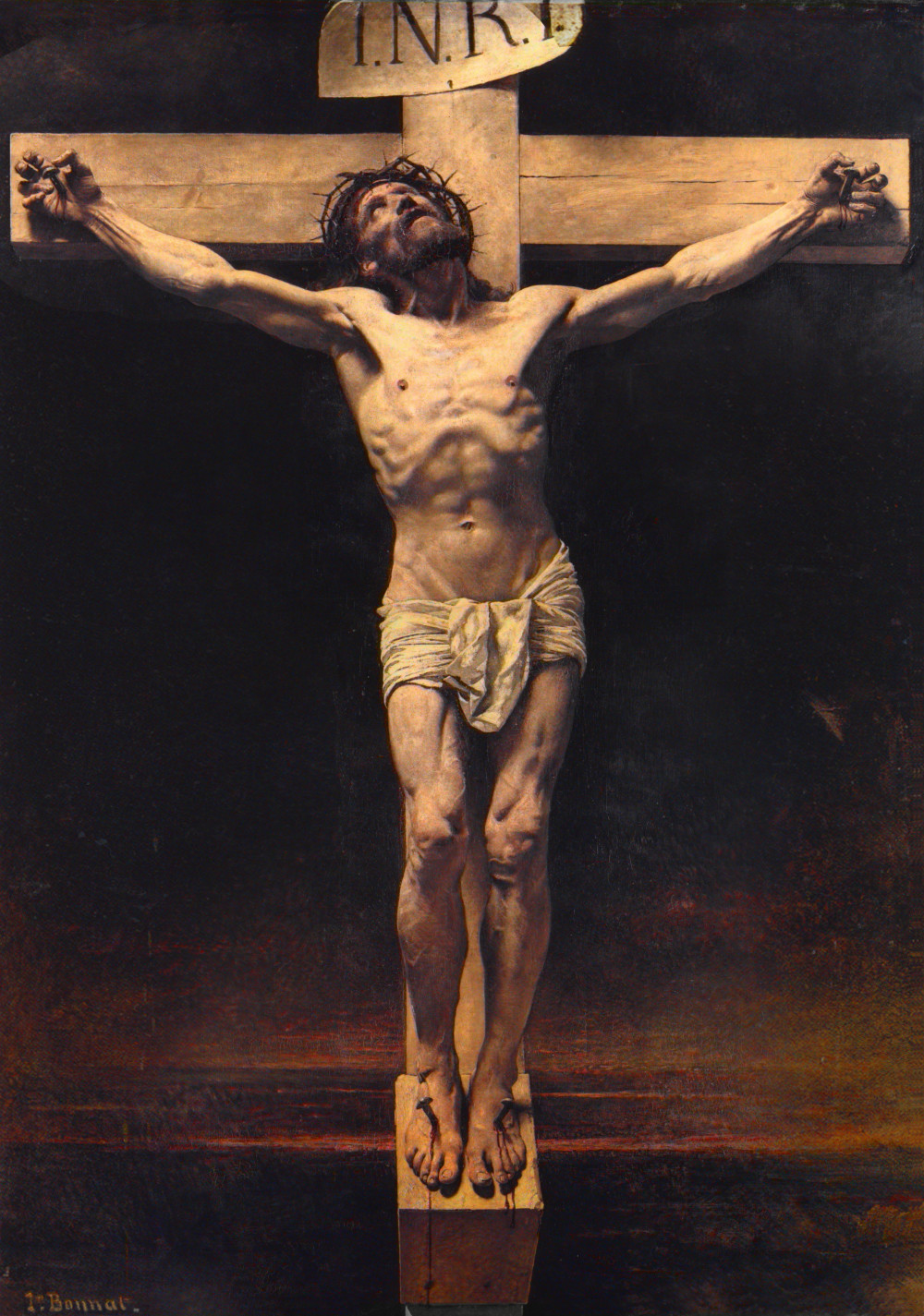
Cardinal Newman, now Saint John Henry Newman, was a towering figure of nineteenth-century Catholicism who is almost universally admired. I say “almost” because not everyone likes him. I knew a priest once, Arthur Caulkins, who has become disenchanted with Newman. As an undergraduate Arthur had been enamoured of Newman, and this interest continued when he[…]Continue reading→
Pope Benedict’s Last Holy Thursday Homily
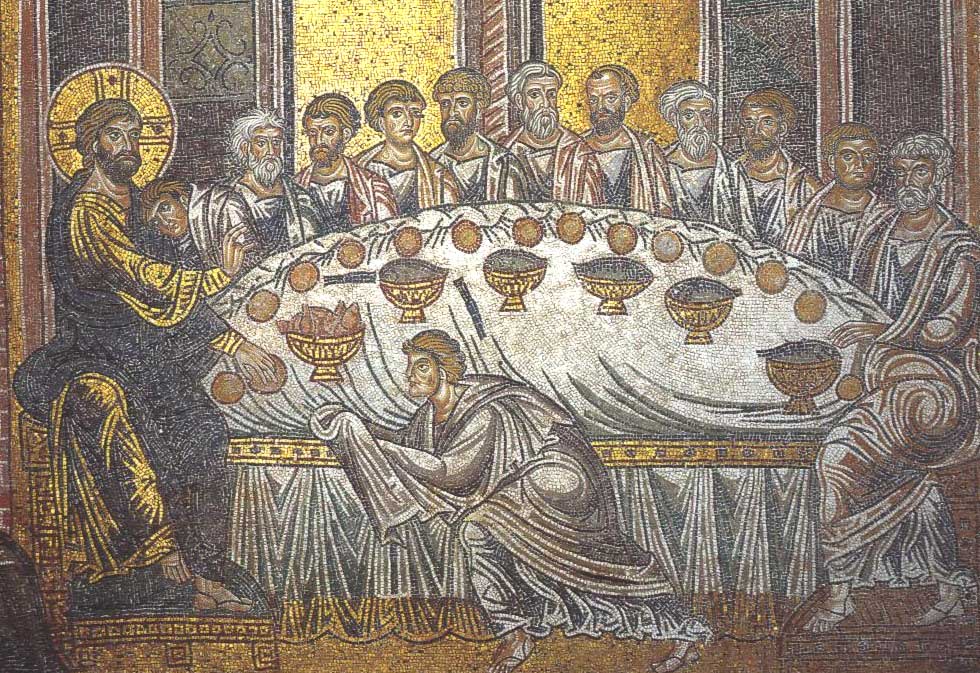
MASS OF THE LORD’S SUPPER HOMILY OF HIS HOLINESS BENEDICT XVI Basilica of St John Lateran Holy Thursday, 5 April 2012 Photo Gallery (Video) Dear Brothers and Sisters! Holy Thursday is not only the day of the institution of the Most Holy Eucharist, whose splendour bathes all else and in some ways draws it to[…]Continue reading→