
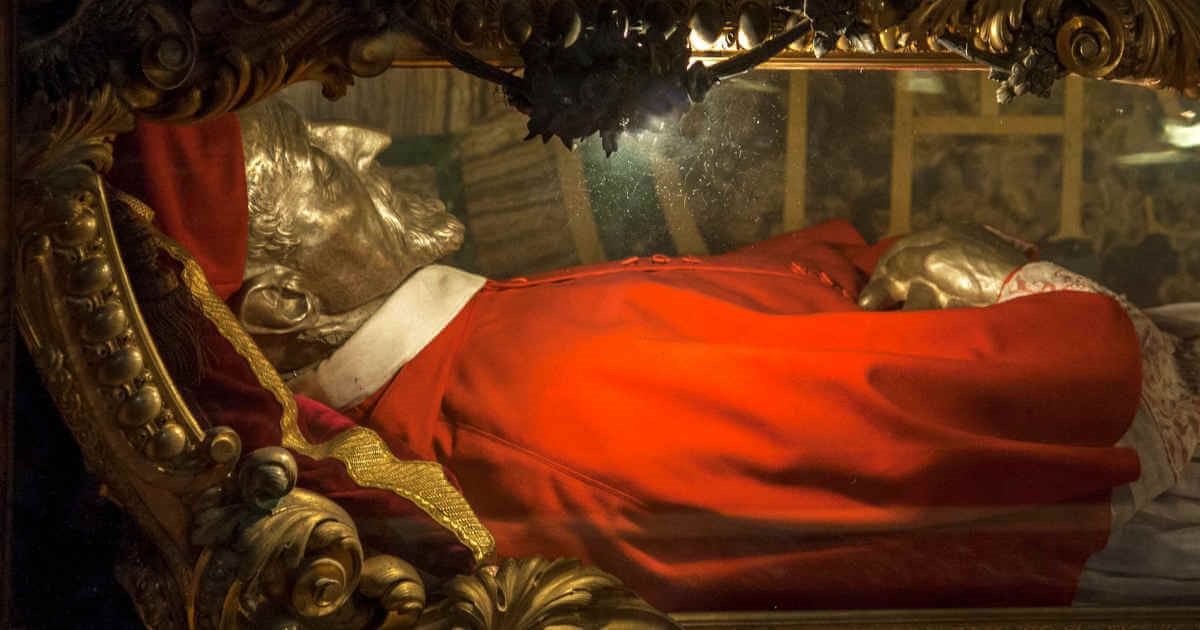
Pope Benedict and Robert Bellarmine
BENEDICT XVI
GENERAL AUDIENCE
Paul VI Audience Hall
Wednesday, 23 February 2011
[Video]
Saint Robert Bellarmine
Dear Brothers and Sisters,
Born on 4 October 1542 in Montepulciano near Siena, he was the nephew, on his mother’s side, of Pope Marcellus II. He had an excellent formation in the humanities before entering the Society of Jesus on 20 September 1560. His philosophy and theology studies, at the Roman College in Padua and at Louvain, focused on St Thomas and the Fathers of the Church. They were crucial to his theological orientation.
He was ordained a priest on 25 March 1570 and for a few years was professor of theology at Louvain. Later, summoned to Rome to teach at the Roman College, he was entrusted with the chair of apologetics. In the decade in which he held it (1576-1586), he compiled a course of lessons which subsequently formed the Controversiae [Controversies], a work whose clarity, rich content and mainly historical tone earned it instant renown.
The Council of Trent had just ended and in the face of the Protestant Reformation, the Catholic Church was impelled to reinforce and confirm her identity. Bellarmine’s action fitted into this context. From 1588 to 1594 he was first spiritual director of the Jesuit students at the Roman College — among whom he met and gave direction to St Aloysius Gonzaga — then religious superior.
Pope Clement VIII appointed Fr Bellarmine Papal Theologian, consultor to the Holy Office and rector of the College of Confessors at St Peter’s. His short catechism, Dottrina cristiana [Christian doctrine] dates back to the two-year period 1597–1598. It was one of his most popular works.
Pope Clement VIII created him a cardinal on 3 March 1599 and on 18 March 1602 he was appointed Archbishop of Capua. He received episcopal ordination on 21 April that same year. In the three years in which he was a diocesan bishop, he distinguished himself by his zeal as a preacher in his cathedral, by his weekly visits to parishes, by three Diocesan Synods and by a Provincial Council which he founded.
After taking part in the Conclaves that elected Pope Leo XI and Pope Paul V, he was called to Rome again, where he became a member of the Congregations of the Holy Office, of the Index, for Rites, for Bishops and for the Propagation of the Faith. He also had diplomatic responsibilities in the Republic of Venice and in England, to defend the rights of the Apostolic See.
In his last years he composed various books on spirituality in which he concentrated the results of his annual spiritual exercises. Christian people today still draw great edification from reading them. He died in Rome on 17 September 1621. Pope Pius XI beatified him in 1923, canonized him in 1930 and proclaimed him a Doctor of the Church in 1931.
St Robert Bellarmine carried out an important role in the Church of the last decades of the 16th century and the first of decades of 17th. His Controversiae were a reference point, still valid, for Catholic ecclesiology on questions concerning Revelation, the nature of the Church, the sacraments and theological anthropology. In them the institutional aspect of the Church is emphasized because of the errors that were then circulating on these issues.
Nevertheless, Bellarmine also explained the invisible aspects of the Church as the Mystical Body and illustrated them with the analogy of body and soul, to the point that he described the relationship between the Church’s inner riches and the external aspects that enable her to be perceived. In this monumental work that endeavours to organize the theological controversies of that time, he avoids any polemical and aggressive approach in speaking of the ideas of the Reformation. Instead, using the arguments of reason and the Tradition of the Church, he illustrates the Catholic doctrine clearly and effectively.
Yet his inheritance consists in the way in which he conceived of his work. Indeed, the burdensome offices of governance did not prevent him from striving daily for holiness, faithful to the demands of his own state as a religious, priest and bishop. From this fidelity came his commitment to preaching assiduously. Since as a priest and bishop he was first and foremost a pastor of souls, he felt it was his duty to preach diligently. He gave hundreds of sermones — homilies — in Flanders, Rome, Naples and Capua, during liturgical celebrations.
(To continue reading, please see here)

Saint Kateri , Canada’s Protectress
This was the title given to Saint Kateri Tekakwitha, by Pope Benedict XVI, when he canonized her on October 28th, 2012, along with six others, in Saint Peter’ Square (she had been beatified by Pope John Paul II back in 1980). With Saint Joseph as our protector, along with the Canadian martyrs, we seem to[…]Continue reading→

Remembering Father Alphonse de Valk
(Today marks the sixth anniversary of the death of Father Alphonse de Valk, C.S.B., a faithful, courageous and indefatigable Basilian priest, pro-life-and-family apostle, and the founder of Catholic Insight magazine. Here is what we wrote those on his entering into eternity five years ago, as we continue to remember him in our prayers and thoughts)[…]Continue reading→

A Tale of Two Benedicts
A grace-filled Holy Week to all our readers! As we await and prepare for the Resurrection about to dawn upon us, we might keep in mind two Benedicts: Pope Emeritus Benedict XVI, requiescat in pace, elected on this day in 2005; and today’s commemoration of the mystic pilgrim, Benedict Joseph Labre, who died on this[…]Continue reading→

My Name is Bernadette
April 16th is a propitious day, for besides the anniversary of Father de Valk’s death, who founded Catholic Insight in its print form decades ago, and the commemoration of the ‘two Benedicts’, mentioned in accompanying posts, today we also recall Saint Bernadette Soubirous, the young visionary to whom the Virgin Mary appeared numerous times at[…]Continue reading→

Saint Lydwina of Schiedam and Suffering Joyfully
Saint Lydwina of Schiedam (1380 – 1433) was one of the countless and glorious ‘victim souls’ in the history of the Church, those whose lives are filled with suffering, often of an unimaginable intensity, but who suffer joyfully. She was a fifteen-year old Dutch girl, out skating one day, when she fell and broke one[…]Continue reading→

The Glorious Martyrdoms of Martin and Maximus
As we enter into Eastertide, we recall on this 13th of April Pope Saint Martin I (+655), one of the noblest, if most tragic, of the successors of Saint Peter. Born in Umbria, Italy, he was of noble lineage, with great intelligence combined with charity and love of the poor and the Church. While still[…]Continue reading→

Canonizing Sister Faustina and Divine Mercy
HOMILY OF THE HOLY FATHER MASS IN ST PETER’S SQUARE FOR THE CANONIZATION OF SR MARY FAUSTINA KOWALSKA Sunday, 30 April 2000 1. “Confitemini Domino quoniam bonus, quoniam in saeculum misericordia eius”; “Give thanks to the Lord for he is good; his steadfast love endures for ever” (Ps 118: 1). So the Church sings on the Octave of[…]Continue reading→

Divine Mercy Sunday – An Echo of Every Mass
Reach out your hand and put it in my side. Do not doubt but believe’… ‘My Lord and my God!’ (Jn. 20:18)). Today is Divine Mercy Sunday, and as we celebrate the end of the Easter Octave, we contemplate the wounded side of our Saviour, the Church’s source of life. On Good Friday in the[…]Continue reading→
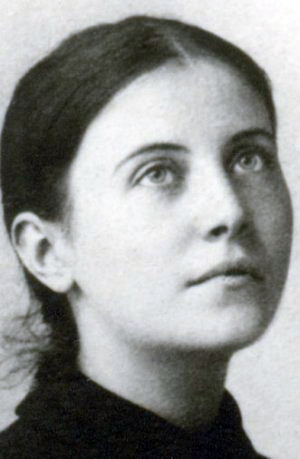
Saint Gemma Galgani
On this April 11th, in 1903 – the same year that the Italian Guiseppe Sarto was elected Pope later that summer as Pius X – a lovely, young Italian woman died, by the name of Gemma Galgani. She lived a brief life of 24 years, as did a number of other young saints, including Pier[…]Continue reading→
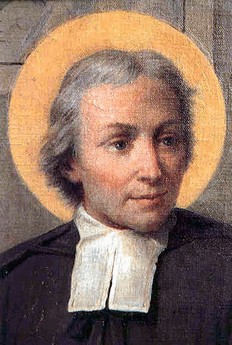
Saint Jean-Baptiste de la Salle: A Teacher for Teachers
Jean-Baptiste de la Salle (1651 – 1719), a French nobleman, ordained a priest, founded the first order in the Church’s history entirely without priests, and this came about almost by accident. I say ‘almost’, for, of course, there are no accidents with God. Destined for ordination from an early age, Jean-Baptiste never looked back, even[…]Continue reading→