
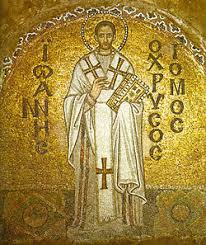
John Chrysostom: The Man with the Golden Mouth
Saint John Chrysostom (+407) was a model bishop, a doctor of the Church, an ascetic and contemplative monk who wanted only to retreat from the turmoil of life in the Eastern empire, and live a life devoted entirely to God. He was chosen first as a priest in Antioch, where he became renowned for his eloquent yet forthright and clear preaching (hence, his ‘surname’, Chrysostom, ‘golden mouth’). In 397, without his knowledge or consent, he was nominated Patriarch of Constantinople, and took on the burden as the will of God, giving himself wholeheartedly to the task. His sermons, letters, and treatises, all worth reading, fill volumes. As he said once, in an apiarian analogy that sums up his own life:
The bee is more honored than other animals, not because she labors, but because she labors for others.
Yet, for all his charity, he did not mince words:
We must not mind insulting men, if by respecting them we offend God.
Due to his forthrightness in condemning the sins of his age – and they were many, as in any age, not least of those in high places – John quickly antagonized the Patriarch of Alexandria, in Egypt, a certain Theophilus, who coveted John’s more exalted position in the capital of Constantinople. Perhaps more tragically, he also raised the ire of Eudoxia, the luxury-loving wife of the uxorious Emperor Arcadius. In her anger, she had him banished twice; the first time, the much-loved Patriarch had to be recalled, as the people would likely have revolted.
But when the Empress had a statue of herself unveiled right in front of the cathedral in 404 (and one wonders how it portrayed her) John protested, and Eudoxia, her vanity and pride wounded, flew into a rage worthy of a Disney villainess. Hell hath no fury, and all that. To prevent bloodshed, John surrendered to the authorities, going into exile, where he continued to write to his flock. Providentially, as one may take it, the cathedral burned down in a conflagration just afterward.
Living too long for his enemies, and still having too much influence for their liking, in 407 John was forced on a ‘long march’ through the most inhospitable conditions by two implacable guards to the very boundaries of the empire, in the midst of which his body, already weakened, gave out, his last words being, Doxa to theo panton eneken (Glory be to God for all things). He died, hated by the empress and a few other ‘elites’, but beloved by his people, as should be the case for all shepherds. His body was eventually returned to Constantinople in 438 with great pomp and ceremony, and buried in the church of the Apostles.
Saint John is a doctor of the Church, and we have more of his salutary writings than almost any other, except Saint Augustine, and his influence is incalculable. We could use a few more fearless shepherds like him, to set the world spiritually ablaze.
Saint John Chrysostome, προσευχηθείτε για εμάς!
A final note: Beware the biography on Wikipedia, which claims that John, in a fiery sermon condemning homosexuality, was the originator of the Church’s ‘homophobia’. The sin of Sodom, so sayeth the anonymous Wiki-editor, was seen, before John’s time, as a violation of ‘hospitality’, and not of the sin that would come to bear its name. This would come as news to Saint Paul, writing three centuries before Chrysostom, who took a rather dim view of men using other men as women and, pardon the pun, vice versa:
Do not err; neither fornicators, nor idolaters, nor adulterers, nor the effeminate, nor sodomites, nor thieves, nor the covetous, nor drunkards, nor the evil-tongued, nor the greedy will inherit the kingdom of God.
Carney’s Amoral Majority
After five defections – euphemistically described as ‘crossing the floor’ – and three by-elections, Mark Carney and his Liberals how have their coveted majority. One wonders what bowls of pottage were offered in back-room deals. In the archaic monarchical system that is the Dominion of Canada, this majority allows the newly-minted Prime Minister to rule[…]Continue reading→

Saint Kateri , Canada’s Protectress
This was the title given to Saint Kateri Tekakwitha, by Pope Benedict XVI, when he canonized her on October 28th, 2012, along with six others, in Saint Peter’ Square (she had been beatified by Pope John Paul II back in 1980). With Saint Joseph as our protector, along with the Canadian martyrs, we seem to[…]Continue reading→
A Tale of Two Benedicts
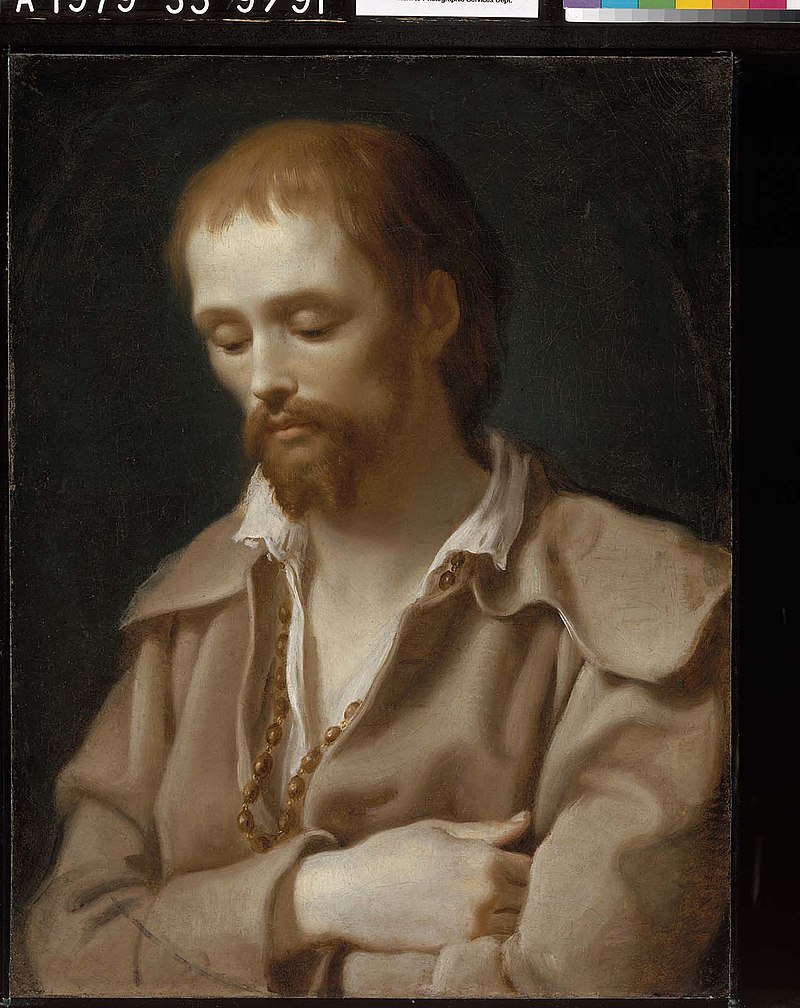
A grace-filled Holy Week to all our readers! As we await and prepare for the Resurrection about to dawn upon us, we might keep in mind two Benedicts: Pope Emeritus Benedict XVI, requiescat in pace, elected on this day in 2005; and today’s commemoration of the mystic pilgrim, Benedict Joseph Labre, who died on this[…]Continue reading→

My Name is Bernadette
April 16th is a propitious day, for besides the anniversary of Father de Valk’s death, who founded Catholic Insight in its print form decades ago, and the commemoration of the ‘two Benedicts’, mentioned in accompanying posts, today we also recall Saint Bernadette Soubirous, the young visionary to whom the Virgin Mary appeared numerous times at[…]Continue reading→
Saint Lydwina of Schiedam and Suffering Joyfully
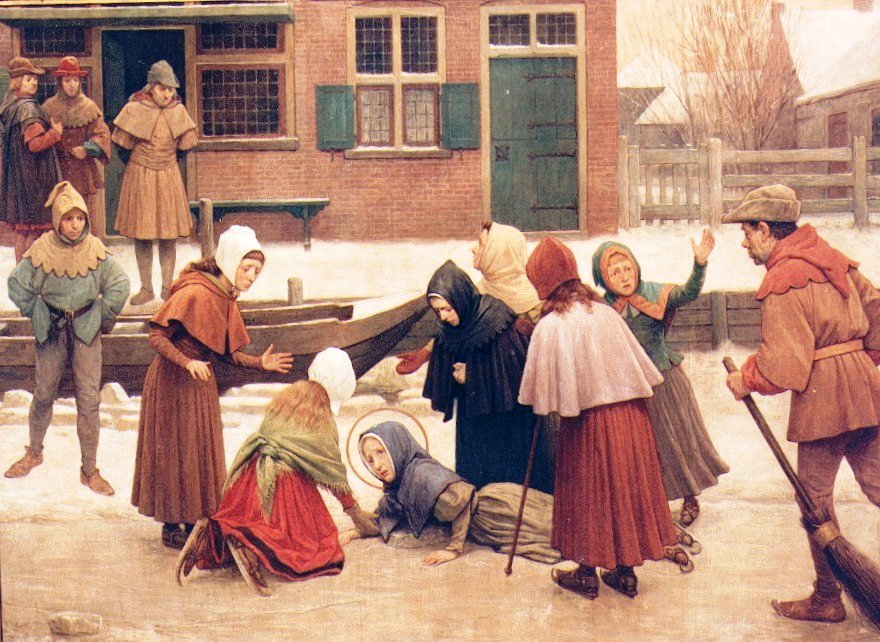
Saint Lydwina of Schiedam (1380 – 1433) was one of the countless and glorious ‘victim souls’ in the history of the Church, those whose lives are filled with suffering, often of an unimaginable intensity, but who suffer joyfully. She was a fifteen-year old Dutch girl, out skating one day, when she fell and broke one[…]Continue reading→
The Glorious Martyrdoms of Martin and Maximus
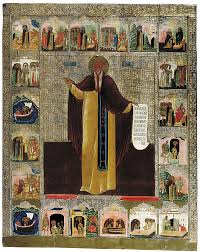
As we enter into Eastertide, we recall on this 13th of April Pope Saint Martin I (+655), one of the noblest, if most tragic, of the successors of Saint Peter. Born in Umbria, Italy, he was of noble lineage, with great intelligence combined with charity and love of the poor and the Church. While still[…]Continue reading→

Canonizing Sister Faustina and Divine Mercy
HOMILY OF THE HOLY FATHER MASS IN ST PETER’S SQUARE FOR THE CANONIZATION OF SR MARY FAUSTINA KOWALSKA Sunday, 30 April 2000 1. “Confitemini Domino quoniam bonus, quoniam in saeculum misericordia eius”; “Give thanks to the Lord for he is good; his steadfast love endures for ever” (Ps 118: 1). So the Church sings on the Octave of[…]Continue reading→

Saint Stanislaus of Szczepanów
We celebrate Saint Stanislaus today (+ April 11, 1079), in light of this Easter Octave, a bishop and martyr who accepted the episcopacy only at the direct order of Pope Alexander II. He proved a wise and courageous leader of his flock, put to death by his own king, Boleslaus, for rebuking the monarch’s ‘immoral[…]Continue reading→
Saint Gemma Galgani
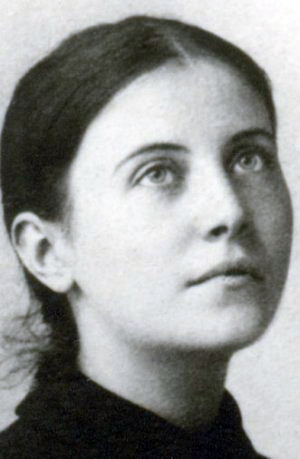
On this April 11th, in 1903 – the same year that the Italian Guiseppe Sarto was elected Pope later that summer as Pius X – a lovely, young Italian woman died, by the name of Gemma Galgani. She lived a brief life of 24 years, as did a number of other young saints, including Pier[…]Continue reading→
An Ideological and Improper Translation
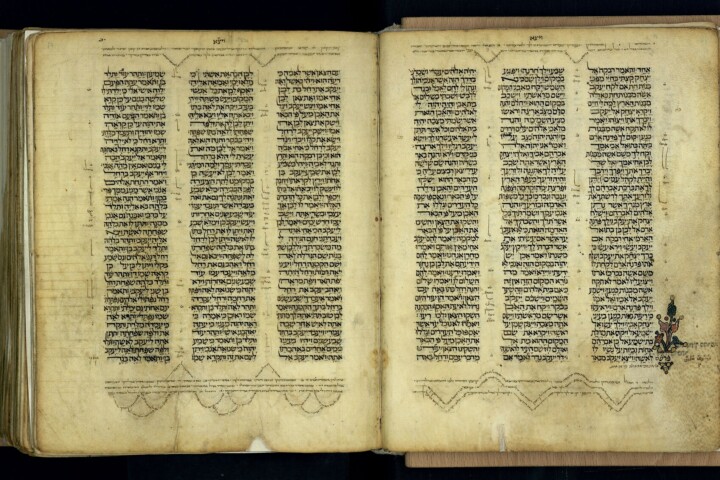
I noticed something odd with the psalm reading at Mass the other day. Our bishops’ conference here in Canada has decreed that the Mass in English – Novus Ordo – use the ‘NRSV’, the ‘New Revised Standard Version’, an ‘updated’ translation of the original RSV, first published in 1952. This ‘new translation’ has the tendency[…]Continue reading→