
Labour Day, Leisure and Life
Labour Day is a rather prosaic name for the last holiday of summer. Why not, ‘blow out day’, or ‘the end of leisure, and back to work day’ (at least for teachers and students), or ‘summer’s almost over’ day…Ah, well, love’s labour – or the love of labour – is not lost.
In the end, all holidays should be as the etymology of the term implies, ‘holy days’, dedicated to feasts of the transcendent, Christ, Our Lady, the saints and the truths of our Faith. This current ‘feast’, if you will, dedicated to work – or escape therefrom – has its origins in a strike in 1872 by the Toronto Typographical Union, in their demand for a 58-hour workweek (!), which seems rather quaint to us – both the typography and the request for no more than 58 hours of it. George Brown, politician and editor of the Globe and Mail, called their action a ‘conspiracy’.
But the tide towards a more leisured life – in the good and true sense of that term – was on its way. The social doctrine of the Church, enunciated in the crystal clear Thomistic reasoning of Pope Leo XIII in his Rerum Novarum (1891) would eventually have their effect. Three years after that, on July 23rd, 1894, a day commemorating labour and its rights was officially set aside in September under Prime Minister John Thompson,
Our customs, and our laws, would more or less decide upon dividing up the 24 hour day into a tri-partite 8 hours of work, 8 hours of leisure of one’s proclivity, and 8 hours of sleep. Quite Benedictine, we might surmise, if some significant chunk of the 8 hours of leisure we give back to God in prayer. Ora et labora.
But as we drift away from our Catholic foundation – and our monastic ideals of doing all things ad gloriam Dei – we regress more and more back towards slavery and drudgery, or, what may be worse, unemployment, indolence, enervation and despair. Peruse Sean Fitzpatrick’s reflection, as well as this current piece from John Grondielski in Crisis, and how difficult it is for employer’s to find employees, enervated as we are by endless lockdowns and the fiat money thrown at people . If Man’s lot is but to ‘eat, drink, and be merry’, now understood as pot smoking, inebriation and the diminishing returns of desultory sex – procreation now being frowned upon – before we die, or, more likely, put to death by some efficient physician, then what’s the point of it all? Why not go gently by merciful euthanasia into that dark goodnight, once the salad days of youth are over, or even before?
As we’ve written before, in light of the feast of Saint Joseph the Worker on May 1st, we should see this day as the two bookends of ‘summer’, all of Man’s life is a ‘work’, as Pope Saint John Paul II wrote, whose primary purpose is to ennoble and perfect us, the worker. Hence, all that we do, in rest, leisure, or what we now call ‘work’, should be fulfilling, first, of ourselves, and also of others – and not just fulfilling, but also full of joy.
On that note, I would recommend to readers to read at some point – and why not start today? – John Paul II’s Laborem Exercens, on the value of human labour, as well as Josef Pieper’s masterpiece Leisure the Basis of Culture, on how to best use our ‘rest’ as true ‘re-creation’, offering the philosophical basis for how we should use the time we are given. For ‘leisure’ is not laziness, but doing all we do for God, in a transcendent mode, whether that be physical work, rest or, most of all, prayer.
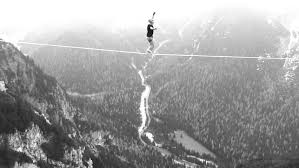
In a Chestertonian mode, we should always be giving thanks, for the gift of life and all that God has given us do in the span we are given – for the chasm of eternity is before us at each moment. Hence, as well we should appreciate all that is beautiful and apparently ‘use-less’, those odd and wonderful things – friendship, food, good conversation, the laughter of children, dancing, the experience of the old, walks in the woods, music, even tight-rope walkers – and, most of all, our Faith, praising God for Who He is, all of which make life worth living.
And that same life is in the end a preparation for heaven, where, as Leo XIII reminds us, we will truly begin to live. So rejoice, and give thanks to God for all things. For the only thing that can lead us away from that lofty goal is sin, the work of the Devil, and who, after all, needs that, or him?
Carney’s Amoral Majority
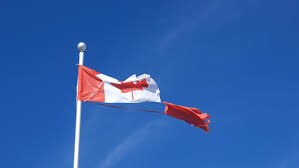
After five defections – euphemistically described as ‘crossing the floor’ – and three by-elections, Mark Carney and his Liberals how have their coveted majority. One wonders what bowls of pottage were offered in back-room deals. In the archaic monarchical system that is the Dominion of Canada, this majority allows the newly-minted Prime Minister to rule[…]Continue reading→

Saint Kateri , Canada’s Protectress
This was the title given to Saint Kateri Tekakwitha, by Pope Benedict XVI, when he canonized her on October 28th, 2012, along with six others, in Saint Peter’ Square (she had been beatified by Pope John Paul II back in 1980). With Saint Joseph as our protector, along with the Canadian martyrs, we seem to[…]Continue reading→

A Tale of Two Benedicts
A grace-filled Holy Week to all our readers! As we await and prepare for the Resurrection about to dawn upon us, we might keep in mind two Benedicts: Pope Emeritus Benedict XVI, requiescat in pace, elected on this day in 2005; and today’s commemoration of the mystic pilgrim, Benedict Joseph Labre, who died on this[…]Continue reading→

My Name is Bernadette
April 16th is a propitious day, for besides the anniversary of Father de Valk’s death, who founded Catholic Insight in its print form decades ago, and the commemoration of the ‘two Benedicts’, mentioned in accompanying posts, today we also recall Saint Bernadette Soubirous, the young visionary to whom the Virgin Mary appeared numerous times at[…]Continue reading→

Saint Lydwina of Schiedam and Suffering Joyfully
Saint Lydwina of Schiedam (1380 – 1433) was one of the countless and glorious ‘victim souls’ in the history of the Church, those whose lives are filled with suffering, often of an unimaginable intensity, but who suffer joyfully. She was a fifteen-year old Dutch girl, out skating one day, when she fell and broke one[…]Continue reading→

The Glorious Martyrdoms of Martin and Maximus
As we enter into Eastertide, we recall on this 13th of April Pope Saint Martin I (+655), one of the noblest, if most tragic, of the successors of Saint Peter. Born in Umbria, Italy, he was of noble lineage, with great intelligence combined with charity and love of the poor and the Church. While still[…]Continue reading→

Saint Stanislaus of Szczepanów
We celebrate Saint Stanislaus today (+ April 11, 1079), in light of this Easter Octave, a bishop and martyr who accepted the episcopacy only at the direct order of Pope Alexander II. He proved a wise and courageous leader of his flock, put to death by his own king, Boleslaus, for rebuking the monarch’s ‘immoral[…]Continue reading→
Saint Gemma Galgani
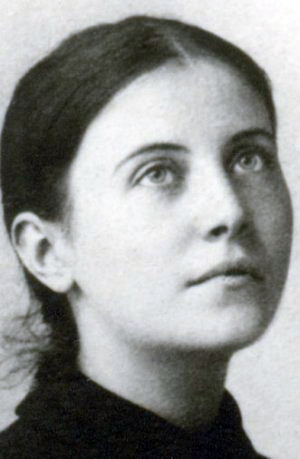
On this April 11th, in 1903 – the same year that the Italian Guiseppe Sarto was elected Pope later that summer as Pius X – a lovely, young Italian woman died, by the name of Gemma Galgani. She lived a brief life of 24 years, as did a number of other young saints, including Pier[…]Continue reading→
An Ideological and Improper Translation
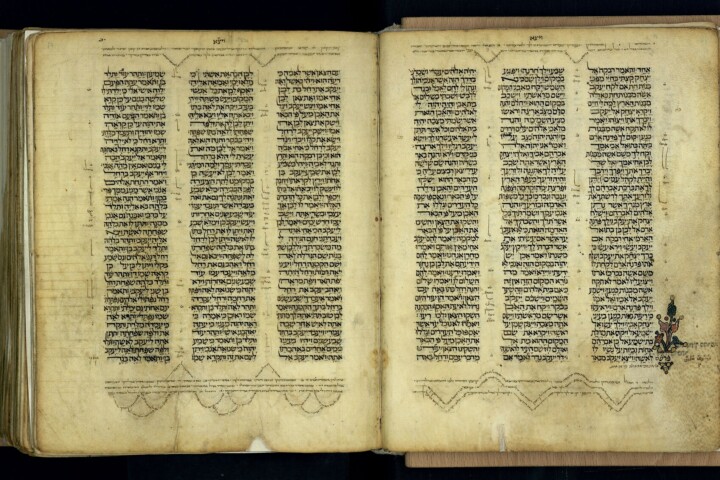
I noticed something odd with the psalm reading at Mass the other day. Our bishops’ conference here in Canada has decreed that the Mass in English – Novus Ordo – use the ‘NRSV’, the ‘New Revised Standard Version’, an ‘updated’ translation of the original RSV, first published in 1952. This ‘new translation’ has the tendency[…]Continue reading→
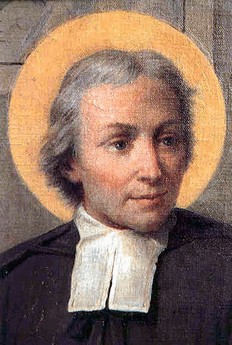
Saint Jean-Baptiste de la Salle: A Teacher for Teachers
Jean-Baptiste de la Salle (1651 – 1719), a French nobleman, ordained a priest, founded the first order in the Church’s history entirely without priests, and this came about almost by accident. I say ‘almost’, for, of course, there are no accidents with God. Destined for ordination from an early age, Jean-Baptiste never looked back, even[…]Continue reading→