
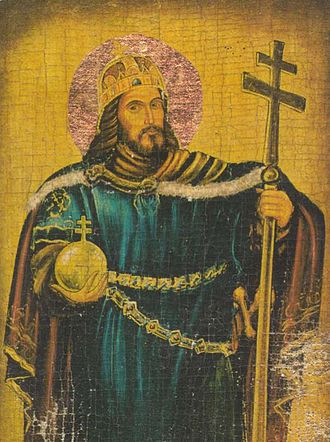
Saint Stephen, Hungary’s First and Greatest King
Hungary is one of the few nations standing against the tsunami of insanity washing over the rest of Europe, threatening to deluge civilization as we know it. As may be expected in this inverted world.
This may seem ironic, for Hungary for the first millennium of the Christian era was an almost entirely pagan nation – with ‘Hun’ being a synonym for all that ‘paganism’ means – until the rise of her first and greatest king, Stephen, Greek for ‘crown’, or the ‘crowned one’, who was born around the year 975 as Vajk, ‘hero, prince or master’. So, by nomenclature, he seemed destined for the role.
His monarchy dates from the propitious year 1000, and he reigned until his death on the also-propitious solemnity of the Assumption, August 15th, 1038. Whatever else one says of King Stephen, he was a not a milquetoast millennial, and did not believe that ‘diversity is our strength’, unless that diversity had a deeper, binding unity in the Catholic Faith, which he instantiated in his kingdom through the laws of the land, extirpating superstitious, pagan beliefs and customs. His first war was against his own brother and a pagan army.
After all, how does a nation maintain itself, without a common belief in marriage and family life, in common worship, holy days and feast days, a shared basis in morality, the right to life and legitimate freedom, and in some transcendent truth that binds it all together? Polygamy, divorce, indolence, contraception, base coinage, inflation, pornography, erroneous views of marriage, the child sacrifice of abortion – all these evils undermine and ultimately corrupt any society. (We need not elaborate on the state of Canada). Here is the opening of King Stephen’s letter to his son, preparing him for succession:
My dearest son, if you desire to honour the royal crown, I advise, I counsel, I urge you above all things to maintain the Catholic and apostolic faith with such diligence and care that you may be an example for all those placed under you by God and that all the clergy may rightly call you a man of true Christian profession. Failing to do this, you may be sure that you will not be called a Christian or a son of the Church. Indeed, in the royal palace – after the faith itself – the Church holds second place, first propagated as she was by our head, Christ; then transplanted, firmly constituted and spread through the whole world by his members, the apostles and holy fathers. And though she always produced fresh offspring, nevertheless in certain places she is regarded as ancient.
King Stephen realized that his kingdom had to be Christian, or it would dissolve into chaos and various factions vying for power, by violence.
Not only must the state adhere to the teachings of Christ, but so must the rulers themselves:
With his own holiness and vigour, Stephen held Hungary together as a Catholic nation, setting up dioceses, bishoprics, building cathedrals and churches, collecting relics, enforcing laws, such that Hungary became prosperous and flourishing, providing the safest route through to the East and the Holy Land. Stephen’s currency was solid, and popular throughout Europe, and his reign, overall, a glorious one. Sadly, King Stephen outlived all his children, and after his death Hungary fell into civil war, until the accession of his grandson, Ladislaus, in 1077. To this day, the feast of King Saint Stephen – celebrated in Hungary on August 20th – is a national holiday, ‘State Foundation Day’. And rejoice they should. Stephen’s right hand – a symbol of his kingly power – is displayed in the basilica named after him in Budapest (curiously, with its own feast day of the ‘Holy Dexter’ on May 30th). He was canonized in 1083 by Pope Gregory VII, the great pontiff of Church reform.
May that reform of both Church and state continue, guided by the fullness of God’s revealed truth, under the intercession of Saint Stephen.
Ora pro nobis! +
(partial source: wikipedia.org)
Carney’s Amoral Majority
After five defections – euphemistically described as ‘crossing the floor’ – and three by-elections, Mark Carney and his Liberals how have their coveted majority. One wonders what bowls of pottage were offered in back-room deals. In the archaic monarchical system that is the Dominion of Canada, this majority allows the newly-minted Prime Minister to rule[…]Continue reading→

Saint Kateri , Canada’s Protectress
This was the title given to Saint Kateri Tekakwitha, by Pope Benedict XVI, when he canonized her on October 28th, 2012, along with six others, in Saint Peter’ Square (she had been beatified by Pope John Paul II back in 1980). With Saint Joseph as our protector, along with the Canadian martyrs, we seem to[…]Continue reading→
A Tale of Two Benedicts
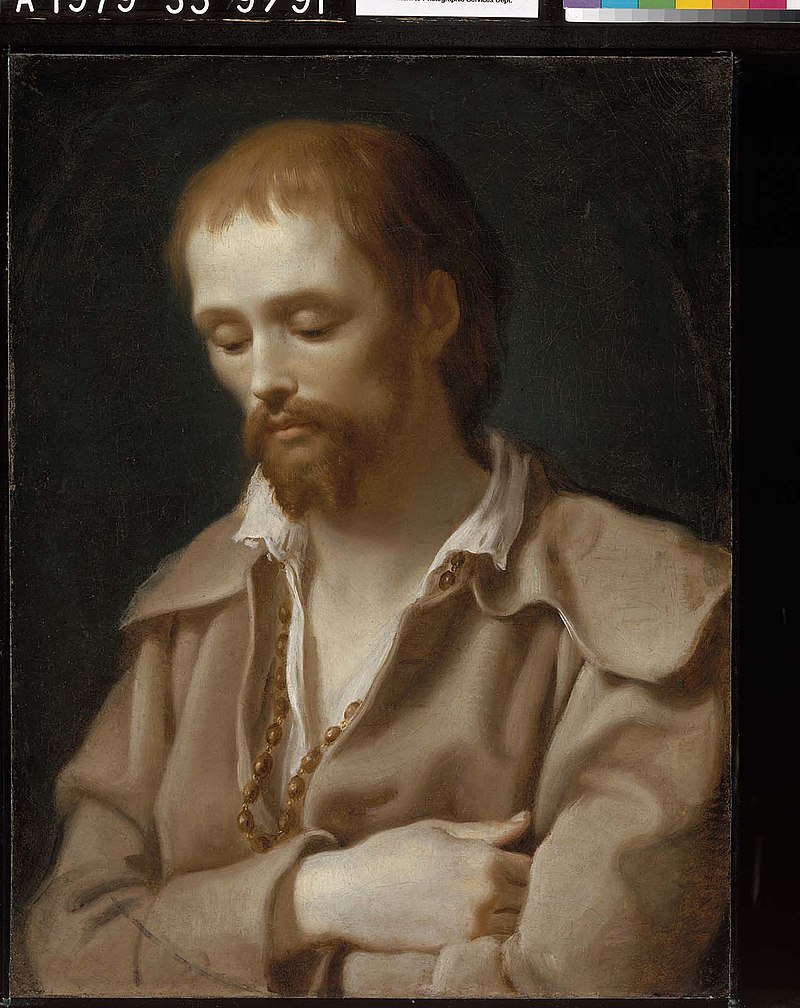
A grace-filled Holy Week to all our readers! As we await and prepare for the Resurrection about to dawn upon us, we might keep in mind two Benedicts: Pope Emeritus Benedict XVI, requiescat in pace, elected on this day in 2005; and today’s commemoration of the mystic pilgrim, Benedict Joseph Labre, who died on this[…]Continue reading→

My Name is Bernadette
April 16th is a propitious day, for besides the anniversary of Father de Valk’s death, who founded Catholic Insight in its print form decades ago, and the commemoration of the ‘two Benedicts’, mentioned in accompanying posts, today we also recall Saint Bernadette Soubirous, the young visionary to whom the Virgin Mary appeared numerous times at[…]Continue reading→
Saint Lydwina of Schiedam and Suffering Joyfully
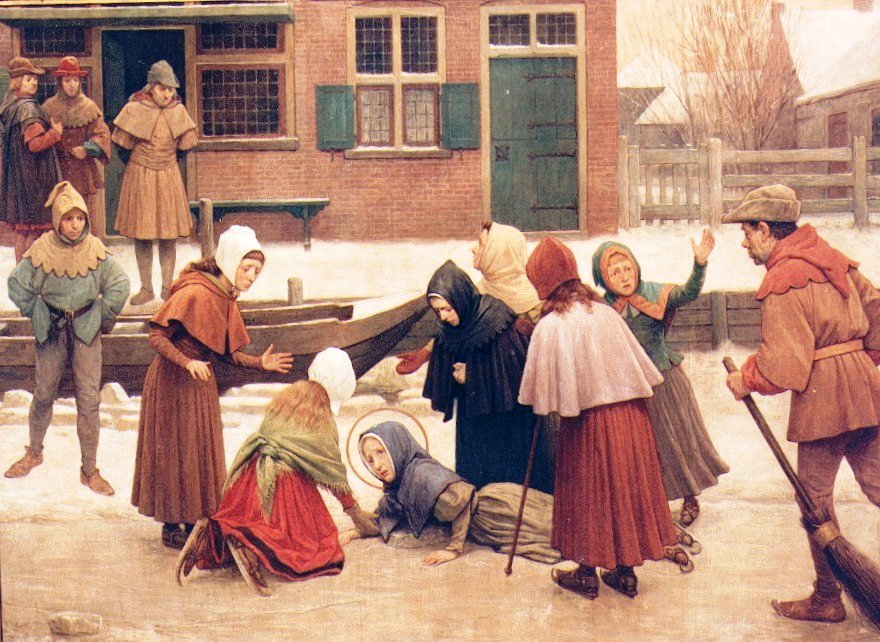
Saint Lydwina of Schiedam (1380 – 1433) was one of the countless and glorious ‘victim souls’ in the history of the Church, those whose lives are filled with suffering, often of an unimaginable intensity, but who suffer joyfully. She was a fifteen-year old Dutch girl, out skating one day, when she fell and broke one[…]Continue reading→
The Glorious Martyrdoms of Martin and Maximus
As we enter into Eastertide, we recall on this 13th of April Pope Saint Martin I (+655), one of the noblest, if most tragic, of the successors of Saint Peter. Born in Umbria, Italy, he was of noble lineage, with great intelligence combined with charity and love of the poor and the Church. While still[…]Continue reading→

Canonizing Sister Faustina and Divine Mercy
HOMILY OF THE HOLY FATHER MASS IN ST PETER’S SQUARE FOR THE CANONIZATION OF SR MARY FAUSTINA KOWALSKA Sunday, 30 April 2000 1. “Confitemini Domino quoniam bonus, quoniam in saeculum misericordia eius”; “Give thanks to the Lord for he is good; his steadfast love endures for ever” (Ps 118: 1). So the Church sings on the Octave of[…]Continue reading→

Saint Stanislaus of Szczepanów
We celebrate Saint Stanislaus today (+ April 11, 1079), in light of this Easter Octave, a bishop and martyr who accepted the episcopacy only at the direct order of Pope Alexander II. He proved a wise and courageous leader of his flock, put to death by his own king, Boleslaus, for rebuking the monarch’s ‘immoral[…]Continue reading→
Saint Gemma Galgani
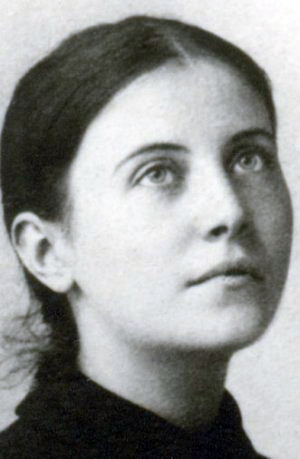
On this April 11th, in 1903 – the same year that the Italian Guiseppe Sarto was elected Pope later that summer as Pius X – a lovely, young Italian woman died, by the name of Gemma Galgani. She lived a brief life of 24 years, as did a number of other young saints, including Pier[…]Continue reading→
An Ideological and Improper Translation
I noticed something odd with the psalm reading at Mass the other day. Our bishops’ conference here in Canada has decreed that the Mass in English – Novus Ordo – use the ‘NRSV’, the ‘New Revised Standard Version’, an ‘updated’ translation of the original RSV, first published in 1952. This ‘new translation’ has the tendency[…]Continue reading→