
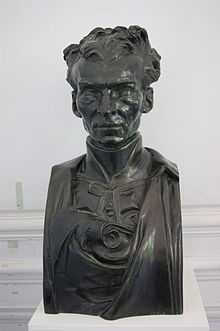
Saints Eusebius of Vercelli and Peter Julian Eymard
The Church commemorates two pastors today, separated by a millennium and a half: The fourth-century Eusebius of Vercelli (+371), the first bishop we know of in northern Italy, who has gone down in history as one of the great foes of the insidious heresy of Arianism, which taught that Christ was not truly God. Eusebius – whose name means ‘good piety’ – suffered much for the truth, including painful and lonely exiles, and at one point even being dragged through the streets, for his resistance to the Emperor’s own support for the heresy. After all, if Christ be not the Almighty – our very Lord and God – then Caesar has no earthly rivals, and he becomes the mediator between God and men. Arianism would have meant not just the death of the Church, but of society, ensuring an unending tyrannical reign of plenipotentiary dictators, as we have seen in so many atheistic regimes. Hence, Eusebius became one of the great supporters of Saint Athanasius and the orthodox teaching of the Council of Nicaea (325), that Christ truly was homo-ousios, con-substantial, of the same substance, nature and essence as the Father – God from God, Light from Light, true God from true God.
Eusebius was also the first to combine the monastic and priestly life, forming a community of clerics in the pursuit of holiness to better regulate their pastoral ministry. He also set up Marian shrines in the countryside, to aid in the devotion of wayfarers, and the conversion of the pagans – literally, those who live in rural areas.
We also on this second day of August remember Saint Peter Julian Eymard (+1868), the Apostle of the Eucharist in an age of rising rationalism (Marx’s Communist Manifesto was published in 1858, and Darwin’s Origin of Species in 1859). From childhood, Peter Julian had a great devotion to the Eucharist and to Our Lady (the two go together like, say, maple syrup and pancakes, to use a very dim analogy). Peter never deviated from his precocious devotion, and in young adulthood began his formal religious journey in the novitiate of the Oblates of Mary Immaculate. But ill health – he suffered from some sort of lung affliction and frequent migraines – forced him to leave, and enter the diocesan priesthood. Like his contemporary, Saint Jean Vianney, Peter reformed a rural parish where there was little faith. But he still felt called elsewhere, to some sort of community life, so eventually he did leave diocesan ministry and joined the missionary Order of the Marists – the Society of Mary.
Here he flourished for a time, but again felt called to devote his life specifically and wholly to Eucharistic adoration, and received permission to depart and begin his own community, the Congregation of the Blessed Sacrament, whose founding is traditionally traced back to January 6th, 1857, when Eymard and a companion, Raymond du Cuers, began their apostolate of adoration at a dilapidated building, whose address ironically was 114 Rue d’Enfers – literally, the road to hell! God does have a sense of humour, and we all know Christ’s saying about the gates of hell…certainly, Father Eymard did not let them prevail, but made that street a road to heaven.
As Father Eymard put it: The Eucharist is everything, because from the Eucharist, everything is.
And he advised laypeople:
Hear Mass daily; it will prosper the whole day. All your duties will be performed the better for it, and your soul will be stronger to bear its daily cross. The Mass is the most holy act of religion; you can do nothing that can give greater glory to God or be more profitable for your soul than to hear Mass both frequently and devoutly. It is the favorite devotion of the saints.
After an all-too-brief life of priestly prayer and ministry, he died of a brain hemorrhage on August 1, 1868, a year before the first Vatican Council, and was canonized by Pope Saint John XXIII a century later, on December 9th, 1962, not long before the Second Council at the Vatican. The saints do signify tradition. Pope Saint John Paul II declared Peter Julian Eymard the ‘Apostle of the Eucharist’.
A final historical footnote about Father Eymard: It was under his direction and advice that the sculptor Auguste Rodin – most famed for the ubiquitously-copied-and-parodied ‘The Thinker’ – entered the Catholic Church, becoming a lay brother in the very congregation Eymard had founded. In gratitude, Rodin sculpted a bust of the saint, providing us with his vivid likeness. In the end, however, it was Rodin who got the better part of that exchange.
Both saints teach us that Christ is the Way, the only path, to heaven, and part of that path is prayer in adoration before the Real Presence, the homoousios. And the more fully and faithfully we trod that road – by Mass, Holy Communion, Eucharistic adoration, devotion to Our Lady and the saints – the more surely we will reach that blessed end of heaven.
On that note, this is also the traditional date of Our Lady of the Angels, and the indulgence of the Portiuncula, one of the oldest in Christendom, given through the work of Saint Francis himself, and on which the reader may peruse the words of Father Attard.
Our Lady of the Angels, Saints Eusebius and Peter Julian, orate pro nobis!

Carney’s Amoral Majority
After five defections – euphemistically described as ‘crossing the floor’ – and three by-elections, Mark Carney and his Liberals how have their coveted majority. One wonders what bowls of pottage were offered in back-room deals. In the archaic monarchical system that is the Dominion of Canada, this majority allows the newly-minted Prime Minister to rule[…]Continue reading→

Saint Kateri , Canada’s Protectress
This was the title given to Saint Kateri Tekakwitha, by Pope Benedict XVI, when he canonized her on October 28th, 2012, along with six others, in Saint Peter’ Square (she had been beatified by Pope John Paul II back in 1980). With Saint Joseph as our protector, along with the Canadian martyrs, we seem to[…]Continue reading→

A Tale of Two Benedicts
A grace-filled Holy Week to all our readers! As we await and prepare for the Resurrection about to dawn upon us, we might keep in mind two Benedicts: Pope Emeritus Benedict XVI, requiescat in pace, elected on this day in 2005; and today’s commemoration of the mystic pilgrim, Benedict Joseph Labre, who died on this[…]Continue reading→

My Name is Bernadette
April 16th is a propitious day, for besides the anniversary of Father de Valk’s death, who founded Catholic Insight in its print form decades ago, and the commemoration of the ‘two Benedicts’, mentioned in accompanying posts, today we also recall Saint Bernadette Soubirous, the young visionary to whom the Virgin Mary appeared numerous times at[…]Continue reading→

Saint Lydwina of Schiedam and Suffering Joyfully
Saint Lydwina of Schiedam (1380 – 1433) was one of the countless and glorious ‘victim souls’ in the history of the Church, those whose lives are filled with suffering, often of an unimaginable intensity, but who suffer joyfully. She was a fifteen-year old Dutch girl, out skating one day, when she fell and broke one[…]Continue reading→

The Glorious Martyrdoms of Martin and Maximus
As we enter into Eastertide, we recall on this 13th of April Pope Saint Martin I (+655), one of the noblest, if most tragic, of the successors of Saint Peter. Born in Umbria, Italy, he was of noble lineage, with great intelligence combined with charity and love of the poor and the Church. While still[…]Continue reading→

Canonizing Sister Faustina and Divine Mercy
HOMILY OF THE HOLY FATHER MASS IN ST PETER’S SQUARE FOR THE CANONIZATION OF SR MARY FAUSTINA KOWALSKA Sunday, 30 April 2000 1. “Confitemini Domino quoniam bonus, quoniam in saeculum misericordia eius”; “Give thanks to the Lord for he is good; his steadfast love endures for ever” (Ps 118: 1). So the Church sings on the Octave of[…]Continue reading→

Saint Stanislaus of Szczepanów
We celebrate Saint Stanislaus today (+ April 11, 1079), in light of this Easter Octave, a bishop and martyr who accepted the episcopacy only at the direct order of Pope Alexander II. He proved a wise and courageous leader of his flock, put to death by his own king, Boleslaus, for rebuking the monarch’s ‘immoral[…]Continue reading→

Saint Gemma Galgani
On this April 11th, in 1903 – the same year that the Italian Guiseppe Sarto was elected Pope later that summer as Pius X – a lovely, young Italian woman died, by the name of Gemma Galgani. She lived a brief life of 24 years, as did a number of other young saints, including Pier[…]Continue reading→
An Ideological and Improper Translation
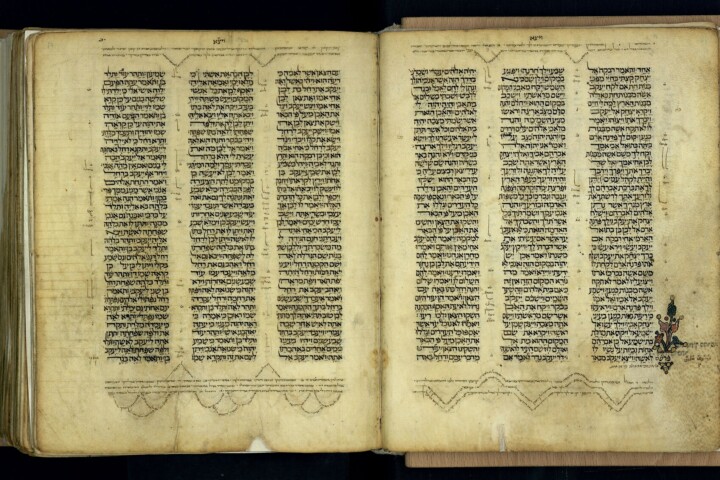
I noticed something odd with the psalm reading at Mass the other day. Our bishops’ conference here in Canada has decreed that the Mass in English – Novus Ordo – use the ‘NRSV’, the ‘New Revised Standard Version’, an ‘updated’ translation of the original RSV, first published in 1952. This ‘new translation’ has the tendency[…]Continue reading→