
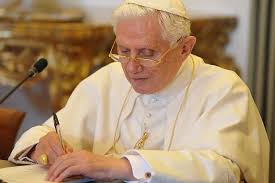
Pope Benedict and Bridget of Sweden
BENEDICT XVI
GENERAL AUDIENCE
Saint Peter’s Square
Wednesday, 27 October 2010
Saint Bridget of Sweden
Dear Brothers and Sisters,
On the eve of the Great Jubilee in anticipation of the Year 2000 the Venerable Servant of God John Paul II proclaimed St Bridget of Sweden Co-Patroness of the whole of Europe. This morning I would like to present her, her message and the reasons why — still today — this holy woman has much to teach the Church and the world.
We are well acquainted with the events of St Bridget’s life because her spiritual fathers compiled her biography in order to further the process of her canonization immediately after her death in 1373. Bridget was born 70 years earlier, in 1303, in Finster, Sweden, a Northern European nation that for three centuries had welcomed the Christian faith with the same enthusiasm as that with which the Saint had received it from her parents, very devout people who belonged to noble families closely related to the reigning house.
We can distinguished two periods in this Saint’s life.
The first was characterized by her happily married state. Her husband was called Ulf and he was Governor of an important district of the Kingdom of Sweden. The marriage lasted for 28 years, until Ulf’s death. Eight children were born, the second of whom, Karin (Catherine), is venerated as a Saint. This is an eloquent sign of Bridget’s dedication to her children’s education. Moreover, King Magnus of Sweden so appreciated her pedagogical wisdom that he summoned her to Court for a time, so that she could introduce his young wife, Blanche of Namur, to Swedish culture. Bridget, who was given spiritual guidance by a learned religious who initiated her into the study of the Scriptures, exercised a very positive influence on her family which, thanks to her presence, became a true “domestic church”. Together with her husband she adopted the Rule of the Franciscan Tertiaries. She generously practiced works of charity for the poor; she also founded a hospital. At his wife’s side Ulf’s character improved and he advanced in the Christian life. On their return from a long pilgrimage to Santiago de Compostela, which they made in 1341 with other members of the family, the couple developed a project of living in continence; but a little while later, in the tranquillity of a monastery to which he had retired, Ulf’s earthly life ended. This first period of Bridget’s life helps us to appreciate what today we could describe as an authentic “conjugal spirituality”: together, Christian spouses can make a journey of holiness sustained by the grace of the sacrament of Marriage. It is often the woman, as happened in the life of St Bridget and Ulf, who with her religious sensitivity, delicacy and gentleness succeeds in persuading her husband to follow a path of faith. I am thinking with gratitude of the many women who, day after day, illuminate their families with their witness of Christian life, in our time too. May the Lord’s Spirit still inspire holiness in Christian spouses today, to show the world the beauty of marriage lived in accordance with the Gospel values: love, tenderness, reciprocal help, fruitfulness in begetting and in raising children, openness and solidarity to the world and participation in the life of the Church.
The second period of Bridget’s life began when she was widowed. She did not consider another marriage in order to deepen her union with the Lord through prayer, penance and charitable works. Therefore Christian widows too may find in this Saint a model to follow. In fact, upon the death of her husband, after distributing her possessions to the poor — although she never became a consecrated religious — Bridget settled near the Cistercian Monastery of Alvastra. Here began the divine revelations that were to accompany her for the rest of her life. Bridget dictated them to her confessors-secretaries, who translated them from Swedish into Latin and gathered them in eight volumes entitled Revelationes (Revelations). A supplement followed these books called, precisely, Revelationes extravagantes (Supplementary revelations).
(To continue reading, please see here).

Saint Kateri , Canada’s Protectress
This was the title given to Saint Kateri Tekakwitha, by Pope Benedict XVI, when he canonized her on October 28th, 2012, along with six others, in Saint Peter’ Square (she had been beatified by Pope John Paul II back in 1980). With Saint Joseph as our protector, along with the Canadian martyrs, we seem to[…]Continue reading→

Remembering Father Alphonse de Valk
(Today marks the sixth anniversary of the death of Father Alphonse de Valk, C.S.B., a faithful, courageous and indefatigable Basilian priest, pro-life-and-family apostle, and the founder of Catholic Insight magazine. Here is what we wrote those on his entering into eternity five years ago, as we continue to remember him in our prayers and thoughts)[…]Continue reading→
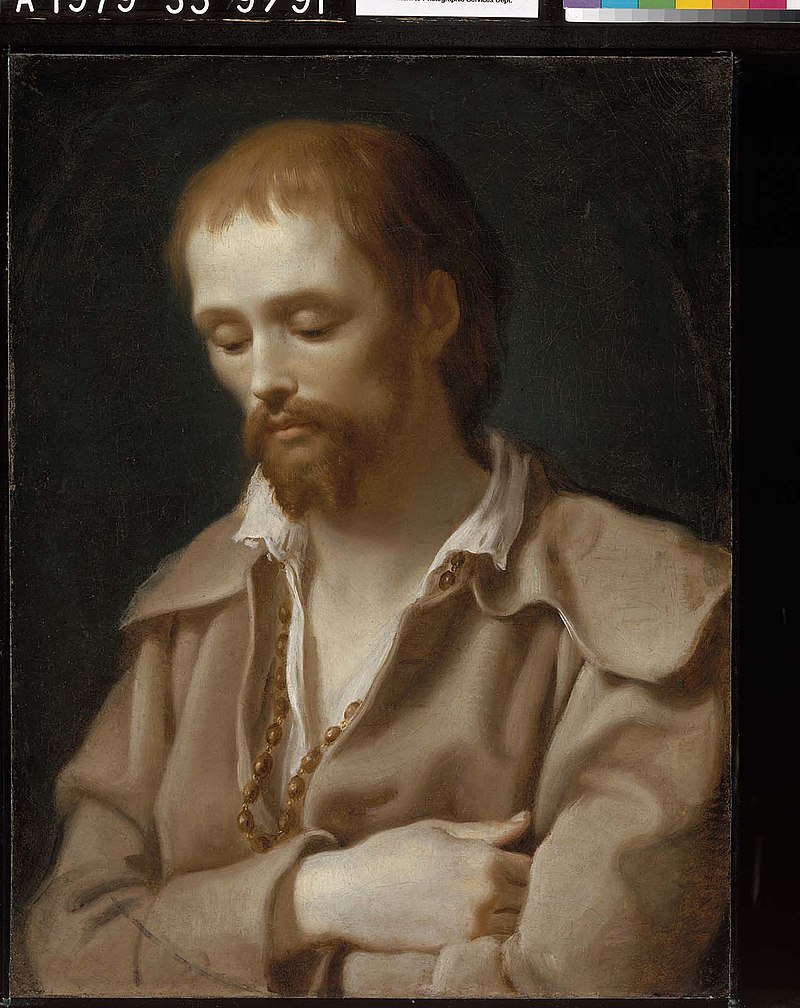
A Tale of Two Benedicts
A grace-filled Holy Week to all our readers! As we await and prepare for the Resurrection about to dawn upon us, we might keep in mind two Benedicts: Pope Emeritus Benedict XVI, requiescat in pace, elected on this day in 2005; and today’s commemoration of the mystic pilgrim, Benedict Joseph Labre, who died on this[…]Continue reading→

My Name is Bernadette
April 16th is a propitious day, for besides the anniversary of Father de Valk’s death, who founded Catholic Insight in its print form decades ago, and the commemoration of the ‘two Benedicts’, mentioned in accompanying posts, today we also recall Saint Bernadette Soubirous, the young visionary to whom the Virgin Mary appeared numerous times at[…]Continue reading→
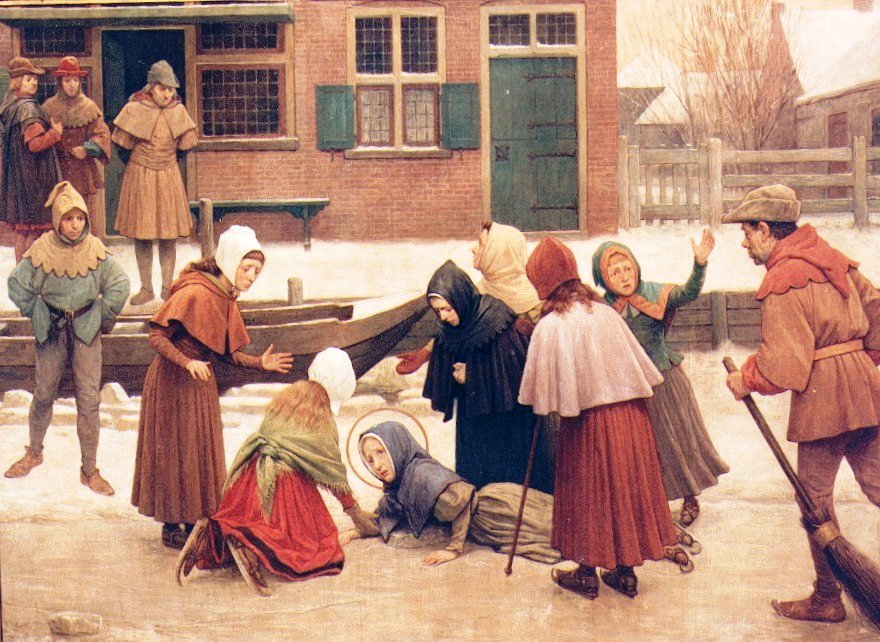
Saint Lydwina of Schiedam and Suffering Joyfully
Saint Lydwina of Schiedam (1380 – 1433) was one of the countless and glorious ‘victim souls’ in the history of the Church, those whose lives are filled with suffering, often of an unimaginable intensity, but who suffer joyfully. She was a fifteen-year old Dutch girl, out skating one day, when she fell and broke one[…]Continue reading→
The Glorious Martyrdoms of Martin and Maximus
As we enter into Eastertide, we recall on this 13th of April Pope Saint Martin I (+655), one of the noblest, if most tragic, of the successors of Saint Peter. Born in Umbria, Italy, he was of noble lineage, with great intelligence combined with charity and love of the poor and the Church. While still[…]Continue reading→
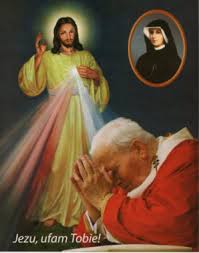
Canonizing Sister Faustina and Divine Mercy
HOMILY OF THE HOLY FATHER MASS IN ST PETER’S SQUARE FOR THE CANONIZATION OF SR MARY FAUSTINA KOWALSKA Sunday, 30 April 2000 1. “Confitemini Domino quoniam bonus, quoniam in saeculum misericordia eius”; “Give thanks to the Lord for he is good; his steadfast love endures for ever” (Ps 118: 1). So the Church sings on the Octave of[…]Continue reading→

Divine Mercy Sunday – An Echo of Every Mass
Reach out your hand and put it in my side. Do not doubt but believe’… ‘My Lord and my God!’ (Jn. 20:18)). Today is Divine Mercy Sunday, and as we celebrate the end of the Easter Octave, we contemplate the wounded side of our Saviour, the Church’s source of life. On Good Friday in the[…]Continue reading→
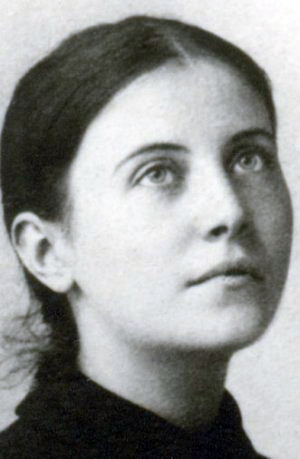
Saint Gemma Galgani
On this April 11th, in 1903 – the same year that the Italian Guiseppe Sarto was elected Pope later that summer as Pius X – a lovely, young Italian woman died, by the name of Gemma Galgani. She lived a brief life of 24 years, as did a number of other young saints, including Pier[…]Continue reading→
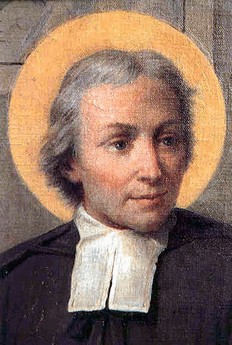
Saint Jean-Baptiste de la Salle: A Teacher for Teachers
Jean-Baptiste de la Salle (1651 – 1719), a French nobleman, ordained a priest, founded the first order in the Church’s history entirely without priests, and this came about almost by accident. I say ‘almost’, for, of course, there are no accidents with God. Destined for ordination from an early age, Jean-Baptiste never looked back, even[…]Continue reading→