

Mary Magdalene’s Metanoia
A blessed feast of Mary Magdalene, which – or who – was raised from memorial status in the liturgical revisions of 1969 to a full feast by a decree of Pope Francis in 2016. This was to emphasize her role as the ‘apostle to the Apostles’; perhaps also to emphasize the feminine genius in evangelization; as well, we may presume, the importance of conversion from a life of sin to one of great love and virtue. One way or the other, rejoice and be glad!
Mary from Magdala is one of the central figures in the Gospels, mentioned far more than most of the Apostles, but about whom – like many of the same Apostles – we know very little, beyond what what sparse details those same Gospels provide. She is mentioned in all four, the three synoptics, with an even more prominent role in Saint John. By the Middle Ages, she had been identified with the ‘sinful woman’ in the seventh chapter of Luke; the woman caught in adultery in the eighth chapter of John; as well as with the Mary, the sister of Martha and Lazarus, of Bethany. This was largely the fruit of the commentaries of Pope Gregory the Great. Modern commentators now see these women as likely distinct persons, a theory which is not entirely modern, for so did a number of the earlier Fathers.
Whoever she was, there are any number of legends told of Mary Magdalene, with the Golden Legend claiming that she and Lazarus and others sailed in a rudderless boat to the south of France, where she converted the king, and lived a long life as an ascetic hermit in a cave; and there she was buried, in Burgundy, with a Gothic cathedral raised on the site in the 13th century.
What we do know is that she was one of Christ’s most devoted disciples, stayed faithful right up to the foot of the Cross, when all the Apostles, except John and Christ’s own mother, had fled. Mary Magdalene was one of the first – Christ’s Mother Mary was likely the first – witnesses to the Resurrection. She ran to tell the Apostles – hence, Pope Francis declaring her the one who was sent to bring the good news to the Apostles.
Although never mentioned as a ‘reformed prostitute’ – and we will leave aside the sacrilegious blasphemy of some modern portrayals – Saint Luke does say that ‘seven devils’ had been cast out of her, a mysterious phrase. Her identification with the ‘sinful woman’ was downplayed after the Council, although Mary of Magdala continues as patron of those who have reformed from sinful ways, which really includes all of us. For each of us must undergo a daily conversion – metanoia, a ‘turning of the mind and heart’ – to overcome the tendency to sin within ourselves which, if left unchecked, can only lead nowhere good.
In the days after the most tragic war the world has ever seen, Pius XII warned in a 1946 radio address that the worst sin of the twentieth century is the loss of the sense of sin, and what applies to eras applies even more specifically to individuals: We must maintain a vivid and profound ‘sense of sin’, to know its insidious and subtle effects, the small temptations to which we succumb – often with what we may consider the best of excuses – little lies, impurity, covetousness, pride, selfishness…
But we may add to the Pope’s words, that we have also lost the sense of the love of God, and what that love really means: to will and hold onto the true good, found in Christ, and only in Him, the Way, the Truth and the Life. The ‘sinful woman’, as Christ says to his host, Simon, loved much, for she was forgiven much. Mary Magdalene is a patron and intercessor for those who come to realize the depths of their distress, and turn completely the other way, to their Lord, Saviour and Redeemer, without Whom all is indeed lost.
There is hope for everyone, so long as their life hangs by that ‘hinge of the flesh’ – right up to their dying breath on whatever cross is theirs.
Would that we may have the grace of that same conversion before that fateful moment – to see ourselves as others, as we are in the eyes of others, and, more to the point, in God. To have sin rooted out and purified, as the Magdalene of old. For only so, like her, will we see Christ as He truly is, when He too calls us by name.
As Saint Gregory the Great puts it in today’s reflection from the Office:
We should reflect on Mary’s attitude and the great love she felt for Christ; for though the disciples had left the tomb, she remained. She was still seeking the one she had not found, and while she sought she wept; burning with the fire of love, she longed for him who she thought had been taken away. And so it happened that the woman who stayed behind to seek Christ was the only one to see him. For perseverance is essential to any good deed, as the voice of truth tells us: Whoever perseveres to the end will be saved.
Saint Mary Magadelene, ora pro nobis! +

Carney’s Amoral Majority
After five defections – euphemistically described as ‘crossing the floor’ – and three by-elections, Mark Carney and his Liberals how have their coveted majority. One wonders what bowls of pottage were offered in back-room deals. In the archaic monarchical system that is the Dominion of Canada, this majority allows the newly-minted Prime Minister to rule[…]Continue reading→

Saint Kateri , Canada’s Protectress
This was the title given to Saint Kateri Tekakwitha, by Pope Benedict XVI, when he canonized her on October 28th, 2012, along with six others, in Saint Peter’ Square (she had been beatified by Pope John Paul II back in 1980). With Saint Joseph as our protector, along with the Canadian martyrs, we seem to[…]Continue reading→
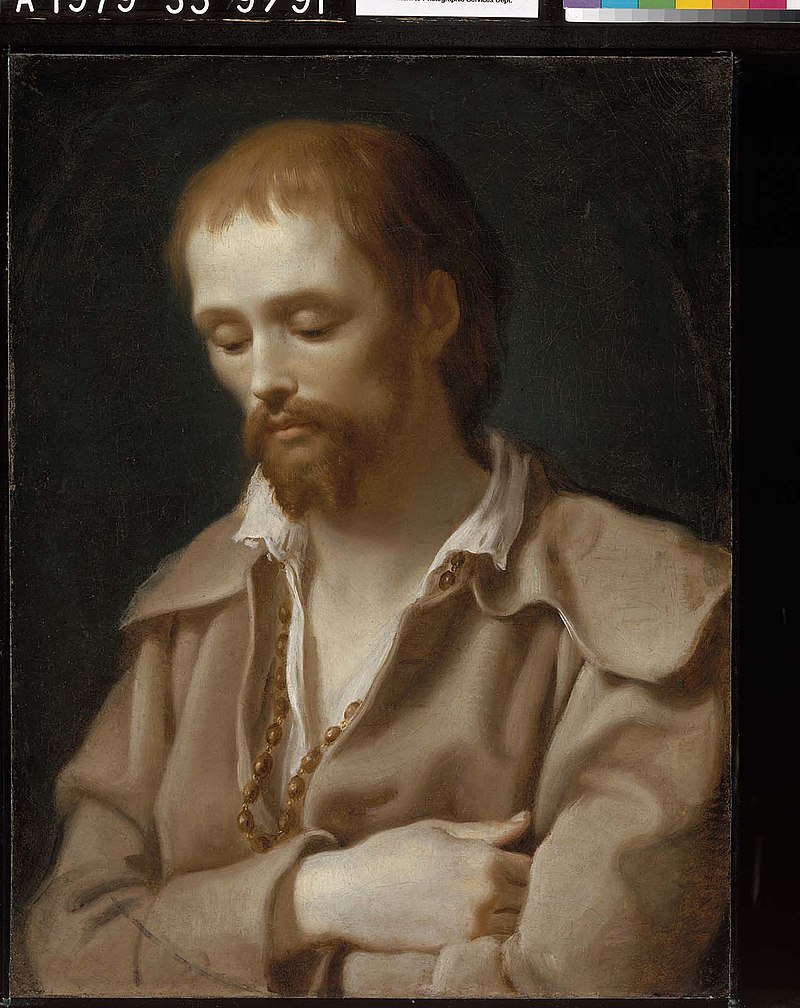
A Tale of Two Benedicts
A grace-filled Holy Week to all our readers! As we await and prepare for the Resurrection about to dawn upon us, we might keep in mind two Benedicts: Pope Emeritus Benedict XVI, requiescat in pace, elected on this day in 2005; and today’s commemoration of the mystic pilgrim, Benedict Joseph Labre, who died on this[…]Continue reading→

My Name is Bernadette
April 16th is a propitious day, for besides the anniversary of Father de Valk’s death, who founded Catholic Insight in its print form decades ago, and the commemoration of the ‘two Benedicts’, mentioned in accompanying posts, today we also recall Saint Bernadette Soubirous, the young visionary to whom the Virgin Mary appeared numerous times at[…]Continue reading→
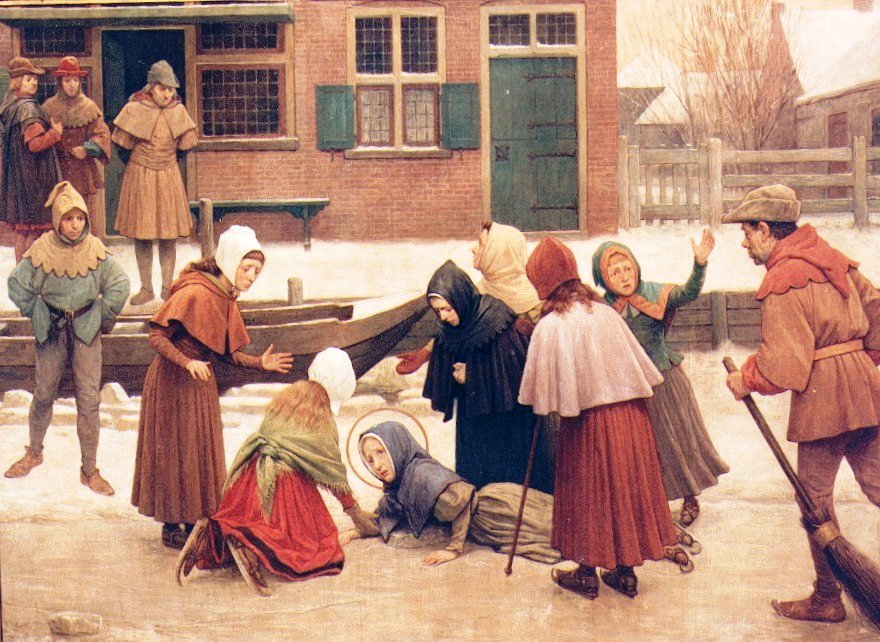
Saint Lydwina of Schiedam and Suffering Joyfully
Saint Lydwina of Schiedam (1380 – 1433) was one of the countless and glorious ‘victim souls’ in the history of the Church, those whose lives are filled with suffering, often of an unimaginable intensity, but who suffer joyfully. She was a fifteen-year old Dutch girl, out skating one day, when she fell and broke one[…]Continue reading→
The Glorious Martyrdoms of Martin and Maximus
As we enter into Eastertide, we recall on this 13th of April Pope Saint Martin I (+655), one of the noblest, if most tragic, of the successors of Saint Peter. Born in Umbria, Italy, he was of noble lineage, with great intelligence combined with charity and love of the poor and the Church. While still[…]Continue reading→
Canonizing Sister Faustina and Divine Mercy
HOMILY OF THE HOLY FATHER MASS IN ST PETER’S SQUARE FOR THE CANONIZATION OF SR MARY FAUSTINA KOWALSKA Sunday, 30 April 2000 1. “Confitemini Domino quoniam bonus, quoniam in saeculum misericordia eius”; “Give thanks to the Lord for he is good; his steadfast love endures for ever” (Ps 118: 1). So the Church sings on the Octave of[…]Continue reading→

Saint Stanislaus of Szczepanów
We celebrate Saint Stanislaus today (+ April 11, 1079), in light of this Easter Octave, a bishop and martyr who accepted the episcopacy only at the direct order of Pope Alexander II. He proved a wise and courageous leader of his flock, put to death by his own king, Boleslaus, for rebuking the monarch’s ‘immoral[…]Continue reading→
Saint Gemma Galgani
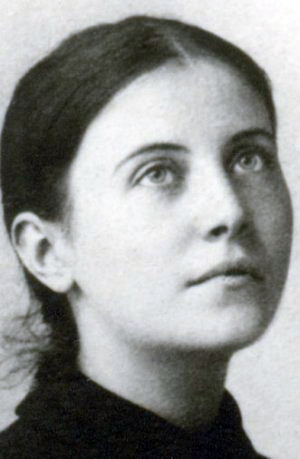
On this April 11th, in 1903 – the same year that the Italian Guiseppe Sarto was elected Pope later that summer as Pius X – a lovely, young Italian woman died, by the name of Gemma Galgani. She lived a brief life of 24 years, as did a number of other young saints, including Pier[…]Continue reading→
An Ideological and Improper Translation
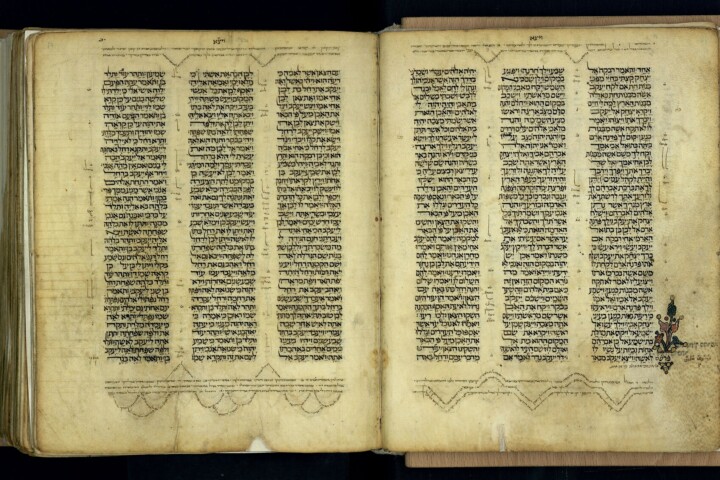
I noticed something odd with the psalm reading at Mass the other day. Our bishops’ conference here in Canada has decreed that the Mass in English – Novus Ordo – use the ‘NRSV’, the ‘New Revised Standard Version’, an ‘updated’ translation of the original RSV, first published in 1952. This ‘new translation’ has the tendency[…]Continue reading→