
Solemnity of Saints Peter and Paul
FEAST OF SAINTS PETER AND PAUL
HOLY MASS FOR THE IMPOSITION OF THE SACRED PALLIUM
ON METROPOLITAN ARCHBISHOPS
HOMILY OF HIS HOLINESS BENEDICT XVI
Vatican Basilica
Friday, 29 June 2012
Your Eminences,
Brother Bishops and Priests,
Dear Brothers and Sisters,
We are gathered around the altar for our solemn celebration of Saints Peter and Paul, the principal Patrons of the Church of Rome. Present with us today are the Metropolitan Archbishops appointed during the past year, who have just received the Pallium, and to them I extend a particular and affectionate greeting. Also present is an eminent Delegation from the Ecumenical Patriarchate of Constantinople, sent by His Holiness Bartholomaios I, and I welcome them with fraternal and heartfelt gratitude. In an ecumenical spirit, I am also pleased to greet and to thank the Choir of Westminster Abbey, who are providing the music for this liturgy alongside the Cappella Sistina. I also greet the Ambassadors and civil Authorities present. I am grateful to all of you for your presence and your prayers.
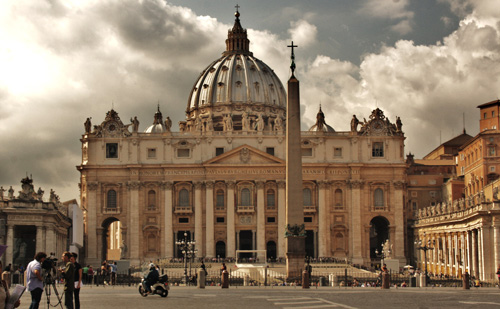
In front of Saint Peter’s Basilica, as is well known, there are two imposing statues of Saint Peter and Saint Paul, easily recognizable by their respective attributes: the keys in the hand of Peter and the sword held by Paul. Likewise, at the main entrance to the Basilica of Saint Paul Outside the Walls, there are depictions of scenes from the life and the martyrdom of these two pillars of the Church. Christian tradition has always considered Saint Peter and Saint Paul to be inseparable: indeed, together, they represent the whole Gospel of Christ. In Rome, their bond as brothers in the faith came to acquire a particular significance. Indeed, the Christian community of this City considered them a kind of counterbalance to the mythical Romulus and Remus, the two brothers held to be the founders of Rome. A further parallel comes to mind, still on the theme of brothers: whereas the first biblical pair of brothers demonstrate the effects of sin, as Cain kills Abel, yet Peter and Paul, much as they differ from one another in human terms and notwithstanding the conflicts that arose in their relationship, illustrate a new way of being brothers, lived according to the Gospel, an authentic way made possible by the grace of Christ’s Gospel working within them. Only by following Jesus does one arrive at this new brotherhood: this is the first and fundamental message that today’s solemnity presents to each one of us, the importance of which is mirrored in the pursuit of full communion, so earnestly desired by the ecumenical Patriarch and the Bishop of Rome, as indeed by all Christians.
In the passage from Saint Matthew’s Gospel that we have just heard, Peter makes his own confession of faith in Jesus, acknowledging him as Messiah and Son of God. He does so in the name of the other Apostles too. In reply, the Lord reveals to him the mission that he intends to assign to him, that of being the “rock”, the visible foundation on which the entire spiritual edifice of the Church is built (cf. Mt16:16-19). But in what sense is Peter the rock? How is he to exercise this prerogative, which naturally he did not receive for his own sake? The account given by the evangelist Matthew tells us first of all that the acknowledgment of Jesus’ identity made by Simon in the name of the Twelve did not come “through flesh and blood”, that is, through his human capacities, but through a particular revelation from God the Father. By contrast, immediately afterwards, as Jesus foretells his passion, death and resurrection, Simon Peter reacts on the basis of “flesh and blood”: he “began to rebuke him, saying, this shall never happen to you” (16:22). And Jesus in turn replied: “Get behind me, Satan! You are a hindrance to me …” (16:23). The disciple who, through God’s gift, was able to become a solid rock, here shows himself for what he is in his human weakness: a stone along the path, a stone on which men can stumble – in Greek, skandalon. Here we see the tension that exists between the gift that comes from the Lord and human capacities; and in this scene between Jesus and Simon Peter we see anticipated in some sense the drama of the history of the papacy itself, characterized by the joint presence of these two elements: on the one hand, because of the light and the strength that come from on high, the papacy constitutes the foundation of the Church during its pilgrimage through history; on the other hand, across the centuries, human weakness is also evident, which can only be transformed through openness to God’s action.
(To continue reading, please see here).

Saint Kateri , Canada’s Protectress
This was the title given to Saint Kateri Tekakwitha, by Pope Benedict XVI, when he canonized her on October 28th, 2012, along with six others, in Saint Peter’ Square (she had been beatified by Pope John Paul II back in 1980). With Saint Joseph as our protector, along with the Canadian martyrs, we seem to[…]Continue reading→

Remembering Father Alphonse de Valk
(Today marks the sixth anniversary of the death of Father Alphonse de Valk, C.S.B., a faithful, courageous and indefatigable Basilian priest, pro-life-and-family apostle, and the founder of Catholic Insight magazine. Here is what we wrote those on his entering into eternity five years ago, as we continue to remember him in our prayers and thoughts)[…]Continue reading→
A Tale of Two Benedicts
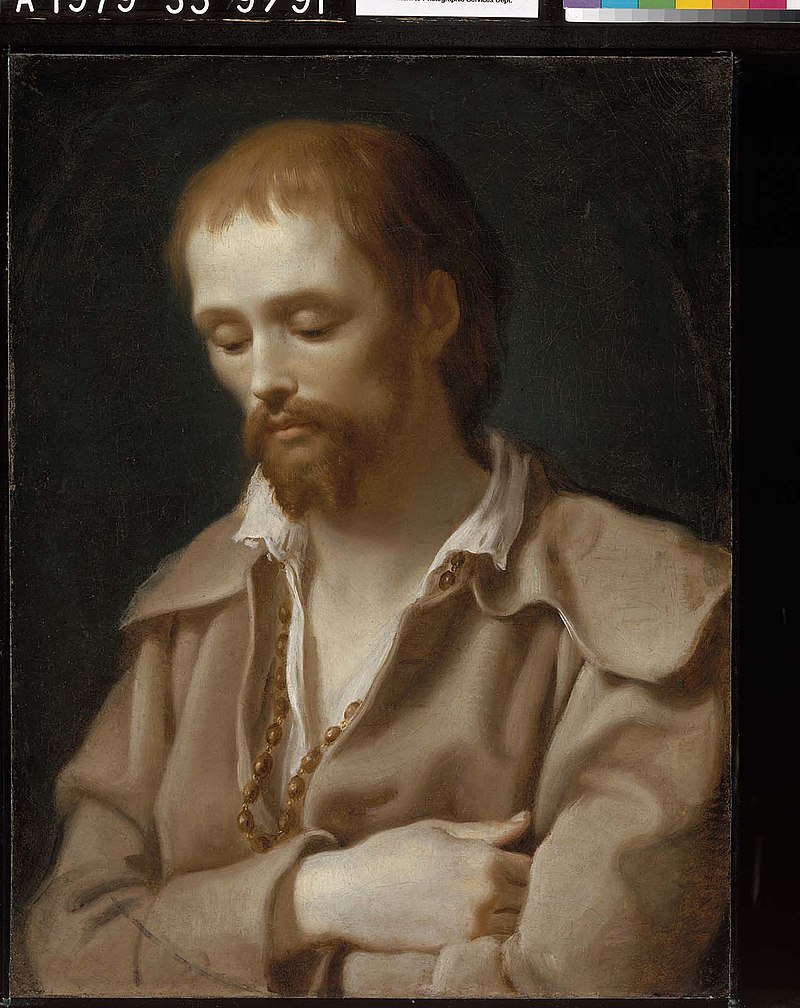
A grace-filled Holy Week to all our readers! As we await and prepare for the Resurrection about to dawn upon us, we might keep in mind two Benedicts: Pope Emeritus Benedict XVI, requiescat in pace, elected on this day in 2005; and today’s commemoration of the mystic pilgrim, Benedict Joseph Labre, who died on this[…]Continue reading→

My Name is Bernadette
April 16th is a propitious day, for besides the anniversary of Father de Valk’s death, who founded Catholic Insight in its print form decades ago, and the commemoration of the ‘two Benedicts’, mentioned in accompanying posts, today we also recall Saint Bernadette Soubirous, the young visionary to whom the Virgin Mary appeared numerous times at[…]Continue reading→
Saint Lydwina of Schiedam and Suffering Joyfully
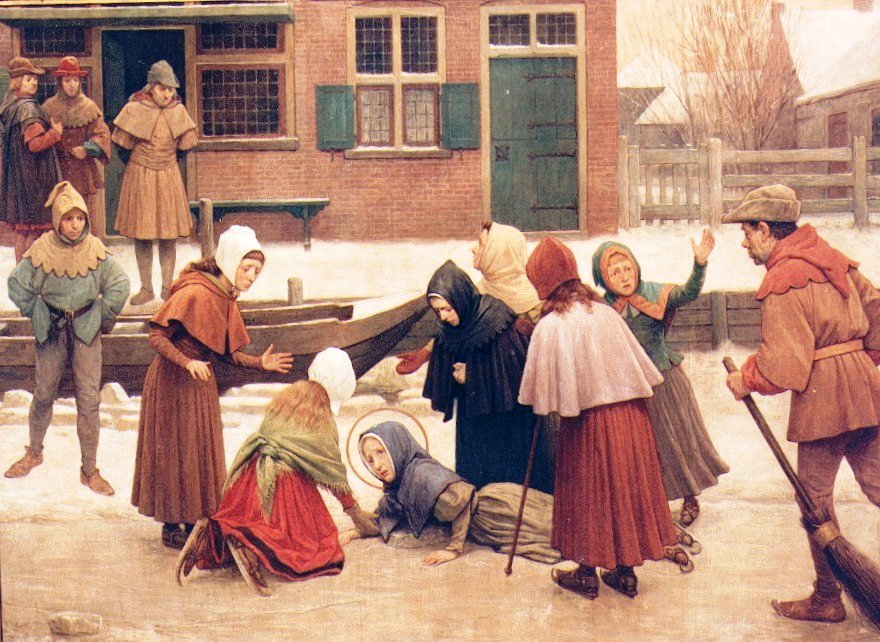
Saint Lydwina of Schiedam (1380 – 1433) was one of the countless and glorious ‘victim souls’ in the history of the Church, those whose lives are filled with suffering, often of an unimaginable intensity, but who suffer joyfully. She was a fifteen-year old Dutch girl, out skating one day, when she fell and broke one[…]Continue reading→
The Glorious Martyrdoms of Martin and Maximus
As we enter into Eastertide, we recall on this 13th of April Pope Saint Martin I (+655), one of the noblest, if most tragic, of the successors of Saint Peter. Born in Umbria, Italy, he was of noble lineage, with great intelligence combined with charity and love of the poor and the Church. While still[…]Continue reading→

Canonizing Sister Faustina and Divine Mercy
HOMILY OF THE HOLY FATHER MASS IN ST PETER’S SQUARE FOR THE CANONIZATION OF SR MARY FAUSTINA KOWALSKA Sunday, 30 April 2000 1. “Confitemini Domino quoniam bonus, quoniam in saeculum misericordia eius”; “Give thanks to the Lord for he is good; his steadfast love endures for ever” (Ps 118: 1). So the Church sings on the Octave of[…]Continue reading→

Divine Mercy Sunday – An Echo of Every Mass
Reach out your hand and put it in my side. Do not doubt but believe’… ‘My Lord and my God!’ (Jn. 20:18)). Today is Divine Mercy Sunday, and as we celebrate the end of the Easter Octave, we contemplate the wounded side of our Saviour, the Church’s source of life. On Good Friday in the[…]Continue reading→

Saint Stanislaus of Szczepanów
We celebrate Saint Stanislaus today (+ April 11, 1079), in light of this Easter Octave, a bishop and martyr who accepted the episcopacy only at the direct order of Pope Alexander II. He proved a wise and courageous leader of his flock, put to death by his own king, Boleslaus, for rebuking the monarch’s ‘immoral[…]Continue reading→
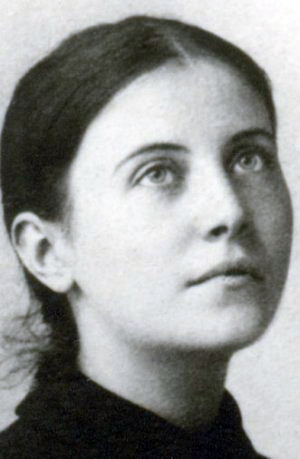
Saint Gemma Galgani
On this April 11th, in 1903 – the same year that the Italian Guiseppe Sarto was elected Pope later that summer as Pius X – a lovely, young Italian woman died, by the name of Gemma Galgani. She lived a brief life of 24 years, as did a number of other young saints, including Pier[…]Continue reading→