
Thinking in Non Sequiturs
Non sequitur is a Latin phrase that translates to “It does not follow.” This is arguably the most common of all the logical fallacies with which every thinking person should be acquainted. A simple example would be: “My dog probably threw up because he ate tainted food.” While it is possible that the dog threw up for that reason, unless you have evidence the food was tainted, the dog could have another reason for throwing up. Among these reasons would be eating too fast or too much, eating foods that are not regularly in the dog’s diet, drinking too much water in hot weather, motion sickness, etc.
Sometimes if we pray for something, such as rain for a crop or fine weather for a vacation, and then get what we pray for, we think that our prayer was nicely answered. Maybe so, maybe not so. Maybe we would have gotten the rain or the fair weather whether or not we prayed. We cannot know for a certainty. That sort of reasoning is certainly not going to convince a non-believer that prayers bring rain. Some believers might also not be convinced.
The case is more interesting to make when it comes to alleged miracles performed after praying to a saint. When a candidate is presented to the Vatican for investigation as to whether the title of “saint” should be conferred on him or her, a requirement for canonization may be whether one or more miracles have been granted by praying for the intercession of the candidate. In the case where a miracle is claimed, it is usually when a remarkable healing has occurred after contracting a deadly disease. If the medical evidence is strong enough, the Church investigators might say it follows that the prayer to the candidate was influential in obtaining the cure. On the other hand, an unbeliever will remain obdurate and insist this is a non sequitur (it does not follow) argument. That is, natural processes for which medical science at present has no explanation might have brought about the healing. In this case, logic is powerless to resolve the issue decisively on one side or the other.
On the other hand, it is a non sequitur fallacy that if one is a materialist and does not believe in the supernatural, therefore miracles cannot happen. Disbelief in God and the supernatural is a condition of the mind and of the heart, let us agree, but it proves nothing. By the same token, when biologist Richard Dawkins says that Darwin’s theory of evolution made it possible and respectable for people to be atheists, that is a rather bold and foolish non sequitur. Evolution does not prove that God does not exist. All it proves, if it proves anything, is that life took a long time to appear on the earth, and also a very long time to produce the human species. Even Charles Darwin conceded this point when he said, “It seems to me absurd to doubt that a man may be an ardent theist and an evolutionist.”
The Bible and evolution, after all, are not so far apart. As the great apologist Monsignor Ronald Knox noted in his book God and the Atom, the appearance of man evolving from lower species has seemed to many people a degrading picture of the origins of humankind. But, Knox reminds us, we are told in the book of Genesis (2:7-9) essentially the same thing: “The Bible says the Lord God formed man out of the slime of the earth. That’s what we are, Lord Macaulay and all the rest of us, slime …. slime of the earth.”
One of the worst non sequitur fallacies I have ever heard is the one that says the world would be better off if science could rule supreme and religion would just completely go away. How would anybody know that the world would be better off if religion went away, since nobody has ever seen a world in which religion has completely gone away?
It stands to reason that there are true religions and false religions, the good and the bad, and they should be identified as such. Banning bad religion would make certain bad things stop happening. Banning good religion would make certain good things stop happening. Anyone who doubts this should read all of Matthew 25.
The argument for science assumes that all science must be good and no science can be bad, which is clearly false when you count all the nuclear weapons in the world.
Some people naively think that the production of weapons of mass destruction will assure peace through strength. That is problematic. Peace for a time might follow, and that’s a comforting thought, but where’s the guarantee that the human race will never go lunatic enough to bring on bloody Armageddon?
As the apostle Peter warned, the devil, like a lion, prowls about the world seeking the ruin of souls … and no doubt the human race all together.

Saint Kateri , Canada’s Protectress
This was the title given to Saint Kateri Tekakwitha, by Pope Benedict XVI, when he canonized her on October 28th, 2012, along with six others, in Saint Peter’ Square (she had been beatified by Pope John Paul II back in 1980). With Saint Joseph as our protector, along with the Canadian martyrs, we seem to[…]Continue reading→

Remembering Father Alphonse de Valk
(Today marks the sixth anniversary of the death of Father Alphonse de Valk, C.S.B., a faithful, courageous and indefatigable Basilian priest, pro-life-and-family apostle, and the founder of Catholic Insight magazine. Here is what we wrote those on his entering into eternity five years ago, as we continue to remember him in our prayers and thoughts)[…]Continue reading→

My Name is Bernadette
April 16th is a propitious day, for besides the anniversary of Father de Valk’s death, who founded Catholic Insight in its print form decades ago, and the commemoration of the ‘two Benedicts’, mentioned in accompanying posts, today we also recall Saint Bernadette Soubirous, the young visionary to whom the Virgin Mary appeared numerous times at[…]Continue reading→
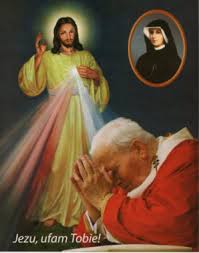
Canonizing Sister Faustina and Divine Mercy
HOMILY OF THE HOLY FATHER MASS IN ST PETER’S SQUARE FOR THE CANONIZATION OF SR MARY FAUSTINA KOWALSKA Sunday, 30 April 2000 1. “Confitemini Domino quoniam bonus, quoniam in saeculum misericordia eius”; “Give thanks to the Lord for he is good; his steadfast love endures for ever” (Ps 118: 1). So the Church sings on the Octave of[…]Continue reading→
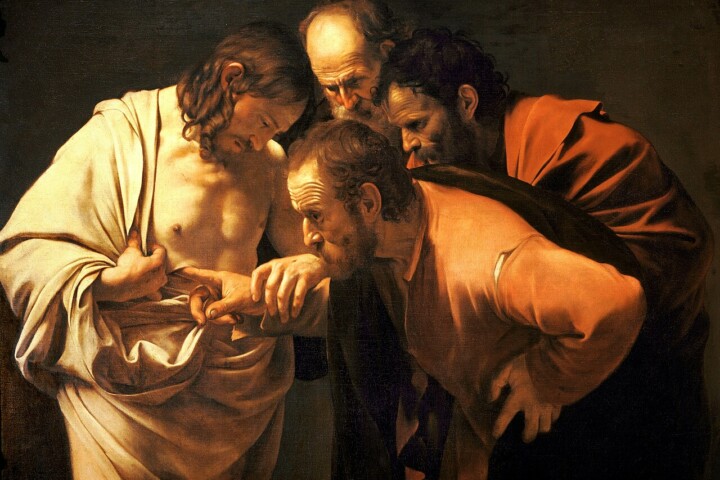
Divine Mercy Sunday – An Echo of Every Mass
Reach out your hand and put it in my side. Do not doubt but believe’… ‘My Lord and my God!’ (Jn. 20:18)). Today is Divine Mercy Sunday, and as we celebrate the end of the Easter Octave, we contemplate the wounded side of our Saviour, the Church’s source of life. On Good Friday in the[…]Continue reading→

Saint Stanislaus of Szczepanów
We celebrate Saint Stanislaus today (+ April 11, 1079), in light of this Easter Octave, a bishop and martyr who accepted the episcopacy only at the direct order of Pope Alexander II. He proved a wise and courageous leader of his flock, put to death by his own king, Boleslaus, for rebuking the monarch’s ‘immoral[…]Continue reading→
First Holy Communion: Sermon from May 16, 1943
Here is a sermon from the good old days by +Rev. Msgr. Vincent Nicholas Foy (August 14, 1915 – March 13, 2017), from 1943. Readers may recall that Pope Saint Pius X, by the decree Quam Singulari in 1910, lowered the customary age of reception of Holy Communion – after the rigours of the plague[…]Continue reading→
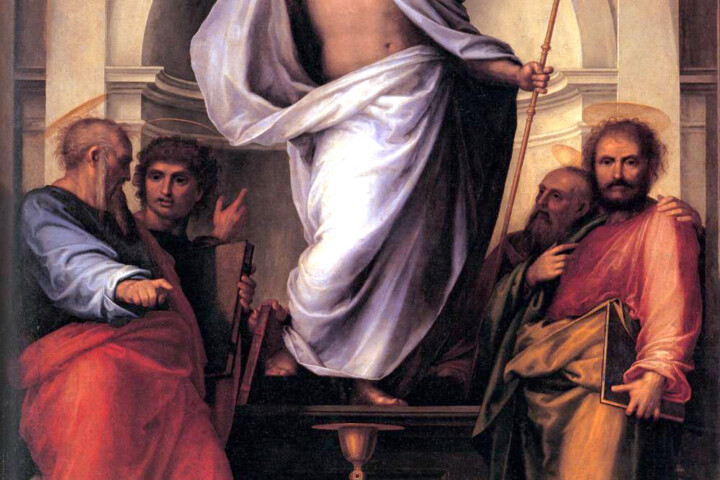
In the Glorious Light of Easter, Alleluia!
Set your minds on things that are above, not on things that are on earth, for you have died, and your life is hidden with Christ in God. When Christ who is your life is revealed, then you also will be revealed with him in glory (Col. 3:3-4). The Resurrection of Our Lord and Saviour[…]Continue reading→
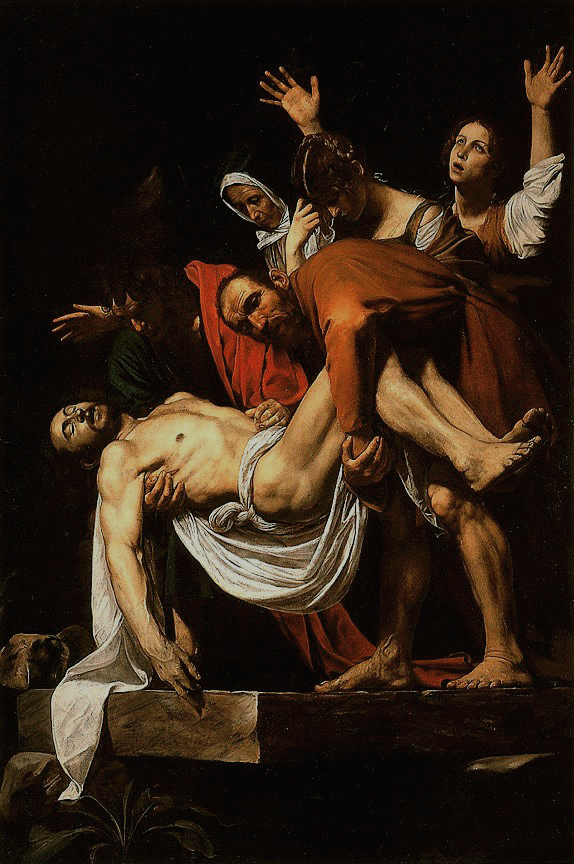
An Ancient Homily for Holy Saturday
The time between Good Friday and Easter Sunday is one of waiting, in silence, as the world wonders – anticipates – what will happen, after the death of Christ. We re-live this time each year in the anamnesis of our liturgy, and in turn look forward to the glorious re-creation of all things at the[…]Continue reading→
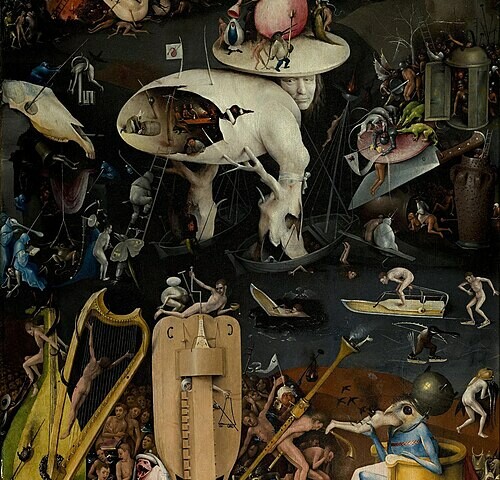
Europe’s Long Descent
(As we meditate on this day on Christ’s burial, and His descent into hell, it is fitting to ponder here with contributor Peter Marcus how the world seems to be heading there as well. The difference is that, although God cannot ‘redeem’ hell, nor those therein, He can and did redeem the world. There is[…]Continue reading→