
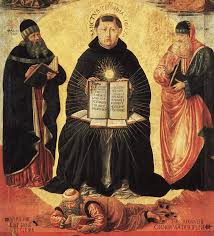
Apologetics 101, Question 5: The Immortality of the Soul
In response to Catholic Insight’s post of Carl Sundell’s list of 39 essential questions we Catholics should be prepared to offer answers about our faith, I have been responding to them one-by-one to equip you with clear, concise and (hopefully) well-reasoned answers to help you grow and share your Faith.
None of these answers can be conclusive. They simplify answers and provide a framework to approach these questions. You can find links to previously published articles in this series at the bottom.
5. How do you know it is reasonable that the soul does not die with the body?
I don’t want these articles to all become too self-referential, but because the questions continually build upon each other, it would be helpful to see my previous post in this series as well as another Catholic Insight article of mine called “What is Life?”). In these articles, more time is spent on the definition of the soul as the “principle of life,” as well as its immaterial nature. Both of these points are important to keep in mind as we consider why the soul does not die with the body. If you are willing to accept these assumptions, please continue reading. If not, I would suggest reading the two links in this paragraph.
The continued existence of the soul in some way has been assumed since our ability to reason, and explored philosophically at least since the time of Socrates. However, the reasons for why the soul survives the death of the body have varied over the centuries. This article will seek to simplify it as much as possible by showing how the immortality of the soul depends on the immateriality of the intellect along with the soul’s “desire” for life.
One can conclude that the intellect is immaterial because it can grasp abstract, universal concepts. It is not just that you can picture an image of space in your head, but that your mind can understand the concept of “the universe” without seeing a photo of everything in the universe at once. Since act follows being Because the intellect can understand immaterial concepts, it must itself be immaterial.
Your Most Important Memory
We can recognize the immateriality of the intellect through its powers of memory and reason. Memory cannot be explained just through physical things like the brain or neurons, and the fact of memory also cannot be denied by even non-Christians or atheists – it is an essential power to the soul. The most important memory each person’s soul retains is the identity of that person, the self.
Every individual memory forms one picture of yourself that is unique. Even if you had a similar experience as someone on the outside, you experienced it differently on the inside. It then formed your identity differently. The self is an immaterial reality. There is no physical part of you that you can say is your “self.” Even your brain is not your “self,” but just another part that contributes to it.
The self is a reality that memory, that power of the soul, holds onto over the course of many years. Because the self is immaterial, it would be independent of the body. Therefore, this principle should be preserved from destruction. Hence, soul is also immaterial and independent of the body, and the soul’s essential nature is to give life, then it would follow that it would continue to exist after the death of the body.
Just A Brain
Even if one were to object to either of these angles by saying that our ability to reason and/or hold memories is hindered or not present in infants, mentally disabled, victims of traumatic brain injuries or people with dementia, this would not disprove the immateriality of the intellect or the immortality of the soul. All of those conditions have to do with the development, damage or deterioration of the physical brain.
To say that the intellect operates through the brain does not deny its materiality. As an analogy, consider the way that the will, the thing we use to make free, conscious choices, operates through your hand when it grabs something. The will itself is not something you can see or measure, but very few would deny it exists. The will is immaterial but it works through material, physical things. The fact that the will works through the hand does not deny the will’s immateriality. Similarly, the fact that the intellect works through the brain does not deny its immateriality.
The Soul’s “Desire”
There is one last angle that one could take when discussing the immortality of the soul. It could be described as the argument from desire. If there is a desire within the nature of a substance, there must be a thing that meets that desire. Hunger exists because there is such a thing as food. It does not guarantee that any individual will meet that desire, only that the thing that would meet that desire exists.
The argument from desire is actually a modified version of Aquinas’s fifth way for God’s existence (ST I. Q 2. A 3; you can also see part 1 of this series). It states that everything in existence is ordered toward an end, or purpose, by its nature. This is the thing that it desires.
This purpose must exist outside of the thing itself (a hammer does not exist for its own sake, but to pound a nail, build a house, etc.). Again, to use hunger and food, they must be distinct each other. If this applies to everything within nature, then it applies to nature as a whole. If nature as a whole requires a purpose outside of it, then this purpose would be beyond nature or super-natural, which qualify it as God (if you’re asking, “What about the thing outside God’s nature?” See part 1).
Going back to the soul, if it has a purpose or “desire,” which has been shown to be “life itself” then it would follow that there is something that could meet this end, namely unlimited life. One would not necessarily need to be a Christian to recognize this Source of unlimited life as God.
So, Every Soul Gets to See God?
This also does not imply that every person, because he has a soul, gets to be with God in heaven. It only shows that the soul continues after death (and retains the memory of the self as it continues). Being with God in heaven is not just about existing but also about our relationship with God.
The immortality of the soul does not prove that God wants a relationship with humanity. It also does not mean that is it possible for humanity to have an intimate relationship with God. For this, one would need God to reveal himself to humanity, which is what the Abrahamic Faith Traditions (Judaism, Christianity and Islam) all claim.*
In order to accept that a never-ending relationship with God is possible, one has to accept that our own never-ending at all is possible. Hopefully, the immateriality of the intellect, its capacity of memory, and the soul’s natural desire for immortality shows how one can have confidence in these realities.
Want to catch up on the previous questions? You can find parts one, two, three and four here!
*The idea of revelation will come up later, but the next set of articles in this series will move in the direction as we start to talk about God and Creation.

Saint Kateri , Canada’s Protectress
This was the title given to Saint Kateri Tekakwitha, by Pope Benedict XVI, when he canonized her on October 28th, 2012, along with six others, in Saint Peter’ Square (she had been beatified by Pope John Paul II back in 1980). With Saint Joseph as our protector, along with the Canadian martyrs, we seem to[…]Continue reading→

Remembering Father Alphonse de Valk
(Today marks the sixth anniversary of the death of Father Alphonse de Valk, C.S.B., a faithful, courageous and indefatigable Basilian priest, pro-life-and-family apostle, and the founder of Catholic Insight magazine. Here is what we wrote those on his entering into eternity five years ago, as we continue to remember him in our prayers and thoughts)[…]Continue reading→

My Name is Bernadette
April 16th is a propitious day, for besides the anniversary of Father de Valk’s death, who founded Catholic Insight in its print form decades ago, and the commemoration of the ‘two Benedicts’, mentioned in accompanying posts, today we also recall Saint Bernadette Soubirous, the young visionary to whom the Virgin Mary appeared numerous times at[…]Continue reading→
Canonizing Sister Faustina and Divine Mercy
HOMILY OF THE HOLY FATHER MASS IN ST PETER’S SQUARE FOR THE CANONIZATION OF SR MARY FAUSTINA KOWALSKA Sunday, 30 April 2000 1. “Confitemini Domino quoniam bonus, quoniam in saeculum misericordia eius”; “Give thanks to the Lord for he is good; his steadfast love endures for ever” (Ps 118: 1). So the Church sings on the Octave of[…]Continue reading→

Divine Mercy Sunday – An Echo of Every Mass
Reach out your hand and put it in my side. Do not doubt but believe’… ‘My Lord and my God!’ (Jn. 20:18)). Today is Divine Mercy Sunday, and as we celebrate the end of the Easter Octave, we contemplate the wounded side of our Saviour, the Church’s source of life. On Good Friday in the[…]Continue reading→

Saint Stanislaus of Szczepanów
We celebrate Saint Stanislaus today (+ April 11, 1079), in light of this Easter Octave, a bishop and martyr who accepted the episcopacy only at the direct order of Pope Alexander II. He proved a wise and courageous leader of his flock, put to death by his own king, Boleslaus, for rebuking the monarch’s ‘immoral[…]Continue reading→
First Holy Communion: Sermon from May 16, 1943
Here is a sermon from the good old days by +Rev. Msgr. Vincent Nicholas Foy (August 14, 1915 – March 13, 2017), from 1943. Readers may recall that Pope Saint Pius X, by the decree Quam Singulari in 1910, lowered the customary age of reception of Holy Communion – after the rigours of the plague[…]Continue reading→
In the Glorious Light of Easter, Alleluia!
Set your minds on things that are above, not on things that are on earth, for you have died, and your life is hidden with Christ in God. When Christ who is your life is revealed, then you also will be revealed with him in glory (Col. 3:3-4). The Resurrection of Our Lord and Saviour[…]Continue reading→
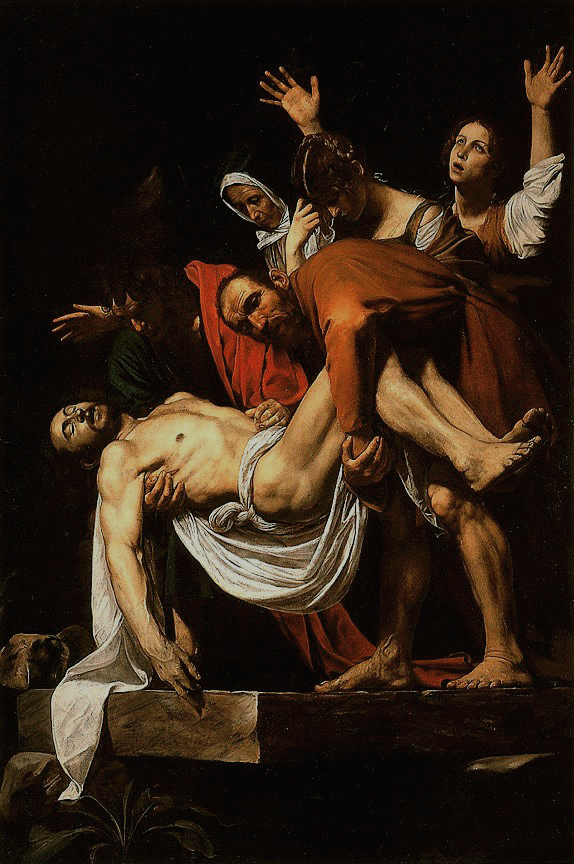
An Ancient Homily for Holy Saturday
The time between Good Friday and Easter Sunday is one of waiting, in silence, as the world wonders – anticipates – what will happen, after the death of Christ. We re-live this time each year in the anamnesis of our liturgy, and in turn look forward to the glorious re-creation of all things at the[…]Continue reading→
Europe’s Long Descent
(As we meditate on this day on Christ’s burial, and His descent into hell, it is fitting to ponder here with contributor Peter Marcus how the world seems to be heading there as well. The difference is that, although God cannot ‘redeem’ hell, nor those therein, He can and did redeem the world. There is[…]Continue reading→