
What Is Life, Really?
We Christians continue to celebrate the gift of new life in the Resurrection of Jesus this and every Easter season. Much of the debate and controversy surrounding this great Feast of Feasts is centered on the historicity of the event itself. Rightfully so, but it should also give us the opportunity to reflect on an even more fundamental concept that has applications in the areas of theology, philosophy and science: the question of life itself. What is life? When we say something is alive, what specifically is different about it from a pre-living thing and a post-living, or dead, or simply inanimate thing? Not only do the disciplines of philosophy and natural science have something to say, but some of the generally held ideas they share have resonance with what the Bible has to say on the matter as well.
Much of what Christian revelation provides in terms of “life” concerns the purpose of one’s life. This certainly has practical value to provide ancient peoples and corresponds more closely to the traditional application of religion. However, when dealing with the more metaphysical question of what is life, there are two helpful verses that this article will consider:
- The first is the locus classicus for creation and life according to the Judeo/Christian faith and comes from Genesis 2:7, whereupon “God breathed life into man, forming him from dust.” The significance of this verse on the surface is that it separates human beings from every other created thing that had previously been mentioned so far. Only man has God’s breath even though there are obviously other living things. This indicates that the life in question is one of a different quality. While this points more toward a spiritual and theological understanding of humanity, it is helpful in that it speaks to the immateriality of life itself. While living things like plants, animals and humans are all material beings with physical bodies who participate in life, life itself is something that precedes any individual living thing. This can be acknowledged even by one who questions the Divine Authorship of the Bible. However, the greater significance of God as the agent that begins life will prove especially important as we get to Aristotle’s definition of life later.
- The other verse worth including also comes from the Old Testament and speaks a little more closely to the nature of life. Leviticus 17:11 tells us that “the life is in the blood.” While this verse is referring more immediately to the value of blood when it comes to ritual sacrifice, this does not speak against what the verse tells us about life but informs it. Like the previous paragraph, there is something spiritual to life even though it is present in physical bodies. Similarly, any religion would agree that the primary value of a sacrificial offering is spiritual – or else the offering would not be made. Life per se is the thing of value that is being offered through the blood of the animal. God would later continue to develop and clarify just what exactly is desired in sacrifice (see Hosea 6:6 and Matthew 9:13).
In philosophy, especially pre-Christian philosophy, things get trickier because while not every philosopher spoke on the nature of life itself, many, especially the pre-Socratics, had some important things to say on the nature of reality that would certainly be applied to life as such. For example, Heraclitus famously said , “You cannot step twice into the same river, for other waters are continually flowing on” (Fragment DK22 B12). With the only reality being change, there is virtually no difference between life and death in the grand scheme of things. This reflects somewhat the view of philosophical materialism that only acknowledges the arrangement of physical particles. However, there is no way to account for a principle of life that substantially distinguishes between a living thing and a dead one.
One area in philosophy that helps understand the nature of life is found in Plato on the soul, which would be the substantial entity that gives life to a body. In distinguishing between the vegetative, sensitive and rational soul, Plato also divides the soul, the principle of life, into its subsequent parts of appetite, spirit (sensation), and reason (The Republic, Book IV, 436a–441c). All living creatures possessed the first in the form of nutrition and reproduction, which parallels appetite, then animals were additionally capable of sensation and locomotion, which corresponds to spirit, and humans also had rational souls, which corresponds to reason. These would provide the foundation for Plato’s student Aristotle and his own magnificent treatise on the soul, De Anima, upon which Saint Thomas would build.
The world has largely developed much from Aristotle’s work in the natural sciences and rightfully so. However, it is unfortunate that the philosophical baby has been thrown out with the biological bath water in its rejection of the principles that preceded his observations- principles that have not been disproven. In his De Anima, he cites “nutrition through itself and growth and decline” (412a14-15). The significant line here is “through itself” as it speaks to movement within the body though independent of the body. This is important for one’s consideration of the Resurrection as life would have seemingly gone and then returned to a body.
Though St. Thomas Aquinas is known mostly for his theology, and some have argued that his philosophy cannot be distinguished from his theology, he speaks extensively on things of nature using reason without the aid of revelation. In his Summa Theologiae part I. question 18. article 1, he speaks analogously on life itself in comparison to the life of God. The most important quality denoting life is self movement. This definition works for something already alive, but it also speaks to the need for an outside agent to give that initial movement.
More recently, the Aristotelian-Thomist philosopher Edward Feser in Immortal Souls, uses the language of “immanent causation” to describe the self-movement present in a living being contrasted with “transient causation, which terminates outside the agent” (location 573). Often, this can be evidenced through the language of an internal change (Feser uses a snake’s digestion of a mouse) versus an external one (per Feser, a boulder rolling down a hill). Neither the boulder nor the hill are alive, though one may argue that gravity in this case is alive, but it would still only be in a metaphorical sense.
There is a branch of philosophy known as philosophy of science that should follow the conclusions that philosophy’s trunk, metaphysics, establishes. While much of science studies the material world, it is guided by notions of immaterial reality. This includes the relationship between living things and life itself. The online Britannica gives a definition that is based on Aristotle’s, saying, “matter that shows certain attributes that include responsiveness, growth, metabolism, energy transformation, and reproduction.” While not using the philosophical terms of movement, many of the features provided allude to such a concept. Though it is not explicit, this definition assumes a preeminent of the physical by ignoring its need of the non-physical for its own understanding.
Fortunately, these assumptions need not be present across all of modern physical science. Jaime Gomez-Marquez in the article “What is Life?” calls it “a process that takes place in highly organized organic structures and is characterized by being preprogrammed, interactive, adaptative and evolutionary.” However, he too notes the insufficiency of science alone to account for this as “biology still lacks a solid theoretical framework necessary to understand the vital phenomenon and to answer questions such as what is life?” Gomez-Marquz is respectful in recognizing the limit of physical science without dismissing the need for something outside of it to account for this immaterial question, despite its imminent impact on the physical world.
One of the beautiful realities of diving deeper into the Christian Tradition is the discovery that faith and science do not disagree even in a matter as important as the Resurrection of Jesus. Diving even deeper shows one that not only do these wings of truth agree, but they actively support each other. Modern science, as well as ancient and contemporary philosophy, show us what God had revealed all the way back in the beginning in the immateriality of life, its independence from the physical world while still intrinsically related to it, and most important its need for a supernatural agent for its beginning. Just as it was God who breathed, or spirited, life into the first Adam in Genesis, so now we look to the new Adam, Jesus Christ, whose life was raised by that same Spirit on the third day (Romans 8:11).

Saint Kateri , Canada’s Protectress
This was the title given to Saint Kateri Tekakwitha, by Pope Benedict XVI, when he canonized her on October 28th, 2012, along with six others, in Saint Peter’ Square (she had been beatified by Pope John Paul II back in 1980). With Saint Joseph as our protector, along with the Canadian martyrs, we seem to[…]Continue reading→

Remembering Father Alphonse de Valk
(Today marks the sixth anniversary of the death of Father Alphonse de Valk, C.S.B., a faithful, courageous and indefatigable Basilian priest, pro-life-and-family apostle, and the founder of Catholic Insight magazine. Here is what we wrote those on his entering into eternity five years ago, as we continue to remember him in our prayers and thoughts)[…]Continue reading→

My Name is Bernadette
April 16th is a propitious day, for besides the anniversary of Father de Valk’s death, who founded Catholic Insight in its print form decades ago, and the commemoration of the ‘two Benedicts’, mentioned in accompanying posts, today we also recall Saint Bernadette Soubirous, the young visionary to whom the Virgin Mary appeared numerous times at[…]Continue reading→
Canonizing Sister Faustina and Divine Mercy
HOMILY OF THE HOLY FATHER MASS IN ST PETER’S SQUARE FOR THE CANONIZATION OF SR MARY FAUSTINA KOWALSKA Sunday, 30 April 2000 1. “Confitemini Domino quoniam bonus, quoniam in saeculum misericordia eius”; “Give thanks to the Lord for he is good; his steadfast love endures for ever” (Ps 118: 1). So the Church sings on the Octave of[…]Continue reading→
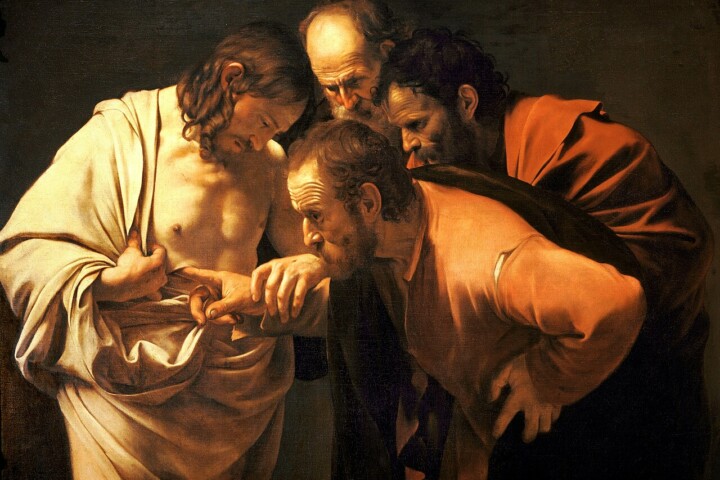
Divine Mercy Sunday – An Echo of Every Mass
Reach out your hand and put it in my side. Do not doubt but believe’… ‘My Lord and my God!’ (Jn. 20:18)). Today is Divine Mercy Sunday, and as we celebrate the end of the Easter Octave, we contemplate the wounded side of our Saviour, the Church’s source of life. On Good Friday in the[…]Continue reading→

Saint Stanislaus of Szczepanów
We celebrate Saint Stanislaus today (+ April 11, 1079), in light of this Easter Octave, a bishop and martyr who accepted the episcopacy only at the direct order of Pope Alexander II. He proved a wise and courageous leader of his flock, put to death by his own king, Boleslaus, for rebuking the monarch’s ‘immoral[…]Continue reading→
First Holy Communion: Sermon from May 16, 1943
Here is a sermon from the good old days by +Rev. Msgr. Vincent Nicholas Foy (August 14, 1915 – March 13, 2017), from 1943. Readers may recall that Pope Saint Pius X, by the decree Quam Singulari in 1910, lowered the customary age of reception of Holy Communion – after the rigours of the plague[…]Continue reading→
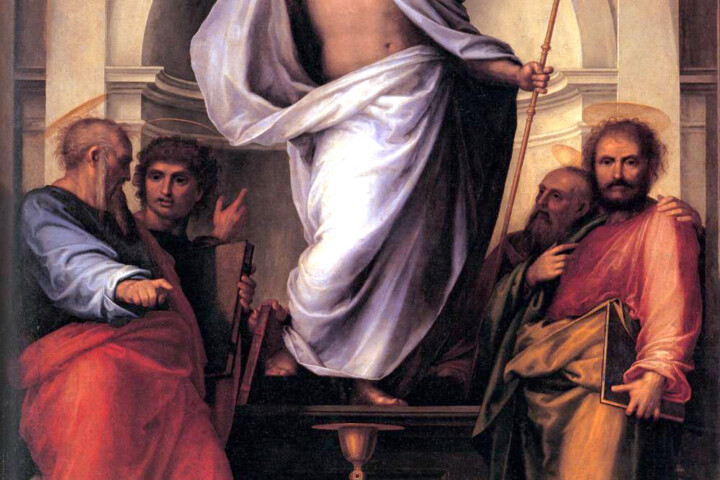
In the Glorious Light of Easter, Alleluia!
Set your minds on things that are above, not on things that are on earth, for you have died, and your life is hidden with Christ in God. When Christ who is your life is revealed, then you also will be revealed with him in glory (Col. 3:3-4). The Resurrection of Our Lord and Saviour[…]Continue reading→
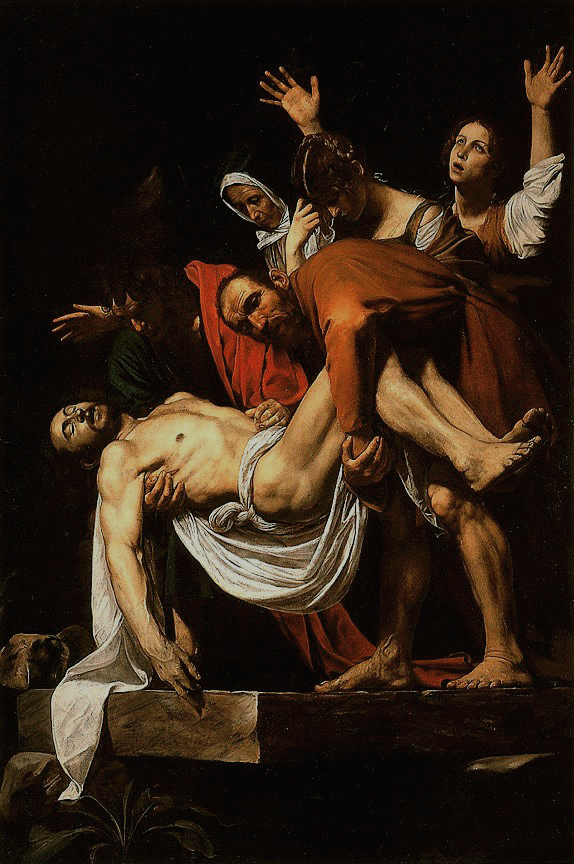
An Ancient Homily for Holy Saturday
The time between Good Friday and Easter Sunday is one of waiting, in silence, as the world wonders – anticipates – what will happen, after the death of Christ. We re-live this time each year in the anamnesis of our liturgy, and in turn look forward to the glorious re-creation of all things at the[…]Continue reading→
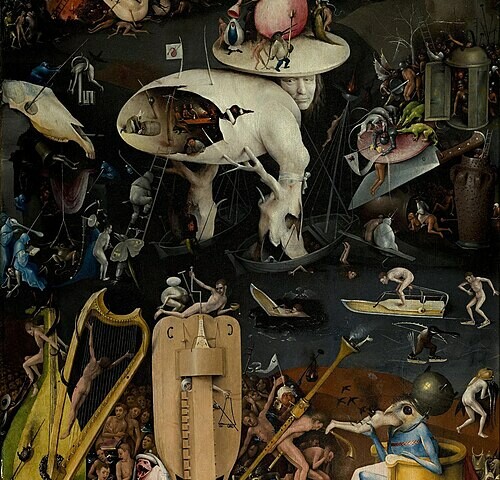
Europe’s Long Descent
(As we meditate on this day on Christ’s burial, and His descent into hell, it is fitting to ponder here with contributor Peter Marcus how the world seems to be heading there as well. The difference is that, although God cannot ‘redeem’ hell, nor those therein, He can and did redeem the world. There is[…]Continue reading→