
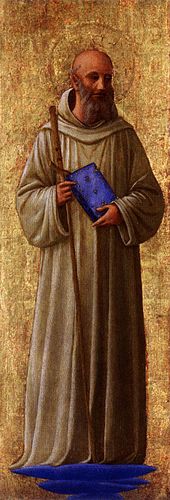
Romuald’s Erimetical Reform
Saint Romuald (+June 19, 1025/27) was a tenth-century monk, founder of the strict Camaldolese Order, named after their primary benefactor, Maldoli, who, impressed by the saint’s way of life, donated the land on which they built their first monastery (hence, campo-maldoli – the ‘field of Maldoli’). But Romuauld only arrived at the ‘narrow path’ after a dissolute youth as a nobleman, living in the midst of the even more dissolute ‘dark ages’ of the tenth-century (according to Peter Damien, who wrote our saint’s biography fifteen years after his death). After seeing his father kill someone in a duel, Romuauld renounced the world, and sought spiritual perfection ‘alone with God’, thereby reviving western eremitism, that strange, solitary life of a hermit. Such was his reputation that he was deputed by the Church to the reform of monasteries, but many monks resisted his call to deepen their discipline and asceticism and be more faithful to their own rules. Alas, prophets are rejected, perhaps especially so, by their own kith and kin.
Romuald was known as a saint, and his striking personality and the reform he instantiated, the fruit of a life of deep, constant prayer and asceticism, marked the direction and history of Western monasticism forever. The future Pope Gregory XVI (elected 1831, +1846) was a Camaldolese monk, continuing to live as such within the external splendour of the papal apartments, sleeping on a board, rising at 4 a.m., and remaining sparse in his meals, which, according to papal custom until quite recent history, he ate alone. Gregory the monk-Pope is known for his intransigence to the ‘modern world’, summed up in his enigmatic reply when he was shown the newly-invented railway: chemin de fer, chemin d’enfer – the ‘road of iron’ is the road to hell. A bit extreme, perhaps, but we may surmise that to his mind trains signified the restlessness of the modern world, the loss of place and permanence and local goods locally made; of families rooted to the earth. We might now replace ‘railway’ with ‘automobile’ and ‘airplane’, ‘internet’ and ‘i-phone’, and wonder whether the holy Pontiff had a point.
The Rule of Saint Romuald emphasizes remaining still, within oneself, living and breathing by the Psalms, allowing their words to penetrate our inmost being. As the saint put it a millennium ago, in words that are still fresh:
Sit in your cell as in paradise. Put the whole world behind you and forget it. Watch your thoughts like a good fisherman watching for fish. The path you must follow is in the Psalms — never leave it.
If you have just come to the monastery, and in spite of your good will you cannot accomplish what you want, take every opportunity you can to sing the Psalms in your heart and to understand them with your mind. And if your mind wanders as you read, do not give up; hurry back and apply your mind to the words once more
Amen.
We could use a few more men in the Church with the same noble, fierce and courageous, yet calm and peaceful, spirit of Saint Romuald, and may he intercede for all of us in these, our own ‘dark ages’.
(An addendum: There was a town in Quebec, right across the river from the capital, named after the saint, but in 2002 it was amalgamated into the larger city of Levi. Ah, well. There is still a majestic church named after Saint Romuald, well worth the ferry ride across.)
Saint Romuaulis, ora pro nobis! +

Carney’s Amoral Majority
After five defections – euphemistically described as ‘crossing the floor’ – and three by-elections, Mark Carney and his Liberals how have their coveted majority. One wonders what bowls of pottage were offered in back-room deals. In the archaic monarchical system that is the Dominion of Canada, this majority allows the newly-minted Prime Minister to rule[…]Continue reading→

Saint Kateri , Canada’s Protectress
This was the title given to Saint Kateri Tekakwitha, by Pope Benedict XVI, when he canonized her on October 28th, 2012, along with six others, in Saint Peter’ Square (she had been beatified by Pope John Paul II back in 1980). With Saint Joseph as our protector, along with the Canadian martyrs, we seem to[…]Continue reading→

A Tale of Two Benedicts
A grace-filled Holy Week to all our readers! As we await and prepare for the Resurrection about to dawn upon us, we might keep in mind two Benedicts: Pope Emeritus Benedict XVI, requiescat in pace, elected on this day in 2005; and today’s commemoration of the mystic pilgrim, Benedict Joseph Labre, who died on this[…]Continue reading→

My Name is Bernadette
April 16th is a propitious day, for besides the anniversary of Father de Valk’s death, who founded Catholic Insight in its print form decades ago, and the commemoration of the ‘two Benedicts’, mentioned in accompanying posts, today we also recall Saint Bernadette Soubirous, the young visionary to whom the Virgin Mary appeared numerous times at[…]Continue reading→

Saint Lydwina of Schiedam and Suffering Joyfully
Saint Lydwina of Schiedam (1380 – 1433) was one of the countless and glorious ‘victim souls’ in the history of the Church, those whose lives are filled with suffering, often of an unimaginable intensity, but who suffer joyfully. She was a fifteen-year old Dutch girl, out skating one day, when she fell and broke one[…]Continue reading→

The Glorious Martyrdoms of Martin and Maximus
As we enter into Eastertide, we recall on this 13th of April Pope Saint Martin I (+655), one of the noblest, if most tragic, of the successors of Saint Peter. Born in Umbria, Italy, he was of noble lineage, with great intelligence combined with charity and love of the poor and the Church. While still[…]Continue reading→
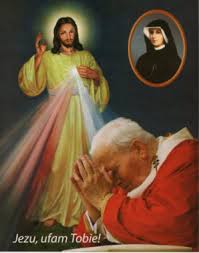
Canonizing Sister Faustina and Divine Mercy
HOMILY OF THE HOLY FATHER MASS IN ST PETER’S SQUARE FOR THE CANONIZATION OF SR MARY FAUSTINA KOWALSKA Sunday, 30 April 2000 1. “Confitemini Domino quoniam bonus, quoniam in saeculum misericordia eius”; “Give thanks to the Lord for he is good; his steadfast love endures for ever” (Ps 118: 1). So the Church sings on the Octave of[…]Continue reading→

Saint Stanislaus of Szczepanów
We celebrate Saint Stanislaus today (+ April 11, 1079), in light of this Easter Octave, a bishop and martyr who accepted the episcopacy only at the direct order of Pope Alexander II. He proved a wise and courageous leader of his flock, put to death by his own king, Boleslaus, for rebuking the monarch’s ‘immoral[…]Continue reading→
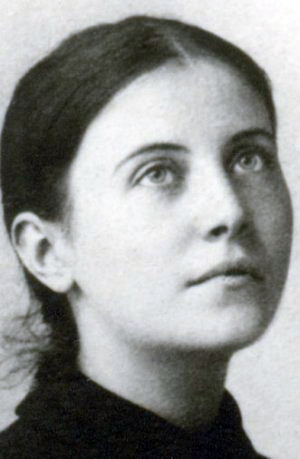
Saint Gemma Galgani
On this April 11th, in 1903 – the same year that the Italian Guiseppe Sarto was elected Pope later that summer as Pius X – a lovely, young Italian woman died, by the name of Gemma Galgani. She lived a brief life of 24 years, as did a number of other young saints, including Pier[…]Continue reading→
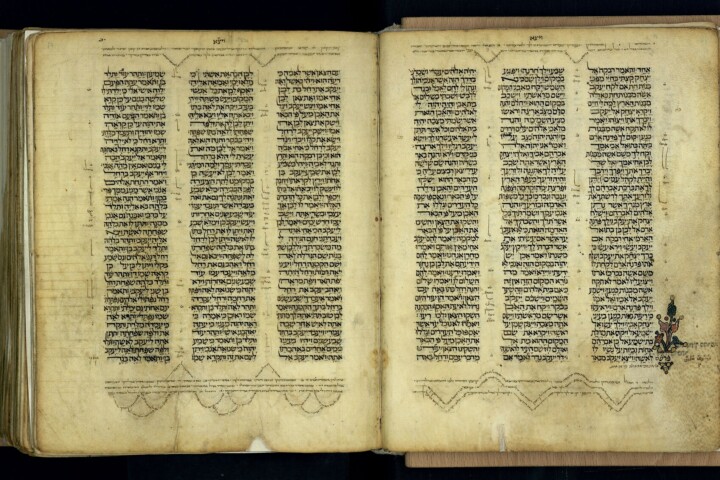
An Ideological and Improper Translation
I noticed something odd with the psalm reading at Mass the other day. Our bishops’ conference here in Canada has decreed that the Mass in English – Novus Ordo – use the ‘NRSV’, the ‘New Revised Standard Version’, an ‘updated’ translation of the original RSV, first published in 1952. This ‘new translation’ has the tendency[…]Continue reading→