
The Index, R.I.P.?
On this day in 1966, the Index Librorum Prohibitorum – Index of Forbidden Books – was abolished by Pope Paul VI, just after the close of the Second Vatican Council. The Index had a long and involved history. Popes and bishops have always warned against heretical writings, even those propaedeutic to heresy, since the earliest days, as a cursory read of Saint Paul shows. The invention of the printing press in the 15th century (1440 saw Gutenberg’s first ‘movable type’), along with the 16th century ‘Reformation’ (1517 and Luther’s 95 Theses) prompted the Church to be more formal in her warnings.
The first Index was promulgated by Pope Paul IV in 1557, then removed, then a more formal version in the wake of the Council of Trent. There were degrees in how ‘dangerous’ a book might be, and many books would be placed on the index, only to be later removed, such as Kepler’s summary of Copernicus, Galileo’s works on heliocentrism; even Saint Robert Bellarmine and Dante’s Divine Comedy were on the Index for a time.
The reasons for dropping the Index were themselves complex, likely motivated by the desire to leave more matters to the human conscience, leaving us free to discern what may be good or bad, beneficial or harmful. The Index still exists, and the Church clarified that although it no longer has the force of ecclesiastical positive law, it still has moral influence, and some books would be ‘banned’ ipso facto, due to their sheer scandal.
As Pope John Paul II put it, our conscience is neither autonomous – a law unto itself – nor heteronomous – totally subservient to an external law – but rather a ‘participated theonomy‘: We impose a law upon ourselves, participating in the law of God, through His revealed Word, Magisterial teaching, natural and divine law, and other means.
I recall as a boy the bishops of Canada rating films, based on their content. The worst was ‘O’, which meant ‘morally offensive’, which were the ones everyone wanted to see. Looking back, such moral guidance from the Church in light of that ‘participated theonomy’ was not a bad idea, and our spiritual leaders perhaps could reconsider some sort of Index, even, say, an official Vatican review and commentary, in a new mode for our era. Just a thought.
Carney’s Amoral Majority
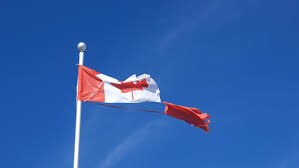
After five defections – euphemistically described as ‘crossing the floor’ – and three by-elections, Mark Carney and his Liberals how have their coveted majority. One wonders what bowls of pottage were offered in back-room deals. In the archaic monarchical system that is the Dominion of Canada, this majority allows the newly-minted Prime Minister to rule[…]Continue reading→

Saint Kateri , Canada’s Protectress
This was the title given to Saint Kateri Tekakwitha, by Pope Benedict XVI, when he canonized her on October 28th, 2012, along with six others, in Saint Peter’ Square (she had been beatified by Pope John Paul II back in 1980). With Saint Joseph as our protector, along with the Canadian martyrs, we seem to[…]Continue reading→
A Closed, Unsustainable, Descending Loop
As a follow-up to my thoughts on Payette’s payout, here be a stark image of where are here in Canada. As the graph shows in, well, graphic terms, since 2025, the public sector has contributed to 95.5% of economic growth. The private sector – which funds the public sector, or is supposed to – has[…]Continue reading→

A Tale of Two Benedicts
A grace-filled Holy Week to all our readers! As we await and prepare for the Resurrection about to dawn upon us, we might keep in mind two Benedicts: Pope Emeritus Benedict XVI, requiescat in pace, elected on this day in 2005; and today’s commemoration of the mystic pilgrim, Benedict Joseph Labre, who died on this[…]Continue reading→

My Name is Bernadette
April 16th is a propitious day, for besides the anniversary of Father de Valk’s death, who founded Catholic Insight in its print form decades ago, and the commemoration of the ‘two Benedicts’, mentioned in accompanying posts, today we also recall Saint Bernadette Soubirous, the young visionary to whom the Virgin Mary appeared numerous times at[…]Continue reading→
Presidential Pardon of Weronika Krawczyk
As a good news, follow-up to our story from Poland, of the persecution of Weronika Krawczyk for her pro-life views, we heard that she has been granted a presidential pardon. One might still wonder why one needs a presidential pardon for simply holding the long-held belief that the child within the womb is a child,[…]Continue reading→

Saint Lydwina of Schiedam and Suffering Joyfully
Saint Lydwina of Schiedam (1380 – 1433) was one of the countless and glorious ‘victim souls’ in the history of the Church, those whose lives are filled with suffering, often of an unimaginable intensity, but who suffer joyfully. She was a fifteen-year old Dutch girl, out skating one day, when she fell and broke one[…]Continue reading→

The Glorious Martyrdoms of Martin and Maximus
As we enter into Eastertide, we recall on this 13th of April Pope Saint Martin I (+655), one of the noblest, if most tragic, of the successors of Saint Peter. Born in Umbria, Italy, he was of noble lineage, with great intelligence combined with charity and love of the poor and the Church. While still[…]Continue reading→
Pope Leo and a Rosary for Peace
Pope Leo XIV has asked Catholics across the world to join him in a Rosary for peace today, at 18:00 Rome time (6 pm), which would be noon from where I write (EST). If you are able, whether at that time or another, and in whatever way you pray, to join in intercession with the[…]Continue reading→
Payette’s Payout
I was glancing through some headlines, and noticed a mention of Julie Payette – engineer and astronaut and sometime the Queen’s representative in Canada – which brought back vague memories. She was appointed Governor-General by Justin Trudeau in 2017. Ms. Payette resigned in 2021, amidst claims that she created a ‘toxic work environment’, with allegations[…]Continue reading→