
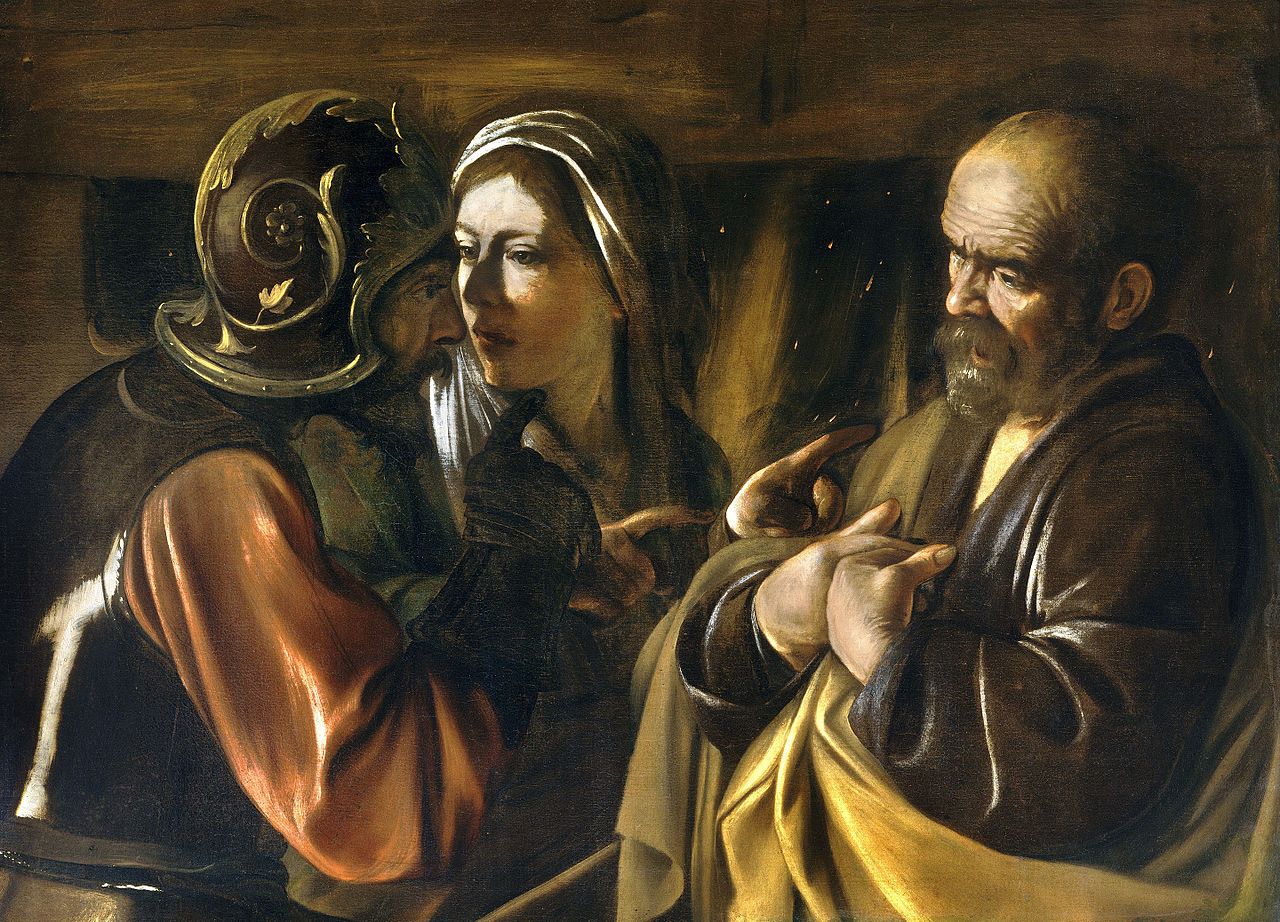
The Repentance and Return of Saint Peter
In a previous essay I dealt with the stages in St. Peter’s fall from grace. In this essay, I would like to examine his return to grace – for any treatment of the life of St. Peter would be incomplete without it. Again, Fulton Sheen will be our guide. He lists four steps in returning to the Faith:
First, Disillusionment.
Second, Response to grace.
Third, Amendment.
Fourth, Sorrow.[1]
The first step is disillusionment. Sin always promises something great and wonderful but is never able to follow through. For St. Peter, his pride would not only be his undoing but his redemption. Sheen writes, “Since pride is a capital sin, it follows that a first condition of conversion is humility: the ego must decrease, God must increase. This humiliation most often comes by a profound realization that sin does not pay, that it never keeps its promises…”[2] Peter’s pride is seen in his zealous defense of Our Lord: “I will lay down my life for you.” (John 13:37) But when the time came, Peter’s zeal wavered because it was fed by pride and not backed by true courage. He then denied Christ just as the cock crowed. It was then that Peter realized that his pride had gotten the better of him. He saw the emptiness of his pride, the emptiness that sin produces in the soul.
This first step leads directly to the second one: the response to God’s grace. Peter’s response to God’s grace comes in the form of the gaze of Christ: “And the Lord turned and looked at Peter; and Peter remembered the word of the Lord, how he had said to him, ‘Before the cock crows today, you will deny me three times.’” (Luke 22:61) This gaze of Christ is very powerful to the sinner. Sheen writes,
He [Jesus] does not desert us though we desert Him. He turns, once we know we are sinners. God never gives us up. The very word used here to describe the look of Our Lord is the same word used the first time Our Lord met Peter – the meaning being that “He looked through” Peter. Peter is recalled to the sweet beginnings of His grace and vocation…Peter received a look with eyes that see us, not as our neighbors see us, not as we see ourselves, but as we really are. They were the eyes of a wounded friend, the look of a wounded Christ.[3]
The look of Christ calls us back to the graces received at Baptism, our vocation to live a life of holiness, and ultimately to restore our intimate relationship with Christ that has either been damaged or destroyed by sin. It should also be noted that Christ initiates this gaze – He looks to Peter and Peter responds accordingly. Christ bestows His grace upon us and eagerly awaits our free and positive response to it.
The third step is amendment. Something now must be done by Peter. He who acted so impetuously must now act again. He who was called to an hour of prayer instead of action is now called upon to move, to leave behind those things that are occasions of sin: the comfort and warmth of the fire, the desire for the respect of others, etc. Sheen writes, “The Scripture records his amendment or purgation in the simple words, ‘And going forth.’ All trappings of sin, the ill-gotten goods, the human respect he won, all these are now trampled underfoot, as ‘he goes out.’”[4] We too are called to remove ourselves from occasions of sin, to purge our lives of those things that hinder us from union with God.
The fourth stage is sorrow for sin. Sheen writes, “Some leave sin only because they find it disgusting, There is no real conversion until that sin is related to an offense against the Person of God.”[5] Imperfect contrition or fear of going to Hell can be a good starting point for sorrow for one’s sin. But true sorrow stems from the love of God, the love of Jesus Christ. Peter clearly had this type of contrition for “His heart was broken into a thousand pieces, and his eyes that looked into the eyes of Christ, now turn into fountains…Tradition has it that Peter wept so much for his sins that his cheeks were furrowed with their penitential streams.”[6] May we all share in the sorrow of St. Peter for our sins and offenses against God and shed tears because of them.
The return of St. Peter to God’s grace would not be complete without a discussion of his commission after the Resurrection. When Peter decides to return to his fishing boat after the Death of Jesus on the Cross, Christ appears to him and some of the others Apostles. Upon recognizing Him, Peter jumps out of the boat and swims to shore. When he arrives, there is a charcoal fire, the same type of fire that was lit when he denied Jesus. Jesus questions Peter three times, “Simon, son of John, do you love (agape) me?” In the Greek Christ uses a word for love meaning a self sacrificial love. Sheen writes, “Peter had once presumed on the greatness of his love, telling his Master the night of the Last Supper, that even though all others would be offended and scandalize Him, yet he would not deny.”[7] Peter now responds differently than he did then. He only responds that he loves Jesus with a natural love not a supernatural one. Sheen continues his analysis:
Peter missed the full significance of Our Lord’s words about the highest kind of love. Peter in self-distrust affirmed no more than a natural love. Having made love the condition of service to Him, the Risen Savior now told Peter, “Feed My lambs.” The man who had fallen most deeply and learned most thoroughly his own weakness was certainly the best qualified for strengthening the weak and feeding the lambs.[8]
This weak Apostle was to be the one Christ would make the Visible Head of His Church. Recognizing his humility now, Christ commissions Peter in service. Peter has learned his lesson and is now ready to serve His Master. After his return to grace, nearing the end of his life, Peter was finally able to say that he loved Christ with a supernatural, sacrificial love. According to tradition, Peter was crucified upside down on a Cross, considering himself as unworthy to die in a similar manner as His Lord. Sheen writes, “Thus the man who was always tempting the Lord away from the Cross was the first of the Apostles to go to it.”[9] Peter’s return to grace gives us more than just hope for the forgiveness of our sins. It gives us the hope of final perseverance in God’s grace. It gives hope to those of us who constantly struggle to take up our Cross and follow Him. It gives hope to those of us who love Christ only in a natural way, that one day we too, like Peter, might love Him the way He loves us.
[1]Fulton J. Sheen, Characters of the Passion (Angelico Press, 2015), 6.
[2]Sheen, Characters, 6.
[3]Sheen, Characters, 7-8.
[4]Sheen, Characters, 8.
[5]Sheen, Characters, 8.
[6]Sheen, Characters, 8-9.
[7]Fulton J. Sheen, Life of Christ (Image Books, 2008), 624.
[8]Sheen, Life, 625.
[9]Sheen, Life, 628.

Saint Kateri , Canada’s Protectress
This was the title given to Saint Kateri Tekakwitha, by Pope Benedict XVI, when he canonized her on October 28th, 2012, along with six others, in Saint Peter’ Square (she had been beatified by Pope John Paul II back in 1980). With Saint Joseph as our protector, along with the Canadian martyrs, we seem to[…]Continue reading→

Remembering Father Alphonse de Valk
(Today marks the sixth anniversary of the death of Father Alphonse de Valk, C.S.B., a faithful, courageous and indefatigable Basilian priest, pro-life-and-family apostle, and the founder of Catholic Insight magazine. Here is what we wrote those on his entering into eternity five years ago, as we continue to remember him in our prayers and thoughts)[…]Continue reading→
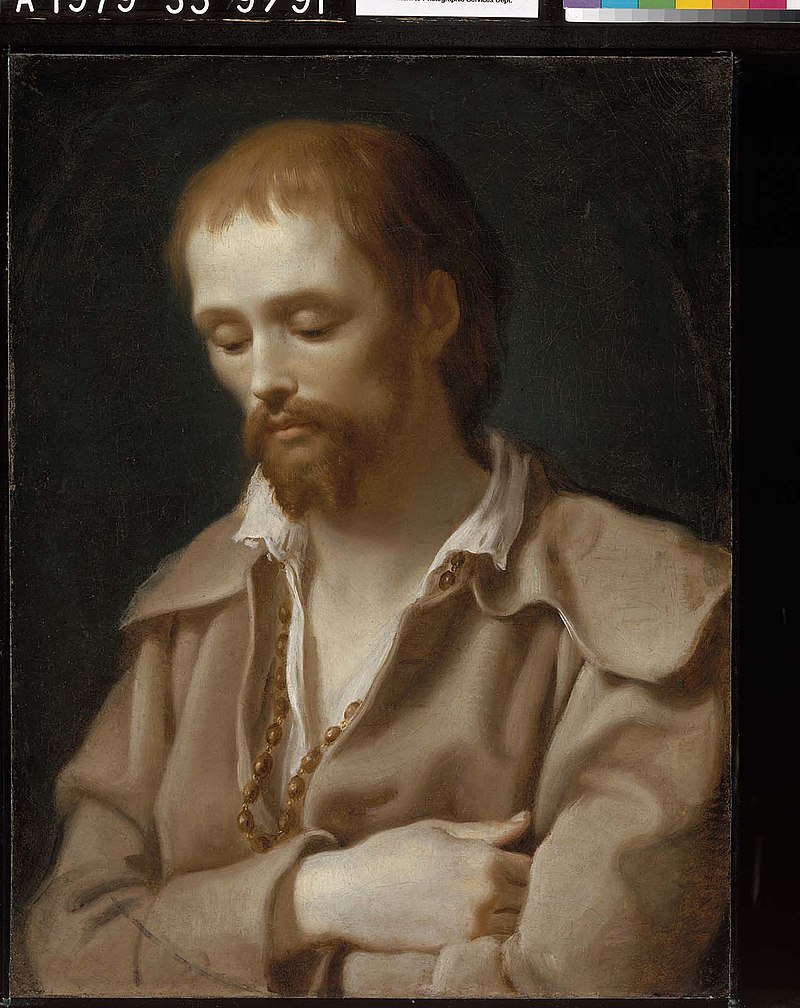
A Tale of Two Benedicts
A grace-filled Holy Week to all our readers! As we await and prepare for the Resurrection about to dawn upon us, we might keep in mind two Benedicts: Pope Emeritus Benedict XVI, requiescat in pace, elected on this day in 2005; and today’s commemoration of the mystic pilgrim, Benedict Joseph Labre, who died on this[…]Continue reading→

My Name is Bernadette
April 16th is a propitious day, for besides the anniversary of Father de Valk’s death, who founded Catholic Insight in its print form decades ago, and the commemoration of the ‘two Benedicts’, mentioned in accompanying posts, today we also recall Saint Bernadette Soubirous, the young visionary to whom the Virgin Mary appeared numerous times at[…]Continue reading→
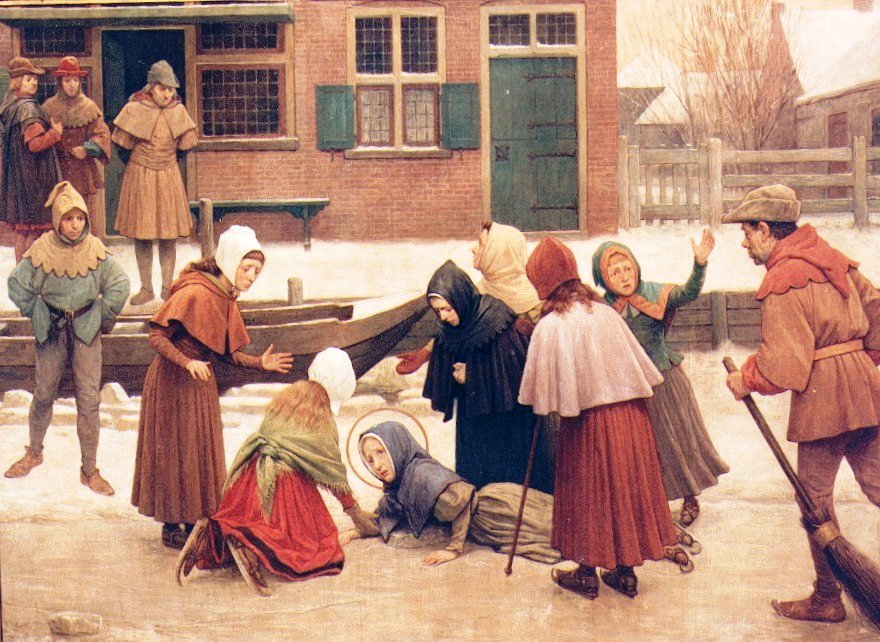
Saint Lydwina of Schiedam and Suffering Joyfully
Saint Lydwina of Schiedam (1380 – 1433) was one of the countless and glorious ‘victim souls’ in the history of the Church, those whose lives are filled with suffering, often of an unimaginable intensity, but who suffer joyfully. She was a fifteen-year old Dutch girl, out skating one day, when she fell and broke one[…]Continue reading→
The Glorious Martyrdoms of Martin and Maximus
As we enter into Eastertide, we recall on this 13th of April Pope Saint Martin I (+655), one of the noblest, if most tragic, of the successors of Saint Peter. Born in Umbria, Italy, he was of noble lineage, with great intelligence combined with charity and love of the poor and the Church. While still[…]Continue reading→
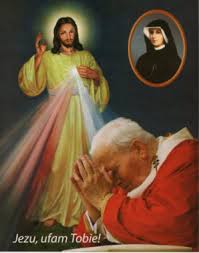
Canonizing Sister Faustina and Divine Mercy
HOMILY OF THE HOLY FATHER MASS IN ST PETER’S SQUARE FOR THE CANONIZATION OF SR MARY FAUSTINA KOWALSKA Sunday, 30 April 2000 1. “Confitemini Domino quoniam bonus, quoniam in saeculum misericordia eius”; “Give thanks to the Lord for he is good; his steadfast love endures for ever” (Ps 118: 1). So the Church sings on the Octave of[…]Continue reading→

Divine Mercy Sunday – An Echo of Every Mass
Reach out your hand and put it in my side. Do not doubt but believe’… ‘My Lord and my God!’ (Jn. 20:18)). Today is Divine Mercy Sunday, and as we celebrate the end of the Easter Octave, we contemplate the wounded side of our Saviour, the Church’s source of life. On Good Friday in the[…]Continue reading→

Saint Stanislaus of Szczepanów
We celebrate Saint Stanislaus today (+ April 11, 1079), in light of this Easter Octave, a bishop and martyr who accepted the episcopacy only at the direct order of Pope Alexander II. He proved a wise and courageous leader of his flock, put to death by his own king, Boleslaus, for rebuking the monarch’s ‘immoral[…]Continue reading→
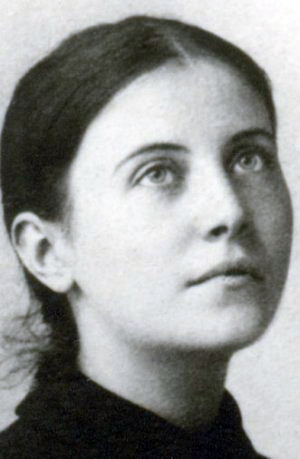
Saint Gemma Galgani
On this April 11th, in 1903 – the same year that the Italian Guiseppe Sarto was elected Pope later that summer as Pius X – a lovely, young Italian woman died, by the name of Gemma Galgani. She lived a brief life of 24 years, as did a number of other young saints, including Pier[…]Continue reading→