
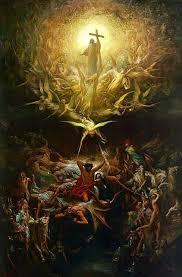
Subito Santo Syndrome and the Narrow Path to Heaven
A number of years ago, I went to seek advice from a venerable professor of philosophy about completing a Ph.D. My visit was providential, in his eyes, for as I knocked on his door, he was writing an article about the then-Pope, John Paul II, and was typing his name, which I happen to share.
What I most recall about our conversation was his advice that ‘Ph.Ds should be rare’. The gist was that they’re not for everyone, in fact should be for a very few, who want to delve into a specific field in such depth, to extend research therein by inches. They were never intended to be a union card to teach.
Like doctorates, canonizations should also be rare. Few there are at the end of their lives prepared to stand unalloyed before the very face of God. Most of us need time – likely a good long time – to be purified of our faults and failings, even our filth (as Pope Benedict put it) in Purgatory. And I use ‘time’ here metaphorically, for there is no time as we know it after this life, but there is duration – as in, ‘enduring’ the suffering required.
Yet the suggestion, if not the outright declaration, is made at too many funerals – by the priest eschewing the traditional black vestments, and be-chasubled in white – that the ‘kind’ and ‘loving’ deceased are already enjoying eternal bliss, regardless of how they lived, whether faithful Catholic, or rarely darkening the door of the parish.
Even the highest echelons of the Church are not immune to this ‘subito santo syndrome’. Cardinal Battista Re more or less ‘canonized’ Pope Francis in his funeral homily:
Dear Pope Francis, we now ask you to pray for us. May you bless the church, bless Rome, and bless the whole world from heaven as you did last Sunday from the balcony of this basilica in a final embrace with all the people of God, but also embrace humanity that seeks the truth with a sincere heart and holds high the torch of hope.
Then, most recently, in the midst of some brief comments after Communion in his inaugural Mass, the newly-elected Pope Leo declared that he strongly felt the spiritual presence of Pope Francis accompanying us from heaven.
I’m sure Pope Leo meant well, but outside of formal canonization, we don’t know Francis’ nor anyone else’ ultimate eternal fate, one way or the other. Feelings are nothing more than, well, feelings. Presuming someone is in heaven – Pope or not – raises a number of questions: Do we still pray for their soul, if they’re already in beatitude? Should be pray to them? Is it not requisite to presume, regardless of how objectively holy anyone may be, that his faults and failings need purifying in Purgatory?
We should mention that the tradition of presumed papal sanctity does have a long history. Of the 266 holders of Peter’s office, 83 are declared saints (which is just over a third), including every one of the first 35 (albeit, 31 were given the fast track of martyrdom). In his decree Dictactus Papae, issued in the year 1090, Pope Gregory VII wrote the following:
That the Roman pontiff, if he have been canonically ordained, is undoubtedly made a saint by the merits of St.Peter; St. Ennodius, bishop of Pavia, bearing witness, and many holy fathers agreeing with him. As is contained in the decrees of St. Symmachus the pope.
What did he mean by this? That all popes automatically go to heaven? This can’t be true, as the most cursory glimpse into their history will attest. Perhaps his implication was that by living his office well, a Pope becomes sanctified, which is sort of tautological, for we are all made holy by doing God’s will, which is not as easy as it seems.
Canonization – of popes and everyone else – requires a rigorous examination of one’s life, along with two verified, bona fide miracles. Only very few could pass this process – at least, until quite recently in Church history.
I am morally certain I’m not saint, and I’m rather sure I’m not trying hard enough to be one. I can only hope, with Saint Augustine, and cry out for the grace of God, without which we’re all lost. When someone called Saint Philip Neri a saint, he retorted, ‘Away with you! I’m a very devil!’. A bit extreme, perhaps, but as Philip also said, what we know of the saints is the least part of them; the greater part is hidden in their own interior struggles with sin, and in the confessional where that sin is absolved, but some of whose effects remain.
We need simply recall the warnings of Saint Paul, that we must work out our salvation with fear and trembling (Philippians 2:12), and Saint Peter, that it’s difficult for even for a just man to be saved (1 Peter 4:18). The Letter to the Hebrews also warns that it is a terrible thing to fall into the hands of the living God (Heb 10:31).
Then we have Christ’s own exhortation, to enter by the narrow gate: for the gate is wide and the way is easy, that leads to destruction, and those who enter by it are many. For the gate is narrow and the way is hard, that leads to life, and those who find it are few. (Mt 7:13-14)
Before we get all discouraged, Christ a few chapters later also encourages us:
Take my yoke upon you, and learn from me; for I am gentle and lowly in heart, and you will find rest for your souls. For my yoke is easy, and my burden is light (Mt 11:29-30)
That is, by God’s grace, heaven is not only possible, but open to all, but only if we cooperate with that grace, which we often – far too often – fail to do. Hence, our Tradition has it that going straight to heaven is far from easy, and not the norm. Pope Benedict surmises in his second encyclical, Spe Salvi, that we need Purgatory, perhaps quite a bit of it:
For the great majority of people—we may suppose—there remains in the depths of their being an ultimate interior openness to truth, to love, to God. In the concrete choices of life, however, it is covered over by ever new compromises with evil —much filth covers purity, but the thirst for purity remains and it still constantly re-emerges from all that is base and remains present in the soul. (par. 46).
Rather than presume all people go to heaven, we should hope – not presume, but hope – that most people go to Purgatory, leaving their ultimate fate in the judgement of the Almighty. The Church does not ‘anti-canonize’ anyone, or reprobate them (pace Dante’s Inferno, which is a literary work of fiction), even if the fate of some seems tragic indeed. Hence, our ongoing sacrifices and prayers should be for them, not to them. That goes for all the predeceased Popes and potentates, along with the rest of us hoi polloi, hoping, even against hope, that we die in the grace and friendship of God.
Carney’s Amoral Majority
After five defections – euphemistically described as ‘crossing the floor’ – and three by-elections, Mark Carney and his Liberals how have their coveted majority. One wonders what bowls of pottage were offered in back-room deals. In the archaic monarchical system that is the Dominion of Canada, this majority allows the newly-minted Prime Minister to rule[…]Continue reading→

Saint Kateri , Canada’s Protectress
This was the title given to Saint Kateri Tekakwitha, by Pope Benedict XVI, when he canonized her on October 28th, 2012, along with six others, in Saint Peter’ Square (she had been beatified by Pope John Paul II back in 1980). With Saint Joseph as our protector, along with the Canadian martyrs, we seem to[…]Continue reading→

A Tale of Two Benedicts
A grace-filled Holy Week to all our readers! As we await and prepare for the Resurrection about to dawn upon us, we might keep in mind two Benedicts: Pope Emeritus Benedict XVI, requiescat in pace, elected on this day in 2005; and today’s commemoration of the mystic pilgrim, Benedict Joseph Labre, who died on this[…]Continue reading→

My Name is Bernadette
April 16th is a propitious day, for besides the anniversary of Father de Valk’s death, who founded Catholic Insight in its print form decades ago, and the commemoration of the ‘two Benedicts’, mentioned in accompanying posts, today we also recall Saint Bernadette Soubirous, the young visionary to whom the Virgin Mary appeared numerous times at[…]Continue reading→

Saint Lydwina of Schiedam and Suffering Joyfully
Saint Lydwina of Schiedam (1380 – 1433) was one of the countless and glorious ‘victim souls’ in the history of the Church, those whose lives are filled with suffering, often of an unimaginable intensity, but who suffer joyfully. She was a fifteen-year old Dutch girl, out skating one day, when she fell and broke one[…]Continue reading→

The Glorious Martyrdoms of Martin and Maximus
As we enter into Eastertide, we recall on this 13th of April Pope Saint Martin I (+655), one of the noblest, if most tragic, of the successors of Saint Peter. Born in Umbria, Italy, he was of noble lineage, with great intelligence combined with charity and love of the poor and the Church. While still[…]Continue reading→

Saint Stanislaus of Szczepanów
We celebrate Saint Stanislaus today (+ April 11, 1079), in light of this Easter Octave, a bishop and martyr who accepted the episcopacy only at the direct order of Pope Alexander II. He proved a wise and courageous leader of his flock, put to death by his own king, Boleslaus, for rebuking the monarch’s ‘immoral[…]Continue reading→
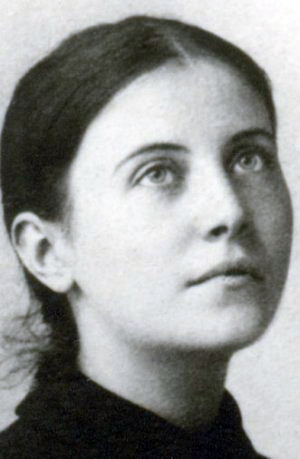
Saint Gemma Galgani
On this April 11th, in 1903 – the same year that the Italian Guiseppe Sarto was elected Pope later that summer as Pius X – a lovely, young Italian woman died, by the name of Gemma Galgani. She lived a brief life of 24 years, as did a number of other young saints, including Pier[…]Continue reading→
An Ideological and Improper Translation
I noticed something odd with the psalm reading at Mass the other day. Our bishops’ conference here in Canada has decreed that the Mass in English – Novus Ordo – use the ‘NRSV’, the ‘New Revised Standard Version’, an ‘updated’ translation of the original RSV, first published in 1952. This ‘new translation’ has the tendency[…]Continue reading→
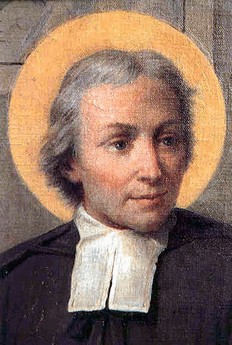
Saint Jean-Baptiste de la Salle: A Teacher for Teachers
Jean-Baptiste de la Salle (1651 – 1719), a French nobleman, ordained a priest, founded the first order in the Church’s history entirely without priests, and this came about almost by accident. I say ‘almost’, for, of course, there are no accidents with God. Destined for ordination from an early age, Jean-Baptiste never looked back, even[…]Continue reading→