
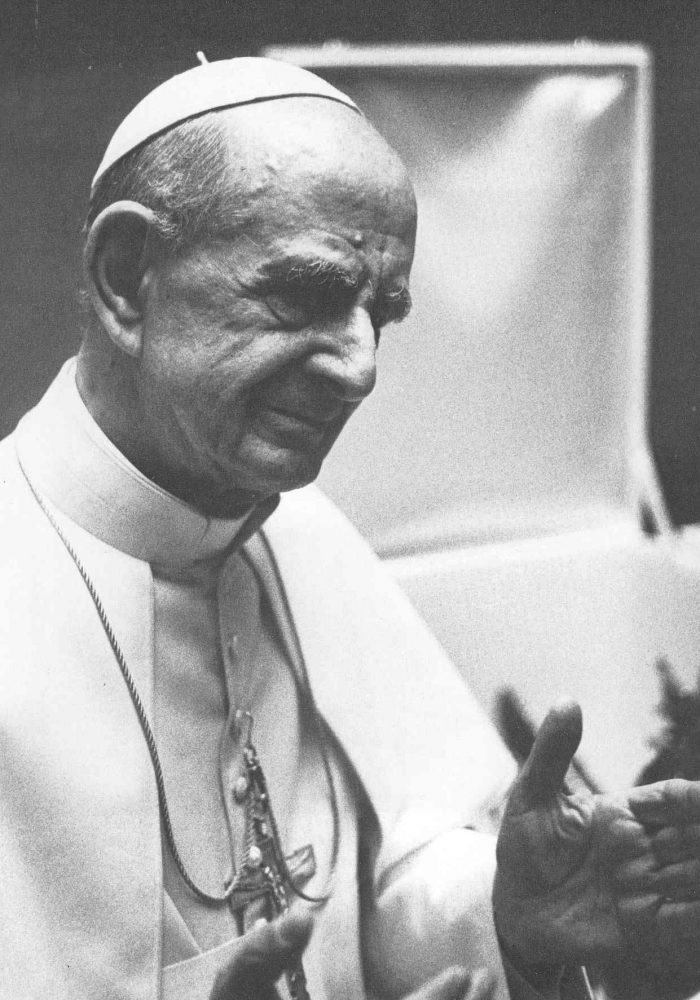
Finding Sanctity in a Controversial Papacy: Paul VI
Today, May 29th, is the optional memorial of Pope Saint Paul VI, celebrated on the anniversary of his ordination in 1920. This year, ironically, this is also the universal Solemnity of the Ascension, which Paul VI’s controversial liturgical reforms allowed to be moved to the following Sunday, when it is held here in Canada. We’ve written on how this attenuates the oldest ‘novena’ in the Church, the nine days from Ascension to Pentecost.
Paul VI’s own birth name was Giovanni Battista Enrico Maria Montini, coming into the world on the 26th of September, 1897. He was of the ‘upper crust’ of Italy, descended from the minor nobility– hence, the hefty moniker – as were almost all the Popes of the past four centuries. Pius X was an exception, still Italian, but of peasant stock, as was John XXIII.
Giovanni entered the seminary at 19 years of age, destined for diplomatic service in the vast bureaucracy of the Vatican City State, and never looked back, as far as we know. Whatever controversies arose in his later life – and there were many – he seems always assured of his vocation as a priest, solid in his celibacy and life of regular, traditional piety – his few encyclicals evince as much. He wrote the first of them on God’s Holy Church (Ecclesiam Suam), in 1964, in the midst of the Council, promulgated on the feasts of the Transfiguration, coincidentally, the day he himself would die fourteen years later. The next two, both on Our Lady (Mense Maio, April 29, 1965) and Christi Matri (September 15, 1966) he wrote just after the Council. Then there was one reaffirming priestly celibacy (Sacerdotalis Caelibatus, June 24, 1967), which some bishops and priests wanted to abolish, on the feast of his namesake, John the Baptist.
His last encyclical was the landmark Humanae Vitae (1968), promulgated on the feast of Saint James, July 25th; fitting, as it was a courageous act of martyrdom, those few pages that were so contra mundum, a prophetic voice to a world drowning in its own hedonism. He wrote no encyclicals after that, even though he governed the Church for another decade. No one quite knows the reason, but perhaps the Pope by this point had become disillusioned, the backlash against his re-affirmation of the Church’s condemnation of contraception and his re-affirmation of the beauty of married love, was far more than he expected, and perhaps more than he could handle. It seems as though events happened around him, and he trusted others too much, expecting they would be like himself. Was not God guiding His Church, and would not Catholics just go along, as they had always done?
But the revolution had begun, the ‘Sixties’ opening up a floodgate of evil, rebellion, even apostasy, in the midst of the ongoing effects of which we are still living, half a century on.
More mysterious is his reform of the Liturgy, not just the Holy Mass, but of all the other sacraments, as well as the Divine Office, according to the prescriptions of the Council’s Constitution on the Sacred Liturgy, Sacrosanctum Concilum. The wide scope he gave to Archbishop Bugnini is odd, as the reform went far beyond the text of the Constitution, and likely beyond what most of the Fathers of the Council had in mind. (As part 2 of ‘Mass of the Ages’ points out). The Pope’s optimistic hopes seem Pollyannish in retrospect, and the practical proscription of the ‘Old Mass’ – which was never explicitly abrogated, as Pope Benedict makes clear in his 2007 Summorum Pontificum – is also opaque. Liturgical abuse, iconoclasm, destroyed altars and sanctuaries, jejune translations – wreaked much harm, and to this day one wonders what the Pope was thinking, as he prayed in the midst of the Vatican. There are stories told of cardinals entering his office, to find the beleaguered Pontiff weeping on his desk, with stacks of files from priests requesting laicization, things spiraling out of his control.
Whatever one thinks of the decisions of Paul VI, somehow, we trust, in the midst of all the turmoil, God led him to holiness, which is not to be found so much in what we do, nor in the effects of our decisions, but who we are, before that same God, in all the travails, exterior, but more so interior, that assail us.
Ora pro nobis, Giovanni Battista, Paolo VI.

Carney’s Amoral Majority
After five defections – euphemistically described as ‘crossing the floor’ – and three by-elections, Mark Carney and his Liberals how have their coveted majority. One wonders what bowls of pottage were offered in back-room deals. In the archaic monarchical system that is the Dominion of Canada, this majority allows the newly-minted Prime Minister to rule[…]Continue reading→

Saint Kateri , Canada’s Protectress
This was the title given to Saint Kateri Tekakwitha, by Pope Benedict XVI, when he canonized her on October 28th, 2012, along with six others, in Saint Peter’ Square (she had been beatified by Pope John Paul II back in 1980). With Saint Joseph as our protector, along with the Canadian martyrs, we seem to[…]Continue reading→

A Tale of Two Benedicts
A grace-filled Holy Week to all our readers! As we await and prepare for the Resurrection about to dawn upon us, we might keep in mind two Benedicts: Pope Emeritus Benedict XVI, requiescat in pace, elected on this day in 2005; and today’s commemoration of the mystic pilgrim, Benedict Joseph Labre, who died on this[…]Continue reading→

My Name is Bernadette
April 16th is a propitious day, for besides the anniversary of Father de Valk’s death, who founded Catholic Insight in its print form decades ago, and the commemoration of the ‘two Benedicts’, mentioned in accompanying posts, today we also recall Saint Bernadette Soubirous, the young visionary to whom the Virgin Mary appeared numerous times at[…]Continue reading→

Saint Lydwina of Schiedam and Suffering Joyfully
Saint Lydwina of Schiedam (1380 – 1433) was one of the countless and glorious ‘victim souls’ in the history of the Church, those whose lives are filled with suffering, often of an unimaginable intensity, but who suffer joyfully. She was a fifteen-year old Dutch girl, out skating one day, when she fell and broke one[…]Continue reading→

The Glorious Martyrdoms of Martin and Maximus
As we enter into Eastertide, we recall on this 13th of April Pope Saint Martin I (+655), one of the noblest, if most tragic, of the successors of Saint Peter. Born in Umbria, Italy, he was of noble lineage, with great intelligence combined with charity and love of the poor and the Church. While still[…]Continue reading→

Canonizing Sister Faustina and Divine Mercy
HOMILY OF THE HOLY FATHER MASS IN ST PETER’S SQUARE FOR THE CANONIZATION OF SR MARY FAUSTINA KOWALSKA Sunday, 30 April 2000 1. “Confitemini Domino quoniam bonus, quoniam in saeculum misericordia eius”; “Give thanks to the Lord for he is good; his steadfast love endures for ever” (Ps 118: 1). So the Church sings on the Octave of[…]Continue reading→

Saint Stanislaus of Szczepanów
We celebrate Saint Stanislaus today (+ April 11, 1079), in light of this Easter Octave, a bishop and martyr who accepted the episcopacy only at the direct order of Pope Alexander II. He proved a wise and courageous leader of his flock, put to death by his own king, Boleslaus, for rebuking the monarch’s ‘immoral[…]Continue reading→

Saint Gemma Galgani
On this April 11th, in 1903 – the same year that the Italian Guiseppe Sarto was elected Pope later that summer as Pius X – a lovely, young Italian woman died, by the name of Gemma Galgani. She lived a brief life of 24 years, as did a number of other young saints, including Pier[…]Continue reading→
An Ideological and Improper Translation
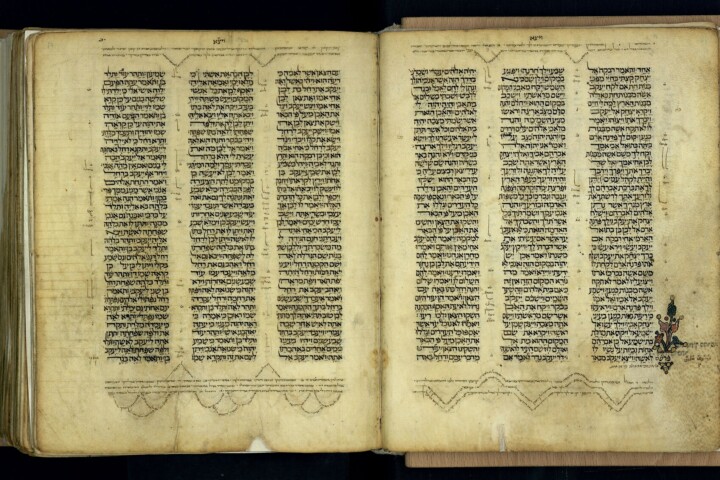
I noticed something odd with the psalm reading at Mass the other day. Our bishops’ conference here in Canada has decreed that the Mass in English – Novus Ordo – use the ‘NRSV’, the ‘New Revised Standard Version’, an ‘updated’ translation of the original RSV, first published in 1952. This ‘new translation’ has the tendency[…]Continue reading→