
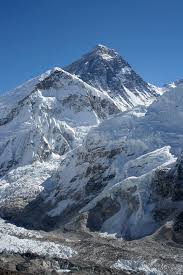
Rise and Fall: Everest and Constantinople
May 29th is the anniversary of two world changing events: The first was the reaching the summit of Mount Everest, the top of the world at 29, 029 feet, five miles up of pure ice, snow, glacier and rock, which had taken the lives of those who first attempted the climb – George Mallory and Andrew Irvine went for the top on June 8, 1924 and never returned – Mallory’s perfectly preserved body was not found until seventy years later, in 1999. It was Mallory who purported answered when asked why he was risking his life to climb such a forbidding edifice, ‘because it’s there’. The race for the top began after World War II, with the opening of Tibet, and permits granted to various nations – the Swiss nearly got there, but the British beat them, aided by their own team of indomitable Sherpas, on this day in 1953, when Tenzig Norgay and Edmund Hillary – the latter scaling the fearful rock chimney now known as ‘Hilary’s Gap’ just below the ridge to the summit. The news reached Britain on the eve of the coronation of Elizabeth the Second, and the hope and optimism of a new age was palpable. Would that we might again capture some wisp of that spirit of courage. For a riveting account of the story, here is a BBC documentary, which I for one quite enjoyed – but maybe that’s just me:
May 29th also commemorates the tragic fall on Constantinople, when the great Byzantine city state was finally taken after a fearful and fateful struggle by the Ottoman Turks under Mehmet the Second, with great chains across the harbour, huge ships dragged across land, giant cannons which the world had never seen before to smash the thick mediaeval walls, the valiant defense of the Christians right to the bitter end. The Emperor himself, Constantine XI, died fighting in the melee, identified by his purple royal slippers sticking out of the pile of corpses. The usual murder, rape, enslaving, pillage and destruction followed, with the great church of Hagia Sophia – one of the wonders of the world – turned into a mosque (it’s now a museum), and the great city transformed into an Islamic fortress (with its name eventually evolving by custom to Istanbul – derived from the Greek ‘eis tin polin‘, or, quite prosaically, ‘into the city’).
On the 500th anniversary of the fall, the novelty song Istanbul not Constantinople was penned in 1953, by a Canadian vocal quartet, The Four Lads. I’m not sure of making light of such a tragic event – pillage, burning, rape, killing, and all the rest of it, from the hands of the Muslims under Sultan Mehmed II. The city was defended quite literally to the last man – even the emperor himself, Constantine IX, perished in combat, identified in the mound of corpses by his purple slippers. That’s one way to die with your boots one. The cathedral of Hagia Sophia was desecrated, and turned into a mosque.
But I suppose from the perspective of half a millennium, and then at a more distant time from ours when the threat of Islamic domination was not on anyone’s mind, such a song had its place:
And here is a the 1990 remake by There Be Giants.
Yet God brings good out of all things, besides catchy slightly silly swing songs, and the flight of the Christians from Byzantium brought much of the treasures of East, spiritual, intellectual, artistic, over to the West, prompting the renaissance (which, yes, had its own issues).
If you do get the chance, peruse John Julius Norwich’s A Short History of Byzantium, which is also riveting, with a cast of characters in an age in some ways more brutal than our own, in some ways not, but at least they were more honest about their brutality, done for noble ends. They saw things more sub specie aeternitatis, as I suppose one gets some hint of at the top of Everest, now that I think of it, which is really the only way to see and live our life on this earth, with all its tragedies and triumphs.

Carney’s Amoral Majority
After five defections – euphemistically described as ‘crossing the floor’ – and three by-elections, Mark Carney and his Liberals how have their coveted majority. One wonders what bowls of pottage were offered in back-room deals. In the archaic monarchical system that is the Dominion of Canada, this majority allows the newly-minted Prime Minister to rule[…]Continue reading→

Saint Kateri , Canada’s Protectress
This was the title given to Saint Kateri Tekakwitha, by Pope Benedict XVI, when he canonized her on October 28th, 2012, along with six others, in Saint Peter’ Square (she had been beatified by Pope John Paul II back in 1980). With Saint Joseph as our protector, along with the Canadian martyrs, we seem to[…]Continue reading→

A Tale of Two Benedicts
A grace-filled Holy Week to all our readers! As we await and prepare for the Resurrection about to dawn upon us, we might keep in mind two Benedicts: Pope Emeritus Benedict XVI, requiescat in pace, elected on this day in 2005; and today’s commemoration of the mystic pilgrim, Benedict Joseph Labre, who died on this[…]Continue reading→

My Name is Bernadette
April 16th is a propitious day, for besides the anniversary of Father de Valk’s death, who founded Catholic Insight in its print form decades ago, and the commemoration of the ‘two Benedicts’, mentioned in accompanying posts, today we also recall Saint Bernadette Soubirous, the young visionary to whom the Virgin Mary appeared numerous times at[…]Continue reading→

Saint Lydwina of Schiedam and Suffering Joyfully
Saint Lydwina of Schiedam (1380 – 1433) was one of the countless and glorious ‘victim souls’ in the history of the Church, those whose lives are filled with suffering, often of an unimaginable intensity, but who suffer joyfully. She was a fifteen-year old Dutch girl, out skating one day, when she fell and broke one[…]Continue reading→

The Glorious Martyrdoms of Martin and Maximus
As we enter into Eastertide, we recall on this 13th of April Pope Saint Martin I (+655), one of the noblest, if most tragic, of the successors of Saint Peter. Born in Umbria, Italy, he was of noble lineage, with great intelligence combined with charity and love of the poor and the Church. While still[…]Continue reading→

Saint Stanislaus of Szczepanów
We celebrate Saint Stanislaus today (+ April 11, 1079), in light of this Easter Octave, a bishop and martyr who accepted the episcopacy only at the direct order of Pope Alexander II. He proved a wise and courageous leader of his flock, put to death by his own king, Boleslaus, for rebuking the monarch’s ‘immoral[…]Continue reading→

Saint Gemma Galgani
On this April 11th, in 1903 – the same year that the Italian Guiseppe Sarto was elected Pope later that summer as Pius X – a lovely, young Italian woman died, by the name of Gemma Galgani. She lived a brief life of 24 years, as did a number of other young saints, including Pier[…]Continue reading→
An Ideological and Improper Translation
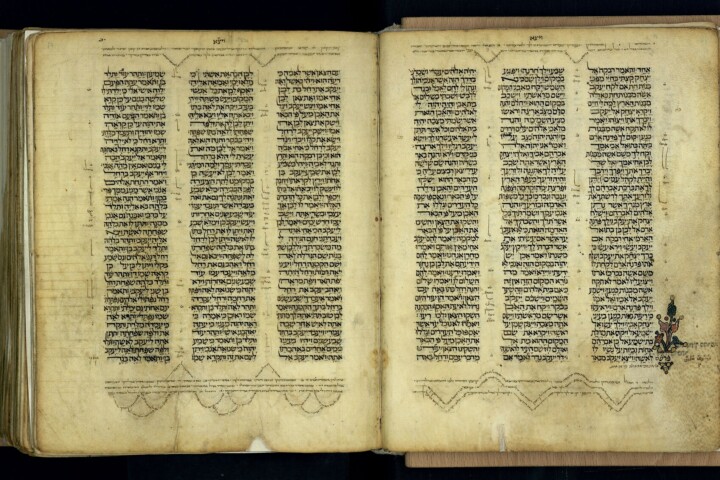
I noticed something odd with the psalm reading at Mass the other day. Our bishops’ conference here in Canada has decreed that the Mass in English – Novus Ordo – use the ‘NRSV’, the ‘New Revised Standard Version’, an ‘updated’ translation of the original RSV, first published in 1952. This ‘new translation’ has the tendency[…]Continue reading→
Saint Jean-Baptiste de la Salle: A Teacher for Teachers
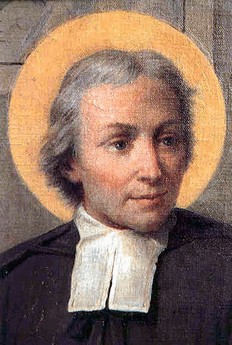
Jean-Baptiste de la Salle (1651 – 1719), a French nobleman, ordained a priest, founded the first order in the Church’s history entirely without priests, and this came about almost by accident. I say ‘almost’, for, of course, there are no accidents with God. Destined for ordination from an early age, Jean-Baptiste never looked back, even[…]Continue reading→