
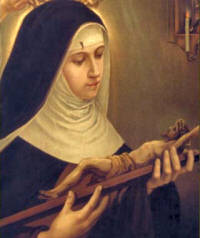
Saint Rita’s Mission Impossible
We have it on good authority that nothing is impossible with God – or, as the Gabriel puts it, all things are possible with the Almighty, the All-Powerful Omnipotens in our Creed.
So when we speak of ‘impossible’ causes, we must qualify the term, for impossibility – or, as some say desperation and desperate causes – depend much on whom of of what we speak.
Every saint is a patron of such ‘impossible’ causes, but there two who have been given the task as a special mission: Saint Jude, one of the Twelve, and today’s Saint Rita of Cascia (+1457). Although she felt a call to enter religious life, Rita was instead married off to an irascible, abusive, philandering, feud-fighting nobleman, Paolo Mancini, at the tender age of twelve (customs were different back then), bearing him two sons. With patience, long-suffering, and heroic virtue, she softened him over the years, so that he became almost pleasant, giving up his vengeful vendettas. When he was stabbed to death after about two decades of what we shall not presume to describe as marital bliss, there was hope for his redemption – marriage can indeed save one. In fact, that’s its purpose – the good of each of the spouses, even if one be more advanced in the spiritual life than the other.
Rita prayed that her two sons – bent on revenging their father’s murder – would die rather than commit such a grave sin, and, soon enough, they too went to their eternal reward, stricken with dysentery. In such desperate ways are some desperate prayers answered, so beware of you ask of Saint Rita!
Now relieved of her marital and familial obligations, Rita sought to follow her first calling, and applied to enter the Augustinian convent of Saint Mary Magdalene, whose Sisters would accept her only if she could somehow resolve the scandalous and murderous feud between her family and the Chiquis. So she prayed mightily – invoking three patron saints – John the Baptist, Augustine and Nicholas of Torentino – and, sure enough, peace was restored, and Rita, at the age of 36, became the consecrated religious she had always wanted to be.
For the next biblical span of forty years, she lived a holy, hidden ascetical life in the convent, joyful and peaceful, until her death on this day in 1457, in her 76th year. Her canonization had to wait a while – until May 24th, 1900, when she was officially declared amongst the heavenly host by Pope Leo XIII.
When she was about sixty, Rita was gifted with a wound in her forehead, much as would be caused by a thorn in a crown made of them, a partial stigmata, which was, as accounts relate, very painful and emitted a foul odour, an external sign of her sacrificial life. As is oft the case for such saints, her prayers were mightily efficacious, often answered miraculously, as they continue to be after her death (hence, her patronage). She is the patron saint, as one source has it, of abuse victims; against loneliness; against sterility; bodily ills; desperate causes; difficult marriages; forgotten causes; impossible causes; infertility; lost causes; parenthood; sick people; sickness; sterility; victims of physical spouse abuse; widows; wounds.
Seven centuries have passed since Rita’s entrance into eternal bliss, but her body is still incorrupt, laid to rest in her glorious shrine at Cascia, about 60 miles north of Rome. In that mystery of God’s providence in glorifying His holy ones, she is still one of the most powerful intercessors in the heavenly pantheon, for all those missions impossible – pace, Mr. Cruise, who, now that I think of it, we may pray returns to his youthful Catholicism, along with all the countless others who have walked away from the Faith. Possible? Surely, for with God, all things are…
Sancta Rita, ora pro nobis…
Carney’s Amoral Majority
After five defections – euphemistically described as ‘crossing the floor’ – and three by-elections, Mark Carney and his Liberals how have their coveted majority. One wonders what bowls of pottage were offered in back-room deals. In the archaic monarchical system that is the Dominion of Canada, this majority allows the newly-minted Prime Minister to rule[…]Continue reading→

Saint Kateri , Canada’s Protectress
This was the title given to Saint Kateri Tekakwitha, by Pope Benedict XVI, when he canonized her on October 28th, 2012, along with six others, in Saint Peter’ Square (she had been beatified by Pope John Paul II back in 1980). With Saint Joseph as our protector, along with the Canadian martyrs, we seem to[…]Continue reading→
A Tale of Two Benedicts
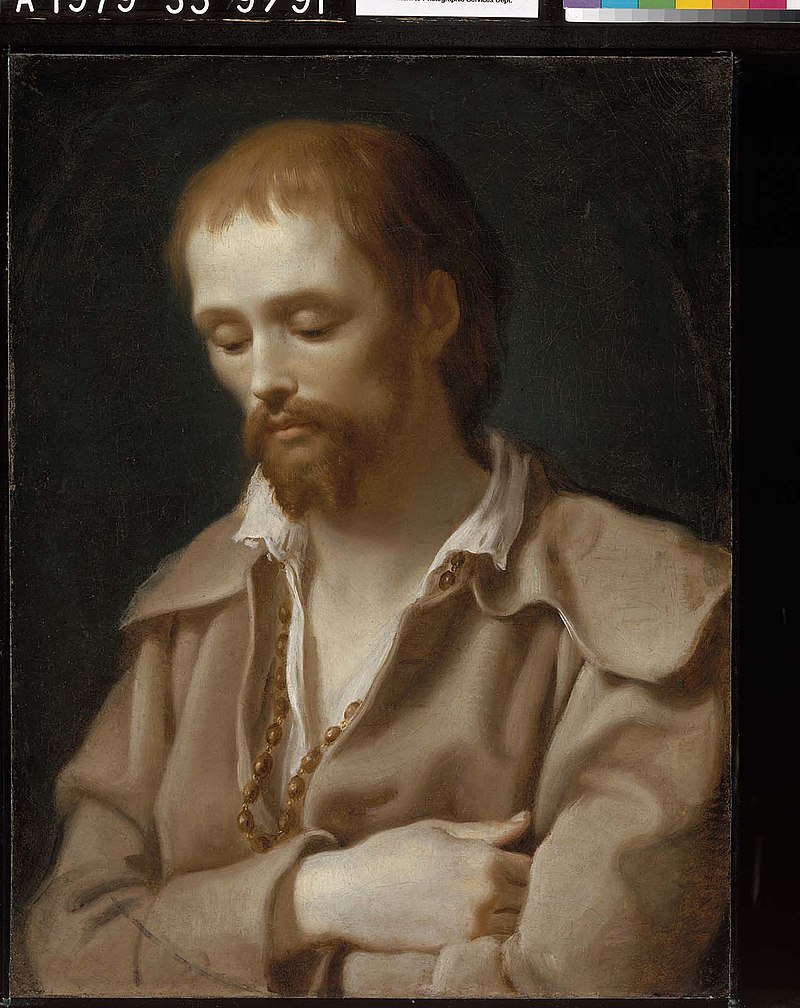
A grace-filled Holy Week to all our readers! As we await and prepare for the Resurrection about to dawn upon us, we might keep in mind two Benedicts: Pope Emeritus Benedict XVI, requiescat in pace, elected on this day in 2005; and today’s commemoration of the mystic pilgrim, Benedict Joseph Labre, who died on this[…]Continue reading→

My Name is Bernadette
April 16th is a propitious day, for besides the anniversary of Father de Valk’s death, who founded Catholic Insight in its print form decades ago, and the commemoration of the ‘two Benedicts’, mentioned in accompanying posts, today we also recall Saint Bernadette Soubirous, the young visionary to whom the Virgin Mary appeared numerous times at[…]Continue reading→
Saint Lydwina of Schiedam and Suffering Joyfully
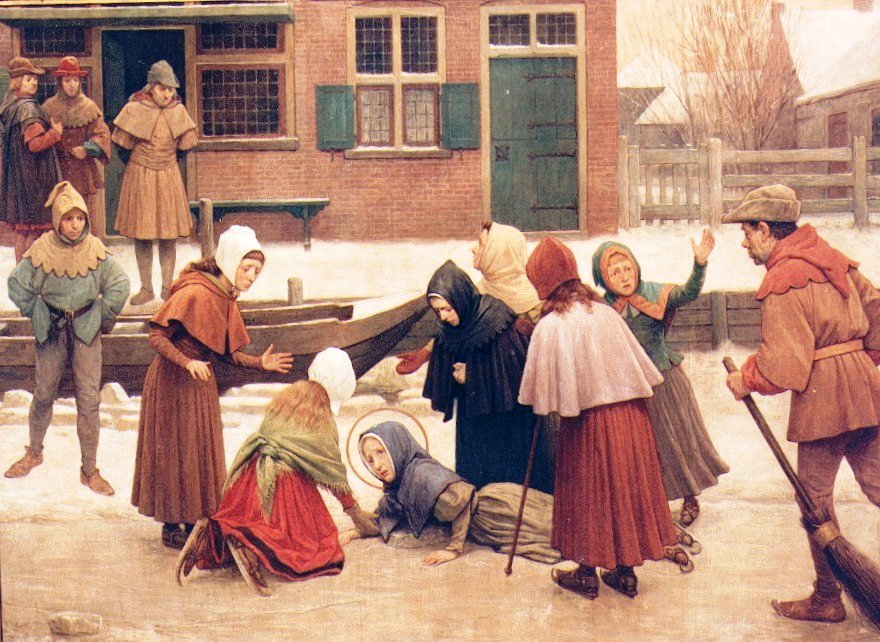
Saint Lydwina of Schiedam (1380 – 1433) was one of the countless and glorious ‘victim souls’ in the history of the Church, those whose lives are filled with suffering, often of an unimaginable intensity, but who suffer joyfully. She was a fifteen-year old Dutch girl, out skating one day, when she fell and broke one[…]Continue reading→
The Glorious Martyrdoms of Martin and Maximus
As we enter into Eastertide, we recall on this 13th of April Pope Saint Martin I (+655), one of the noblest, if most tragic, of the successors of Saint Peter. Born in Umbria, Italy, he was of noble lineage, with great intelligence combined with charity and love of the poor and the Church. While still[…]Continue reading→

Saint Stanislaus of Szczepanów
We celebrate Saint Stanislaus today (+ April 11, 1079), in light of this Easter Octave, a bishop and martyr who accepted the episcopacy only at the direct order of Pope Alexander II. He proved a wise and courageous leader of his flock, put to death by his own king, Boleslaus, for rebuking the monarch’s ‘immoral[…]Continue reading→
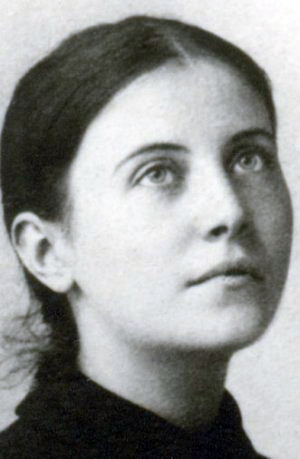
Saint Gemma Galgani
On this April 11th, in 1903 – the same year that the Italian Guiseppe Sarto was elected Pope later that summer as Pius X – a lovely, young Italian woman died, by the name of Gemma Galgani. She lived a brief life of 24 years, as did a number of other young saints, including Pier[…]Continue reading→
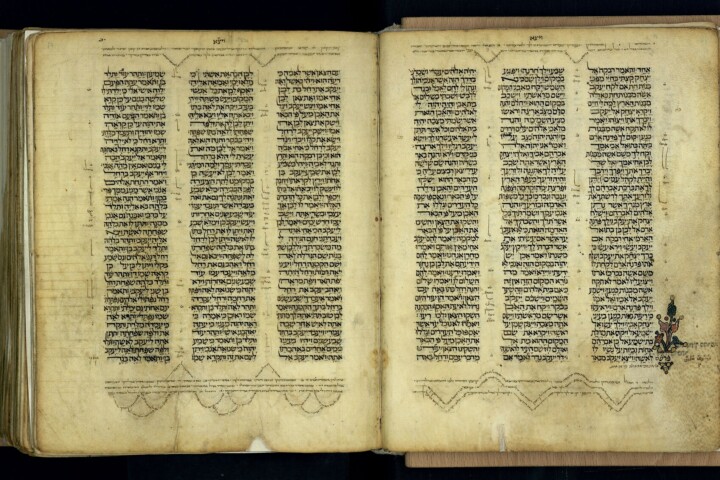
An Ideological and Improper Translation
I noticed something odd with the psalm reading at Mass the other day. Our bishops’ conference here in Canada has decreed that the Mass in English – Novus Ordo – use the ‘NRSV’, the ‘New Revised Standard Version’, an ‘updated’ translation of the original RSV, first published in 1952. This ‘new translation’ has the tendency[…]Continue reading→
Saint Jean-Baptiste de la Salle: A Teacher for Teachers
Jean-Baptiste de la Salle (1651 – 1719), a French nobleman, ordained a priest, founded the first order in the Church’s history entirely without priests, and this came about almost by accident. I say ‘almost’, for, of course, there are no accidents with God. Destined for ordination from an early age, Jean-Baptiste never looked back, even[…]Continue reading→