
Eligendo Papam – Electing a Pope
The conclave to elect the next Pope begins today, Wednesday May 7th. We pray, trusting in God and the Holy Spirit to work through the fallibility and imperfections of those men gathered. Of course, as Pope Benedict XVI made clear, it is not as though God’s perfect choice will automatically be made, just as His perfect will is not always done. That is why we pray, so that God’s will may be done as perfectly as it might be in the circumstances, or at least less imperfectly done.
That is why the Church has rules about electing a Pope, to facilitate the will of God being manifest. These go way back in history, but we may trace the specific practice of cardinal-electors and conclaves to the 1059 Apostolic Bull of Pope Nicholas II, In Nomine Domini. The rules have been modified over the years. The most recent revisions were made by Popes John Paul II in his 1996 Apostolic Constitution Universi Dominici Gregis. (with subsequent modifications by Benedict XVI)
The main takeaways: There may be one vote on the first day, four votes per day after that, two in the morning, two in the afternoon. They must be written, but anonymous, and handed personally to the scrutineers, who are seated before the altar in the Sistine Chapel, above which looms, of course, Michelangelo’s Last Judgement. Strictest secrecy must be maintained, as well as no contact with the outside world barring extreme emergencies – no cell phones, newspapers, periodicals or updates. The veto power of various nation-states or anyone else is abolished. There are to be no binding compacts or secret agreements, although discussion is permitted, and even encouraged. The key is to leave each cardinal-elector free before God in his conscience to choose the one he – the elector – deems the best candidate, which one hopes is also God’s choice.
Paul VI had earlier stipulated that only those who have not reached their 80th birthday may vote, even if they may still be chosen as Pope. Cardinal Re said the opening Mass for the Conclave this morning, with quite a rousing homily, and he’s 91. But I suppose one must have a cut-off somewhere, barring a cognitive test for senescent cardinals. Yet one loses a lot of accumulated wisdom and tradition in barring octogenarians from casting their ballots.
A two-thirds majority is required, regardless of how long this lasts. After voting, the ballots are burned. Pope John Paul II originally allowed the requirement to drop to a simple majority after 33 ballots, but Pope Benedict restored the traditional 2/3, which more fully and clearly manifests the will of the cardinal-electors. What Pope Benedict did allow was that after 33 ballots, voting may be restricted to the two cardinals with the most votes, with these two excluded from voting. (The one chosen need not be a cardinal, but almost always has been since Nicholas II’s decree).
So this could take a day, or a week, or a month. Likely not longer, but one never knows. Previous long conclaves required drastic measures. In fact, the notion of a ‘conclave’ – with the electors locked inside ‘under key’ – was established due to the length of the interregnum from 1268-71, which is to say, 1006 days. That election was held in Viterbo, just north of Rome, and the citizens had to pay for the cardinals’ room and board. So they took the roof off the building, then restricted the cardinals’ diet to bread and water, all to expedite the process. We may hope things don’t come to such a pass.
Do I have hope? I don’t know much about most of the cardinal-electors, three-quarters of whom were appointed by Pope Francis (110 out of 133 electors, beyond the 120 maximum stipulated by Pope John Paul II). My natural human hope is minimal, but supernatural hope abounds. We may ponder what we might term the Thomas a Becket option. Readers may recall that Thomas was a boon companion of King Henry II, living a life of mediocrity, if not outright debauchery and scandal. The King appointed him Archbishop of Canterbury, thinking he would be a pliant tool in his control of the Church in England. But once Thomas was ordained, grace infused his soul, with which he cooperated. Pondering his future judgement, he took his new office seriously and strictly, adopting a rigorous regime to become a saint, devoted to his priestly and episcopal duties. In the end he defied the king’s unjust encroachments, and died a martyr.
It would be edifying if whoever is elected is also a saint, even a martyr. At the very least, however, he should be a good custodian and guardian, fulfilling what is mentioned in the collect of Pope Saint Pius V, whose feast we just celebrated:
Deus, qui in Ecclesia tua beatum Pium papam ad fidem tuendam ac te dignius colendum providus excitasti, da nobis, ipso intercedente, vivida fide ac fructuosa caritate mysteriorum tuorum esse participes.
Which basically translates that the Pope’s task is to preserve (tuendam) and cultivate (colendum) the Faith, like a good gardener. Nothing too fancy or esoteric – just keep things as they were, and improving them as one might, without destroying or even harming the garden with which one has been entrusted, or making a mess of things. Just so, the members of the Church may participate more fully in its mysteries with living faith (vivida fide) and fruitful charity (fructuosa caritate).
We don’t need a rock star. Just a rock.
Amen to that.

Carney’s Amoral Majority
After five defections – euphemistically described as ‘crossing the floor’ – and three by-elections, Mark Carney and his Liberals how have their coveted majority. One wonders what bowls of pottage were offered in back-room deals. In the archaic monarchical system that is the Dominion of Canada, this majority allows the newly-minted Prime Minister to rule[…]Continue reading→

Saint Kateri , Canada’s Protectress
This was the title given to Saint Kateri Tekakwitha, by Pope Benedict XVI, when he canonized her on October 28th, 2012, along with six others, in Saint Peter’ Square (she had been beatified by Pope John Paul II back in 1980). With Saint Joseph as our protector, along with the Canadian martyrs, we seem to[…]Continue reading→

A Tale of Two Benedicts
A grace-filled Holy Week to all our readers! As we await and prepare for the Resurrection about to dawn upon us, we might keep in mind two Benedicts: Pope Emeritus Benedict XVI, requiescat in pace, elected on this day in 2005; and today’s commemoration of the mystic pilgrim, Benedict Joseph Labre, who died on this[…]Continue reading→

My Name is Bernadette
April 16th is a propitious day, for besides the anniversary of Father de Valk’s death, who founded Catholic Insight in its print form decades ago, and the commemoration of the ‘two Benedicts’, mentioned in accompanying posts, today we also recall Saint Bernadette Soubirous, the young visionary to whom the Virgin Mary appeared numerous times at[…]Continue reading→

Saint Lydwina of Schiedam and Suffering Joyfully
Saint Lydwina of Schiedam (1380 – 1433) was one of the countless and glorious ‘victim souls’ in the history of the Church, those whose lives are filled with suffering, often of an unimaginable intensity, but who suffer joyfully. She was a fifteen-year old Dutch girl, out skating one day, when she fell and broke one[…]Continue reading→

The Glorious Martyrdoms of Martin and Maximus
As we enter into Eastertide, we recall on this 13th of April Pope Saint Martin I (+655), one of the noblest, if most tragic, of the successors of Saint Peter. Born in Umbria, Italy, he was of noble lineage, with great intelligence combined with charity and love of the poor and the Church. While still[…]Continue reading→

Saint Stanislaus of Szczepanów
We celebrate Saint Stanislaus today (+ April 11, 1079), in light of this Easter Octave, a bishop and martyr who accepted the episcopacy only at the direct order of Pope Alexander II. He proved a wise and courageous leader of his flock, put to death by his own king, Boleslaus, for rebuking the monarch’s ‘immoral[…]Continue reading→

Saint Gemma Galgani
On this April 11th, in 1903 – the same year that the Italian Guiseppe Sarto was elected Pope later that summer as Pius X – a lovely, young Italian woman died, by the name of Gemma Galgani. She lived a brief life of 24 years, as did a number of other young saints, including Pier[…]Continue reading→

An Ideological and Improper Translation
I noticed something odd with the psalm reading at Mass the other day. Our bishops’ conference here in Canada has decreed that the Mass in English – Novus Ordo – use the ‘NRSV’, the ‘New Revised Standard Version’, an ‘updated’ translation of the original RSV, first published in 1952. This ‘new translation’ has the tendency[…]Continue reading→
Saint Jean-Baptiste de la Salle: A Teacher for Teachers
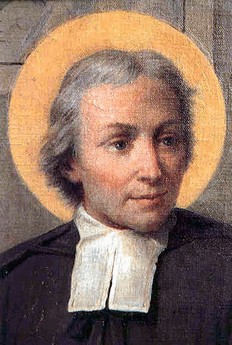
Jean-Baptiste de la Salle (1651 – 1719), a French nobleman, ordained a priest, founded the first order in the Church’s history entirely without priests, and this came about almost by accident. I say ‘almost’, for, of course, there are no accidents with God. Destined for ordination from an early age, Jean-Baptiste never looked back, even[…]Continue reading→