
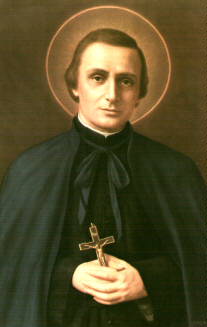
Saints Peter Chanel and Louis Grignon de Montfort
On this 28th of April we celebrate two Saints: Saint Peter Chanel (+1841) who evangelized the island of Futuna in the South Pacific – the first to bring the Gospel to a people who had never heard of Christianity. He was tireless and indefatigable in the midst of very difficult and discouraging conditions, and, like many martyrs, was already a saint before he was put to death – recognized so from his humble beginnings in childhood, working as a shepherd from the time he was seven, until his twelfth year. His piety and intelligence were recognized, and he was sent first to school, then to the seminary, before his ordination on July 15, 1827. He was, as expected, an exemplary parish priest.
But his heart was in the missions, to which he had felt called since his youth. Father Peter joined the recently-founded (1816) Society of Mary – the Marists – and was sent to their outposts in the South Pacific islands in 1837. This was well before they were tourist destinations, and to wild jungles and remote shores of Wallis, Tahiti, Tonga, and finally, to Futuna. (In one of those innumerable coincidences of history, this is also the date of the mutiny on the Bounty by Fletcher Christian and fellows in 1789, as France was plunging into revolution. All the mutineers ended up in Tahiti – which had yet to be evangelized, before hiding out on remote Pitcairn Island). Father Chanel’s work and ethic were far different from the mutinous sailors. The good priest was unremitting and relentless in the Lord’s vineyard, always displaying the highest level of self-control, chastity and the other virtues; as one contemporary describes the priest:
Because of his labours he was often burned by the heat of the sun, and famished with hunger, and he would return home wet with perspiration and completely exhausted. Yet he always remained in good spirits, courageous and energetic, as if he were returning from a pleasure jaunt, and this would happen almost every day.
Chanel’s was beloved by the island people, who recognized his own love for them, becoming indeed ‘all things to all men’.
He could never refuse anything to the Futunians, even to those who persecuted him; he always made excuses for them and never rejected them, even though they were often rude and troublesome. He displayed an unparalleled mildness towards everyone on all occasions without exception.
But this charity – as is oft the case – prompted Niuliki, the King of the people of Futuna, to jealousy, when his own son desired baptism. Like many rulers before and since, the king thought that Christianity – more specifically, Christ Himself – would undermine his own authority. So he sent a warrior to do ‘whatever was necessary’, hearkening back to Henry II’s lament of his own archbishop, Thomas a Becket, ‘would no one rid me of this meddlesome priest?”. And like the trio of knights in the 12th century, the pagan ‘warrior’ of the 19th decided that meant putting the priest to a violent end, clubbing him to death with an axe on this day in 1841, after feigning need of medical attention.
Not long before, as the storm clouds gathered around him, Father Peter had calmly declared in prophecy: It does not matter if I die. Christ’s religion is so deeply rooted on this island that it cannot be destroyed by my death
Soon after the martyrdom of the saint, the King’s son did convert, and, as a contemporary eulogy declares: The blood of this martyr benefited, in the first place, the natives of Futuna, for a few years later they were all converted to the faith of Christ
To this day, many regions in the South Pacific are renowned for their Catholic devotion and zeal. By the blood of martyrs…

The other saint we commemorate on this joyful day is Louis de Montfort (1673-1716) known for his own tireless missionary zeal in France, his constant preaching and administration of the sacraments, his founding of two religious orders, the Company of Mary and the Daughters of Wisdom. He is also renowned, perhaps more so for many devout Catholics, for his propagation of true devotion to Mary, the title of one of his numerous works that have stood the test of time, including The Secret of the Rosary and the Secret of Mary.
Father de Montfort’s phenomenal success was the fruit of prayer and sacrifice: He spent much time in solitude in retreat at a cave near Merment, outside La Rochelle. While on active ministry, he was indefatigable, covering many miles by foot, preaching, writing, and went to his eternal reward at the age of 43, worn out like a good and faithful servant, having been a priest for ‘only’ sixteen years, two years more than Father Chanel. But much was by both done in what we might consider little time.
Saint Louis de Montfort predicted that great devotion to the Virgin Mary would be the devotion of the ‘end times’ and the ‘final unleashing of evil’, as the Catechism puts it, that would bring the Bridegroom down from heaven, towards which glorious event we seem to be moving with ever greater speed. In fact, he predicted his writings would be lost, then rediscovered when they were most needed – which was just the case in the 19th century, after which the Popes – Blessed Pius IX being the first – took up his cause.
Father de Montfort most popular devotion advocated making a 33-day consecration to the Mother of God, culminating on one of her major feast days, offering our whole lives to Christ through her, as the most perfect instrument ever to be shaped by the hand of God. He called this devotion a ‘short cut’ to heaven, for Our Lady will perfect all that we do, offering it to her Son and the Father in a way that purifies and elevates our own less-than-perfect intentions and charity. As he puts in his True Devotion to Mary:
by this consecration we give ourselves explicitly to Jesus through Mary’s hands and we include in our consecration the value of all our actions.
This path has benefited countless souls, not least Karol Wojtyla, whose canonization anniversary was yesterday – another coincidence, for as Pope John Paul II, he adopted as his papal motto was ‘Totus tuus’ Montfort’s own words: ‘Totus tuus ego sum, et omnia mea tua sunt‘.
I am all yours (O, Mary), and all that is mine is yours.
Would that we could all say the same.
Pope John Paul II’s Marian thought is perhaps best summed up in his encyclical Redemptoris Mater, of March 25th, 1987, to coincide, approximately, with 2000th anniversary of Our Lady’s birth, preceding the great Jubilee of the Third Millennium.
On this very Marian of days, as we soon begin the month of Mary, Saints Peter and Louis, orate pro nobis…

Carney’s Amoral Majority
After five defections – euphemistically described as ‘crossing the floor’ – and three by-elections, Mark Carney and his Liberals how have their coveted majority. One wonders what bowls of pottage were offered in back-room deals. In the archaic monarchical system that is the Dominion of Canada, this majority allows the newly-minted Prime Minister to rule[…]Continue reading→

Saint Kateri , Canada’s Protectress
This was the title given to Saint Kateri Tekakwitha, by Pope Benedict XVI, when he canonized her on October 28th, 2012, along with six others, in Saint Peter’ Square (she had been beatified by Pope John Paul II back in 1980). With Saint Joseph as our protector, along with the Canadian martyrs, we seem to[…]Continue reading→

A Tale of Two Benedicts
A grace-filled Holy Week to all our readers! As we await and prepare for the Resurrection about to dawn upon us, we might keep in mind two Benedicts: Pope Emeritus Benedict XVI, requiescat in pace, elected on this day in 2005; and today’s commemoration of the mystic pilgrim, Benedict Joseph Labre, who died on this[…]Continue reading→

My Name is Bernadette
April 16th is a propitious day, for besides the anniversary of Father de Valk’s death, who founded Catholic Insight in its print form decades ago, and the commemoration of the ‘two Benedicts’, mentioned in accompanying posts, today we also recall Saint Bernadette Soubirous, the young visionary to whom the Virgin Mary appeared numerous times at[…]Continue reading→

Saint Lydwina of Schiedam and Suffering Joyfully
Saint Lydwina of Schiedam (1380 – 1433) was one of the countless and glorious ‘victim souls’ in the history of the Church, those whose lives are filled with suffering, often of an unimaginable intensity, but who suffer joyfully. She was a fifteen-year old Dutch girl, out skating one day, when she fell and broke one[…]Continue reading→

The Glorious Martyrdoms of Martin and Maximus
As we enter into Eastertide, we recall on this 13th of April Pope Saint Martin I (+655), one of the noblest, if most tragic, of the successors of Saint Peter. Born in Umbria, Italy, he was of noble lineage, with great intelligence combined with charity and love of the poor and the Church. While still[…]Continue reading→
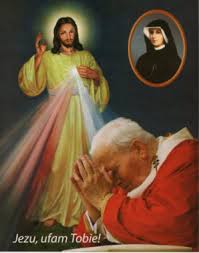
Canonizing Sister Faustina and Divine Mercy
HOMILY OF THE HOLY FATHER MASS IN ST PETER’S SQUARE FOR THE CANONIZATION OF SR MARY FAUSTINA KOWALSKA Sunday, 30 April 2000 1. “Confitemini Domino quoniam bonus, quoniam in saeculum misericordia eius”; “Give thanks to the Lord for he is good; his steadfast love endures for ever” (Ps 118: 1). So the Church sings on the Octave of[…]Continue reading→

Saint Stanislaus of Szczepanów
We celebrate Saint Stanislaus today (+ April 11, 1079), in light of this Easter Octave, a bishop and martyr who accepted the episcopacy only at the direct order of Pope Alexander II. He proved a wise and courageous leader of his flock, put to death by his own king, Boleslaus, for rebuking the monarch’s ‘immoral[…]Continue reading→
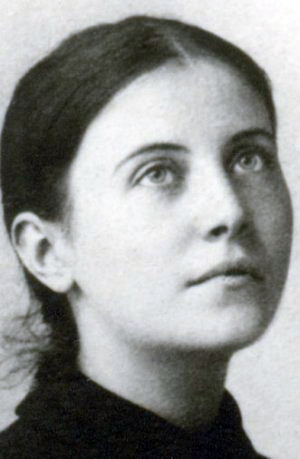
Saint Gemma Galgani
On this April 11th, in 1903 – the same year that the Italian Guiseppe Sarto was elected Pope later that summer as Pius X – a lovely, young Italian woman died, by the name of Gemma Galgani. She lived a brief life of 24 years, as did a number of other young saints, including Pier[…]Continue reading→
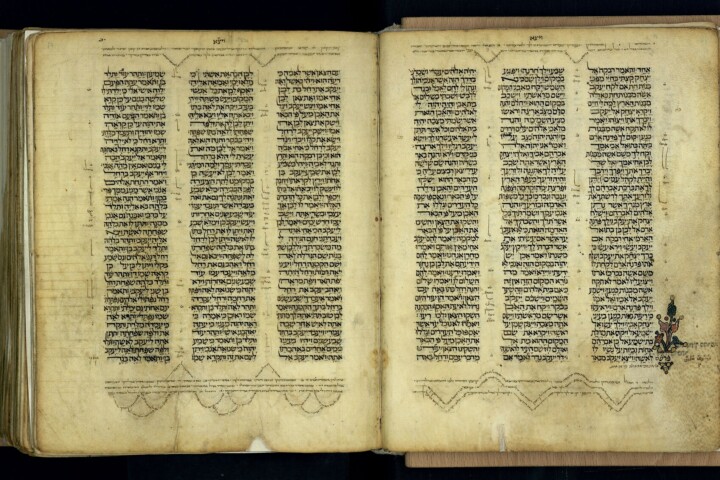
An Ideological and Improper Translation
I noticed something odd with the psalm reading at Mass the other day. Our bishops’ conference here in Canada has decreed that the Mass in English – Novus Ordo – use the ‘NRSV’, the ‘New Revised Standard Version’, an ‘updated’ translation of the original RSV, first published in 1952. This ‘new translation’ has the tendency[…]Continue reading→