
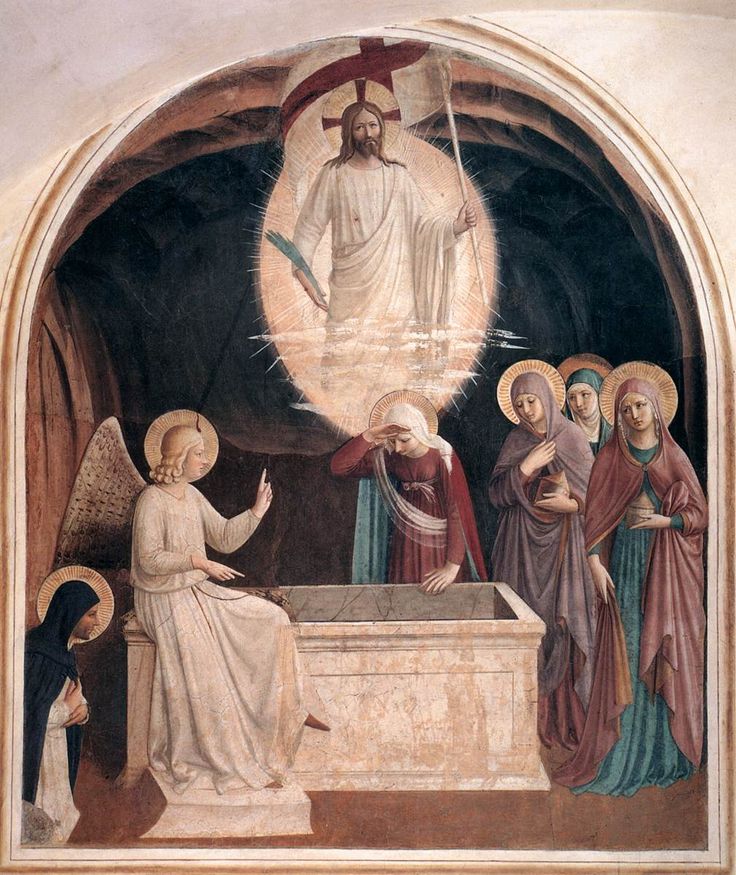
Saint Mark and the Resurrection
At Easter Sunday Mass, you heard the closing verses of Saint Mark’s Gospel, or almost so. I say “almost” because our lectionary omits the final verse. That is unfortunate, for those few words are crucial for understanding the message Mark has for us. Perhaps the reason for their omission comes from the fact that this final verse is mysterious, disconcerting, even alarming:
And they went out and fled from the tomb; for trembling and astonishment had come upon them, and they said nothing to anyone, for they were afraid.
One can understand why the framers of our lectionary omitted these strange words, for they hardly qualify as proclamation of the glorious triumph of Jesus over sin and death. I described them as “mysterious” and so they are, in that they point to a puzzling characteristic of this scene and, really, of Mark’s Gospel overall. For we find here our expectations continually confounded. The women are commissioned to proclaim what they have seen—“Go and tell his disciples and Peter”—and we hear instead that “they said nothing to anyone”: a proclamation was enjoined but then responded to by silence. Another contrast: the consoling news of Christ risen makes them afraid. Also, the “young man . . . clothed in a white robe” is the reversal of the young man in Gethsemane who ran away naked when the soldiers came to arrest Jesus. The tomb itself is a locus of contradictions. A grave is closed but this one is open; a grave, as containing a corpse, is ritually unclean, but here it has been sanctified by containing and then by surrendering the body of Jesus. Such conflicting traits are found throughout Mark’s Gospel, which is a catalogue of revelation continually misunderstood, of—as one scholar has it—of mystery confronted by stupidity.[1] Those closest to Jesus, his disciples, fail over and over again to comprehend his message and his person to the point that Jesus once in exasperation exclaimed, “Do you not yet understand?”[2] If we were called upon to describe Mark’s Gospel in a single word, it would be “bewilderment.” He has been compared to Franz Kafka, whose tales leave their protagonists, and so, by implication, their readers, the frustrated and alarmed victims of an arbitrary, irrational and all-powerful bureaucracy. Another parallel could be found in the physics of a Stephen Hawking whose account of the physical world is ultimately beyond comprehension. We are in the cosmos, he says, like goldfish in a bowl whose vision of the world come to them distorted by the glass and water through which they move.
But why, we must ask, were the disciples unable to grasp the significance of what Jesus said and did? Two reasons for their stupidity suggest themselves. The first would be that they approached him with the expectation that he was going to re-establish the political kingdoms of David and Solomon: “Lord, will you at this time restore the kingdom to Israel?”[3] It seems, as a matter of fact, to have required the long years of their apostolic mission for them eventually to comprehend the superiority of a spiritual kingship to a worldly one. For the former can suffer no decline, no corruption, however inadequate or even sinful its adherents. And like them, we are continually summoned to abandon our confidence in the methods of the world, for as followers of a crucified Lord, we know, or should know, that “God chose what is foolish in the world to shame the wise; God chose what is weak in the world to shame the strong.”[4]
The second element in their lack of understanding is more profound, and it too reminds us of what as Catholics we believe. It is simply this: God is transcendent and as such unknowable; that’s what transcendent means. God revealed himself truly in the course of history, but this revelation is always partial, not in its source but because of the limitations of its human recipients. It follows that the man Jesus, as the climax and fulfilment of these Old Testament experiences, will be ultimately beyond comprehension: “Have I been with you so long and yet you do not know me, Philip?”[5] There’s a long and fruitful tradition in the Church that reminds us of the mystery surrounding Christ as the God-man. In the Old Testament, it’s the cloud that filled the tent of the covenant and, later, the temple of Solomon. It is a perfect symbol of the opposing elements of God’s presence, for the cloud at once locates the presence of God even as it simultaneously hides him. The same cloud appeared in the career of Jesus, supremely at the Transfiguration (as I mentioned in my homily for Palm Sunday). Clearly, then, the obtuseness of the disciples had good cause, even though they tried to supply their deficiency by naïve images of political power. In a way, the silence and dread of the women at the empty tomb were an appropriate response to their immediate contact with things divine. And we, too, should learn from what we may designate as their silent and mimed proclamation the reverence and silent assent that are appropriate responses to our encounter with God in the sacramental worship we are privileged to perform.
[1] Frank Kermode, The Genesis of Secrecy (Cambridge [MA]: Harard University Press, 1959), p. 143.
[2] Mark 8.21.
[3] Acts 1.6.
[4] 1 Cor 1.27.
[5] Jn 14.9.

Saint Kateri , Canada’s Protectress
This was the title given to Saint Kateri Tekakwitha, by Pope Benedict XVI, when he canonized her on October 28th, 2012, along with six others, in Saint Peter’ Square (she had been beatified by Pope John Paul II back in 1980). With Saint Joseph as our protector, along with the Canadian martyrs, we seem to[…]Continue reading→

Remembering Father Alphonse de Valk
(Today marks the sixth anniversary of the death of Father Alphonse de Valk, C.S.B., a faithful, courageous and indefatigable Basilian priest, pro-life-and-family apostle, and the founder of Catholic Insight magazine. Here is what we wrote those on his entering into eternity five years ago, as we continue to remember him in our prayers and thoughts)[…]Continue reading→
A Tale of Two Benedicts
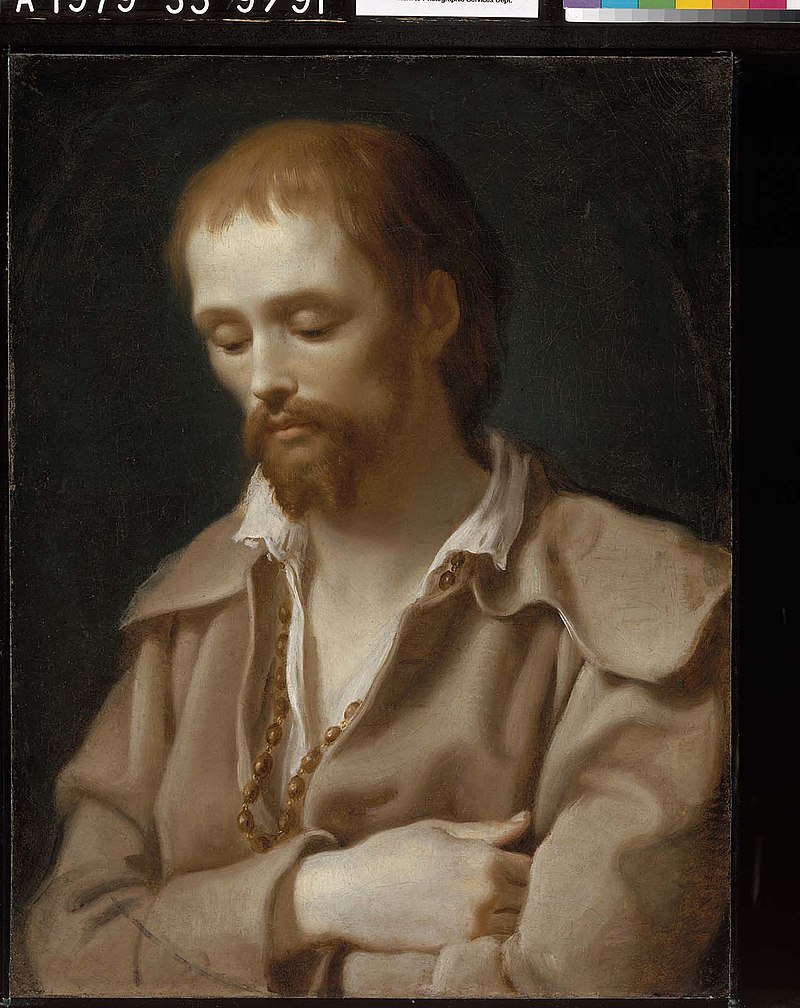
A grace-filled Holy Week to all our readers! As we await and prepare for the Resurrection about to dawn upon us, we might keep in mind two Benedicts: Pope Emeritus Benedict XVI, requiescat in pace, elected on this day in 2005; and today’s commemoration of the mystic pilgrim, Benedict Joseph Labre, who died on this[…]Continue reading→

My Name is Bernadette
April 16th is a propitious day, for besides the anniversary of Father de Valk’s death, who founded Catholic Insight in its print form decades ago, and the commemoration of the ‘two Benedicts’, mentioned in accompanying posts, today we also recall Saint Bernadette Soubirous, the young visionary to whom the Virgin Mary appeared numerous times at[…]Continue reading→
Saint Lydwina of Schiedam and Suffering Joyfully
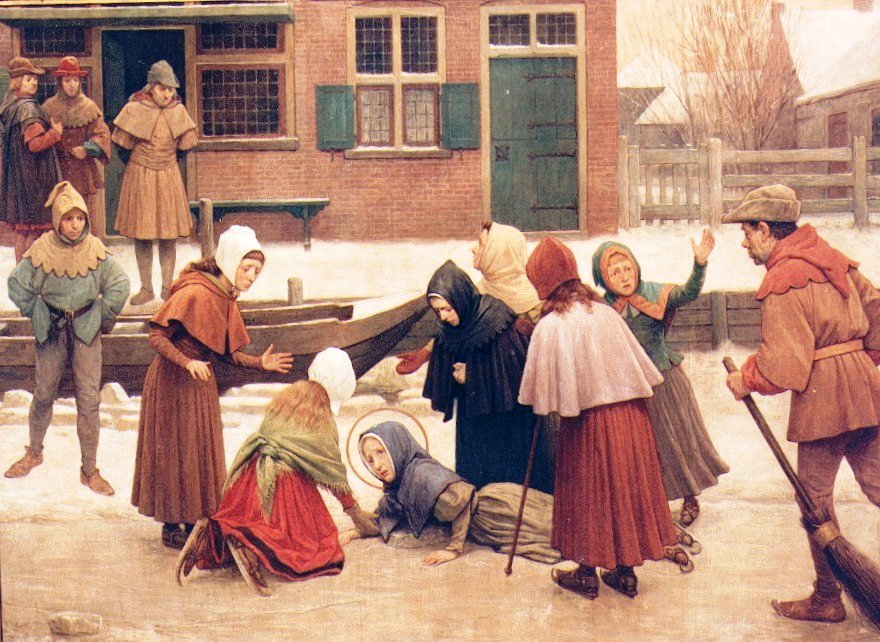
Saint Lydwina of Schiedam (1380 – 1433) was one of the countless and glorious ‘victim souls’ in the history of the Church, those whose lives are filled with suffering, often of an unimaginable intensity, but who suffer joyfully. She was a fifteen-year old Dutch girl, out skating one day, when she fell and broke one[…]Continue reading→
The Glorious Martyrdoms of Martin and Maximus
As we enter into Eastertide, we recall on this 13th of April Pope Saint Martin I (+655), one of the noblest, if most tragic, of the successors of Saint Peter. Born in Umbria, Italy, he was of noble lineage, with great intelligence combined with charity and love of the poor and the Church. While still[…]Continue reading→
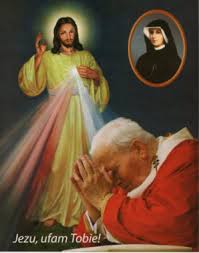
Canonizing Sister Faustina and Divine Mercy
HOMILY OF THE HOLY FATHER MASS IN ST PETER’S SQUARE FOR THE CANONIZATION OF SR MARY FAUSTINA KOWALSKA Sunday, 30 April 2000 1. “Confitemini Domino quoniam bonus, quoniam in saeculum misericordia eius”; “Give thanks to the Lord for he is good; his steadfast love endures for ever” (Ps 118: 1). So the Church sings on the Octave of[…]Continue reading→

Divine Mercy Sunday – An Echo of Every Mass
Reach out your hand and put it in my side. Do not doubt but believe’… ‘My Lord and my God!’ (Jn. 20:18)). Today is Divine Mercy Sunday, and as we celebrate the end of the Easter Octave, we contemplate the wounded side of our Saviour, the Church’s source of life. On Good Friday in the[…]Continue reading→

Saint Stanislaus of Szczepanów
We celebrate Saint Stanislaus today (+ April 11, 1079), in light of this Easter Octave, a bishop and martyr who accepted the episcopacy only at the direct order of Pope Alexander II. He proved a wise and courageous leader of his flock, put to death by his own king, Boleslaus, for rebuking the monarch’s ‘immoral[…]Continue reading→
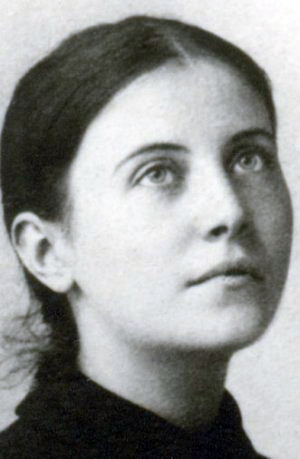
Saint Gemma Galgani
On this April 11th, in 1903 – the same year that the Italian Guiseppe Sarto was elected Pope later that summer as Pius X – a lovely, young Italian woman died, by the name of Gemma Galgani. She lived a brief life of 24 years, as did a number of other young saints, including Pier[…]Continue reading→