
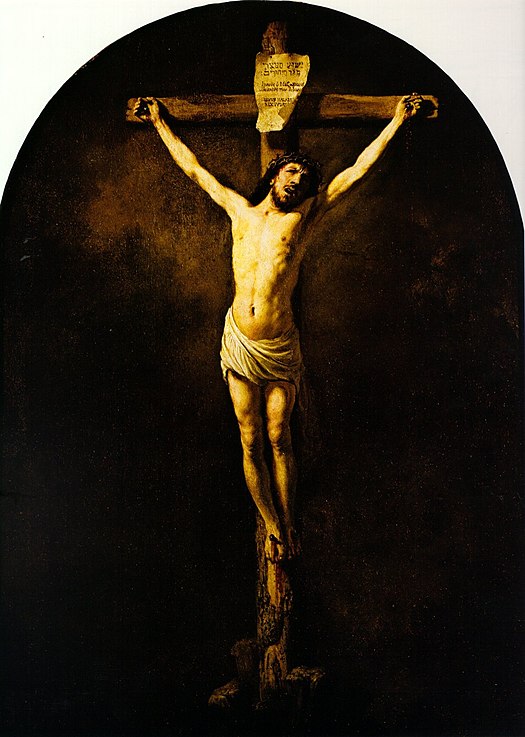
Good Friday
One of the soldiers pierced his side with a spear, and at once blood and water came out. He who saw this has testified so that you may believe. His testimony is true, and he knows that he tells the truth (Jn. 19:34-35). ⧾
The reading of the Passion of Our Lord according to St. John on Good Friday is a climax of the liturgy of Lent; and the piercing of Our Lord’s side is the climax of the Gospel of St. John. The Cross is the goal to which the gospel of John, as well as the other gospels, steadily move. The Cross is no less our goal because we preach Christ crucified… Christ the power of God and the wisdom of God (1 Cor. 1:23-24). As we have repeatedly noted, the Crucifixion of Our Lord is not an accident. It is part of the Father’s plan; and the Son, the Word made flesh humbly submits to this plan. To understand God’s plan and to participate in it with greater purpose, we must leave the elementary doctrine of Christ and go on to maturity (Heb. 6:1). In other words, we must not be content simply to recall His Passion; we must enter into this Mystery with deeper understanding and perceive in all the details that are recorded a fuller revelation of God’s plan of salvation.
One of the soldiers pierced his side with a spear, and at once blood and water came out. He who saw this has testified so that you may believe. His testimony is true, and he knows that he tells the truth (Jn. 19:34-35). This detail is not recorded in any of the other gospels; and St. John assures us of the trustworthiness of what is recounted: He who saw this has testified so that you may believe. His testimony is true, and he knows that he tells the truth. This detail is the biblical foundation for our devotion to the Sacred Heart of Jesus, the pierced Heart of Jesus, which sums up the whole of Christian faith and life.
Last Sunday, in the reading of the Passion according to St. Luke, we reflected on the significance of the tearing of the curtain of the Temple at the death of Our Lord. This veil, forty-five feet in length and four inches thick served as the barrier to the Holy of Holies, where God’s presence rested and where the Ark of the Covenant was kept. Its rending from top to bottom, clearly an act of God, conveys a deeper truth that can be accessed only if we leave the elementary doctrine of Christ and go on to maturity (Heb. 6:1). The veil was rent because we have access to God through Christ Our Saviour. As we read in the Epistle to the Hebrews, Therefore, brethren, since we have confidence to enter the sanctuary by the blood of Jesus, by the new and living way which he opened for us through the curtain, that is, through his flesh (Heb. 10:19-20). St. John, who does not record the rending of the Temple curtain, includes the piercing of Our Lord’s side because it is by His Blood that we are saved. This Precious Blood prefigured in the blood of the Passover lamb that marked the deliverance of the Jewish people from the slavery of Egypt, is the true Blood of Christ the High Priest who on the altar of the Cross is both Priest and Victim. St. John Chrysostom explains: If you desire further proof of the power of this blood, remember where it came from, how it ran down from the Cross, flowing from the Master’s side. The gospel records that when Christ was dead, but still hung on the Cross, a soldier came and pierced his side with a lance and immediately there poured out water and blood. Now the water was a symbol of baptism and the blood, of the holy Eucharist. The soldier pierced the Lord’s side, he breached the wall of the sacred temple, and I have found the treasure and made it my own. So also with the lamb: the Jews sacrificed the victim and I have been saved by it (From the Catecheses by St. John Chrysostom, The Liturgy of the Hours, Vol. II, p. 472). It is all part of God’s plan; then and even now. Our Lord, because He shares our humanity, our human nature, has opened for us and for all humanity a way to God through His sacred humanity. The flesh that is offered in sacrifice for our salvation is like our flesh for He became as we are, yet without sin (Heb. 4:15). The curtain of the temple, the first veil, is torn from top to bottom because now, through faith in Christ all have access to God through the Sacrifice of His Son. We must pass through the first veil and approach the second, turning our eyes toward the Holy of Holies (St. Gregory Nazianzen). The second veil is the veil of His flesh; and as we gaze on Him who was pierced for our transgressions [and] crushed for our iniquities (Is. 53:5) the prophecy of Zechariah is fulfilled and we look on him whom they have pierced (Jn. 19:37). It is for this reason that one of the soldiers pierced his side with a spear, and at once blood and water came out (Jn. 19:34).
As we commemorate the passion of Our Saviour, we recall that true reverence for the Lord’s passion means fixing the eyes of our heart on Jesus crucified and recognizing in Him our own humanity (From a sermon by Pope Saint Leo the Great, The Liturgy of the Hours, Vol. II, p. 313). To recognize in Him our own humanity is to enter into the mystery of both God and man; to ponder the meaning and purpose of human life and the manner in which we are meant to live our lives. I came that they may have life and have it abundantly (Jn. 10:10); and this life is ours not simply because we accept Him as Our Lord and Saviour but because the abundance of this life depends upon our union with Him in this mystery of the Redemption. Within the very intimate and particular circumstances of our own individual lives we say with the Apostle Paul, I have been crucified with Christ; it is no longer I who live but Christ who lives in me; and the life I now live in the flesh I live by faith in the Son of God, who loved me and gave Himself for me (Gal. 2:20).
Those who throughout the world today recall Our Lord’s suffering with true reverence do so because we love Our Lord and we believe that He is indeed the source of eternal salvation for all who obey Him (Heb. 5:9). What good and what purpose would our life have without knowing Christ Jesus Crucified? Today we devoutly commemorate His Passion so that we may enter more fully into this Mystery in which is revealed the truth about God and man; of human nature wounded by sin, yet redeemed and healed by the Son of God. We enter into his most Sacred Heart through the wound made by the lance and learn from Him the value of every human life redeemed by His Precious Blood. Everything that we need to know for life is revealed to us through the Passion of Our Lord. To recognize in Our Lord our own humanity is when life truly begins for us; a life of meaning and purpose, a beautiful life. The beauty of Christ is visible most of all at what is seemingly the ugliest moment of all: Jesus’ tortured death on the cross. The beauty that shines in the form of Christ at that moment is the beauty of infinite love. It is Christ’s self-surrender to the Father in identification with sinners. This beauty seeks to touch people and to transform them, to awaken and to draw them. The response it elicits is not sensual and momentary but all-encompassing, one that embraces [our] entire existence. (Life and Soul, Thomas G. Casey, S. J.).
So we endeavour to fashion our lives to this Mystery and to this standard of beauty. In suffering and in death we recognise the presence of a God who in both gave us an example to imitate. We are also inspired by the example of Our Lady of Sorrows and the faithful disciples at the foot of the Cross. In them we recognise the first gathering of a faithful remnant (Cf. Rom. 11:5); and from them we endeavour to learn to remain steadfast in the truth of Christ, no matter the worldly consequences. Our personal conversion to goodness, purity, humility, gentleness, charity, to courage and penance and even suffering patiently borne out of love for God enables us to reflect and reveal this divine beauty. This Beauty will save our world and our conformity to it is the work of a lifetime; until we reflect the glory of Christ Our Lord. All of this is the fruit of a strong and meaningful devotion to Our Lord’s Most Sacred Heart, a devotion that we must treasure and make our very own. Praised be Jesus Christ. Now and forever. ⧾

Remembering Father Alphonse de Valk
(Today marks the sixth anniversary of the death of Father Alphonse de Valk, C.S.B., a faithful, courageous and indefatigable Basilian priest, pro-life-and-family apostle, and the founder of Catholic Insight magazine. Here is what we wrote those on his entering into eternity five years ago, as we continue to remember him in our prayers and thoughts)[…]Continue reading→

Divine Mercy Sunday – An Echo of Every Mass
Reach out your hand and put it in my side. Do not doubt but believe’… ‘My Lord and my God!’ (Jn. 20:18)). Today is Divine Mercy Sunday, and as we celebrate the end of the Easter Octave, we contemplate the wounded side of our Saviour, the Church’s source of life. On Good Friday in the[…]Continue reading→

Saint Stanislaus of Szczepanów
We celebrate Saint Stanislaus today (+ April 11, 1079), in light of this Easter Octave, a bishop and martyr who accepted the episcopacy only at the direct order of Pope Alexander II. He proved a wise and courageous leader of his flock, put to death by his own king, Boleslaus, for rebuking the monarch’s ‘immoral[…]Continue reading→
First Holy Communion: Sermon from May 16, 1943
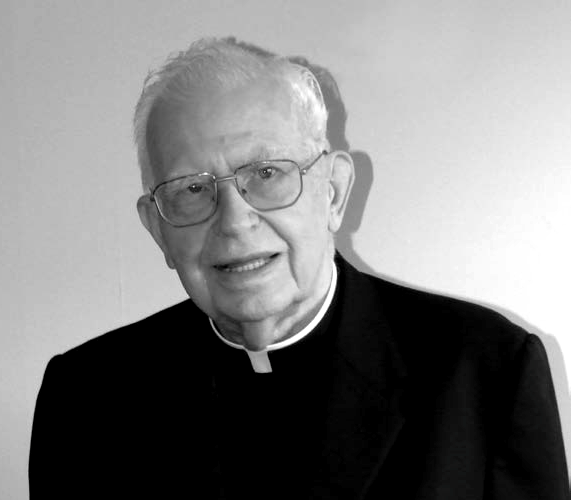
Here is a sermon from the good old days by +Rev. Msgr. Vincent Nicholas Foy (August 14, 1915 – March 13, 2017), from 1943. Readers may recall that Pope Saint Pius X, by the decree Quam Singulari in 1910, lowered the customary age of reception of Holy Communion – after the rigours of the plague[…]Continue reading→
In the Glorious Light of Easter, Alleluia!
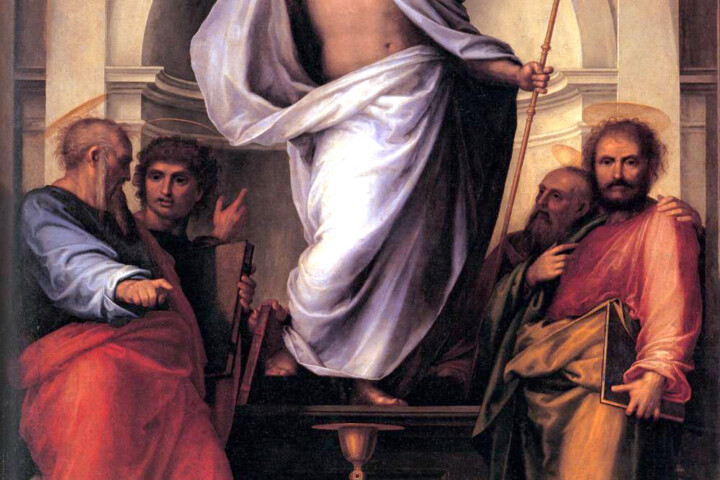
Set your minds on things that are above, not on things that are on earth, for you have died, and your life is hidden with Christ in God. When Christ who is your life is revealed, then you also will be revealed with him in glory (Col. 3:3-4). The Resurrection of Our Lord and Saviour[…]Continue reading→

An Ancient Homily for Holy Saturday
The time between Good Friday and Easter Sunday is one of waiting, in silence, as the world wonders – anticipates – what will happen, after the death of Christ. We re-live this time each year in the anamnesis of our liturgy, and in turn look forward to the glorious re-creation of all things at the[…]Continue reading→
Europe’s Long Descent
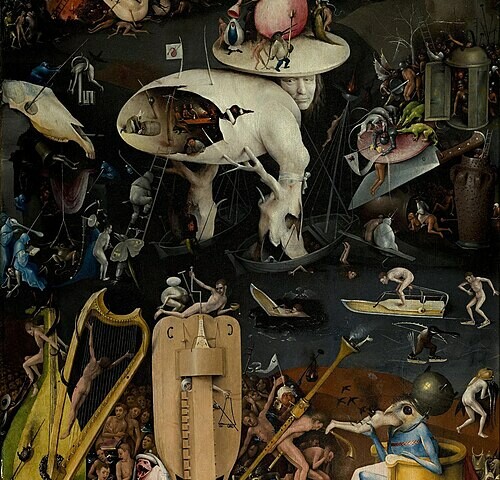
(As we meditate on this day on Christ’s burial, and His descent into hell, it is fitting to ponder here with contributor Peter Marcus how the world seems to be heading there as well. The difference is that, although God cannot ‘redeem’ hell, nor those therein, He can and did redeem the world. There is[…]Continue reading→
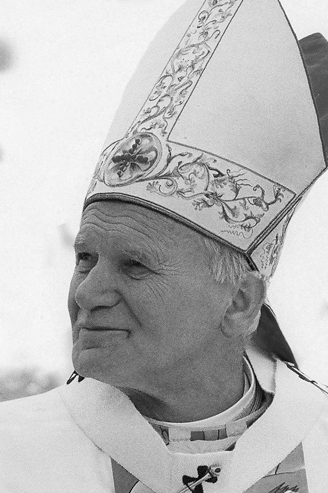
Pope Saint John Paul II’s First Good Friday Homily
ADDRESS OF HIS HOLINESS JOHN PAUL II AT THE CONCLUSION OF THE STATIONS OF THE CROSS AT THE COLOSSEUM Good Friday, 13 April 1979 When we make the Way of the Cross from one station to the next, in spirit we are always at the spot wherethis journey had its “historical” place: where it[…]Continue reading→
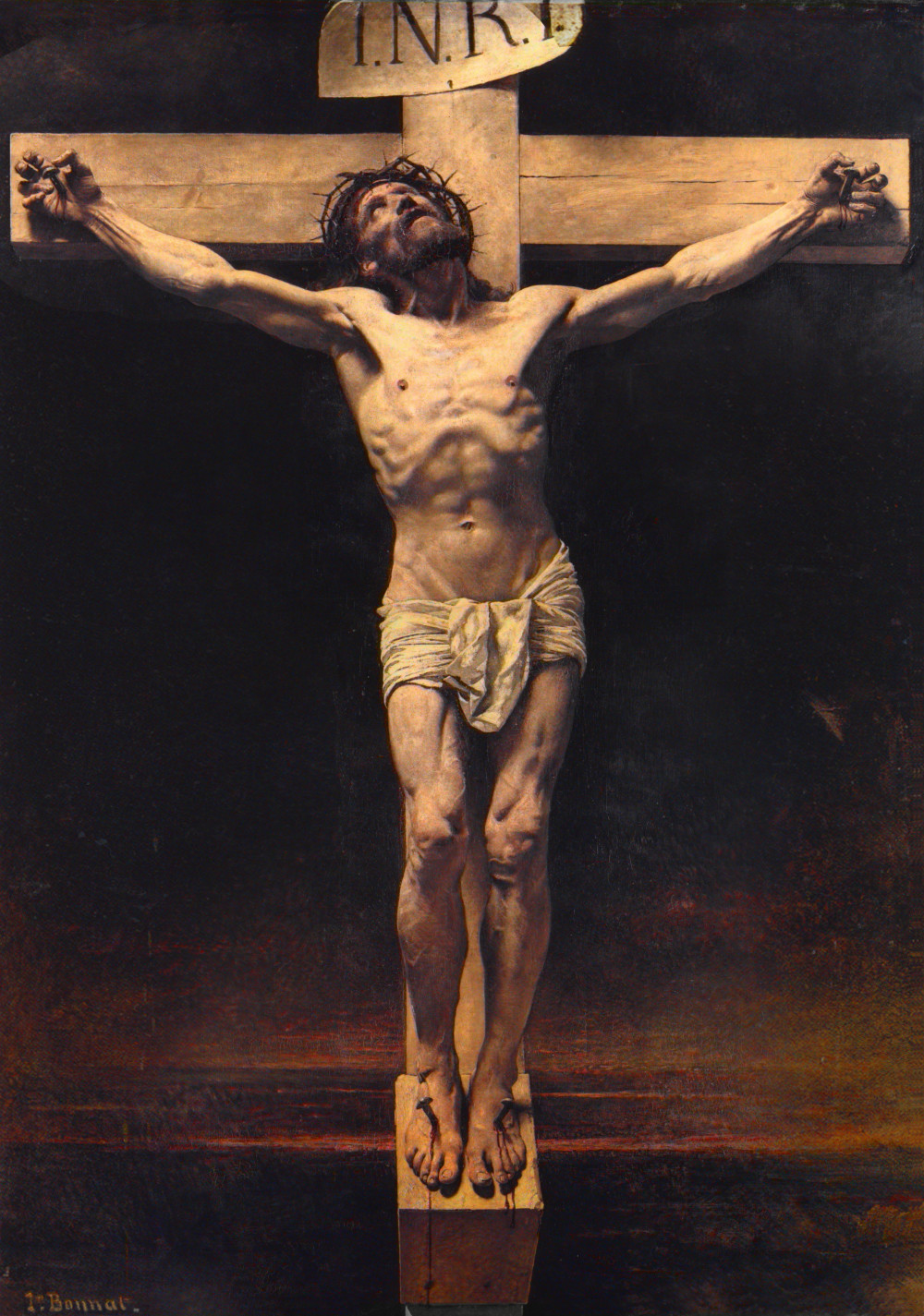
A Meditation for Good Friday: How To Undo the Effects of Sin?
Cardinal Newman, now Saint John Henry Newman, was a towering figure of nineteenth-century Catholicism who is almost universally admired. I say “almost” because not everyone likes him. I knew a priest once, Arthur Caulkins, who has become disenchanted with Newman. As an undergraduate Arthur had been enamoured of Newman, and this interest continued when he[…]Continue reading→
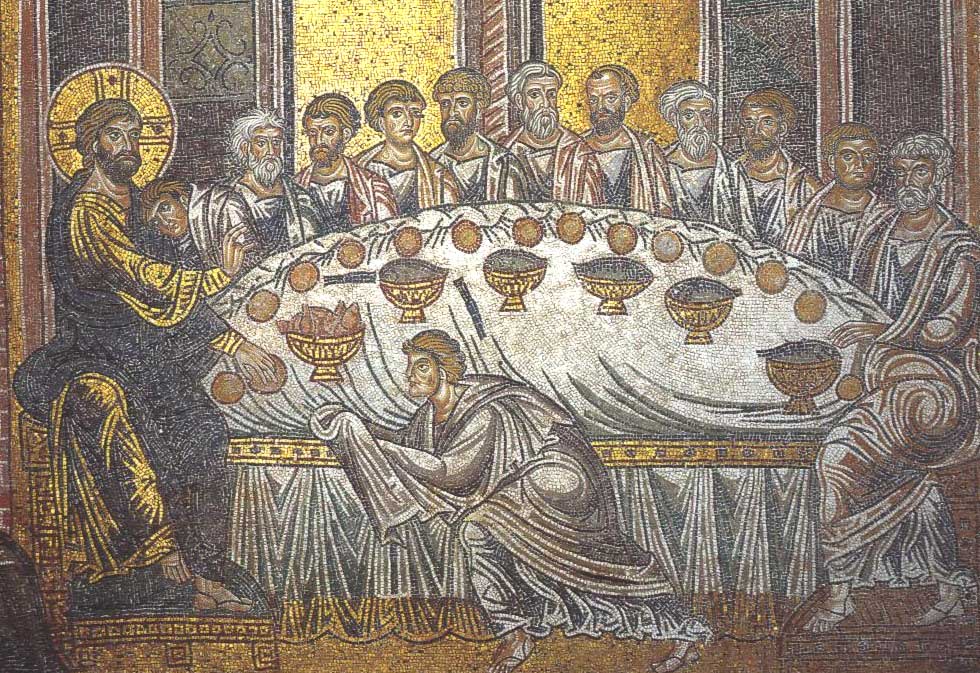
Pope Benedict’s Last Holy Thursday Homily
MASS OF THE LORD’S SUPPER HOMILY OF HIS HOLINESS BENEDICT XVI Basilica of St John Lateran Holy Thursday, 5 April 2012 Photo Gallery (Video) Dear Brothers and Sisters! Holy Thursday is not only the day of the institution of the Most Holy Eucharist, whose splendour bathes all else and in some ways draws it to[…]Continue reading→