
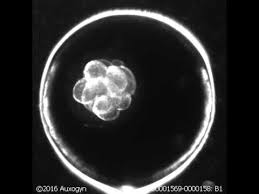
A Second Reply to Dr. Elizabeth Rex: IVF and ET Are Still Immoral
(Bioethicist Dr. Elizabeth Rex has responded to my initial response, and the reader may find such on LifeSite. You can read the debate here. Alas, Dr. Rex’s arguments do not work, and here is my reply and clarification, which may be posted on LifeSite soon. This will likely close my contribution, for I’m not sure anything more said on this issue would be profitable). Editor
I would like to thank Dr. Rex for her detailed reply to my own concerns. I must confess that I did not realize that ‘embryo adoption’ had gone so mainstream in the Catholic world. But that still does not make it right.
Dr. Rex does not respond directly to the two key teachings which I quote from Donum Vitae (1987) and Dignitatis Personae (2008). She talks around them, but not to them.
Before offering some clarifications required in the claims made in her response, allow me to ask a simple question:
Both Pope John Paul II and Cardinal Ratzinger were well aware of all the reasons and arguments that Dr. Rex offers, and could have made them at least as well as she does. Yet they still taught – quite clearly – that there are no licit means to bring these embryos to birth.
Why does Dr. Rex – and the others she quotes – get to say that there are now indeed licit means? What has changed since 1987 and 2008? Whence does she derive the authority to go contrary to the conclusions reached by the Magisterium? Keep in mind that Cardinal Ratzinger wrote Donum Vitae, and approved Dignitatis Humanae as Pope.
Readers should be aware that the Pontifical Academy for Life that Dr. Rex invokes for support is not a Magisterial office, but simply advisory, as is the Pontifical Academy for Sciences. You don’t even need to be a Catholic to be appointed, and there are some controversial appointees of late. Just a few years ago, they were embroiled in a scandal when a book they published approved contraception. And to seek moral guidance from the USCCB is a fraught endeavour.
It is a principle in theology that one always interprets the less authoritative in light of the more authoritative. Both Donum Vitae and Dignitatis Personae are Magisterial documents, promulgated by the highest level of authority in the Church. Nothing and no one that Dr. Rex invokes to support her position has such authority.
Theologians debate all sorts of things, from women’s ordination, to contraception, euthanasia and abortion. That does not make these issues debatable. For when things really matter, the Church (after much pondering) will simply speak the truth.
Read over the two key paragraphs quoted in my first reply. The Church frames her teaching in such simple and clear terms, so that all may understand, ‘with ease, firm certainty and no admixture of error’, without any need of advanced education, esoteric language or complex arguments.
We will now clarify our response to just a few of the claims Dr. Rex makes:
- Yes, we have a duty to save and preserve life, but not at the expense of doing moral evil. That is the whole point of the two documents. Placing an embryo in a womb by technical means (embryo transfer, ET) replaces the conjugal act and is an intrinsic evil, as part of the broader evil of IVF. Even if many Catholics, even bishops, support the technology since it seems superficially ‘pro-life’. It’s not.
- The arguments made by Dr. Rex supporting embryo transfer could just as well be used to support some aspects of IVF, if not all of it. After all, it’s producing life, is it not, and children who would otherwise not have existed can now exist, all the while giving (apparently) great hope and joy to infertile couples. In whatever way one defines surrogacy, implanting a genetically alien child in one’s womb fits the bill, regardless of intention. But Donum Vitae condemns even the theoretical ‘simple case’ of IVF and ET: An infertile, married couple, who have one ovum fertilized via IVF, by sperm taken without masturbation, and no abortion. Would Dr. Rex dissociate these two procedures, claiming that IVF is wrong, but ET – implanting the embryos – is not? Is this what she claims the documents are teaching? It seems clear that both procedures are condemned as immoral. The whole process dissociates the ‘nexus indissolubilis’ – the unbreakable bond – that exists, and must exist, between the unitive and the procreative.
- The paragraph permitting therapeutic interventions on the unborn – a noble endeavor – refers to babies already in the womb, and cannot be construed to support implanting embryos. The document just spent the previous paragraphs condemning IVF and ET. What is more, if this were the point of that paragraph, why wouldn’t the authors of the document – who were well aware of embryo transfer – allude to such when referring later to embryo adoption? Instead, it says the exact opposite: There are no licit means to bring these embryos to term. Rex’s interpretation is specious.
- As an ancillary point, how would such embryos be chosen? By arbitrary criteria, eugenic or otherwise, or by a quasi-random lottery?
- To implant these embryos in the wombs of willing participants – for all of the good intentions – is formal cooperation in this macabre endeavor, usurping God’s prerogative, and would only create an even greater market and appetite for embryonic children to be produced. Moral evil always begets ever-greater evil, which is why the Church has indeed condemned IVF and ET, from beginning to end. We should take no part in it. These children, sadly, have no morally licit way to be brought to term. That is what the Church has taught, simply and clearly. If the Magisterium intervenes and clarifies this further, I am open. Until then, Roma locuta, causa finita.

Carney’s Amoral Majority
After five defections – euphemistically described as ‘crossing the floor’ – and three by-elections, Mark Carney and his Liberals how have their coveted majority. One wonders what bowls of pottage were offered in back-room deals. In the archaic monarchical system that is the Dominion of Canada, this majority allows the newly-minted Prime Minister to rule[…]Continue reading→

Saint Kateri , Canada’s Protectress
This was the title given to Saint Kateri Tekakwitha, by Pope Benedict XVI, when he canonized her on October 28th, 2012, along with six others, in Saint Peter’ Square (she had been beatified by Pope John Paul II back in 1980). With Saint Joseph as our protector, along with the Canadian martyrs, we seem to[…]Continue reading→

A Tale of Two Benedicts
A grace-filled Holy Week to all our readers! As we await and prepare for the Resurrection about to dawn upon us, we might keep in mind two Benedicts: Pope Emeritus Benedict XVI, requiescat in pace, elected on this day in 2005; and today’s commemoration of the mystic pilgrim, Benedict Joseph Labre, who died on this[…]Continue reading→

My Name is Bernadette
April 16th is a propitious day, for besides the anniversary of Father de Valk’s death, who founded Catholic Insight in its print form decades ago, and the commemoration of the ‘two Benedicts’, mentioned in accompanying posts, today we also recall Saint Bernadette Soubirous, the young visionary to whom the Virgin Mary appeared numerous times at[…]Continue reading→

Saint Lydwina of Schiedam and Suffering Joyfully
Saint Lydwina of Schiedam (1380 – 1433) was one of the countless and glorious ‘victim souls’ in the history of the Church, those whose lives are filled with suffering, often of an unimaginable intensity, but who suffer joyfully. She was a fifteen-year old Dutch girl, out skating one day, when she fell and broke one[…]Continue reading→

The Glorious Martyrdoms of Martin and Maximus
As we enter into Eastertide, we recall on this 13th of April Pope Saint Martin I (+655), one of the noblest, if most tragic, of the successors of Saint Peter. Born in Umbria, Italy, he was of noble lineage, with great intelligence combined with charity and love of the poor and the Church. While still[…]Continue reading→

Saint Stanislaus of Szczepanów
We celebrate Saint Stanislaus today (+ April 11, 1079), in light of this Easter Octave, a bishop and martyr who accepted the episcopacy only at the direct order of Pope Alexander II. He proved a wise and courageous leader of his flock, put to death by his own king, Boleslaus, for rebuking the monarch’s ‘immoral[…]Continue reading→
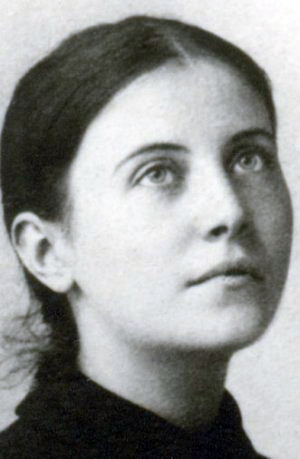
Saint Gemma Galgani
On this April 11th, in 1903 – the same year that the Italian Guiseppe Sarto was elected Pope later that summer as Pius X – a lovely, young Italian woman died, by the name of Gemma Galgani. She lived a brief life of 24 years, as did a number of other young saints, including Pier[…]Continue reading→
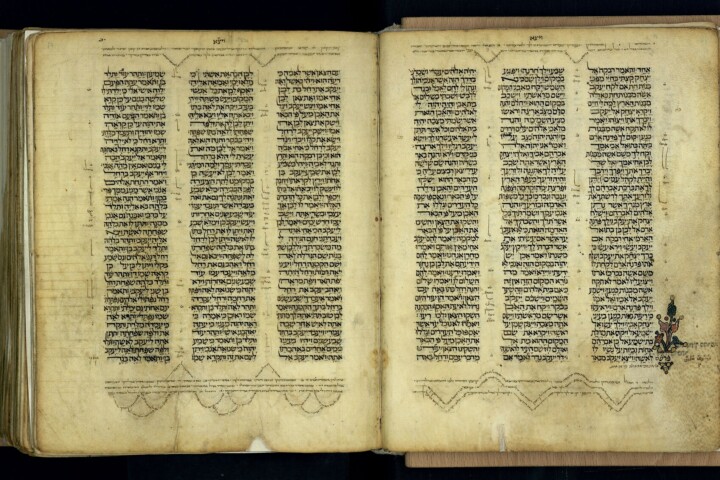
An Ideological and Improper Translation
I noticed something odd with the psalm reading at Mass the other day. Our bishops’ conference here in Canada has decreed that the Mass in English – Novus Ordo – use the ‘NRSV’, the ‘New Revised Standard Version’, an ‘updated’ translation of the original RSV, first published in 1952. This ‘new translation’ has the tendency[…]Continue reading→
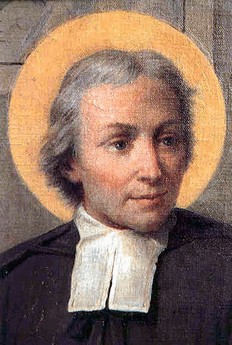
Saint Jean-Baptiste de la Salle: A Teacher for Teachers
Jean-Baptiste de la Salle (1651 – 1719), a French nobleman, ordained a priest, founded the first order in the Church’s history entirely without priests, and this came about almost by accident. I say ‘almost’, for, of course, there are no accidents with God. Destined for ordination from an early age, Jean-Baptiste never looked back, even[…]Continue reading→