
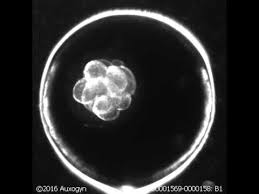
No, Embryo Adoption is Not an Option, for Catholics or Anyone Else: A Reply to Dr. Elizabeth Rex on LifeSite
I listened with some concern to the recent interview with Dr. Elizabeth Rex on LifeSite news, “The Moral Crisis of IVF: Can Catholics Adopt Frozen Embryos?”. During the discussion, Dr. Rex quoted selectively, incompletely and inaccurately from the two Magisterial document(s), Donum Vitae (1987) and Dignitatis Personae (2008).
Here is the full relevant section of Donum Vitae:
In consequence of the fact that they have been produced <in vitro,> those embryos which are not transferred into the body of the mother and are called “spare” are exposed to an absurd fate, with no possibility of their being offered safe means of survival which can be licitly pursued. (emphasis added)
This teaching is re-emphasized and expanded upon two decades later, in Dignitatis Personae:
With regard to the large number of frozen embryos already in existence the question becomes: what to do with them? Some of those who pose this question do not grasp its ethical nature, motivated as they are by laws in some countries that require cryopreservation centers to empty their storage tanks periodically. Others, however, are aware that a grave injustice has been perpetrated and wonder how best to respond to the duty of resolving it.
Proposals to use these embryos for research or for the treatment of disease are obviously unacceptable because they treat the embryos as mere “biological material” and result in their destruction. The proposal to thaw such embryos without reactivating them and use them for research, as if they were normal cadavers, is also unacceptable.
The proposal that these embryos could be put at the disposal of infertile couples as a treatment for infertility is not ethically acceptable for the same reasons which make artificial heterologous procreation illicit as well as any form of surrogate motherhood; this practice would also lead to other problems of a medical, psychological and legal nature.
It has also been proposed, solely in order to allow human beings to be born who are otherwise condemned to destruction, that there could be a form of “prenatal adoption”. This proposal, praiseworthy with regard to the intention of respecting and defending human life, presents however various problems not dissimilar to those mentioned above.
All things considered, it needs to be recognized that the thousands of abandoned embryos represent a situation of injustice which in fact cannot be resolved. Therefore John Paul II made an “appeal to the conscience of the world’s scientific authorities and in particular to doctors, that the production of human embryos be halted, taking into account that there seems to be no morally licit solution regarding the human destiny of the thousands and thousands of ‘frozen’ embryos which are and remain the subjects of essential rights and should therefore be protected by law as human persons”. (emphasis added)
To put it simply, embryo adoption is not permitted by the Church, nor it is the same as adopting born children, as Dr. Rex implies. The two cases are inherently different.
The ‘problems’ alluded to are explained in the previous sections of the documents. The two primary intrinsic evils involved in embryo adoption are:
- Embryo transfer – (which is always linked with IVF). The Church distinguishes reproductive technologies that ‘assist’ the natural God-given conjugal act, and those that ‘dominate’ and replace the act. Placing an embryo in a womb is dominative, and not assistive. The only morally permitted way for a baby to be in a womb is by the conjugal act, between a husband and wife.
- Surrogacy – Gestating a child who is not genetically related to the mother, placed there by artificial means (embryo transfer) is also explicitly condemned. Embryo adoption is surrogacy.
Besides this, there are two added a posteriori problems. One is that anything that could be done, in the end, and in some way, should be done. Would not legions of young women have an obligation to save these babies? And which ones do they choose? Like all intrinsic evils, embryo adoption raises more problems than it may purport to solve.
Also, if we harken back to 1968 and Humanae Vitae, Paul VI warns that if an intrinsic evil such as contraception were to be permitted, what’s to stop the state using such means, even coercively, for proportionate reasons? A Pandora’s box would be open to all sorts of evils, and a brave new world would dawn indeed.
Pope Saint John Paul II warns in Veritatis Splendor the prohibition of intrinsic evils is the safeguard against totalitarian moral anarchy. The Church is now practically alone in such prohibitions. Some things must never be done, regardless of how much good may be attained, or evil avoided.
I agree this is an emotional topic, and the intention to ‘save’ the babies an admirable one. But Pope John Paul II in Evangelium Vitae teaches that this earthly life is a penultimate good, not an ultimate one –we are made for heaven, including all those embryonic babies. Placing them in a womb, surrogate or otherwise, is an intrinsic evil, incommensurate with the spiritual harm this would entail.
If embryo adoption were an option, the Church would have said so. The technology was available when both documents were written. Rather, she says the opposite: The highest authority in the Church has explicitly declared that there is no licit way to bring these children to birth.
To echo John Paul II, the production of artificial embryos must stop, and the ongoing IVF horror show end.

Carney’s Amoral Majority
After five defections – euphemistically described as ‘crossing the floor’ – and three by-elections, Mark Carney and his Liberals how have their coveted majority. One wonders what bowls of pottage were offered in back-room deals. In the archaic monarchical system that is the Dominion of Canada, this majority allows the newly-minted Prime Minister to rule[…]Continue reading→

Saint Kateri , Canada’s Protectress
This was the title given to Saint Kateri Tekakwitha, by Pope Benedict XVI, when he canonized her on October 28th, 2012, along with six others, in Saint Peter’ Square (she had been beatified by Pope John Paul II back in 1980). With Saint Joseph as our protector, along with the Canadian martyrs, we seem to[…]Continue reading→

A Tale of Two Benedicts
A grace-filled Holy Week to all our readers! As we await and prepare for the Resurrection about to dawn upon us, we might keep in mind two Benedicts: Pope Emeritus Benedict XVI, requiescat in pace, elected on this day in 2005; and today’s commemoration of the mystic pilgrim, Benedict Joseph Labre, who died on this[…]Continue reading→

My Name is Bernadette
April 16th is a propitious day, for besides the anniversary of Father de Valk’s death, who founded Catholic Insight in its print form decades ago, and the commemoration of the ‘two Benedicts’, mentioned in accompanying posts, today we also recall Saint Bernadette Soubirous, the young visionary to whom the Virgin Mary appeared numerous times at[…]Continue reading→

Saint Lydwina of Schiedam and Suffering Joyfully
Saint Lydwina of Schiedam (1380 – 1433) was one of the countless and glorious ‘victim souls’ in the history of the Church, those whose lives are filled with suffering, often of an unimaginable intensity, but who suffer joyfully. She was a fifteen-year old Dutch girl, out skating one day, when she fell and broke one[…]Continue reading→

The Glorious Martyrdoms of Martin and Maximus
As we enter into Eastertide, we recall on this 13th of April Pope Saint Martin I (+655), one of the noblest, if most tragic, of the successors of Saint Peter. Born in Umbria, Italy, he was of noble lineage, with great intelligence combined with charity and love of the poor and the Church. While still[…]Continue reading→

Saint Stanislaus of Szczepanów
We celebrate Saint Stanislaus today (+ April 11, 1079), in light of this Easter Octave, a bishop and martyr who accepted the episcopacy only at the direct order of Pope Alexander II. He proved a wise and courageous leader of his flock, put to death by his own king, Boleslaus, for rebuking the monarch’s ‘immoral[…]Continue reading→

Saint Gemma Galgani
On this April 11th, in 1903 – the same year that the Italian Guiseppe Sarto was elected Pope later that summer as Pius X – a lovely, young Italian woman died, by the name of Gemma Galgani. She lived a brief life of 24 years, as did a number of other young saints, including Pier[…]Continue reading→

An Ideological and Improper Translation
I noticed something odd with the psalm reading at Mass the other day. Our bishops’ conference here in Canada has decreed that the Mass in English – Novus Ordo – use the ‘NRSV’, the ‘New Revised Standard Version’, an ‘updated’ translation of the original RSV, first published in 1952. This ‘new translation’ has the tendency[…]Continue reading→
Saint Jean-Baptiste de la Salle: A Teacher for Teachers
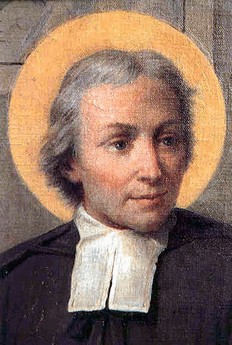
Jean-Baptiste de la Salle (1651 – 1719), a French nobleman, ordained a priest, founded the first order in the Church’s history entirely without priests, and this came about almost by accident. I say ‘almost’, for, of course, there are no accidents with God. Destined for ordination from an early age, Jean-Baptiste never looked back, even[…]Continue reading→