
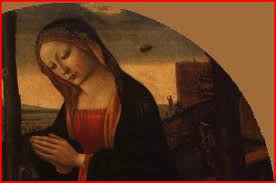
Our Lady’s Role in Redemption
On this great Solemnity of the Annunciation – and a blessed one may it be – it is fitting to reflect upon Our Lady’s role in redemption. Certainly, Christ is the ‘one Mediator between God and men’ (1 Tim 2:5), and we can say the same of His redemptive role. It is unique, and belongs to Him as both God and Man. Our Lady had to be redeemed by her Son, but in her own unique way, by being conceived Immaculate and preserved from any stain of sin.
Yet, Christ wills for human beings to share in this work of redemption (cf., Summa Theologica, I, 103, 6) – as Saint Paul himself says, ‘in my flesh I complete what is lacking in Christ’s afflictions for the sake of his body, that is, the church‘. In the aforementioned article, Saint Thomas clarifies God allows His creatures a share in His work, for for His sake, as though He had need of us, but for ours, so that His creation may grow in perfection. As he puts it: Now it is a greater perfection for a thing to be good in itself and also the cause of goodness in others, than only to be good in itself.
We all share in the work of redemption in some way, with every act of charity; every discomfort and pain offered up in union with Christ; all the drudgery of family life in the raising and educating of children, the changing of diapers and the homeschooled algebra class; every task done well; every prayer and sacrament, from the whispered confession to the most solemn of High Masses. All of it is redemptive, if done with even a small spark, a veritable scintilla, of divine love.
The prefix ‘co’ derives from the Latin ‘cum‘, and means ‘with’, as in, et cum spiritu tuo,, and, in English, co-worker, col-league, con-spirator and so on. Hence, we are all, in one broad sense, ‘co-redeemers’ with Christ, even if we may not put it that way, just as we all ‘carry our own crosses’ with Him.
Yet the Virgin Mary’s role in the work of redemption was (and is) unique and irreplaceable, beyond any other human or angel. As the greatest of God’s creatures, filled with the most grace and charity, sinless and immaculate from her conception, one who never deviated from the divine will, she, the very Theotokos, she shared in that salvific work as no one else ever had, could or will.
Whatever title the Church has given to Our Lady – and there are many – has reflected this reality. Should we officially declare Mary as ‘Co-Redemeer’, or, ‘Co-Redemptrix’? I will leave that to the discernment of the Magisterium. We may see the Pope’s point in emphasizing her maternal role, which is how the Virgin primarily fulfills her mission, but being a ‘mother’ is not contrary to having a unique share in the redemptive work of Christ, and in fact complements it. And, at the end of the day, we should recall that Pope Francis is in no way speaking ex cathedra, nor even definitively, but rather airing out his thoughts in a general audience. Dialogue, debate and development on the roles and titles of the Virgin Mary are by no means at an end, but will continue unto the very end of time. We should take some comfort in the meantime that a rose of the Davidic line by any other name would still smell as sweet, and still share in the meritorious work of her Son.
Readers may want to peruse the teaching of the Church on the role of the Virgin Mary in the ‘economy’ – that is the work and providential plan – of salvation. Hence, we will append after this reflection the relevant few paragraphs from the Vatican Council’s teaching on Our Lady, as found in Lumen Gentium, the Dogmatic Constitution on the Church, with italicized phrases for your pondering.
Sancta Maria, Mater Dei, ora pro nobis!
Now, to Lumen Gentium!…
II. The Role of the Blessed Mother in the Economy of Salvation
55. The Sacred Scriptures of both the Old and the New Testament, as well as ancient Tradition show the role of the Mother of the Saviour in the economy of salvation in an ever clearer light and draw attention to it. The books of the Old Testament describe the history of salvation, by which the coming of Christ into the world was slowly prepared. These earliest documents, as they are read in the Church and are understood in the light of a further and full revelation, bring the figure of the woman, Mother of the Redeemer, into a gradually clearer light. When it is looked at in this way, she is already prophetically foreshadowed in the promise of victory over the serpent which was given to our first parents after their fall into sin.(284) Likewise she is the Virgin who shall conceive and bear a son, whose name will be called Emmanuel.(285) She stands out among the poor and humble of the Lord, who confidently hope for and receive salvation from Him. With her the exalted Daughter of Sion, and after a long expectation of the promise, the times are fulfilled and the new Economy established, when the Son of God took a human nature from her, that He might in the mysteries of His flesh free man from sin.
56. The Father of mercies willed that the incarnation should be preceded by the acceptance of her who was predestined to be the mother of His Son, so that just as a woman contributed to death, so also a woman should contribute to life. That is true in outstanding fashion of the mother of Jesus, who gave to the world Him who is Life itself and who renews all things, and who was enriched by God with the gifts which befit such a role. It is no wonder therefore that the usage prevailed among the Fathers whereby they called the mother of God entirely holy and free from all stain of sin, as though fashioned by the Holy Spirit and formed as a new creature.(5*) Adorned from the first instant of her conception with the radiance of an entirely unique holiness, the Virgin of Nazareth is greeted, on God’s command, by an angel messenger as “full of grace”,(286) and to the heavenly messenger she replies: “Behold the handmaid of the Lord, be it done unto me according to thy word”.(287) Thus Mary, a daughter of Adam, consenting to the divine Word, became the mother of Jesus, the one and only Mediator. Embracing God’s salvific will with a full heart and impeded by no sin, she devoted herself totally as a handmaid of the Lord to the person and work of her Son, under Him and with Him, by the grace of almighty God, serving the mystery of redemption. Rightly therefore the holy Fathers see her as used by God not merely in a passive way, but as freely cooperating in the work of human salvation through faith and obedience. For, as St. Irenaeus says, she “being obedient, became the cause of salvation for herself and for the whole human race.”(6*) Hence not a few of the early Fathers gladly assert in their preaching, “The knot of Eve’s disobedience was untied by Mary’s obedience; what the virgin Eve bound through her unbelief, the Virgin Mary loosened by her faith.”(7*) Comparing Mary with Eve, they call her “the Mother of the living,”(8*) and still more often they say: “death through Eve, life through Mary.”(9*)
57. This union of the Mother with the Son in the work of salvation is made manifest from the time of Christ’s virginal conception up to His death it is shown first of all when Mary, arising in haste to go to visit Elizabeth, is greeted by her as blessed because of her belief in the promise of salvation and the precursor leaped with joy in the womb of his mother.(288) This union is manifest also at the birth of Our Lord, who did not diminish His mother’s virginal integrity but sanctified it,(10*) when the Mother of God joyfully showed her firstborn Son to the shepherds and Magi. When she presented Him to the Lord in the temple, making the offering of the poor, she heard Simeon foretelling at the same time that her Son would be a sign of contradiction and that a sword would pierce the mother’s soul, that out of many hearts thoughts might be revealed.(289) When the Child Jesus was lost and they had sought Him sorrowing, His parents found Him in the temple, taken up with the things that were His Father’s business; and they did not understand the word of their Son. His Mother indeed kept these things to be pondered over in her heart.(290)
58. In the public life of Jesus, Mary makes significant appearances. This is so even at the very beginning, when at the marriage feast of Cana, moved with pity, she brought about by her intercession the beginning of miracles of Jesus the Messiah.(291) In the course of her Son’s preaching she received the words whereby in extolling a kingdom beyond the calculations and bonds of flesh and blood, He declared blessed(292) those who heard and kept the word of God, as she was faithfully doing.(293) After this manner the Blessed Virgin advanced in her pilgrimage of faith, and faithfully persevered in her union with her Son unto the cross, where she stood, in keeping with the divine plan,(294) grieving exceedingly with her only begotten Son, uniting herself with a maternal heart with His sacrifice, and lovingly consenting to the immolation of this Victim which she herself had brought forth. Finally, she was given by the same Christ Jesus dying on the cross as a mother to His disciple with these words: “Woman, behold thy son”.(295) (11*)
59. But since it has pleased God not to manifest solemnly the mystery of the salvation of the human race before He would pour forth the Spirit promised by Christ, we see the apostles before the day of Pentecost “persevering with one mind in prayer with the women and Mary the Mother of Jesus, and with His brethren”,(296) and Mary by her prayers imploring the gift of the Spirit, who had already overshadowed her in the Annunciation. Finally, the Immaculate Virgin, preserved free from all guilt of original sin,(12*) on the completion of her earthly sojourn, was taken up body and soul into heavenly glory,(13*) and exalted by the Lord as Queen of the universe, that she might be the more fully conformed to her Son, the Lord of lords(297) and the conqueror of sin and death.(l4*)

Carney’s Amoral Majority
After five defections – euphemistically described as ‘crossing the floor’ – and three by-elections, Mark Carney and his Liberals how have their coveted majority. One wonders what bowls of pottage were offered in back-room deals. In the archaic monarchical system that is the Dominion of Canada, this majority allows the newly-minted Prime Minister to rule[…]Continue reading→

Saint Kateri , Canada’s Protectress
This was the title given to Saint Kateri Tekakwitha, by Pope Benedict XVI, when he canonized her on October 28th, 2012, along with six others, in Saint Peter’ Square (she had been beatified by Pope John Paul II back in 1980). With Saint Joseph as our protector, along with the Canadian martyrs, we seem to[…]Continue reading→

A Tale of Two Benedicts
A grace-filled Holy Week to all our readers! As we await and prepare for the Resurrection about to dawn upon us, we might keep in mind two Benedicts: Pope Emeritus Benedict XVI, requiescat in pace, elected on this day in 2005; and today’s commemoration of the mystic pilgrim, Benedict Joseph Labre, who died on this[…]Continue reading→

My Name is Bernadette
April 16th is a propitious day, for besides the anniversary of Father de Valk’s death, who founded Catholic Insight in its print form decades ago, and the commemoration of the ‘two Benedicts’, mentioned in accompanying posts, today we also recall Saint Bernadette Soubirous, the young visionary to whom the Virgin Mary appeared numerous times at[…]Continue reading→

Saint Lydwina of Schiedam and Suffering Joyfully
Saint Lydwina of Schiedam (1380 – 1433) was one of the countless and glorious ‘victim souls’ in the history of the Church, those whose lives are filled with suffering, often of an unimaginable intensity, but who suffer joyfully. She was a fifteen-year old Dutch girl, out skating one day, when she fell and broke one[…]Continue reading→

The Glorious Martyrdoms of Martin and Maximus
As we enter into Eastertide, we recall on this 13th of April Pope Saint Martin I (+655), one of the noblest, if most tragic, of the successors of Saint Peter. Born in Umbria, Italy, he was of noble lineage, with great intelligence combined with charity and love of the poor and the Church. While still[…]Continue reading→

Saint Stanislaus of Szczepanów
We celebrate Saint Stanislaus today (+ April 11, 1079), in light of this Easter Octave, a bishop and martyr who accepted the episcopacy only at the direct order of Pope Alexander II. He proved a wise and courageous leader of his flock, put to death by his own king, Boleslaus, for rebuking the monarch’s ‘immoral[…]Continue reading→

Saint Gemma Galgani
On this April 11th, in 1903 – the same year that the Italian Guiseppe Sarto was elected Pope later that summer as Pius X – a lovely, young Italian woman died, by the name of Gemma Galgani. She lived a brief life of 24 years, as did a number of other young saints, including Pier[…]Continue reading→
An Ideological and Improper Translation
I noticed something odd with the psalm reading at Mass the other day. Our bishops’ conference here in Canada has decreed that the Mass in English – Novus Ordo – use the ‘NRSV’, the ‘New Revised Standard Version’, an ‘updated’ translation of the original RSV, first published in 1952. This ‘new translation’ has the tendency[…]Continue reading→
Saint Jean-Baptiste de la Salle: A Teacher for Teachers
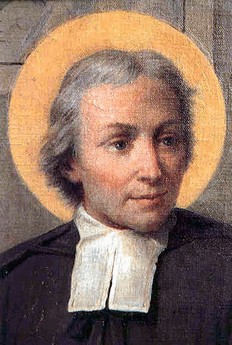
Jean-Baptiste de la Salle (1651 – 1719), a French nobleman, ordained a priest, founded the first order in the Church’s history entirely without priests, and this came about almost by accident. I say ‘almost’, for, of course, there are no accidents with God. Destined for ordination from an early age, Jean-Baptiste never looked back, even[…]Continue reading→