
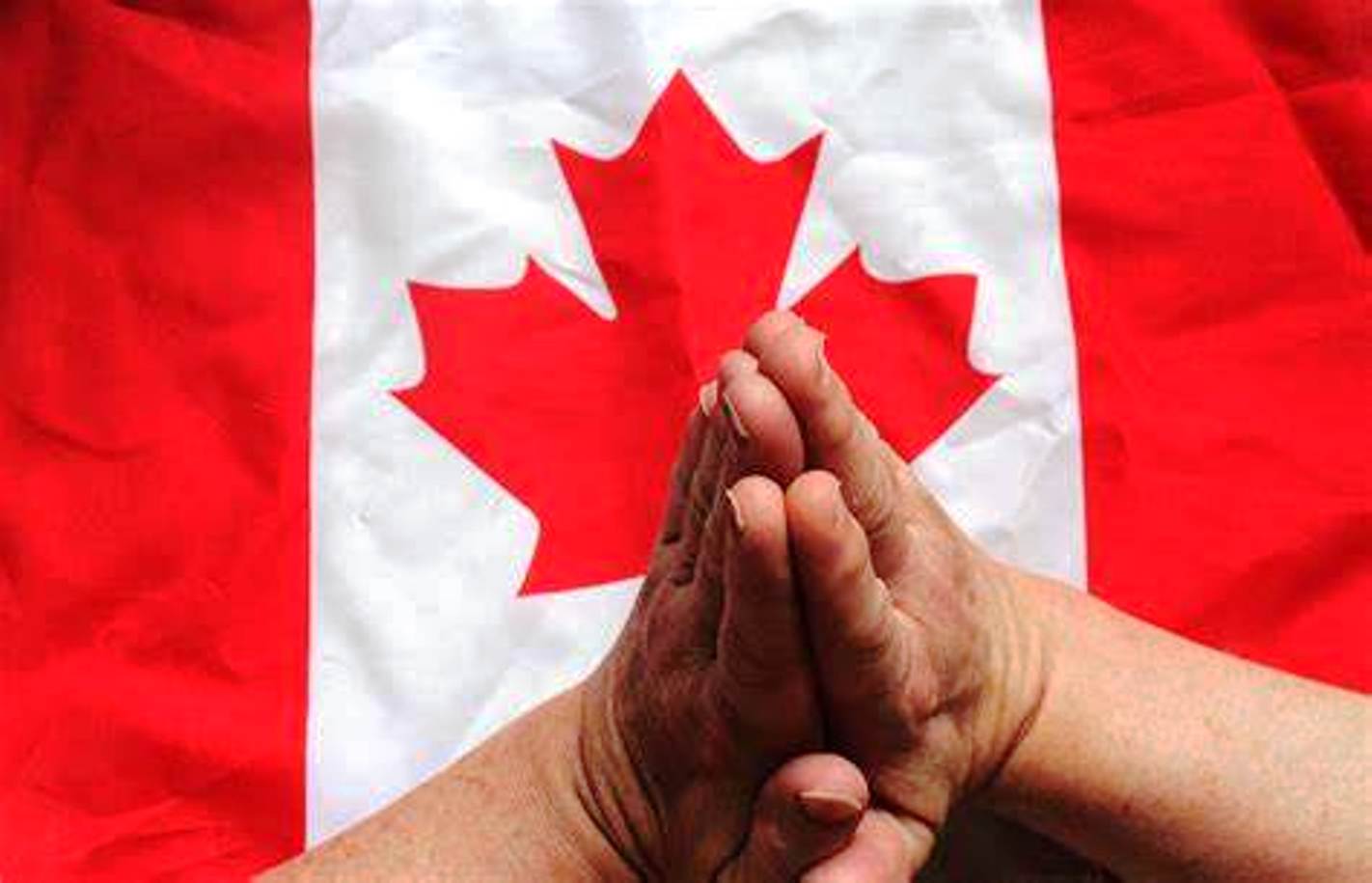
Charitable Status to be, or not to be, Revoked – and Then Some: Whither the Church in Canada?
Every branch of mine that bears no fruit, he takes away, and every branch that does bear fruit he prunes, that it may bear more fruit. (John 15:2)
Many of the persecutions in history began as bland, bureaucratic laws. Latent therein, however, was deep evil. The persecutions in ancient Rome were a simple request to throw a pinch of incense to placate the local gods, just to keep the peace, and all would be well. The French Revolutionaries asked priests to swear to the legalese of the Civil Constitution – and one had to look closely to see what that entailed. Henry VIII’s dissolution of the monasteries – resulting in the martyrdom of untold number of monks and the closure of every religious house in England – had as initial purpose (so they said) to make an inventory of their goods and accounting practices. And his own Oath of Supremacy, declaring the King ‘head of the Church’ – well, only Thomas More’s finely trained Catholic legal mind could fully and honestly see where that was headed.
Just so, buried in hundreds of pages of proposed tax reform legislation of last December, 2024, the Liberal government buried their own intent to remove charitable status from any ‘anti-abortion’ organization, or any that has as its primary purpose the ‘advancement of religion’. For a more detailed analysis, with some good legal questions on what these vaguely worded terms might mean, see here. As well, Peter Baklinksi has a good summary of this possible legislation here.
It is a vivid irony that a very un-charitable, immoral government supporting all sorts of evil and mayhem – from abortion to medically-assisted suicide – gets to decide who is a ‘charity’ and not.
There is also the deep problem of the very notion of an ‘income tax’ itself, first put in as a ‘temporary and emergency measure’ during the Great War – but we all know what happens with those. The government got addicted to the largesse, which now provides most of its funds. It’s not only not gone away, but metastasized, and the state now seizes a good portion of our paycheque, feeding its growth into a bloated behemoth, consuming untold billions every year. Canadians, unto the umpteenth generation, are paying for it all.
One relief from this oppressive tax burden is to give to charities. And the Church, in her visible, hierarchical dimension, relies on being exempt from tax and her own charitable status. But this means that her bishops and priests must watch what they say, especially if what is said strays anywhere near anything deemed ‘political’ – which is pretty much everything now – in case they lose that ‘charitable status’.
But this proposed legislation goes further than simply removing ‘charitable status’, which could be tolerated, and may even do much good. But there is more: targeted organizations will also have to pay a ‘revocation tax’, to the sum of 100% of their assets – buildings and chattel – unless they can transfer these to an ‘approved’ charity. This will bankrupt them all, and given the ambiguity of the criteria for closure – much like Cromwell’s closing of the monasteries for whatever reasons he deemed fit – no one will be exempt who has any whiff of pro-life sentiment or religious zeal. Churches, schools, charities that help new mothers, pro-life groups and counselling centres, convents, religious houses, colleges – even, dare I say, Catholic magazines.
I can’t help but think the Church in Canada partly brought this upon herself, giving free reign to the Trudeaus’ – senior and junior – with nary a rebuke or remonstrance to their nefarious socialist agenda running roughshod over the Church and the very foundations of our society. From the Winnipeg statement onwards, there has been too much silence and complaisance on the grave moral crises of our time. And this not just from our hierarchy, but from all of us. It’s a subtle form of quasi-Erastianism, with the Church subject to an omnipotent state.
All is not lost, and we may see much good from this proposed legislation, in unifying and even purifying the Church. Cardinal Frank Leo has penned two forceful letters, one to the Finance Minister against this ruinous change to the tax law. The other is to the Health Minister, against MAiD – medical assistance in dying, or, more simply, state-sanctioned murder-suicide. The tide may be turning, leaving the murky moral waters of the Winnipeg statement in the dust and ashes, where it belongs.
There’s also a petition going around, to ask that this legislation be buried. I sympathize, for I enjoy walking down to Mass and access to the sacraments in our lovely local church. I also teach at a private Catholic college, which could be described as ‘anti-abortion’ and ‘advancing religion’. The same could be said for this magazine which I happen to edit. The same could be said of any number – hundreds, if not thousands – of other apostolates across our fair land.
As imperfect, even disordered, as all these things may be, I want them – well, most of them, perhaps – to continue to exist, so they become more perfect. As long as there an opportunity for reform and renewal, let’s re-form and re-new.
But perhaps God doesn’t want the status quo to continue, but rather shake things up, and shake us out of our complacence. After all, most Catholics in Canada don’t practice their Faith in any meaningful sense, with only a small minority fulfilling the Sunday precept to attend Mass, to say nothing of fidelity to Humanae Vitae and the rest of the moral law. As the saying goes, if you don’t use it, you lose it. The Almighty does send punishment as a means of repentance, and there’s lots of precedent in history and Scripture.
I know not the future, nor whether this proposed legislation will ever see the light of day. But we may be in for a sturm und drang if this is imposed by our modern atheistic authoritarian state, which has a distinct animosity to the Catholic Church in particular. Perhaps a dose of persecution will follow, and the loss of much our buildings and wealth. The result may be a smaller, even underground, Church, that may well grow in spiritual strength and zeal, which Cardinal Ratzinger predicted back in 1967 in this radio interview, and a fitting conclusion to these dire, yet hopeful, thoughts may be the prediction of the great theologian, cardinal and Pope, who saw farther, and deeper, than the rest of us:
The Church will be a more spiritual Church, not presuming upon a political mandate, flirting as little with the Left as with the Right. It will be hard going for the Church, for the process of crystallization and clarification will cost her much valuable energy. It will make her poor and cause her to become the Church of the meek. The process will be all the more arduous, for sectarian narrow-mindedness as well as pompous self-will will have to be shed. One may predict that all of this will take time. The process will be long and wearisome as was the road from the false progressivism on the eve of the French Revolution — when a bishop might be thought smart if he made fun of dogmas and even insinuated that the existence of God was by no means certain — to the renewal of the nineteenth century. But when the trial of this sifting is past, a great power will flow from a more spiritualized and simplified Church. Men in a totally planned world will find themselves unspeakably lonely. If they have completely lost sight of God, they will feel the whole horror of their poverty. Then they will discover the little flock of believers as something wholly new. They will discover it as a hope that is meant for them, an answer for which they have always been searching in secret.
God brings good out of all things, even the greatest evil. We trust in Him, and praise Him still, through whatever storms are on the horizon. We are made for heaven, and thither we must go.
We’re in the middle of our novena to Saint Joseph, patron of the Universal Church and of Canada, so let us beseech his intercession. As well, of the Canadian Martyrs, and all the holy saints of this fair Dominion. Orate pro nobis!
Carney’s Amoral Majority
After five defections – euphemistically described as ‘crossing the floor’ – and three by-elections, Mark Carney and his Liberals how have their coveted majority. One wonders what bowls of pottage were offered in back-room deals. In the archaic monarchical system that is the Dominion of Canada, this majority allows the newly-minted Prime Minister to rule[…]Continue reading→

Saint Kateri , Canada’s Protectress
This was the title given to Saint Kateri Tekakwitha, by Pope Benedict XVI, when he canonized her on October 28th, 2012, along with six others, in Saint Peter’ Square (she had been beatified by Pope John Paul II back in 1980). With Saint Joseph as our protector, along with the Canadian martyrs, we seem to[…]Continue reading→
A Tale of Two Benedicts
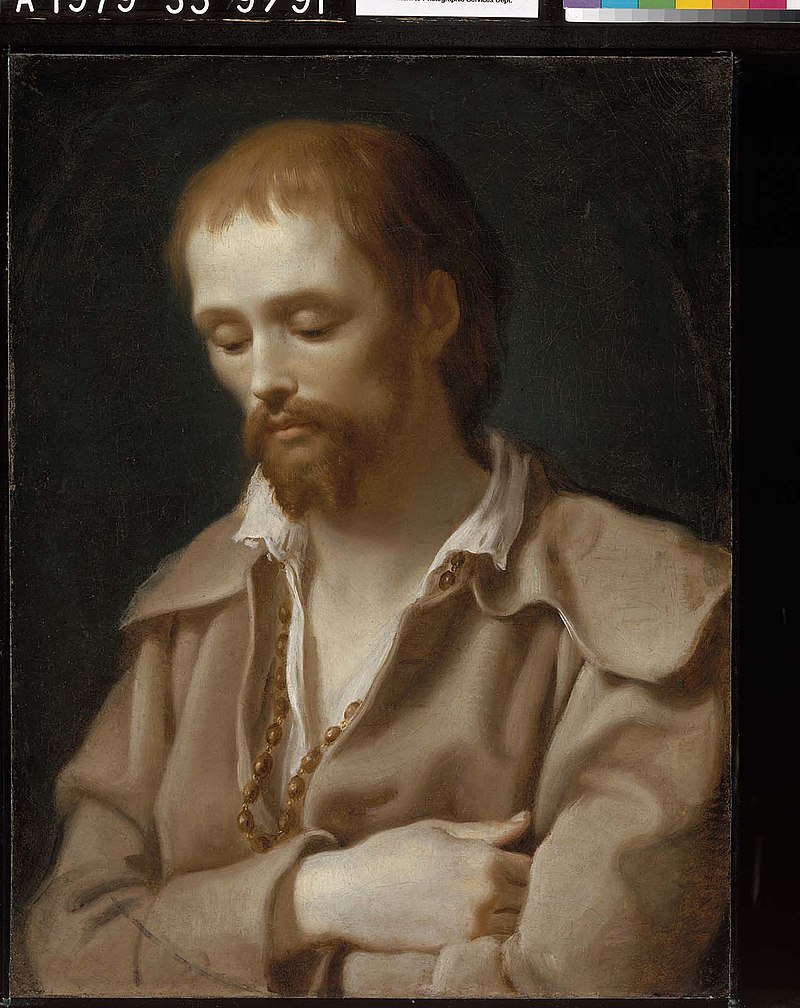
A grace-filled Holy Week to all our readers! As we await and prepare for the Resurrection about to dawn upon us, we might keep in mind two Benedicts: Pope Emeritus Benedict XVI, requiescat in pace, elected on this day in 2005; and today’s commemoration of the mystic pilgrim, Benedict Joseph Labre, who died on this[…]Continue reading→

My Name is Bernadette
April 16th is a propitious day, for besides the anniversary of Father de Valk’s death, who founded Catholic Insight in its print form decades ago, and the commemoration of the ‘two Benedicts’, mentioned in accompanying posts, today we also recall Saint Bernadette Soubirous, the young visionary to whom the Virgin Mary appeared numerous times at[…]Continue reading→
Saint Lydwina of Schiedam and Suffering Joyfully
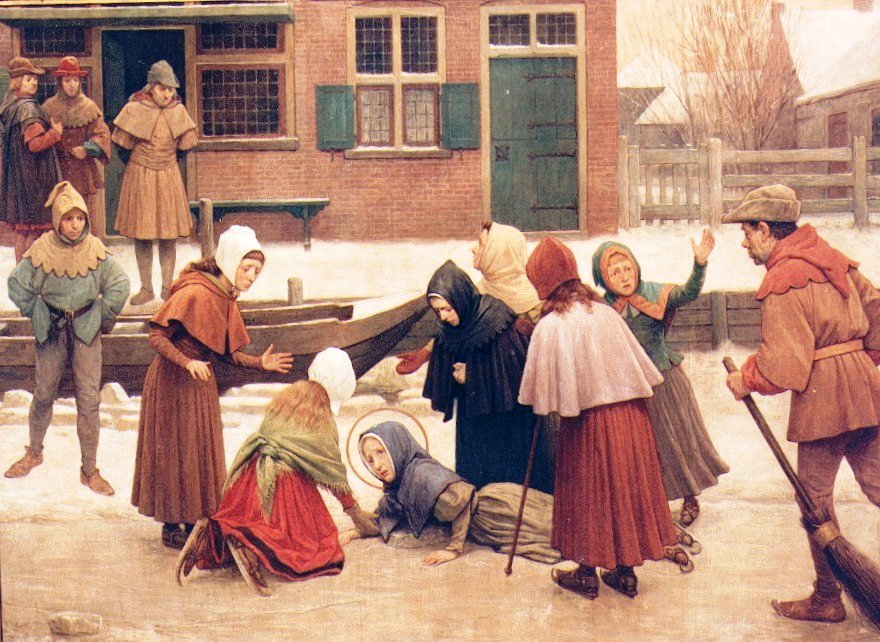
Saint Lydwina of Schiedam (1380 – 1433) was one of the countless and glorious ‘victim souls’ in the history of the Church, those whose lives are filled with suffering, often of an unimaginable intensity, but who suffer joyfully. She was a fifteen-year old Dutch girl, out skating one day, when she fell and broke one[…]Continue reading→
The Glorious Martyrdoms of Martin and Maximus
As we enter into Eastertide, we recall on this 13th of April Pope Saint Martin I (+655), one of the noblest, if most tragic, of the successors of Saint Peter. Born in Umbria, Italy, he was of noble lineage, with great intelligence combined with charity and love of the poor and the Church. While still[…]Continue reading→

Saint Stanislaus of Szczepanów
We celebrate Saint Stanislaus today (+ April 11, 1079), in light of this Easter Octave, a bishop and martyr who accepted the episcopacy only at the direct order of Pope Alexander II. He proved a wise and courageous leader of his flock, put to death by his own king, Boleslaus, for rebuking the monarch’s ‘immoral[…]Continue reading→
Saint Gemma Galgani
On this April 11th, in 1903 – the same year that the Italian Guiseppe Sarto was elected Pope later that summer as Pius X – a lovely, young Italian woman died, by the name of Gemma Galgani. She lived a brief life of 24 years, as did a number of other young saints, including Pier[…]Continue reading→
An Ideological and Improper Translation
I noticed something odd with the psalm reading at Mass the other day. Our bishops’ conference here in Canada has decreed that the Mass in English – Novus Ordo – use the ‘NRSV’, the ‘New Revised Standard Version’, an ‘updated’ translation of the original RSV, first published in 1952. This ‘new translation’ has the tendency[…]Continue reading→
Saint Jean-Baptiste de la Salle: A Teacher for Teachers
Jean-Baptiste de la Salle (1651 – 1719), a French nobleman, ordained a priest, founded the first order in the Church’s history entirely without priests, and this came about almost by accident. I say ‘almost’, for, of course, there are no accidents with God. Destined for ordination from an early age, Jean-Baptiste never looked back, even[…]Continue reading→