
Three Reasons to Read the Book of Jonah this Lent
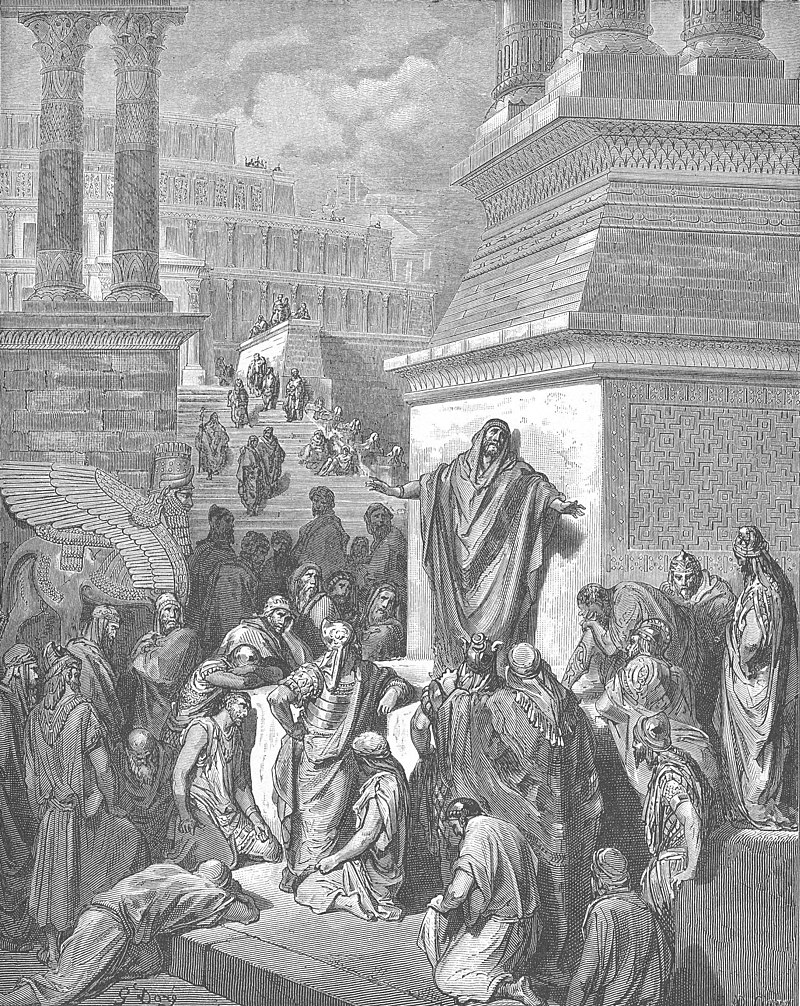
Every year, the Wednesday after Ash Wednesday, the Mass readings revolve around the prophet Jonah. Not only does the first reading come from the book itself, Jonah 3:1-10, to be exact, but the Gospel reading includes the powerful and prophetic allusion to Jonah made by Jesus Himself in Luke 11:29-32, when He says that, “Just as Jonah became a sign to the Ninevites, so will the Son of Man be to this generation…and there is something greater than Jonah here.” Much has been made of this specific connection as well as the story of Jonah as a whole, though much of that conversation around Jonah revolves around whether it “really happened.” While this is an interesting and important question in biblical studies, it is limiting if this is the only question we ask about it. Here are three really good reasons you should read the story of Jonah this Lent.
- First, everyone knows the Jonah story, but has anyone actually read it? We all know the “Sunday School basics” of the story, but there are some interesting details that should give the casual reader pause.
For example, we know about the storm and Jonah getting thrown overboard, but what about the other sailors. It says that when the storm happened, “each one cried to his god” in order to stop it (Jonah 1:5). This implies they were pagans, as opposed to Jonah, and had numerous other gods to call upon. After Jonah reveals his faithfulness as the cause of the storm, convinces them to throw him overboard and the storm is calmed, these pagans are “Seized with great fear of the LORD,” and they then “offered sacrifice to the LORD and made vows” (Jonah 1:16). We see a profound conversion take place because of the miracle, but it is a miracle brought about by Jonah’s sacrifice.
Next, Jonah 2:3 describes the size of Nineveh, saying it took Jonah “three days” to walk through the city. This is another interesting connection to Jesus, who compares his upcoming three days in the tomb to the three days Jonah was in the whale. The symbolic connection of three for Jonah’s imprisonment and his ministry should strike us as important. It is almost like the three days in the whale had to make up for the three days he would have spent following God’s call.
Another often overlooked detail is that even the animals of Nineveh fasted and did penance (Jonah 3:8). This points one to a more allegorical reading of the story, but it shows the level of conversion that was taking place within the city. This should resonate with us about the effect our actions have on other elements of Creation. Christ’s redemption is applied to everything and we are meant to participate in it. When we turn to God, the healing permeates to all of Creation.
Jonah 4:1 shows us a disquieting reality about Jonah when it describes his anger that God was merciful to Nineveh. While no one argues that Jonah was perfect, it is strange to see a prophet of God acting in this way. It is an important reminder of how God works through broken vessels and that can even include us with our own sins and spiritual baggage. There is also the strange cliffhanger ending at Jonah 4:11. The author ends this parable with a rhetorical question by God for Jonah and for us to consider when we struggle with God’s commands for us and God’s decisions with others.
Finally, there are also the allusions to the “death” and “resurrection” of Jonah that makes it such an important comparison to Jesus later in the Gospels. He is described as crying out “from the womb of Sheol” in Jonah 2:3 and how “the deep enveloped me” in Jonah 2:6. He says that God “brought my life up from the pit” in Jonah 2:7. There is no definitive teaching on how to interpret whether Jonah actually died when swallowed by the whale, but it was a strong enough reference to death and resurrection that Jesus relates it to his death in Matthew 12:38-42 and Mark 8:12.
- Jonah may be “verse for verse” the single most commented upon book of the Bible
This is a bold statement I realize, but consider the caveat “verse for verse.” Maybe Genesis or Revelation has more commentary with the gallons of ink spilled on those foundational and mysterious texts, but those books are 50 and 22 chapters respectively (approx. 32,000 and 10,000 words respectively). Jonah totals only four chapters and around 1000 words. Yet, there are tons of commentaries on it from figures like Rabbi Akiva, St. Jerome, Abraham ibn Ezra, Jean Calvin, Martin Luther and Joseph Ratzinger (later Pope Benedict XVI). The fact that a book so short, about the length of this post actually, has produced so many thoughts across Judaism and Christianity (and non religious people as we’ll see below) is astounding.
- Fascinated and inspired wonder from many outside the Biblical tradition
Besides the many Jewish and Christian commentators on Jonah. There have been numerous non Jewish/Christian perspectives of it as well. This is not to say that these should be considered as authoritative or as instructive as the names mentioned above. But it shows the cultural fascination that the story of Jonah has created. The names I could find of those who have discussed Jonah include the psychologist and mythicist Carl Jung, one of the most important novelists in American literature and author of Moby Dick, Herman Melville, whose faith is ambiguous but was certainly not a theologian by any stretch. There is also the poet, Robert Frost, whose Christianity was suspect (he described himself as an “Old Testament Christian”). There is also the psychologist Erich Fromm. Finally, mythologist Joseph Campbell titled one of the stages of his famous “Hero’s Journey” after the story of Jonah, where the hero is brought to his lowest, humiliating point, called “the Belly of the Whale.”
So, after you have read the Mass readings and are curious about why Jesus would talk so much about Jonah in his ministry, or why it has fascinated great minds since its composition thousands of years ago, sit down and slowly read through Jonah. Even a slow, meditative reading will take you, at most, a half hour. The spiritual benefits though, will carry you much longer.

Remembering Father Alphonse de Valk
(Today marks the sixth anniversary of the death of Father Alphonse de Valk, C.S.B., a faithful, courageous and indefatigable Basilian priest, pro-life-and-family apostle, and the founder of Catholic Insight magazine. Here is what we wrote those on his entering into eternity five years ago, as we continue to remember him in our prayers and thoughts)[…]Continue reading→

Divine Mercy Sunday – An Echo of Every Mass
Reach out your hand and put it in my side. Do not doubt but believe’… ‘My Lord and my God!’ (Jn. 20:18)). Today is Divine Mercy Sunday, and as we celebrate the end of the Easter Octave, we contemplate the wounded side of our Saviour, the Church’s source of life. On Good Friday in the[…]Continue reading→

Saint Stanislaus of Szczepanów
We celebrate Saint Stanislaus today (+ April 11, 1079), in light of this Easter Octave, a bishop and martyr who accepted the episcopacy only at the direct order of Pope Alexander II. He proved a wise and courageous leader of his flock, put to death by his own king, Boleslaus, for rebuking the monarch’s ‘immoral[…]Continue reading→
First Holy Communion: Sermon from May 16, 1943
Here is a sermon from the good old days by +Rev. Msgr. Vincent Nicholas Foy (August 14, 1915 – March 13, 2017), from 1943. Readers may recall that Pope Saint Pius X, by the decree Quam Singulari in 1910, lowered the customary age of reception of Holy Communion – after the rigours of the plague[…]Continue reading→
In the Glorious Light of Easter, Alleluia!
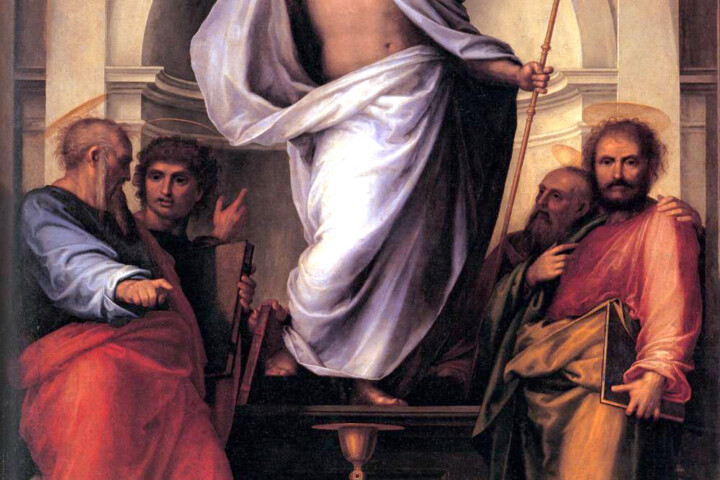
Set your minds on things that are above, not on things that are on earth, for you have died, and your life is hidden with Christ in God. When Christ who is your life is revealed, then you also will be revealed with him in glory (Col. 3:3-4). The Resurrection of Our Lord and Saviour[…]Continue reading→
An Ancient Homily for Holy Saturday
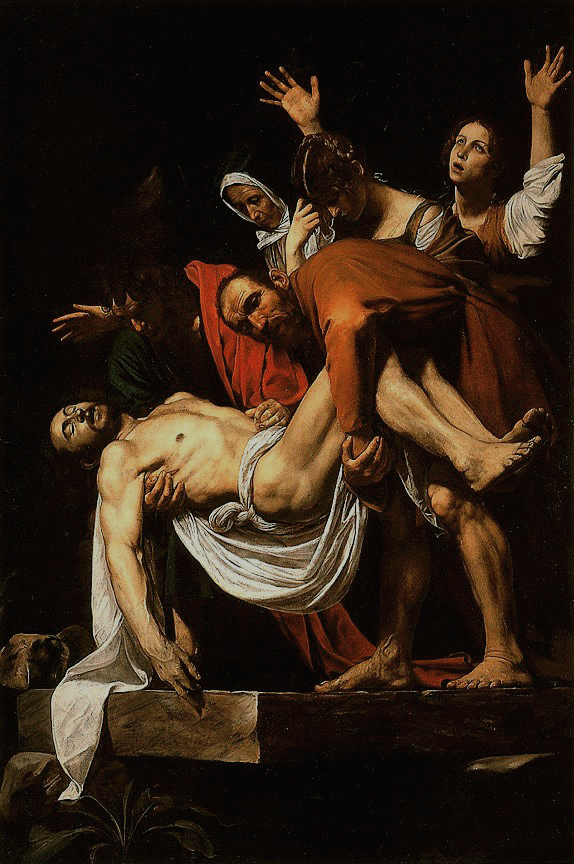
The time between Good Friday and Easter Sunday is one of waiting, in silence, as the world wonders – anticipates – what will happen, after the death of Christ. We re-live this time each year in the anamnesis of our liturgy, and in turn look forward to the glorious re-creation of all things at the[…]Continue reading→
Europe’s Long Descent
(As we meditate on this day on Christ’s burial, and His descent into hell, it is fitting to ponder here with contributor Peter Marcus how the world seems to be heading there as well. The difference is that, although God cannot ‘redeem’ hell, nor those therein, He can and did redeem the world. There is[…]Continue reading→
Pope Saint John Paul II’s First Good Friday Homily
ADDRESS OF HIS HOLINESS JOHN PAUL II AT THE CONCLUSION OF THE STATIONS OF THE CROSS AT THE COLOSSEUM Good Friday, 13 April 1979 When we make the Way of the Cross from one station to the next, in spirit we are always at the spot wherethis journey had its “historical” place: where it[…]Continue reading→
A Meditation for Good Friday: How To Undo the Effects of Sin?
Cardinal Newman, now Saint John Henry Newman, was a towering figure of nineteenth-century Catholicism who is almost universally admired. I say “almost” because not everyone likes him. I knew a priest once, Arthur Caulkins, who has become disenchanted with Newman. As an undergraduate Arthur had been enamoured of Newman, and this interest continued when he[…]Continue reading→
Allegri’s Miserere and Mozart’s Memory
On this Good Friday, a fitting help to our devotion is Allegri’s Miserere, his unsurpassed musical setting of Psalm 51, recited in Lauds (Morning Prayer) every Friday. Composed around 1638, under the patronage of Pope Urban VIII- the same one who battled Galileo – the sublime piece was performed only on certain occasions in the[…]Continue reading→