
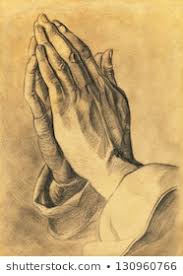
The Power of Prayer
Prayer does not change God, but it changes him who prays. – Soren Kierkegaard
Does prayer work?
First we should define what prayer is, and is not. It is not the merely automatic utterance of pious words on somebody else’s cue. That is to say, it is not just a habit that sooner or later we might easily break. With true prayer there has to be a real conviction that we are at the moment encountering God in our hearts … up close and personal. Those who do not believe what Christians believe, who have no faith whatever, cannot begin to imagine the reality of that encounter. To them, it is put down as delusional wishful thinking that God even exists, never mind that He listens to our thoughts and considers our petitions. And this is the reason why faith seems not possible for them. They have shut their hearts to the presence of God, just as you might lock the door when you know someone you do not want to encounter is on the other side knocking to enter.
Prayer, then, first of all is openness to the presence of God in our hearts. Not only openness, but welcome, and eager welcome at that. Perhaps that is why faith is traditionally listed first of the three great virtues: faith, hope, and charity. Without faith there can be no openness, and therefore no conversation. Without faith there can be no hope; and there can only be at best a modest portion of charity compared to the charity preached by Christ.
The notion that prayers are sometimes never answered is a false one. They are always answered, and that is why Saint Paul admonishes us to pray continually. The answer to our prayers may not be the one we want to hear, but even “No” is an answer. “Wait” is another answer. Those who cease to pray, or cease to believe in the power of prayer because they did not get a “Yes” do not understand that for God “Yes” may be the wrong answer to a particular petition. But even “No” is part of God’s providential plan and proves that His power is at work in the world even when we think ours is not.
The prayers of the faithful have always, sooner or later, brought about an end to tyrants and evil regimes. That is power. Hitler believed his Nazi empire would last a thousand years, but Christians prayed and it lasted only twelve. If the power of God were less than the power of Satan, life would be an unrelenting hell of torture and suffering. At least one spiritual writer says that if we are in the middle of a temptation, speaking one word … “Jesus!” … can make the temptation lose its force. By the sound of our voice calling out His name we are strengthened.
The instinct for God is natural, but the knowing of God must be in the seeking, because we have a hidden God. The scientist’s search for natural law is natural; yet the natural law cannot be known except by struggling to find it. The artist naturally seeks the beautiful, but the beautiful must be discovered by struggling to sculpt beauty out of a rock or by struggling to paint it on a canvas or by struggling to finger it on a keyboard. That is power. If we acted upon the principle that things do not exist because we do not see them in front of us, there would be no science or art, because nothing is visible except by drawing ourselves near to the True and the Beautiful and the Good, and struggling with all our power to wrench them from their secret hiding places. The skeptic will never know the power of prayer until he draws nearer to God with his first prayer. First prayers may be hardly recognizable as such. They might be a mere rumble in the spirit, a radical discontent, a moment of supreme nostalgia for the Father we have abandoned but who never abandons us.
To pray constantly is spiritual struggle and constant wrestling with God.

Saint Kateri , Canada’s Protectress
This was the title given to Saint Kateri Tekakwitha, by Pope Benedict XVI, when he canonized her on October 28th, 2012, along with six others, in Saint Peter’ Square (she had been beatified by Pope John Paul II back in 1980). With Saint Joseph as our protector, along with the Canadian martyrs, we seem to[…]Continue reading→

Remembering Father Alphonse de Valk
(Today marks the sixth anniversary of the death of Father Alphonse de Valk, C.S.B., a faithful, courageous and indefatigable Basilian priest, pro-life-and-family apostle, and the founder of Catholic Insight magazine. Here is what we wrote those on his entering into eternity five years ago, as we continue to remember him in our prayers and thoughts)[…]Continue reading→

My Name is Bernadette
April 16th is a propitious day, for besides the anniversary of Father de Valk’s death, who founded Catholic Insight in its print form decades ago, and the commemoration of the ‘two Benedicts’, mentioned in accompanying posts, today we also recall Saint Bernadette Soubirous, the young visionary to whom the Virgin Mary appeared numerous times at[…]Continue reading→

Canonizing Sister Faustina and Divine Mercy
HOMILY OF THE HOLY FATHER MASS IN ST PETER’S SQUARE FOR THE CANONIZATION OF SR MARY FAUSTINA KOWALSKA Sunday, 30 April 2000 1. “Confitemini Domino quoniam bonus, quoniam in saeculum misericordia eius”; “Give thanks to the Lord for he is good; his steadfast love endures for ever” (Ps 118: 1). So the Church sings on the Octave of[…]Continue reading→

Divine Mercy Sunday – An Echo of Every Mass
Reach out your hand and put it in my side. Do not doubt but believe’… ‘My Lord and my God!’ (Jn. 20:18)). Today is Divine Mercy Sunday, and as we celebrate the end of the Easter Octave, we contemplate the wounded side of our Saviour, the Church’s source of life. On Good Friday in the[…]Continue reading→

Saint Stanislaus of Szczepanów
We celebrate Saint Stanislaus today (+ April 11, 1079), in light of this Easter Octave, a bishop and martyr who accepted the episcopacy only at the direct order of Pope Alexander II. He proved a wise and courageous leader of his flock, put to death by his own king, Boleslaus, for rebuking the monarch’s ‘immoral[…]Continue reading→

First Holy Communion: Sermon from May 16, 1943
Here is a sermon from the good old days by +Rev. Msgr. Vincent Nicholas Foy (August 14, 1915 – March 13, 2017), from 1943. Readers may recall that Pope Saint Pius X, by the decree Quam Singulari in 1910, lowered the customary age of reception of Holy Communion – after the rigours of the plague[…]Continue reading→
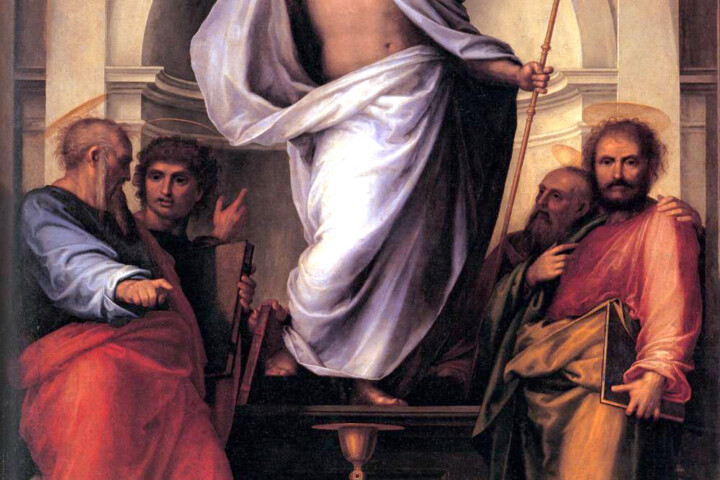
In the Glorious Light of Easter, Alleluia!
Set your minds on things that are above, not on things that are on earth, for you have died, and your life is hidden with Christ in God. When Christ who is your life is revealed, then you also will be revealed with him in glory (Col. 3:3-4). The Resurrection of Our Lord and Saviour[…]Continue reading→
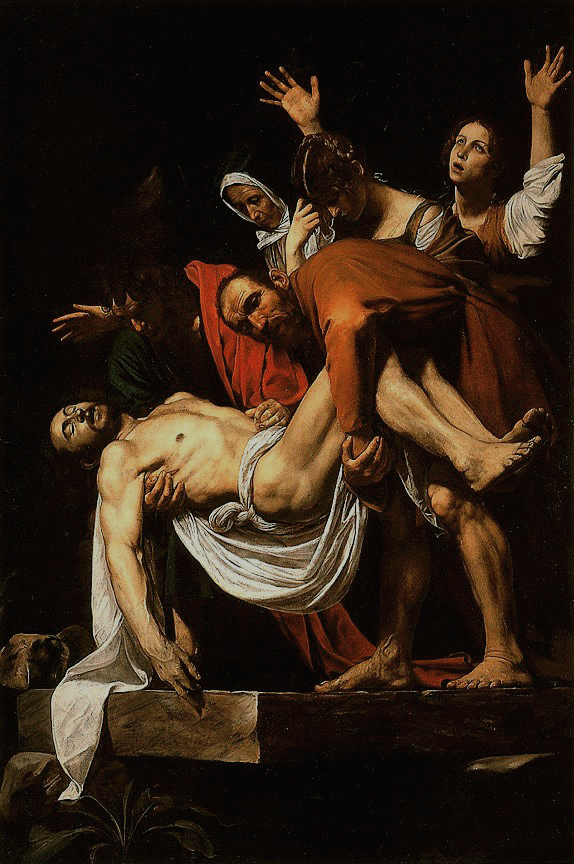
An Ancient Homily for Holy Saturday
The time between Good Friday and Easter Sunday is one of waiting, in silence, as the world wonders – anticipates – what will happen, after the death of Christ. We re-live this time each year in the anamnesis of our liturgy, and in turn look forward to the glorious re-creation of all things at the[…]Continue reading→
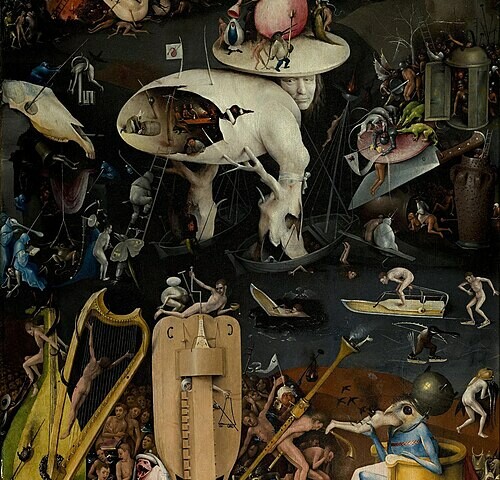
Europe’s Long Descent
(As we meditate on this day on Christ’s burial, and His descent into hell, it is fitting to ponder here with contributor Peter Marcus how the world seems to be heading there as well. The difference is that, although God cannot ‘redeem’ hell, nor those therein, He can and did redeem the world. There is[…]Continue reading→