
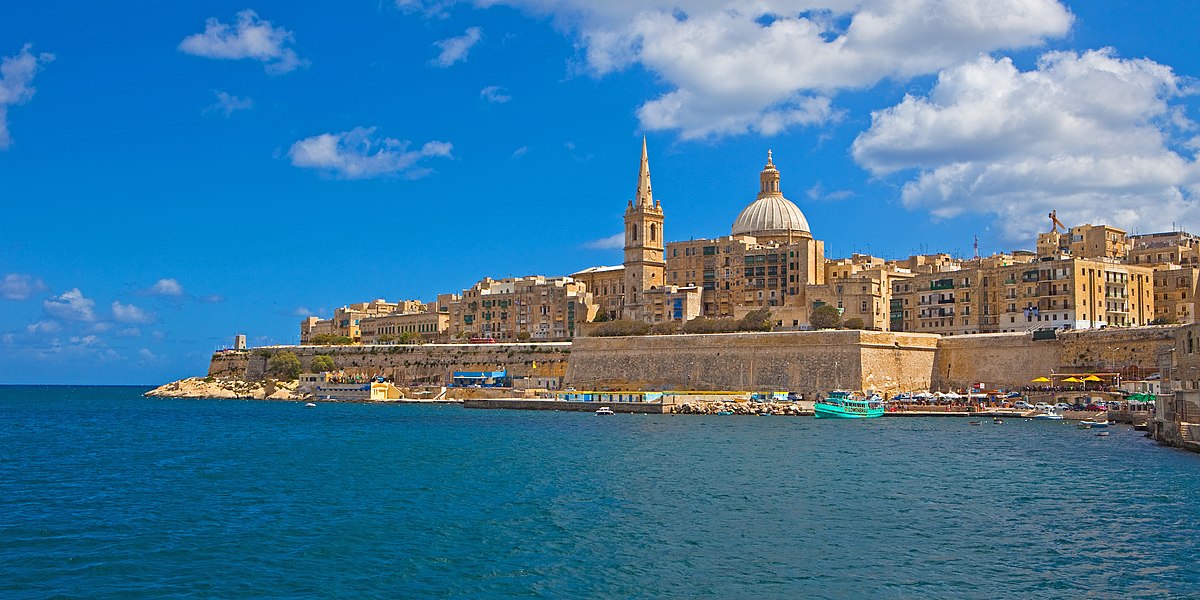
Saint Paul’s Shipwreck: A Message to both Malta and the World
This tenth of February is for us Maltese is the feast of the baptism of our nation, for today all Maltese around the world celebrate the feast when St Paul was shipwrecked on our shores.
With how much interest I look forward to the second reading for the solemn Mass of today! In that reading, taken from Acts 27: 14―28:6 I see God’s love for our tiny island. To begin with, the coming of St Paul and his companions to our country was dramatic. He came to us accompanied with tempestous wind, called the northeaster (Acts 27:14). Then, the ship was caught and could not face the wind (Acts 27:15). St Luke, who was with St Paul on this voyage, explicitly said: we gave way to it and were driven (Acts 27:15). What could they do against this ferocious wind which still assails our Island till this very day, thus disrupting any connection with sister-island Gozo?
With great detail St Luke keeps informing us of the enormous difficulty of this voyage. Now the sailors took measures to undergird the ship and lowered the gear for fear that they should run on the Syr’tis (Acts 27:17). However, they were violently storm-tossed up to the point that they began next day to throw the cargo overboard (Acts 27:18). The message is so clear: in life, challenged as we are with the problems and difficulties that keep knocking at our doors, we need more than human measures to counter them. St Luke hammered this point and reached the conclusion that when human efforts, by themselves, are not simply not enough to face life but also, when exhausted, can lead to despair. In verse 20 he openly declares: And when neither sun nor stars appeared for many a day, and no small tempest lay on us, all hope of our being saved was at last abandoned (Acts 27:20).
However St Luke drives home an important message after this fateful declaration: the end of human effort is always the beginning of Divine action; what is the end for man is the beginning with God’. This Lucan text is crystal clear about it when it says: As they had been long without food, Paul then came forward among them and said, “Men, you should have listened to me, and should not have set sail from Crete and incurred this injury and loss. I now bid you take heart; for there will be no loss of life among you, but only of the ship. For this very night there stood by me an angel of the God to whom I belong and whom I worship, and he said, `Do not be afraid, Paul; you must stand before Caesar; and lo, God has granted you all those who sail with you.’ So take heart, men, for I have faith in God that it will be exactly as I have been told. But we shall have to run on some island” (Acts 27:22-26).
As human Paul thought that it was safe to stay in Crete but God had other plans, far wider than his. He had to stand trial before Caesar but on the way he had to stop on some island (Acts 27). Thank God then that what we plan to do does not always end in the way we wanted it to end not because we planned it badly but because God had ulterior plans which were far better than ours! How happy and peaceful we shall be if we let this thought sink into our minds and hearts! God’s way, which is not easy and not always detectable, turns out to be for us the best option every. Blessed are we if we are shaped by God’s way of doing things. In the Gospel Jesus praises Our Heavenly Father for this when he addresses his prayerful joy to the Father saying: I thank thee, Father, Lord of heaven and earth, that thou hast hidden these things from the wise and understanding and revealed them to babes (Matt 11:25).
Another important detail that emerges from Acts 27:33-34 is that irrespective how small is our cooperation with God’s grace it is essential because it is thanks to it that God’s most powerful intervention can leave indelible effects in our life story. St Paul tells the passengers and the crew of the ship: Today is the fourteenth day that you have continued in suspense and without food, having taken nothing. Therefore I urge you to take some food; it will give you strength, since not a hair is to perish from the head of any of you. Paul was the first one who gave them a sound example by eating the bread himself and the others followed suit. St Luke tells us: And when he had said this, he took bread, and giving thanks to God in the presence of all he broke it and began to eat. Then they all were encouraged and ate some food themselves. (We were in all two hundred and seventy-six persons in the ship.) And when they had eaten enough, they lightened the ship, throwing out the wheat into the sea. (Acts 27:35-38).
We all know how this dramatic story ended: the sailors planned to bring the ship ashore (Acts 27: 39). And even when this plan failed because the ship struck a shoal and the sailors had to run the vessel aground, with the consequence that the bow stuck and remained immovable (Acts 27:41), the Holy Spirit saved Paul and his companions by leading the centurion to order those who could swim to throw themselves overboard first and make for the land, and the rest on planks or on pieces of the ship. And so it was that all escaped to land (Acts 27:43-44).
The happy ending for such a tempestuous story is that the crew and the passengers not only were spared a sure death but also that they landed on land and learned that the island was called Malta (Acts 28:1). After such misfortune and suffering the natives showed [them] unusual kindness, for they kindled a fire and welcomed us all, because it had begun to rain and was cold (Acts 28:2). Commenting on this verse St John Chrysostom says in his homily 54 on the Book of the Apostles: “They showed no small kindness,” and yet (some of them) were prisoners. Let those be ashamed that say, Do not do good to those in prison: let these barbarians shame us; for they knew not who these men were, but simply because they were in misfortune (they were kind): thus much they perceived, that they were human beings, and therefore they considered them to have a claim upon their humanity. Thus, let us be kind to one another amid the rain and cold of this freezing indifferent spirit modern society is filled with.
While envisaging St Paul’s shipwrecked in Malta let us make ours the prayer of St Ignatius of Loyola of complete trust in Jesus: O Christ Jesus, when all is darkness and we feel our weakness and helplessness, give us the sense of Your presence, Your love, and Your strength. Help us to have perfect trust in Your protecting love and strengthening power, so that nothing may frighten or worry us, for, living close to You, we shall see Your hand, Your purpose, Your will through all things. Amen.

Saint Kateri , Canada’s Protectress
This was the title given to Saint Kateri Tekakwitha, by Pope Benedict XVI, when he canonized her on October 28th, 2012, along with six others, in Saint Peter’ Square (she had been beatified by Pope John Paul II back in 1980). With Saint Joseph as our protector, along with the Canadian martyrs, we seem to[…]Continue reading→

Remembering Father Alphonse de Valk
(Today marks the sixth anniversary of the death of Father Alphonse de Valk, C.S.B., a faithful, courageous and indefatigable Basilian priest, pro-life-and-family apostle, and the founder of Catholic Insight magazine. Here is what we wrote those on his entering into eternity five years ago, as we continue to remember him in our prayers and thoughts)[…]Continue reading→

My Name is Bernadette
April 16th is a propitious day, for besides the anniversary of Father de Valk’s death, who founded Catholic Insight in its print form decades ago, and the commemoration of the ‘two Benedicts’, mentioned in accompanying posts, today we also recall Saint Bernadette Soubirous, the young visionary to whom the Virgin Mary appeared numerous times at[…]Continue reading→

Canonizing Sister Faustina and Divine Mercy
HOMILY OF THE HOLY FATHER MASS IN ST PETER’S SQUARE FOR THE CANONIZATION OF SR MARY FAUSTINA KOWALSKA Sunday, 30 April 2000 1. “Confitemini Domino quoniam bonus, quoniam in saeculum misericordia eius”; “Give thanks to the Lord for he is good; his steadfast love endures for ever” (Ps 118: 1). So the Church sings on the Octave of[…]Continue reading→

Divine Mercy Sunday – An Echo of Every Mass
Reach out your hand and put it in my side. Do not doubt but believe’… ‘My Lord and my God!’ (Jn. 20:18)). Today is Divine Mercy Sunday, and as we celebrate the end of the Easter Octave, we contemplate the wounded side of our Saviour, the Church’s source of life. On Good Friday in the[…]Continue reading→

Saint Stanislaus of Szczepanów
We celebrate Saint Stanislaus today (+ April 11, 1079), in light of this Easter Octave, a bishop and martyr who accepted the episcopacy only at the direct order of Pope Alexander II. He proved a wise and courageous leader of his flock, put to death by his own king, Boleslaus, for rebuking the monarch’s ‘immoral[…]Continue reading→
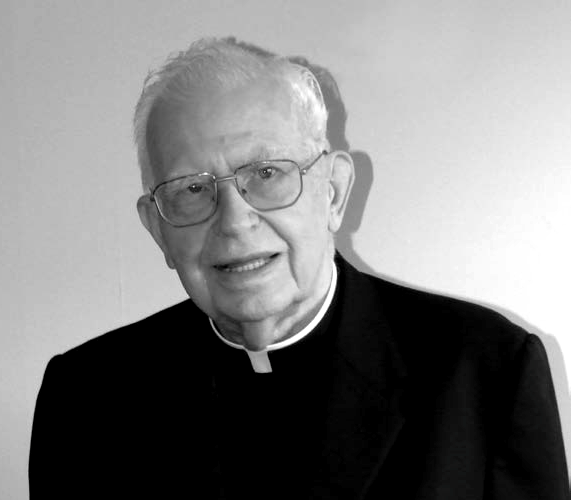
First Holy Communion: Sermon from May 16, 1943
Here is a sermon from the good old days by +Rev. Msgr. Vincent Nicholas Foy (August 14, 1915 – March 13, 2017), from 1943. Readers may recall that Pope Saint Pius X, by the decree Quam Singulari in 1910, lowered the customary age of reception of Holy Communion – after the rigours of the plague[…]Continue reading→
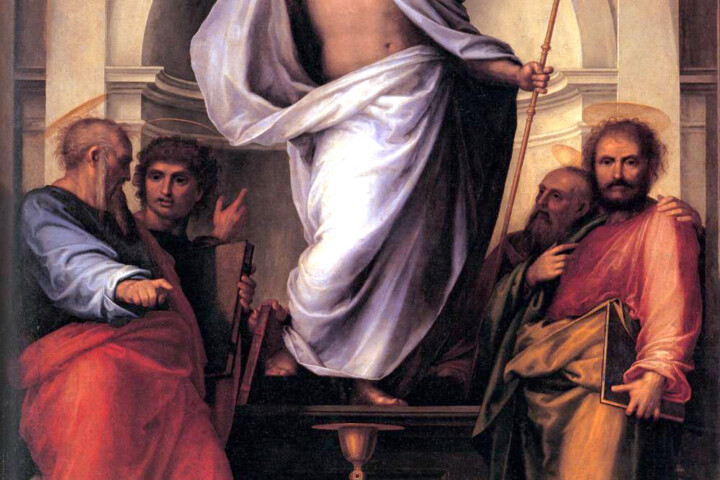
In the Glorious Light of Easter, Alleluia!
Set your minds on things that are above, not on things that are on earth, for you have died, and your life is hidden with Christ in God. When Christ who is your life is revealed, then you also will be revealed with him in glory (Col. 3:3-4). The Resurrection of Our Lord and Saviour[…]Continue reading→
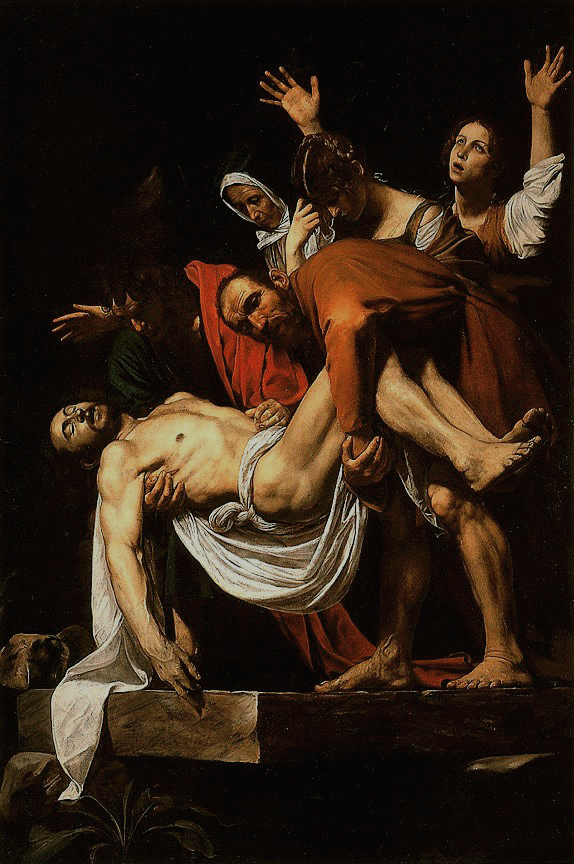
An Ancient Homily for Holy Saturday
The time between Good Friday and Easter Sunday is one of waiting, in silence, as the world wonders – anticipates – what will happen, after the death of Christ. We re-live this time each year in the anamnesis of our liturgy, and in turn look forward to the glorious re-creation of all things at the[…]Continue reading→
Europe’s Long Descent
(As we meditate on this day on Christ’s burial, and His descent into hell, it is fitting to ponder here with contributor Peter Marcus how the world seems to be heading there as well. The difference is that, although God cannot ‘redeem’ hell, nor those therein, He can and did redeem the world. There is[…]Continue reading→