
Nova et Vetera: Initial Insights on Artificial Intelligence
Recently, the Vatican’s Dicastery for the Doctrine of the Faith and its Dicastery for Culture collaborated in constructing a document on the Church’s most recent stance on the nature and use of Artificial Intelligence. In my first reading through this document, I was encouraged by the philosophical principles it put forward for the distinction between human and artificial intelligence and how it influenced their applications of this precarious new tool.
As one might not expect from a Church document on AI, it is not entirely critical of the practice. As par for the course, the Church has been relatively slow on commenting on AI, but the response has been reasonable, thoughtful and fair. There have been several responses from individual Catholics, including those with an expertise in the science of AI, that have shed a lot of light on the issue that are worth considering as well. I am thinking of Br. Eric Salobir and Fr. Anselm Ramelow.
Though I understand the desire of many to deal with the practical questions related to AI, these are still downstream from the more fundamental questions that it incites. What AI should force us to ask more deeply is what truly qualifies as intelligence in the first place. From this we should ask what is the intellect and its relationship to the soul. From this, one could ask what is the soul’s relationship to the body. When we work our way back to these foundational principles, we can turn around and move forward with clarity and confidence we are headed toward our proper end.
Fortunately, this is exactly what Antiqua et Nova does. After moving through some introductory, expository paragraphs, the document makes its first important point of distinction between human and artificial intelligence. This first important point is the necessity of integration of parts to the whole (Antiqua et Nova, 26). Information alone is not intelligence. That information must be integrated and processed through what St. Thomas Aquinas recognized as the “four interior powers,” which consists of the “common sense, the imagination, and the estimative and memorative powers” (ST I. Q 78. A 4). Simply put, the memorative power is that which stores the information, the estimative is that which applies it to future situations, the imaginative is what “pictures” the data (or a symbol of it), and finally the common is that which integrates all of the previous senses into one comprehension of a substance.
The common sense is what brings all the data together so you know that meowing thing is a cat. Though the document does not cite this section from Aquinas, they will use him fruitfully in some important passages to come. It does highlight the importance of the “essential contemplative dimension” of intelligence, which must go beyond the “utilitarian purpose” of simple data collection or processing in AI (AN, 29). To see information as not just a tool but formative to an individual cannot be taken for granted in the face of machine so-called learning.
One of the oft-overlooked necessities of intelligence that Aquinas recognizes is its relationship to the body. Part of the reason this is overlooked is because it is not direct, but is mediated through the intellect’s relationship to the soul first, which itself has an essential, formal relationship to the body. The Catholic Tradition holds to the Aristotelian principle as articulated by Aquinas that the soul is the ‘form’ of the body. This is known as hylomorphism. Briefly, it means that the soul is not locally present in any one point of the body or less, but equally present throughout and is what forms it. As an analogy, the three-sidedness is not present “inside” the triangle, but is literally what shapes, or forms, it.
The relevance to the intellect and Artificial Intelligence is that the soul itself has its own form, which Aquinas identifies with knowledge, saying, “knowledge is a form of the soul” (ST I. Q 76. A 1 resp.). Similarly, the intellect as a power of the soul is an intrinsic extension of it. With this essential relationship between the intellect and the soul, and then between the soul and the body, there exists a similar relationship between the intellect and the body. Antiqua et Nova recognizes this connection as well as emphasizes its importance in paragraphs 31 and 33. Many working in the field of A.I. may question the existence of a soul and this is an important conversation for which Catholics must engage. However, it does not negate the importance the Church must recognize in defending the human intellect, and from this human dignity.
I was pleased with the recognition of precise language the Nova notes in paragraph 35, saying that the term intelligence “can prove misleading.” This is because what AI does is, at best, a metaphorical thinking. It is like when we are thinking on auto-pilot because we are completing a task we have done so many times. Our brain gets used to the uniform data and “discerns” at the minimum level, which is why we are prime to mistakes. It is when we are doing this sort of sub-thinking that machines are like us. The difference is when we do it, we know it is a defect. We have to catch our mistakes, or someone else must, and we readjust. When AI does it, however, it is an achievement.
From here Nova et Antiqua begins to apply these principles to the more common questions we have about proper use of AI in its various dimensions. Because this is a shift in focus for the document and because it will prove lengthy itself, it will be its own post in part 2.

Remembering Father Alphonse de Valk
(Today marks the sixth anniversary of the death of Father Alphonse de Valk, C.S.B., a faithful, courageous and indefatigable Basilian priest, pro-life-and-family apostle, and the founder of Catholic Insight magazine. Here is what we wrote those on his entering into eternity five years ago, as we continue to remember him in our prayers and thoughts)[…]Continue reading→

Divine Mercy Sunday – An Echo of Every Mass
Reach out your hand and put it in my side. Do not doubt but believe’… ‘My Lord and my God!’ (Jn. 20:18)). Today is Divine Mercy Sunday, and as we celebrate the end of the Easter Octave, we contemplate the wounded side of our Saviour, the Church’s source of life. On Good Friday in the[…]Continue reading→

Saint Stanislaus of Szczepanów
We celebrate Saint Stanislaus today (+ April 11, 1079), in light of this Easter Octave, a bishop and martyr who accepted the episcopacy only at the direct order of Pope Alexander II. He proved a wise and courageous leader of his flock, put to death by his own king, Boleslaus, for rebuking the monarch’s ‘immoral[…]Continue reading→
First Holy Communion: Sermon from May 16, 1943
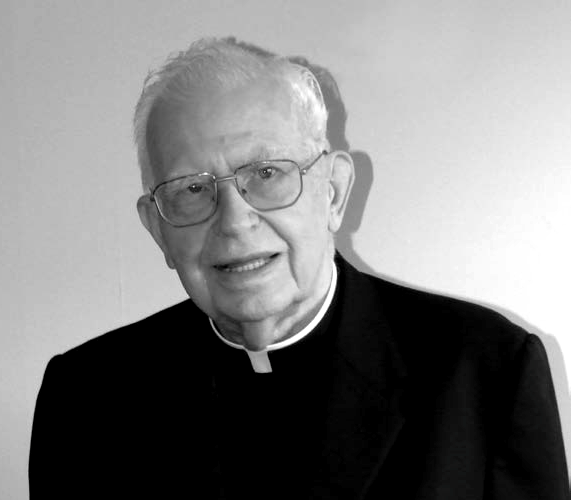
Here is a sermon from the good old days by +Rev. Msgr. Vincent Nicholas Foy (August 14, 1915 – March 13, 2017), from 1943. Readers may recall that Pope Saint Pius X, by the decree Quam Singulari in 1910, lowered the customary age of reception of Holy Communion – after the rigours of the plague[…]Continue reading→
In the Glorious Light of Easter, Alleluia!
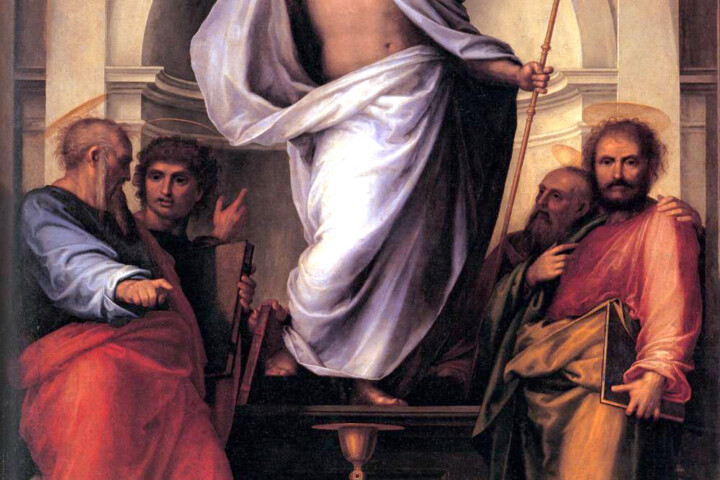
Set your minds on things that are above, not on things that are on earth, for you have died, and your life is hidden with Christ in God. When Christ who is your life is revealed, then you also will be revealed with him in glory (Col. 3:3-4). The Resurrection of Our Lord and Saviour[…]Continue reading→
An Ancient Homily for Holy Saturday
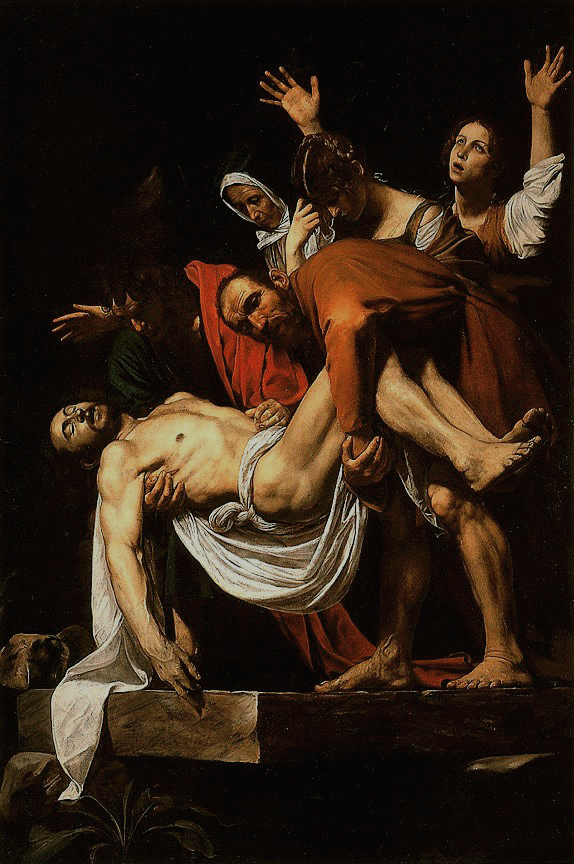
The time between Good Friday and Easter Sunday is one of waiting, in silence, as the world wonders – anticipates – what will happen, after the death of Christ. We re-live this time each year in the anamnesis of our liturgy, and in turn look forward to the glorious re-creation of all things at the[…]Continue reading→
Europe’s Long Descent
(As we meditate on this day on Christ’s burial, and His descent into hell, it is fitting to ponder here with contributor Peter Marcus how the world seems to be heading there as well. The difference is that, although God cannot ‘redeem’ hell, nor those therein, He can and did redeem the world. There is[…]Continue reading→
Pope Saint John Paul II’s First Good Friday Homily
ADDRESS OF HIS HOLINESS JOHN PAUL II AT THE CONCLUSION OF THE STATIONS OF THE CROSS AT THE COLOSSEUM Good Friday, 13 April 1979 When we make the Way of the Cross from one station to the next, in spirit we are always at the spot wherethis journey had its “historical” place: where it[…]Continue reading→
A Meditation for Good Friday: How To Undo the Effects of Sin?
Cardinal Newman, now Saint John Henry Newman, was a towering figure of nineteenth-century Catholicism who is almost universally admired. I say “almost” because not everyone likes him. I knew a priest once, Arthur Caulkins, who has become disenchanted with Newman. As an undergraduate Arthur had been enamoured of Newman, and this interest continued when he[…]Continue reading→
Pope Benedict’s Last Holy Thursday Homily
MASS OF THE LORD’S SUPPER HOMILY OF HIS HOLINESS BENEDICT XVI Basilica of St John Lateran Holy Thursday, 5 April 2012 Photo Gallery (Video) Dear Brothers and Sisters! Holy Thursday is not only the day of the institution of the Most Holy Eucharist, whose splendour bathes all else and in some ways draws it to[…]Continue reading→