
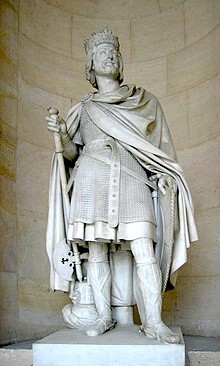
The Catholic Conqueror, Charles Martel
(As Europe confronts the problems of mass immigration, especially from Muslim nations, with yet another deadly stabbing by a ‘mentally disturbed’ Afghan asylum seeker, we could learn something from history. Here, Carl Sundell recounts the story of Charles Martel, the grandfather of Charlemagne, about whom we will post in a sequel.).
The illegitimate son of Pippin II, Charles “The Hammer” Martel succeeded his father as ruler of the Franks and played a key role in saving Christian Europe from the threatening conquest of Islam. A tall and powerfully built man, Martel with great skill and courage forged a realm that by today’s national boundaries would include most of France, Western Germany, and the Low Countries (Belgium, the Netherlands, and Luxembourg).
For nearly three hundred years since the fall of Rome in 476 after the invasion of the Ostrogoths, there had been no political and military venture comparable to Martel’s effort to restore the Empire. But Martel did not live to see a new line of emperors. The founding of that line would be the privilege and destiny of his grandson, Charlemagne.
To understand the enormous importance of Martel’s role in the history of Europe it is necessary to study the rise and expansion of Islam from the East to the West. After the death of Mohammed in 632, the entire Arabian Peninsula was united under the first Caliph, Abu Bakr. In 638 the Muslims conquered Jerusalem and would eventually build the first major mosque, the Dome of the Rock, where Solomon’s temple was located and by tradition the place where Abraham nearly sacrificed Isaac. But soon the Arabs were at war among themselves to determine which brand of Islam would prevail. The Sunnis finally dominated the more radical Shiites and established the Umayyad Empire. In the meantime Caliph Ali had moved his armies through Egypt and North Africa. By 710 the Arabs (now called Moors) were invading Spain and moving from the Straits of Gibraltar toward Madrid. Charles Martel was 22 years old.
Within four years Martel’s father, Pippin, would be dead, leaving no legal heir to the throne but his eight-year old grandson, Theudoald. Pippin’s wife Plectrude, thinking the illegitimate Charles might be her grandson’s rival claimant to the throne, had him arrested and imprisoned and her grandson declared the new king. But the people did not take to being ruled by a boy. Martel escaped his confinement, raised an army, and subsequently won battles that proved him the master of the realm. He showed mercy to Plectrude and Theudoald, a rare favor in those days.
The strategy of his military campaigns was new and surprising to his enemies. For example, he would attack during the noonday sun, when the enemy was usually at rest. Also, he mastered the fine art of using retreat as a method of entrapping a pursuing army by attacking them with unseen battalions from all sides. This required precision timing, a skill that would have been directed only by a commanding general with keen insight and powers of organization. In 717, having won the Battle of Vincy at the age of 29, Martel established himself as the supreme ruler of a budding young empire. Never claiming the crown for himself, he routinely appointed a succession of kings to rule the land.
Battling the Saxons and the Germans, Martel expanded his territories and championed the spread of the Catholic faith into areas still pagan. At the request of Pope Gregory II he wrote a letter of safe-conduct for Saint Boniface, the great reformer of the German Church, who admitted that without this letter he would not have been successful in his efforts to bring the German Church, which had been corrupted by a lax clergy, back into harmony with Rome. Martel also donated land and treasure for the Church to build monasteries, thereby achieving the approval of many bishops and abbots. By 730, at the age of 42, Charles was firmly in charge of his realm and ready to march against the Muslim Moors about to invade from the south.
The massive invasion of the Muslims out of Spain and into the Catholic territories controlled by Martel began in 732. Emir Abdul Rahman Al Ghafiqi, the General of the Moors, entirely miscalculated the military strength and tactical genius of his foe. Instead of waiting to attack Martel’s main army with the full force of his own army and on his own terms, the Emir wasted his strength picking on smaller and easier targets, thus giving Martel the chance to choose the time and place when the great battle between them would be fought. The site Martel chose was near Tours, a city in modern day France.
The number of Martel’s soldiers compared to the Emir’s varies in different accounts. Most historians agree that Martel fought with a greatly outnumbered but well armed heavy infantry and few cavalry, a tactic for winning unheard of in his day. The Moors were heavy with cavalry, a disadvantage for them because Martel chose for the battle a terrain of woods that required an uphill charge, exhausting the Moors by the time they encountered the enemy. Moreover, the Moors had acquired considerable loot from previous battles, which weighed down and tired their horses. Also, the cold autumn weather must have shaken the morale of the Emir’s soldiers who did not have the warm furs that were standard wear for Martel’s troops.
On the seventh day of the encounter, the Emir charged with all his force into Martel’s carefully laid trap. The battle was fierce and earned for Charles the surname “Martel” (the hammer). Charles meanwhile sent his scouts into the Emir’s rear encampment to release prisoners. Many of the fighting men, worried the prisoners would steal the loot they had accumulated, retreated from the main battle to protect their goods. Though the Emir had planned ahead to have his men concentrate on finding and killing Charles, it was the Emir who was killed and his forces scattered in retreat. Subsequent battles of Martel with the Muslim invaders would come, but this was by far his greatest triumph and the victory that would inspire Pope Gregory III to view him with gratitude and trust as a defender of the faith.
Historians debate the significance of the Battle of Tours. One can never be sure of the future of European history had Martel lost the battle, but the majority opinion, led by the great historian Edward Gibbon, is that if Martel had not vanquished the Emir, there would have been no stopping the advance of the Muslim invasion throughout Europe. Italy, for some time impotent and wracked with civil strife, without Martel’s protection would surely have fallen; Rome would have been sacked, and very possibly in due course an Islamic temple would have been built over the old Vatican site as the Muslims had built one over Solomon’s temple in Jerusalem. Had the militant march of Islam been extended all the way through Europe, Christianity might have retained to this day, at best, a mere memory of its ancient glory. But it was not to be so. Islam retreated southward to its Spanish fortress, and seven centuries later was reduced to a distinct minority in Catholic Spain by the time Columbus was setting sail with Catholic missionaries to bring the Gospels to a New World.
Deo gratias!

Remembering Father Alphonse de Valk
(Today marks the sixth anniversary of the death of Father Alphonse de Valk, C.S.B., a faithful, courageous and indefatigable Basilian priest, pro-life-and-family apostle, and the founder of Catholic Insight magazine. Here is what we wrote those on his entering into eternity five years ago, as we continue to remember him in our prayers and thoughts)[…]Continue reading→

Divine Mercy Sunday – An Echo of Every Mass
Reach out your hand and put it in my side. Do not doubt but believe’… ‘My Lord and my God!’ (Jn. 20:18)). Today is Divine Mercy Sunday, and as we celebrate the end of the Easter Octave, we contemplate the wounded side of our Saviour, the Church’s source of life. On Good Friday in the[…]Continue reading→

Saint Stanislaus of Szczepanów
We celebrate Saint Stanislaus today (+ April 11, 1079), in light of this Easter Octave, a bishop and martyr who accepted the episcopacy only at the direct order of Pope Alexander II. He proved a wise and courageous leader of his flock, put to death by his own king, Boleslaus, for rebuking the monarch’s ‘immoral[…]Continue reading→

First Holy Communion: Sermon from May 16, 1943
Here is a sermon from the good old days by +Rev. Msgr. Vincent Nicholas Foy (August 14, 1915 – March 13, 2017), from 1943. Readers may recall that Pope Saint Pius X, by the decree Quam Singulari in 1910, lowered the customary age of reception of Holy Communion – after the rigours of the plague[…]Continue reading→

In the Glorious Light of Easter, Alleluia!
Set your minds on things that are above, not on things that are on earth, for you have died, and your life is hidden with Christ in God. When Christ who is your life is revealed, then you also will be revealed with him in glory (Col. 3:3-4). The Resurrection of Our Lord and Saviour[…]Continue reading→

An Ancient Homily for Holy Saturday
The time between Good Friday and Easter Sunday is one of waiting, in silence, as the world wonders – anticipates – what will happen, after the death of Christ. We re-live this time each year in the anamnesis of our liturgy, and in turn look forward to the glorious re-creation of all things at the[…]Continue reading→

Europe’s Long Descent
(As we meditate on this day on Christ’s burial, and His descent into hell, it is fitting to ponder here with contributor Peter Marcus how the world seems to be heading there as well. The difference is that, although God cannot ‘redeem’ hell, nor those therein, He can and did redeem the world. There is[…]Continue reading→
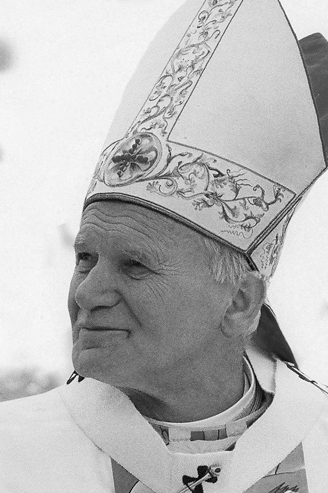
Pope Saint John Paul II’s First Good Friday Homily
ADDRESS OF HIS HOLINESS JOHN PAUL II AT THE CONCLUSION OF THE STATIONS OF THE CROSS AT THE COLOSSEUM Good Friday, 13 April 1979 When we make the Way of the Cross from one station to the next, in spirit we are always at the spot wherethis journey had its “historical” place: where it[…]Continue reading→
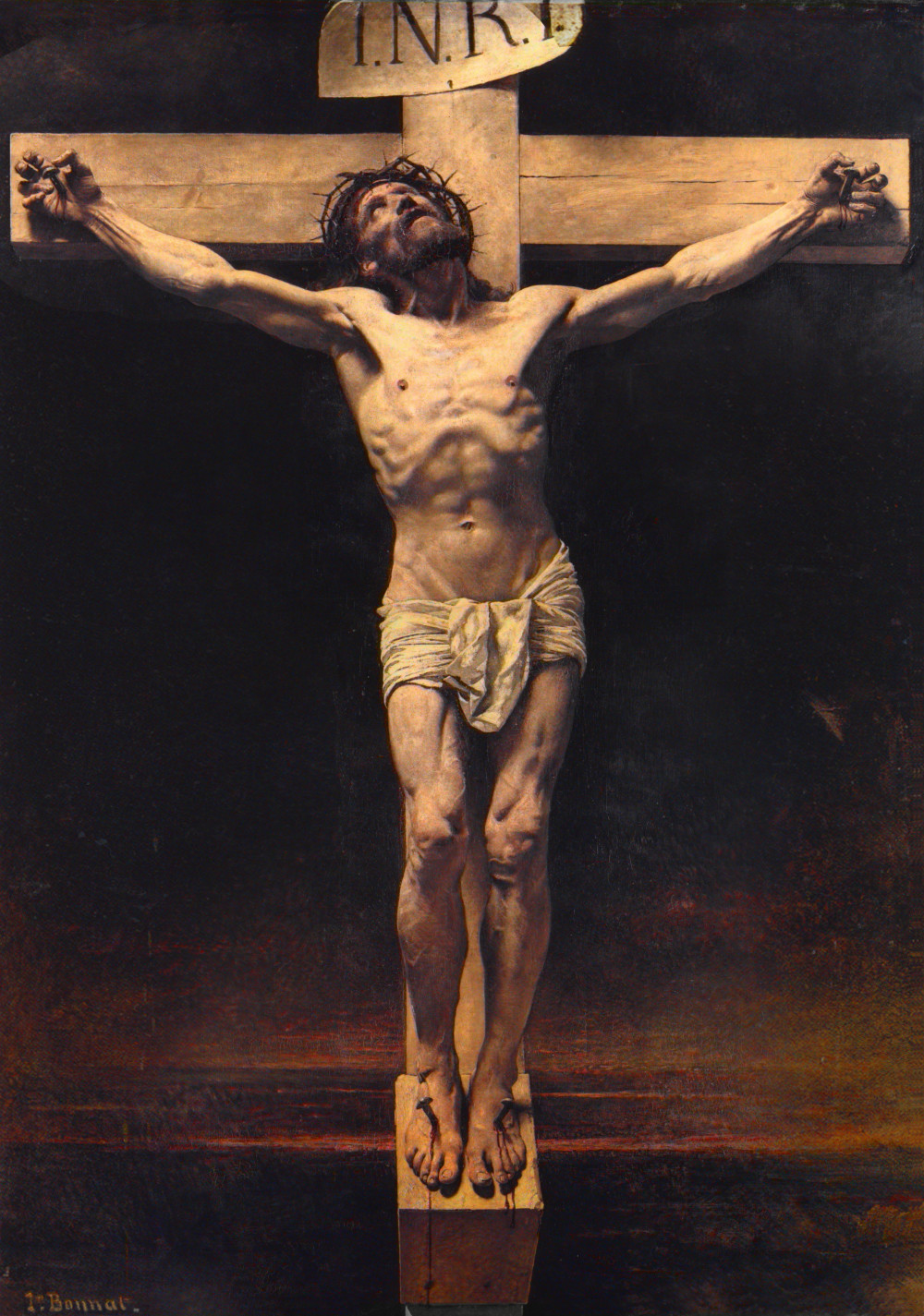
A Meditation for Good Friday: How To Undo the Effects of Sin?
Cardinal Newman, now Saint John Henry Newman, was a towering figure of nineteenth-century Catholicism who is almost universally admired. I say “almost” because not everyone likes him. I knew a priest once, Arthur Caulkins, who has become disenchanted with Newman. As an undergraduate Arthur had been enamoured of Newman, and this interest continued when he[…]Continue reading→
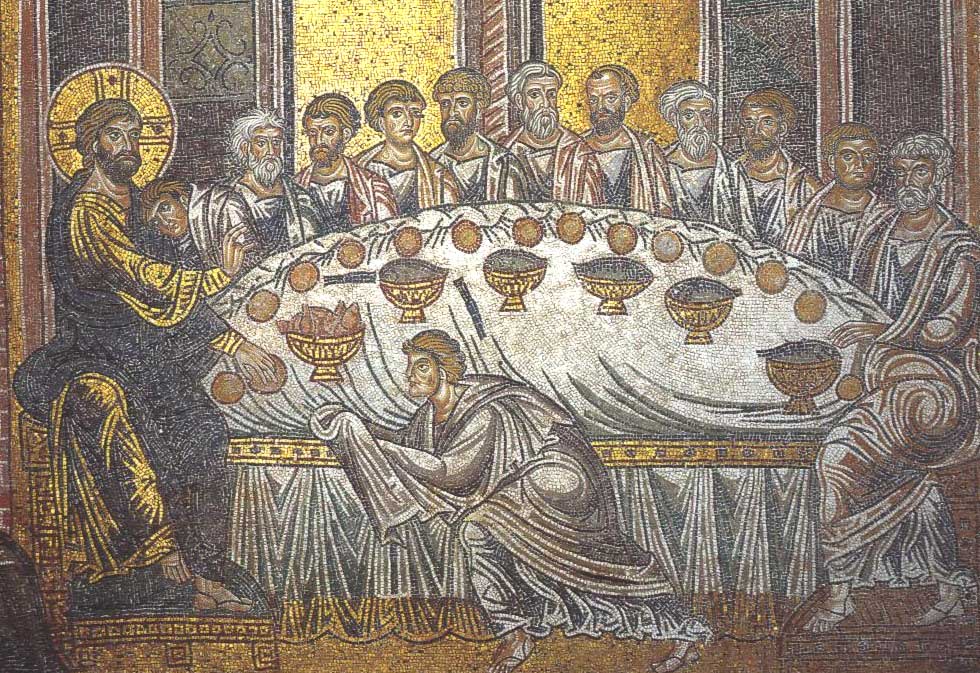
Pope Benedict’s Last Holy Thursday Homily
MASS OF THE LORD’S SUPPER HOMILY OF HIS HOLINESS BENEDICT XVI Basilica of St John Lateran Holy Thursday, 5 April 2012 Photo Gallery (Video) Dear Brothers and Sisters! Holy Thursday is not only the day of the institution of the Most Holy Eucharist, whose splendour bathes all else and in some ways draws it to[…]Continue reading→