
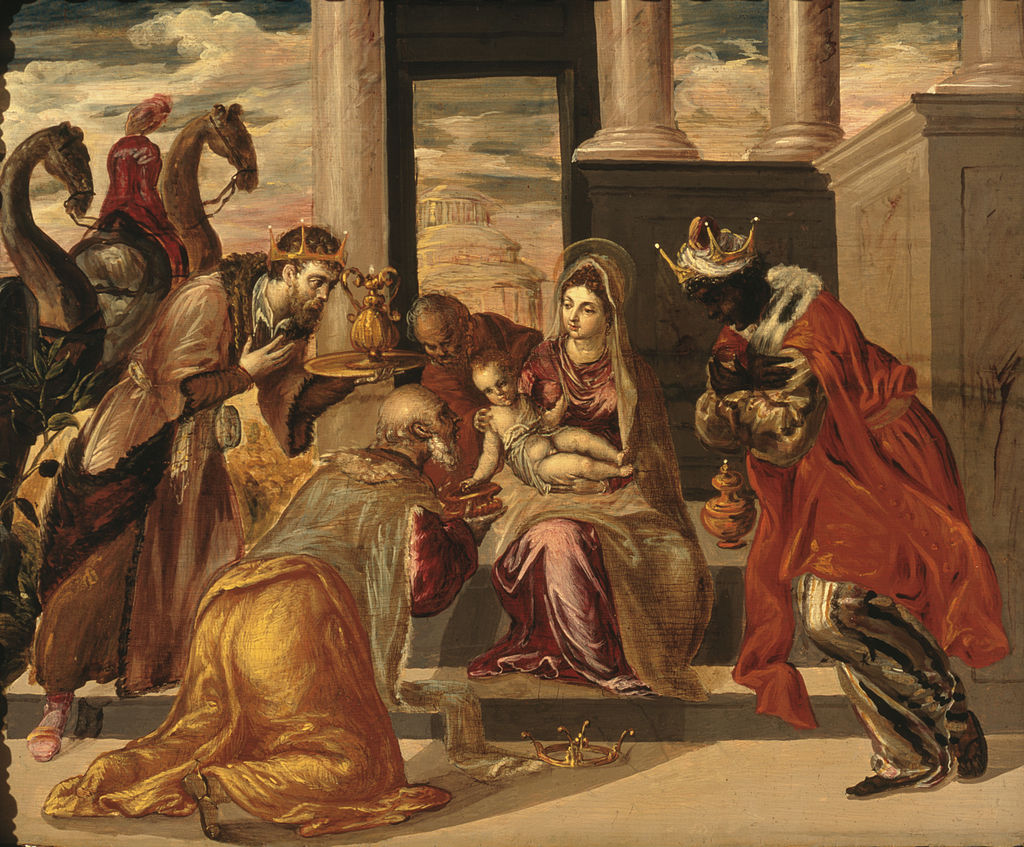
The Magi’s Epiphany
The Gentiles have become fellow heirs, members of the same body, and sharers in the promise in Christ Jesus through the Gospel (Eph. 3:6).
Our celebration of the Solemnity of the Epiphany completes our commemoration of the Mystery of the Incarnation which Christmas commemorates. In keeping with an ancient tradition of the Church, you have also heard The Announcement of Easter and the Moveable Feasts. This proclamation expresses our desire and intention to permeate the whole year with the grace of the Mystery of Christ as we celebrate the great Feasts of our faith. The radiance of Christ the Light of the world which today’s Feast of the Epiphany proclaims, is a Light that continues to shine even in the darkness of our own days. In him was life and the life was the light of men. The light shines in the darkness, and the darkness has not overcome it (Jn. 1:4-5).
Wise men from the East came to Jerusalem, asking, ‘Where is the child who has been born king of the Jews? For we observed his star at its rising, and have come to pay him homage’ (Mt. 2:2). Who were these wise men, these magi? According to St. Jerome there were three classes of magus in the ancient Near East: some were practitioners of demonic magic, others were experts in astronomy and the science of nature, while a third group was a caste of ascetical priests.
St. Jerome assures us that our Magi were of the second kind; sober students of the stars. They belonged to the great tradition of astronomy that had developed in Mesopotamia over the centuries and continued to flourish. The wise men were attentive to a series of regular astronomical events involving rare conjunctions that symbolically indicate the birth of a king. They had doubtless heard of the prophecy of the Gentile prophet Balaam: A star shall come forth out of Jacob and a scepter shall rise out of Israel (Num. 24:17). They explored this promise and they took upon themselves the sacrifices and the effort of a long and uncertain journey. Their humble courage was what enabled them to bend down before the Child of poor people and to recognize in Him the promised King. St. John Chrysostom says, if the Magi had come in search for an earthly King, they would have been disconcerted at finding that they had taken the trouble to come such a long way for nothing. Consequently, they would have neither adored nor offered gifts. But since they sought a heavenly king, though they found in Him no sign of royal pre-eminence, yet content with the testimony of the star alone, they adored: for they saw a man and they acknowledged a God (Cited in ST 3a q. 36, a. 8, ad 4.).
On entering the house, they saw the child with Mary his mother; and they knelt down and paid him homage. Then opening their treasure chests, they offered him gifts of gold, frankincense, and myrrh (Mt. 2:11). The treasures of the Epiphany affirm by implication the true nature of the Incarnate Son: Gold as to a king, frankincense as a sacrifice to God, myrrh as embalming the body of the dead (St. Gregory the Great). The Holy Infant is the one eternal Son in two natures, the Divine Saviour, at once kingly and priestly, who comes to conquer Satan’s pride and atone for Adam’s sin. The three gifts offered to Him refute all the errors and heresies surrounding His true nature as God and Man. This is more than a child. He is the Word Incarnate. On entering the house, they saw the child with Mary his mother; and they knelt down and paid him homage. Their simple gesture is instructive for every succeeding generation in the Church, including ours; and perhaps especially for ours. The kneeling down of the Magi is especially instructive and necessary. We, too, should kneel down when we enter the church, the House of God and find the Incarnate Son substantially present, yet humbly hidden, beneath the sacramental species in the Tabernacle. Of all the ways in which He is present on earth, this is the most excellent and the most deserving of our love. So we pray: O Sacrament Most Holy, O Sacrament Divine, all praise and all thanksgiving be every moment Thine!
The Magi teach us the lesson of humility before the Mysteries of God. More than any other virtue we ought to foster in ourselves first and foremost an attitude of profound humility before Our Saviour. The Christ Child silently teaches us a lesson. If childhood can serve as an instrument united to His Divine person, it would seem to follow that there is some quality in childhood that enables it to be in harmony with the God who became a Child. Hence in the midst of His public ministry He declared: ‘Truly I say to you, unless you turn and become like little children, you will not enter the kingdom of Heaven’ (Mt. 18:3). The Christ Child Whom we contemplate invites us to conform ourselves to His life; so that our own lives may be a proclamation of our salvation in Christ as a light for the nations (Preface of the Epiphany).
In view of the recent death of Pope Benedict XVI and his enduring theological and spiritual legacy in the life of the Church, today’s Feast of the Epiphany and specifically our consideration of the journey of the magi in search of the Word made Flesh, the logos of the Father, we see in the magi a coupling of faith and reason in the best of the intellectual tradition of the Catholic Church. In his life as a scholar and indeed as a doctor or teacher of the faith as supreme pontiff, Pope Benedict prophetically upheld and courageously defended the intellectual and spiritual tradition of that built what was arguably the greatest of all civilizations, Western Civilization or Christendom. Benedict’s description of monastic theology aptly describes his own and if we may, our own dialogue with God, the world and our very selves in our own search for integrity of life in the truth of God:
Faith and reason, in reciprocal dialogue, are vibrant with joy when they are both inspired by the search for intimate union with God. When love enlivens the prayerful dimension of theology, knowledge, acquired by reason, is broadened. Truth is sought with humility, received with wonder and gratitude: in a word, knowledge only grows if one loves truth. Love becomes intelligence and authentic theology wisdom of the heart, which directs and sustains the faith and life of believers.
May our efforts to know and to serve the living God in Christ be sustained and deepened this coming year by our encounter with the Triune God in the sacred rites and Feasts of the Church. The Announcement of Easter and the Moveable Feasts clearly expresses our desire and intention to permeate the whole year with the grace of the Mystery of Christ. May our worship always be an enduring experience of intimate union with God in the beauty of holiness. Like the Magi, each week we will undertake a journey to this House of God; that we may reflect the light of God’s glory and make it our glory to praise Him.

Saint Kateri , Canada’s Protectress
This was the title given to Saint Kateri Tekakwitha, by Pope Benedict XVI, when he canonized her on October 28th, 2012, along with six others, in Saint Peter’ Square (she had been beatified by Pope John Paul II back in 1980). With Saint Joseph as our protector, along with the Canadian martyrs, we seem to[…]Continue reading→

Remembering Father Alphonse de Valk
(Today marks the sixth anniversary of the death of Father Alphonse de Valk, C.S.B., a faithful, courageous and indefatigable Basilian priest, pro-life-and-family apostle, and the founder of Catholic Insight magazine. Here is what we wrote those on his entering into eternity five years ago, as we continue to remember him in our prayers and thoughts)[…]Continue reading→

My Name is Bernadette
April 16th is a propitious day, for besides the anniversary of Father de Valk’s death, who founded Catholic Insight in its print form decades ago, and the commemoration of the ‘two Benedicts’, mentioned in accompanying posts, today we also recall Saint Bernadette Soubirous, the young visionary to whom the Virgin Mary appeared numerous times at[…]Continue reading→
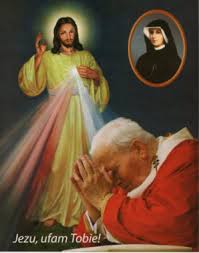
Canonizing Sister Faustina and Divine Mercy
HOMILY OF THE HOLY FATHER MASS IN ST PETER’S SQUARE FOR THE CANONIZATION OF SR MARY FAUSTINA KOWALSKA Sunday, 30 April 2000 1. “Confitemini Domino quoniam bonus, quoniam in saeculum misericordia eius”; “Give thanks to the Lord for he is good; his steadfast love endures for ever” (Ps 118: 1). So the Church sings on the Octave of[…]Continue reading→

Divine Mercy Sunday – An Echo of Every Mass
Reach out your hand and put it in my side. Do not doubt but believe’… ‘My Lord and my God!’ (Jn. 20:18)). Today is Divine Mercy Sunday, and as we celebrate the end of the Easter Octave, we contemplate the wounded side of our Saviour, the Church’s source of life. On Good Friday in the[…]Continue reading→

Saint Stanislaus of Szczepanów
We celebrate Saint Stanislaus today (+ April 11, 1079), in light of this Easter Octave, a bishop and martyr who accepted the episcopacy only at the direct order of Pope Alexander II. He proved a wise and courageous leader of his flock, put to death by his own king, Boleslaus, for rebuking the monarch’s ‘immoral[…]Continue reading→
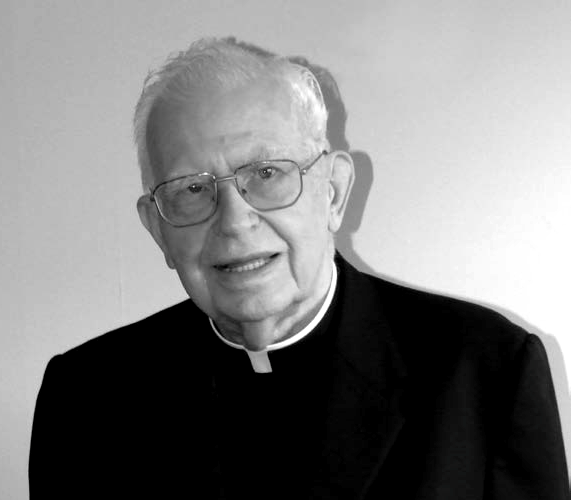
First Holy Communion: Sermon from May 16, 1943
Here is a sermon from the good old days by +Rev. Msgr. Vincent Nicholas Foy (August 14, 1915 – March 13, 2017), from 1943. Readers may recall that Pope Saint Pius X, by the decree Quam Singulari in 1910, lowered the customary age of reception of Holy Communion – after the rigours of the plague[…]Continue reading→
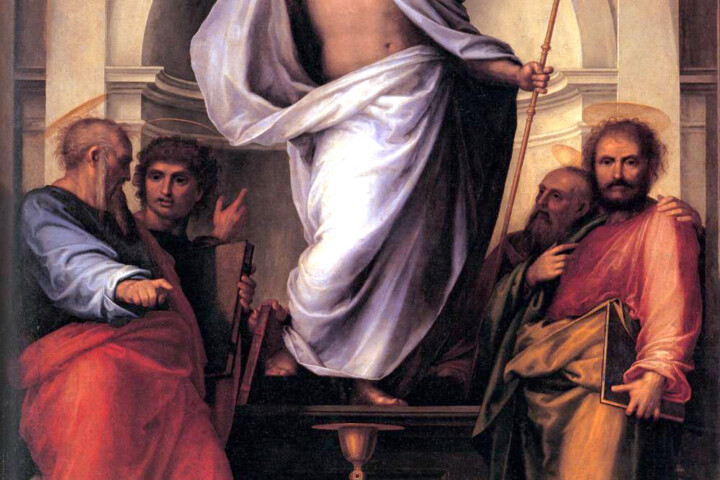
In the Glorious Light of Easter, Alleluia!
Set your minds on things that are above, not on things that are on earth, for you have died, and your life is hidden with Christ in God. When Christ who is your life is revealed, then you also will be revealed with him in glory (Col. 3:3-4). The Resurrection of Our Lord and Saviour[…]Continue reading→
An Ancient Homily for Holy Saturday
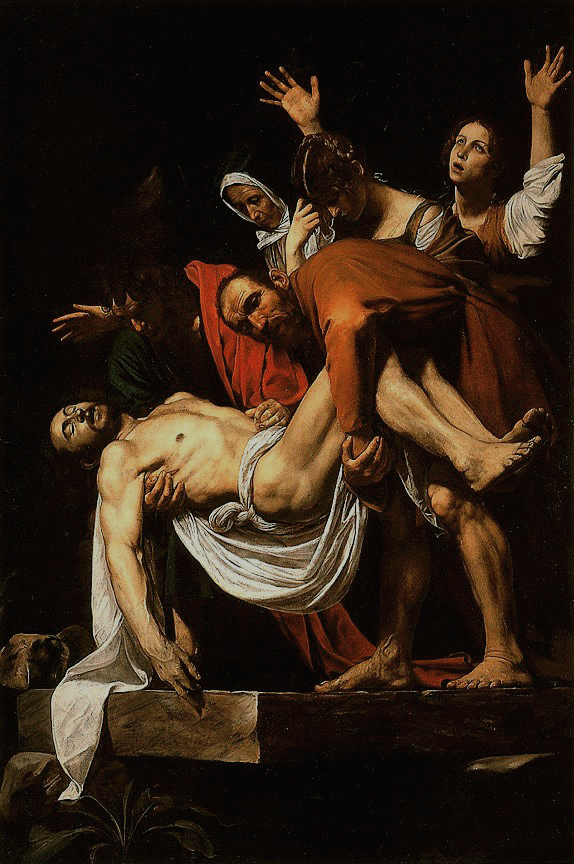
The time between Good Friday and Easter Sunday is one of waiting, in silence, as the world wonders – anticipates – what will happen, after the death of Christ. We re-live this time each year in the anamnesis of our liturgy, and in turn look forward to the glorious re-creation of all things at the[…]Continue reading→
Europe’s Long Descent
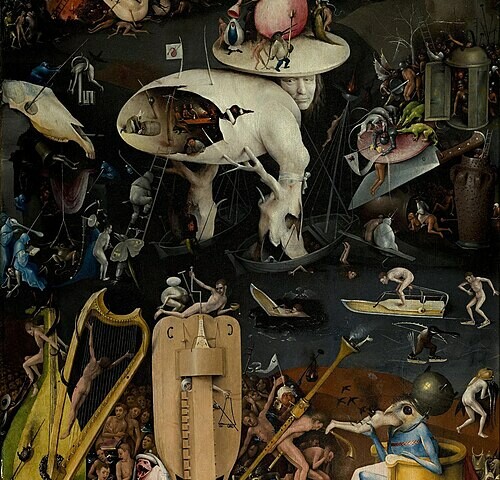
(As we meditate on this day on Christ’s burial, and His descent into hell, it is fitting to ponder here with contributor Peter Marcus how the world seems to be heading there as well. The difference is that, although God cannot ‘redeem’ hell, nor those therein, He can and did redeem the world. There is[…]Continue reading→