
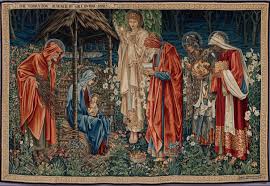
Epiphany: Three Approaches to Christ
In the events surrounding the birth of Jesus, three groups are called to our attention: the shepherds, the Magi and the court of King Herod. Each had its peculiar reaction to the birth of Jesus. The shepherds represent a simple faith; they heard and they believed, and they acted. The Magi, as the wise men of the ancient Near East, used observation, reason and inference to come to Bethlehem. Herod was a king, and as such he had political power . . . and alarm at the announcement of a potential rival.
We can obtain a better grasp the significance of these three—of faith as found in the shepherds, of science as exercised by the Magi and of power as held by Herod—by examining the form they assume when they degenerate. Faith, to begin with, when it is corrupted, becomes superstition. These two, faith and superstition, have something in common in that they both admit the existence of a spirit world; the difference between them lies in their attitudes towards it. While faith is reverent, superstition is manipulative, attempting by charms or spells to control the mysterious forces that govern human life. The means it adopts to do so can be crude, such as sticking pins in a voodoo doll, or pretentious, as in the case of fortune tellers and also those horoscopes we like to consult in the daily newspapers.
As for the wise men, the danger they run is to place too great a reliance on reason alone. When logic rules the roost, there is a temptation to move from its proper use into scepticism. For if every experience has to be grilled by reason, the subtle realities that religion honours will elude the investigator. The babe of Bethlehem is a good instance of the limitations of logic All the scientific methods available to modern medicine could not have revealed anything about the infant Jesus that made him different from any other baby boy. And yet, there, in the squalor of the cave, was the eternal Word made flesh.
Finally, consider Herod. The abuse of power is easily recognized. Simply look at him or any other absolute ruler; they are, almost of necessity, tyrants to a man, employing their power against rather than in the service of their people. And as a tyrant, Herod could not tolerate the existence of a rival to the throne any more than he could conceive of a king who would govern by changing men’s hearts rather than by forcing their compliance.
How, then, are these wrongs, seemingly inevitable, to be righted? How can we rescue religion from superstition? science from scepticism? and power from tyranny? The response to these questions is waiting for us in the manger of Bethlehem. Superstition is corrected when God reveals himself as he is, viz., the providential guardian of creation that, in his transcendence, cannot be affected by human agents. Rather, we depend on his beneficent interest in mankind, his showing himself to us. He takes the initiative, determining ways and means, and he does so by revealing himself as man in the person of Jesus who birth at Bethlehem we are currently celebrating.
What about the hubris, the preening pride, of the intellectual? How is rationalism to be restrained? The answer is by mystery, in that the world, the universe is more and more an object of wonder as the various scientific theories, one by one, admit their inadequacy to describe, much less to account for it. To take a simple instance, given that the Magi followed a star, consider the light that comes to us from any star, that is to say from light years away, unimaginably distant. How much of its radiation, emitted in all directions, strikes my eye? An infinitesimal amount. And yet I see it, and in a laboratory can analyze its light. More amazing yet is the fact that the tiny speck in space we call the planet earth is home to the human mind, that can encompass such vast and ambiguous tracts of time and space. Thus, the rightly disposed thinker will be led to make his own the words of Saint Paul “There is one God from whom are all things, and for whom we exist, and One Lord, Jesus Christ, through whom are all things, and through whom we exist.”[1]
A much more difficult question is, “How is the decline of power into tyranny to be reversed?” The shepherds, after all, responded eagerly to revelation and the Magi to mystery, but King Herod became even more violent when he learned that a new David had been born in Bethlehem. “Power corrupts,” as the old axiom states, and so it does. The great evil of the brutal use of strength must be answered by an even greater power for good—and that greater power is love. Only where there is genuine affection and good will can anyone be trusted to use his authority well. “Our charge is love that issued from a pure heart and a good conscience and sincere faith.”[2] There you have the description of the ideal prime minister, CEO or parent: “Love that issues from a pure heart and a good conscience and sincere faith.” Our king is Jesus Christ, who taught us that the entire old law, in all its multiple and complicated demands, could be reduced to the double commandment, to love God with all our hearts and our neighbour as ourselves. Only this supernatural, surprising love can win out against the violence and greed we find in the world around us, . . . and even in ourselves. As Christians, assembled here in worship, we accept revelation as a corrective to superstition, we recognize mystery and wonder as a refutation of rationalism, and we embrace a generous intelligent and universal love as the means to overcome the violence of tyranny that would destroy rather than safeguard human life.
[1] 1 Cor 8.6.
[2] 1 Tim 1.5

Remembering Father Alphonse de Valk
(Today marks the sixth anniversary of the death of Father Alphonse de Valk, C.S.B., a faithful, courageous and indefatigable Basilian priest, pro-life-and-family apostle, and the founder of Catholic Insight magazine. Here is what we wrote those on his entering into eternity five years ago, as we continue to remember him in our prayers and thoughts)[…]Continue reading→

Divine Mercy Sunday – An Echo of Every Mass
Reach out your hand and put it in my side. Do not doubt but believe’… ‘My Lord and my God!’ (Jn. 20:18)). Today is Divine Mercy Sunday, and as we celebrate the end of the Easter Octave, we contemplate the wounded side of our Saviour, the Church’s source of life. On Good Friday in the[…]Continue reading→

Saint Stanislaus of Szczepanów
We celebrate Saint Stanislaus today (+ April 11, 1079), in light of this Easter Octave, a bishop and martyr who accepted the episcopacy only at the direct order of Pope Alexander II. He proved a wise and courageous leader of his flock, put to death by his own king, Boleslaus, for rebuking the monarch’s ‘immoral[…]Continue reading→

First Holy Communion: Sermon from May 16, 1943
Here is a sermon from the good old days by +Rev. Msgr. Vincent Nicholas Foy (August 14, 1915 – March 13, 2017), from 1943. Readers may recall that Pope Saint Pius X, by the decree Quam Singulari in 1910, lowered the customary age of reception of Holy Communion – after the rigours of the plague[…]Continue reading→
In the Glorious Light of Easter, Alleluia!
Set your minds on things that are above, not on things that are on earth, for you have died, and your life is hidden with Christ in God. When Christ who is your life is revealed, then you also will be revealed with him in glory (Col. 3:3-4). The Resurrection of Our Lord and Saviour[…]Continue reading→
An Ancient Homily for Holy Saturday
The time between Good Friday and Easter Sunday is one of waiting, in silence, as the world wonders – anticipates – what will happen, after the death of Christ. We re-live this time each year in the anamnesis of our liturgy, and in turn look forward to the glorious re-creation of all things at the[…]Continue reading→
Europe’s Long Descent
(As we meditate on this day on Christ’s burial, and His descent into hell, it is fitting to ponder here with contributor Peter Marcus how the world seems to be heading there as well. The difference is that, although God cannot ‘redeem’ hell, nor those therein, He can and did redeem the world. There is[…]Continue reading→
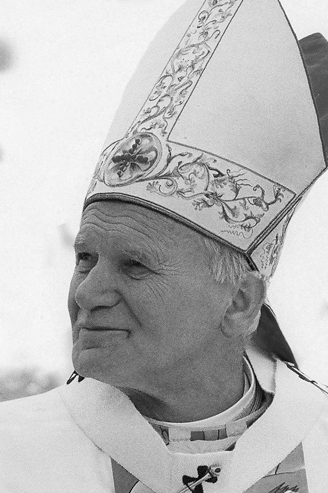
Pope Saint John Paul II’s First Good Friday Homily
ADDRESS OF HIS HOLINESS JOHN PAUL II AT THE CONCLUSION OF THE STATIONS OF THE CROSS AT THE COLOSSEUM Good Friday, 13 April 1979 When we make the Way of the Cross from one station to the next, in spirit we are always at the spot wherethis journey had its “historical” place: where it[…]Continue reading→
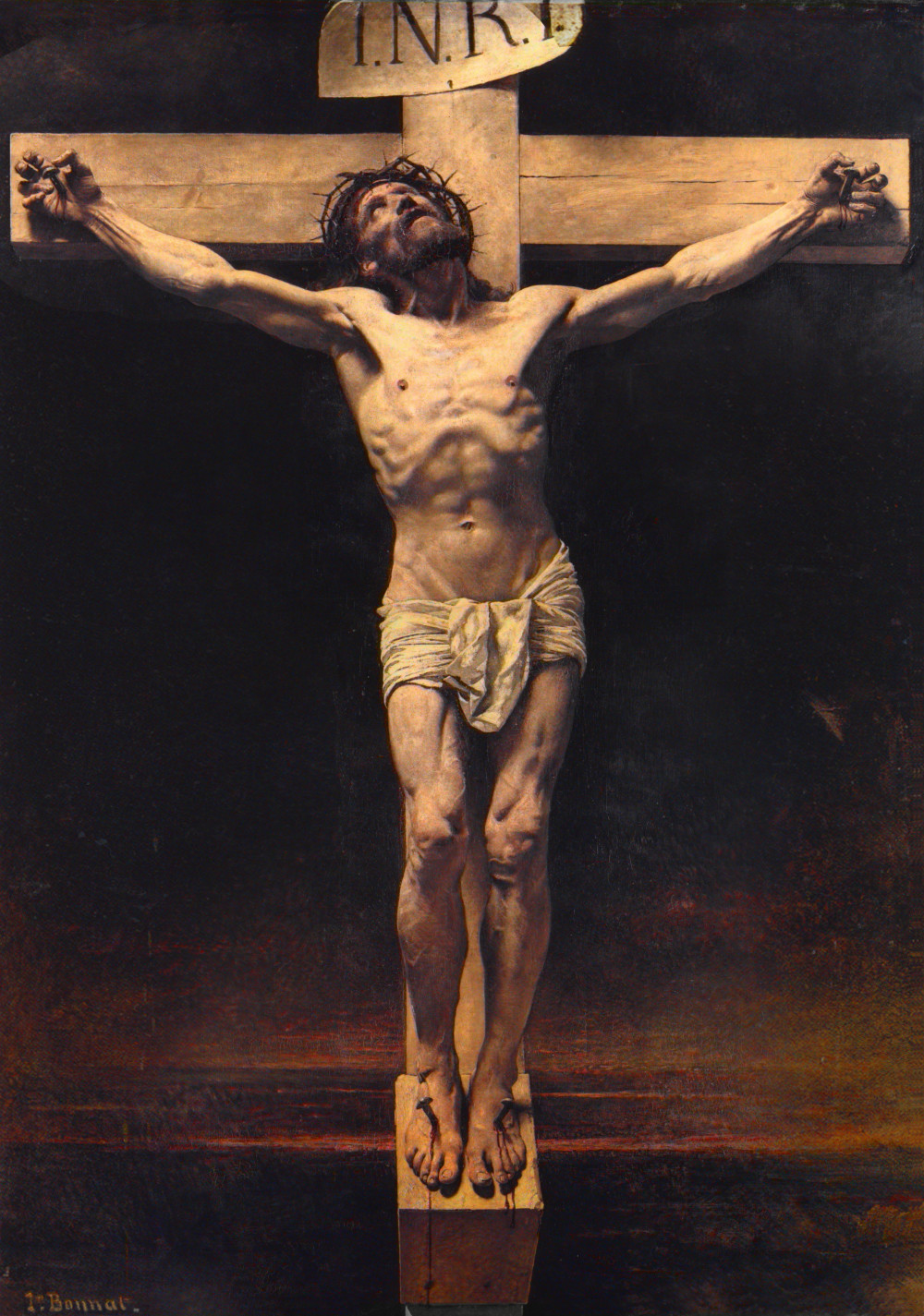
A Meditation for Good Friday: How To Undo the Effects of Sin?
Cardinal Newman, now Saint John Henry Newman, was a towering figure of nineteenth-century Catholicism who is almost universally admired. I say “almost” because not everyone likes him. I knew a priest once, Arthur Caulkins, who has become disenchanted with Newman. As an undergraduate Arthur had been enamoured of Newman, and this interest continued when he[…]Continue reading→
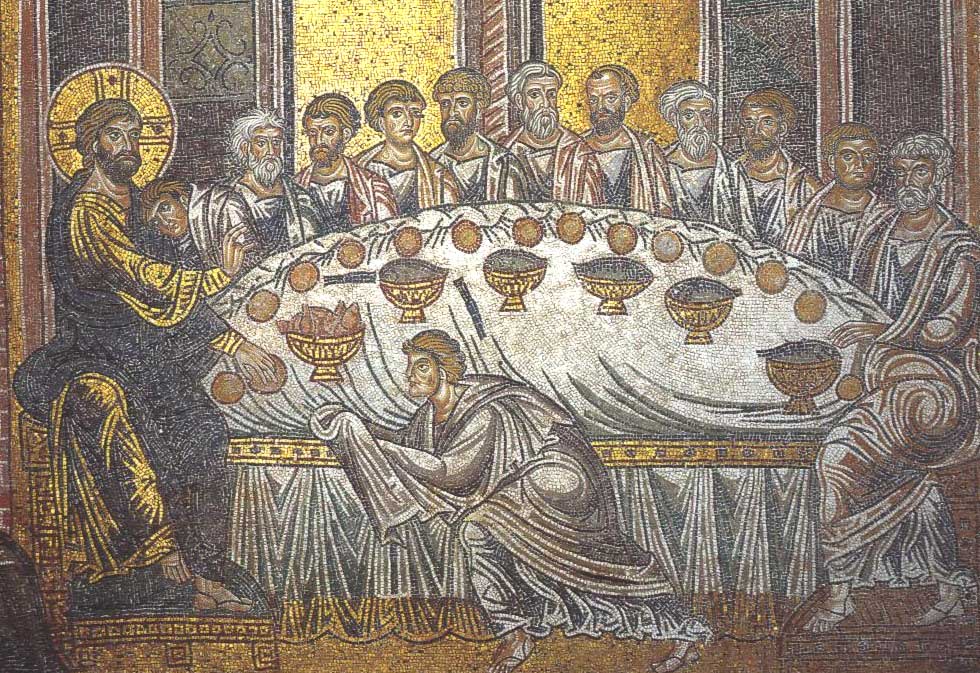
Pope Benedict’s Last Holy Thursday Homily
MASS OF THE LORD’S SUPPER HOMILY OF HIS HOLINESS BENEDICT XVI Basilica of St John Lateran Holy Thursday, 5 April 2012 Photo Gallery (Video) Dear Brothers and Sisters! Holy Thursday is not only the day of the institution of the Most Holy Eucharist, whose splendour bathes all else and in some ways draws it to[…]Continue reading→