
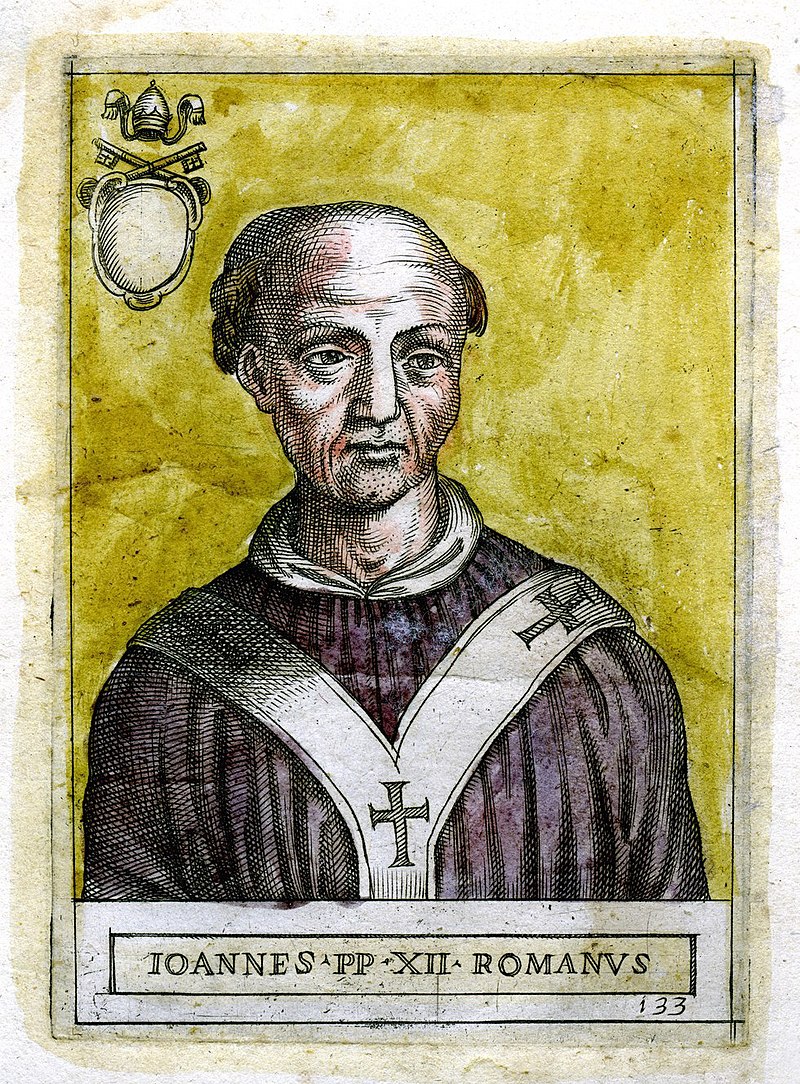
Might a Pope Be Deposed?
On November 6th in 963, Emperor Otto I called a council in Rome, which condemned and then deposed Pope John XII, on charges that the pontiff had staged an ‘armed rebellion’ against the emperor. The Pope fled, and Leo VIII elected in his place. But the deposition was never really carried out, for John quickly managed to return, oust the alleged new Pope, and reigned again for a few months, until God took him, by his untimely and unseemly death, allegedly of apoplexy in flagrante delicto in the act of adultery. Or perhaps he was dispatched at the hands of the cuckolded husband.
John XXII was far from an exemplary Vicar of Christ. In fact, he was an outright scandal, amongst the worse in the list of pontiffs, at least in the moral sphere, even if he promulgated no heresy so far as we know. He was obviously not worthy of the papal office.
But who is?
Otto’s actions were what they were, and produced the desired effect for a brief time, but seem to have made things worse (many died in the conflict between emperor and pope, and a possible anti-Pope was elected). They were not legal, for it has been clarified by the Church that no earthly power, and no human court, can depose a reigning Pope, as Bishop Athanasius Schneider makes clear. Napoleon found this out, to his dismay, 900 years later, in his own conflict with the two Piuses, VI and VII (both of whom, unlike John XII, were saintly men).
In the current law of the Church, which is consistent with revealed Tradition, there is no legal way to ‘get rid’ of a Pontiff that we may find troublesome, even one deemed heretical. Even if there were, said Pope would be entitled to his day in court to defend himself. Even the most blatant, die-hard, contumacious heretic has been – and should be – granted as much.
The problem is, there is no such court to judge a Pope. It doesn’t exist. There may be cardinals and bishops who can confront a Pope, force him in some way to face his errors and repent. But if he should not, well, we must leave his fate to God.
This is why the current crop of sedevacantists are, quite simply, wrong.
To be clear, they may be right, in some deep, ontological sense. There could be some reason why a Pope is not validly a Pope, just as there could be some obscure reason why a given marriage may not be valid.
But we are not in a position to judge.
LifeSite posted an article today by John Lamont (reposted from Rorate Coeli) – rather recherché and overlong – arguing why Pope Francis is not a legitimate Pope. They still publish the pronouncements of Archbishop Vigano – who has shrugged off his excommunication like bullets bouncing off Superman. He was judged to be in schism after his own claim that ‘Bergoglio’ is no longer Pope, not long after he had deemed Vatican II an illegitimate council. According to Vigano, everything the Pope has done is thereby deemed illegitimate and invalid, which, needless to say, raises a host of other problems, worse than having a wobbly and wayward occupant on the Seat of Peter.
The difficulty with Lamont’s position is that he and others may accuse, and list any number of problems with the current pontificate – with many of which we may agree, and which must be faced. But they have no authority to convict, far less pass sentence. No one has that authority. Except God.
Catholics should be aware that in so acting as judge, jury and executioner of the Pope’s unfitness for office, and hence losing the papacy, they are thereby deposing the Pope. They then carry on as though he had already died or resigned, which are the only two legitimate ways that a Pope may complete his office. Whence, we may ask, do they derive such authority?
A lesson for our time is found in the example of the future-and-sometime King David: He would not lay his hands on King Saul, unworthy though he had made himself of his own crown, for Saul was the Lord’s anointed. David could have argued that Samuel – or God! – had made a bad and hasty choice in anointing him; or that the anointing was invalid; or that Saul’s apostasy ipso facto removed him from the monarchy; or any other argument.
He had plenty of chances, but he did not, not even in his heart. David, in hope and faith, waited for God to act. And so must we.

Carney’s Amoral Majority
After five defections – euphemistically described as ‘crossing the floor’ – and three by-elections, Mark Carney and his Liberals how have their coveted majority. One wonders what bowls of pottage were offered in back-room deals. In the archaic monarchical system that is the Dominion of Canada, this majority allows the newly-minted Prime Minister to rule[…]Continue reading→

Saint Kateri , Canada’s Protectress
This was the title given to Saint Kateri Tekakwitha, by Pope Benedict XVI, when he canonized her on October 28th, 2012, along with six others, in Saint Peter’ Square (she had been beatified by Pope John Paul II back in 1980). With Saint Joseph as our protector, along with the Canadian martyrs, we seem to[…]Continue reading→

A Tale of Two Benedicts
A grace-filled Holy Week to all our readers! As we await and prepare for the Resurrection about to dawn upon us, we might keep in mind two Benedicts: Pope Emeritus Benedict XVI, requiescat in pace, elected on this day in 2005; and today’s commemoration of the mystic pilgrim, Benedict Joseph Labre, who died on this[…]Continue reading→

My Name is Bernadette
April 16th is a propitious day, for besides the anniversary of Father de Valk’s death, who founded Catholic Insight in its print form decades ago, and the commemoration of the ‘two Benedicts’, mentioned in accompanying posts, today we also recall Saint Bernadette Soubirous, the young visionary to whom the Virgin Mary appeared numerous times at[…]Continue reading→

Saint Lydwina of Schiedam and Suffering Joyfully
Saint Lydwina of Schiedam (1380 – 1433) was one of the countless and glorious ‘victim souls’ in the history of the Church, those whose lives are filled with suffering, often of an unimaginable intensity, but who suffer joyfully. She was a fifteen-year old Dutch girl, out skating one day, when she fell and broke one[…]Continue reading→

The Glorious Martyrdoms of Martin and Maximus
As we enter into Eastertide, we recall on this 13th of April Pope Saint Martin I (+655), one of the noblest, if most tragic, of the successors of Saint Peter. Born in Umbria, Italy, he was of noble lineage, with great intelligence combined with charity and love of the poor and the Church. While still[…]Continue reading→

Saint Stanislaus of Szczepanów
We celebrate Saint Stanislaus today (+ April 11, 1079), in light of this Easter Octave, a bishop and martyr who accepted the episcopacy only at the direct order of Pope Alexander II. He proved a wise and courageous leader of his flock, put to death by his own king, Boleslaus, for rebuking the monarch’s ‘immoral[…]Continue reading→

Saint Gemma Galgani
On this April 11th, in 1903 – the same year that the Italian Guiseppe Sarto was elected Pope later that summer as Pius X – a lovely, young Italian woman died, by the name of Gemma Galgani. She lived a brief life of 24 years, as did a number of other young saints, including Pier[…]Continue reading→

An Ideological and Improper Translation
I noticed something odd with the psalm reading at Mass the other day. Our bishops’ conference here in Canada has decreed that the Mass in English – Novus Ordo – use the ‘NRSV’, the ‘New Revised Standard Version’, an ‘updated’ translation of the original RSV, first published in 1952. This ‘new translation’ has the tendency[…]Continue reading→
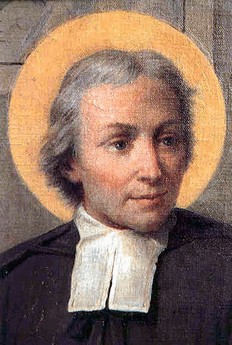
Saint Jean-Baptiste de la Salle: A Teacher for Teachers
Jean-Baptiste de la Salle (1651 – 1719), a French nobleman, ordained a priest, founded the first order in the Church’s history entirely without priests, and this came about almost by accident. I say ‘almost’, for, of course, there are no accidents with God. Destined for ordination from an early age, Jean-Baptiste never looked back, even[…]Continue reading→