
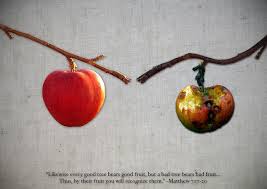
Clarifying One’s Christian Duty
A recent reflection in First Things warns against sacralising politics (or politicizing the sacred), and rightly so. As the prophet Jeremiah warns: cursed is the man who trusts in man, and makes flesh his strength, whose heart departs from the LORD (17:5).
Yet, I may be permitted to offer some further distinction required, when the author writes:
Of the many things Christians might do to put God back in their homes, voting for any candidate seems an odd place to start. Indeed, if voting for Trump is considered a fulfillment of Christian duty, or even an act of Christian piety, it would be a distraction from that duty, or a dereliction of piety—in short, a danger to Christian faith and practice.
True enough: One should not start with politics to put the sacred anywhere. We should rather begin at the beginning, within one’s own heart and home. But when there’s an existential threat to keeping ‘God in your home’, priorities shift – the aggressor must be avoided or neutralized. The primary task of the state, and the politicians who govern, is first and foremost is to provide peace and good order, founded on the objective moral law, to leave room and freedom so that the myriad of private societies – especially the family – may flourish. Need we belabour how this applies in the current crisis?
This is the very reason why the notion of ‘Christian duty’ must be clarified. There are actions that are specifically Christian, flowing from the virtues of religion and piety – attending Mass, saying one’s Rosary, regular Confession and so on.
Then there are other duties that flow from other virtues which are not specifically sacred – scrubbing the bathroom, studying for an exam, practising music, feeding one’s children, and, yes, voting. Yet we may see these duties as ‘Christian’ in a broad, unified sense, since they follow upon some truth impinging on our conscience, moving it suaviter et fortiter, to do, or not do, something. And that voice of conscience, if properly formed, is Christ Himself speaking. For what is conscience, as Gaudium et Spes put it, but a dialogue between God and man?
Conscience is the most secret core and sanctuary of a man. There he is alone with God, Whose voice echoes in his depths (#16)
In this sense, are not all of our duties ‘Christian’? As the decree on the laity, Apostolicam Actuositatem, further clarifies:
Christ’s redemptive work, while essentially concerned with the salvation of men, includes also the renewal (instaurationem) of the whole temporal order. Hence the mission of the Church is not only to bring the message and grace of Christ to men but also to penetrate and perfect the temporal order with the spirit of the Gospel. In fulfilling this mission of the Church, the Christian laity exercise their apostolate both in the Church and in the world, in both the spiritual and the temporal orders. These orders, although distinct, are so connected in the singular plan of God that He Himself intends to raise up the whole world again in Christ and to make it a new creation, initially on earth and completely on the last day. In both orders the layman, being simultaneously a believer and a citizen, should be continuously (continenter) led by the same (una) Christian conscience. (#5)
All things are Christ’s, Who is all, in all (Col 3:11).
Only to say that voting, and voting prudently and wisely, is a Christian act, just as all acts of a Christian are Christian. While we should distinguish how explicitly ‘Christian’ any given act may be, we cannot go to the point of bifurcating our conscience into ‘Christian’ and ‘non-Christian’, even if that conscience is motivated by many different factors in the vagaries of this fractious life.
We may wish there were better choices – a philosopher-king, say. At this point, we’d even take a philosopher-prince, duke or minor viscount. Would also that the bombast were not so bombastic, with less ad hominem vitriol and more ad veritatem dialogue. But what we have is given to us in God’s mysterious providence, and we must make the best of it – or, at the very least, the less worse.
What is our Christian duty is to realize the implications of our vote – or non-vote, as the case may be – and how it will weigh upon one’s conscience. This applies to all of our decisions, especially when so much is at stake, with the very fate of the family, nation, and everyone therein, hanging in the balance, as the chasm between good and evil widens. Sure, things already may have gone too far, and no president can at this point ‘save’ America. But we should do what we can. Even if we’re all going off a cliff, we must along the way prepare to go before our Lord and Maker with a conscience that is clear, continent and unified, in both the temporal and the spiritual order.

Carney’s Amoral Majority
After five defections – euphemistically described as ‘crossing the floor’ – and three by-elections, Mark Carney and his Liberals how have their coveted majority. One wonders what bowls of pottage were offered in back-room deals. In the archaic monarchical system that is the Dominion of Canada, this majority allows the newly-minted Prime Minister to rule[…]Continue reading→

Saint Kateri , Canada’s Protectress
This was the title given to Saint Kateri Tekakwitha, by Pope Benedict XVI, when he canonized her on October 28th, 2012, along with six others, in Saint Peter’ Square (she had been beatified by Pope John Paul II back in 1980). With Saint Joseph as our protector, along with the Canadian martyrs, we seem to[…]Continue reading→

A Tale of Two Benedicts
A grace-filled Holy Week to all our readers! As we await and prepare for the Resurrection about to dawn upon us, we might keep in mind two Benedicts: Pope Emeritus Benedict XVI, requiescat in pace, elected on this day in 2005; and today’s commemoration of the mystic pilgrim, Benedict Joseph Labre, who died on this[…]Continue reading→

My Name is Bernadette
April 16th is a propitious day, for besides the anniversary of Father de Valk’s death, who founded Catholic Insight in its print form decades ago, and the commemoration of the ‘two Benedicts’, mentioned in accompanying posts, today we also recall Saint Bernadette Soubirous, the young visionary to whom the Virgin Mary appeared numerous times at[…]Continue reading→

Saint Lydwina of Schiedam and Suffering Joyfully
Saint Lydwina of Schiedam (1380 – 1433) was one of the countless and glorious ‘victim souls’ in the history of the Church, those whose lives are filled with suffering, often of an unimaginable intensity, but who suffer joyfully. She was a fifteen-year old Dutch girl, out skating one day, when she fell and broke one[…]Continue reading→

The Glorious Martyrdoms of Martin and Maximus
As we enter into Eastertide, we recall on this 13th of April Pope Saint Martin I (+655), one of the noblest, if most tragic, of the successors of Saint Peter. Born in Umbria, Italy, he was of noble lineage, with great intelligence combined with charity and love of the poor and the Church. While still[…]Continue reading→

Saint Stanislaus of Szczepanów
We celebrate Saint Stanislaus today (+ April 11, 1079), in light of this Easter Octave, a bishop and martyr who accepted the episcopacy only at the direct order of Pope Alexander II. He proved a wise and courageous leader of his flock, put to death by his own king, Boleslaus, for rebuking the monarch’s ‘immoral[…]Continue reading→

Saint Gemma Galgani
On this April 11th, in 1903 – the same year that the Italian Guiseppe Sarto was elected Pope later that summer as Pius X – a lovely, young Italian woman died, by the name of Gemma Galgani. She lived a brief life of 24 years, as did a number of other young saints, including Pier[…]Continue reading→

An Ideological and Improper Translation
I noticed something odd with the psalm reading at Mass the other day. Our bishops’ conference here in Canada has decreed that the Mass in English – Novus Ordo – use the ‘NRSV’, the ‘New Revised Standard Version’, an ‘updated’ translation of the original RSV, first published in 1952. This ‘new translation’ has the tendency[…]Continue reading→
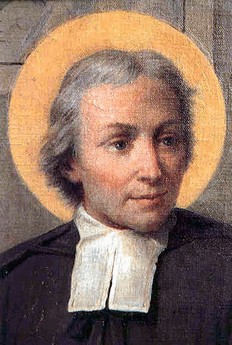
Saint Jean-Baptiste de la Salle: A Teacher for Teachers
Jean-Baptiste de la Salle (1651 – 1719), a French nobleman, ordained a priest, founded the first order in the Church’s history entirely without priests, and this came about almost by accident. I say ‘almost’, for, of course, there are no accidents with God. Destined for ordination from an early age, Jean-Baptiste never looked back, even[…]Continue reading→