
The Surreality of Reality
Things are surreal, and getting more so by the minute – or so it goes. In the first minute or so of his interview with Elon Musk, Donald Trump describes the recent attempt to assassinate him as ‘surreal’ multiple times. It’s used to describe wars, and rumours of wars; the state of the Church, and the behaviour of some of her more erratic members. But it’s also used to describe great feats of musicianship, athleticism.
What’s real, and what’s surreal?
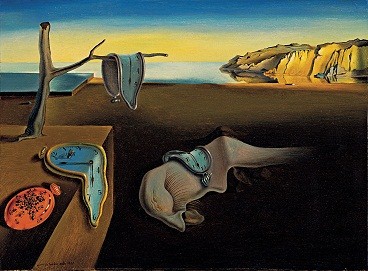
I was surprised to learn that the term is of rather recent origin, its first use dating back to 1937, derived from the earlier self-described ‘surrealist’ movement in art. Salvador Dali’s ‘limp watch’ from his 1931 work ‘The Persistence of Memory‘ became an iconic symbol of the surreal.
One definition has it that what is surreal is marked by the intense irrational reality of a dream.
‘Intense irrational reality’. Hmm. It’s irrational but seems real.
Like any number of other words, surreal evolved to mean almost its opposite: From that which seems unreal, and is so, to that which seems unreal, but is all too real, whether in a bad or good sense. Being in a plane falling out the sky is surreal, but so is falling in love, especially for the first time (which should, ideally, be the only time).
Movies are almost by definition surreal: They have to exaggerate reality to keep viewers’ attention. Flannery O’Connor’s stories were surreal, since, as she said, people were too morally deaf to hear anything else, and she had to write in capital letters . All literature and art has to have some surreal quality, to re-present reality in a way that we have not seen it before. As Chesterton quipped, only a child would not be bored by a realistic novel. For such children, all reality is surreal – they are filled with awe at a blue sky, or a waving flower. Aristotle and Aquinas declared that poets and philosophers are filled with wonder – mira – for the world is a wonder-ful place, as a song some time ago sang. Would that we blasé adults might become like such little children, to see the world as God always sees it, for the first time.
But to get to that state, we have to be grounded in reality, which is, what is really real, not on the un-reality – the fake surreality – of technology. Unlike past ages, when life and art were distinct and we knew which was which, they now coalesce, mediated by the ubiquitous screens. With the exponential advance of AI-deep fakes – something Gavin Newsom has just made illegal in the state of California, and bonnes chances with that – it’s more and more difficult to tell what is real, from what is sort of real, from what is completely – or nearly so – unreal. Everything is now surreal, a Dali-esque dreamscape, or nightmare, depending on your point of view.
Even if what is portrayed on screen is ‘real’, those who control that technology only reveal to us what they want us to see, like the woman of Billy Joel’s eponymous song. Edited, filtered, censored and massaged. Chesterton warned in his own far less technological day that newspapers were like giant spotlights, illuminating one moment, and leaving the rest – and the rest of us – in the dark. Wars and rumours of wars, indeed.
Saint Thomas defines truth as adequatio rei et intellectus – a conformity between the mind and reality. If our minds become unhinged from what is real, we cannot, therefore, find truth. We are all now in Plato’s cave, watching images of images – but the images now seem more real than reality.
We need to anchor our minds, our very selves, in reality – in what is truly real, if you may pardon the redundancy. This means first and foremost what is right around us, that is, local life, which, like the present day, has enough evil to suffice. And we may add, enough good, even more than enough. Live life, and life will be given you. For only what is really real and truly true – however surreal it seem – will lead us to sanity, to charity and to heaven, the realest and surreal-est of all.
Carney’s Amoral Majority
After five defections – euphemistically described as ‘crossing the floor’ – and three by-elections, Mark Carney and his Liberals how have their coveted majority. One wonders what bowls of pottage were offered in back-room deals. In the archaic monarchical system that is the Dominion of Canada, this majority allows the newly-minted Prime Minister to rule[…]Continue reading→

Saint Kateri , Canada’s Protectress
This was the title given to Saint Kateri Tekakwitha, by Pope Benedict XVI, when he canonized her on October 28th, 2012, along with six others, in Saint Peter’ Square (she had been beatified by Pope John Paul II back in 1980). With Saint Joseph as our protector, along with the Canadian martyrs, we seem to[…]Continue reading→
A Tale of Two Benedicts
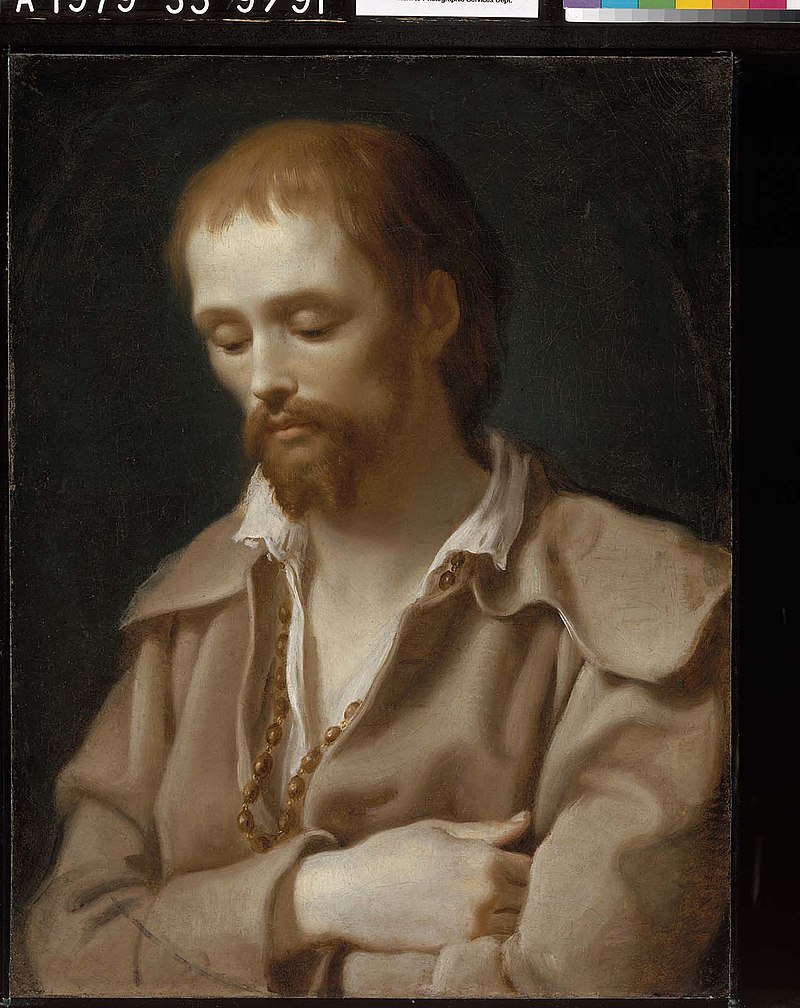
A grace-filled Holy Week to all our readers! As we await and prepare for the Resurrection about to dawn upon us, we might keep in mind two Benedicts: Pope Emeritus Benedict XVI, requiescat in pace, elected on this day in 2005; and today’s commemoration of the mystic pilgrim, Benedict Joseph Labre, who died on this[…]Continue reading→

My Name is Bernadette
April 16th is a propitious day, for besides the anniversary of Father de Valk’s death, who founded Catholic Insight in its print form decades ago, and the commemoration of the ‘two Benedicts’, mentioned in accompanying posts, today we also recall Saint Bernadette Soubirous, the young visionary to whom the Virgin Mary appeared numerous times at[…]Continue reading→
Saint Lydwina of Schiedam and Suffering Joyfully
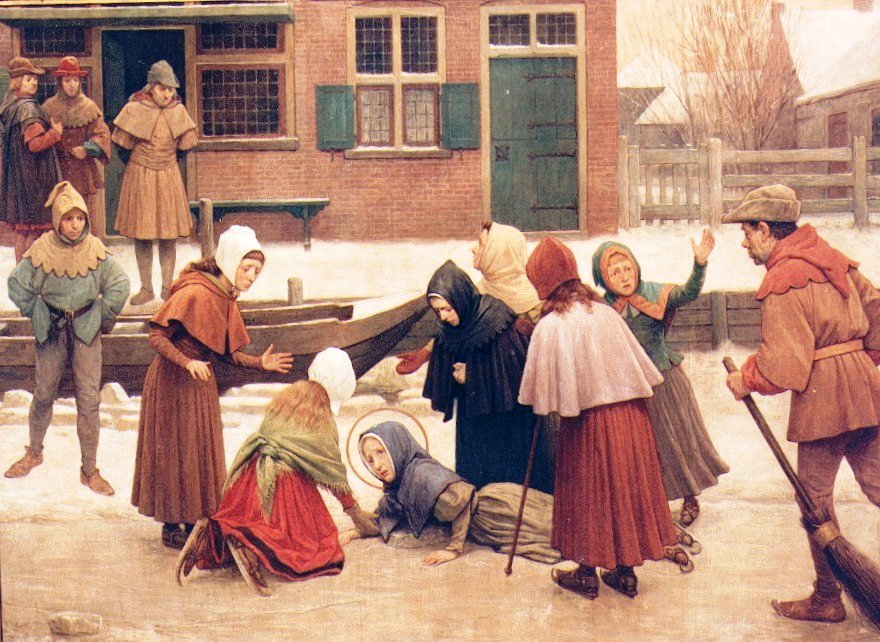
Saint Lydwina of Schiedam (1380 – 1433) was one of the countless and glorious ‘victim souls’ in the history of the Church, those whose lives are filled with suffering, often of an unimaginable intensity, but who suffer joyfully. She was a fifteen-year old Dutch girl, out skating one day, when she fell and broke one[…]Continue reading→
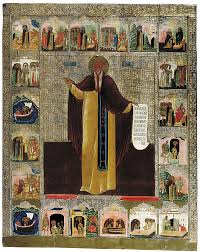
The Glorious Martyrdoms of Martin and Maximus
As we enter into Eastertide, we recall on this 13th of April Pope Saint Martin I (+655), one of the noblest, if most tragic, of the successors of Saint Peter. Born in Umbria, Italy, he was of noble lineage, with great intelligence combined with charity and love of the poor and the Church. While still[…]Continue reading→

Saint Stanislaus of Szczepanów
We celebrate Saint Stanislaus today (+ April 11, 1079), in light of this Easter Octave, a bishop and martyr who accepted the episcopacy only at the direct order of Pope Alexander II. He proved a wise and courageous leader of his flock, put to death by his own king, Boleslaus, for rebuking the monarch’s ‘immoral[…]Continue reading→
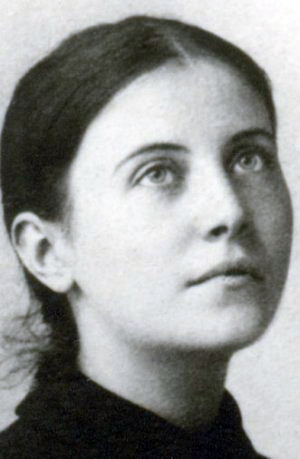
Saint Gemma Galgani
On this April 11th, in 1903 – the same year that the Italian Guiseppe Sarto was elected Pope later that summer as Pius X – a lovely, young Italian woman died, by the name of Gemma Galgani. She lived a brief life of 24 years, as did a number of other young saints, including Pier[…]Continue reading→
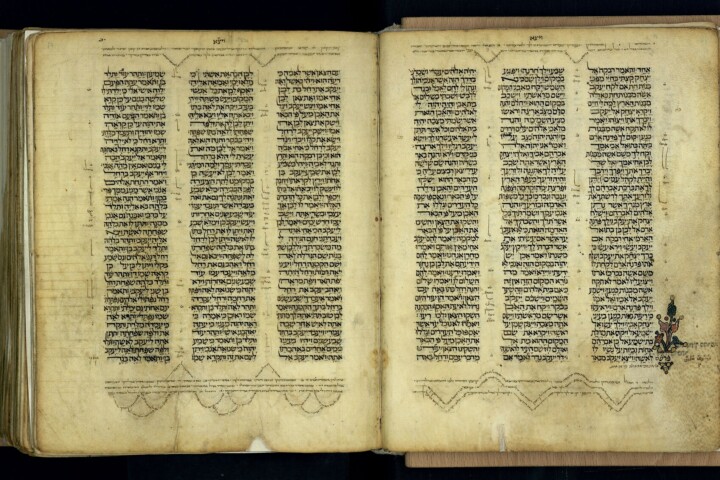
An Ideological and Improper Translation
I noticed something odd with the psalm reading at Mass the other day. Our bishops’ conference here in Canada has decreed that the Mass in English – Novus Ordo – use the ‘NRSV’, the ‘New Revised Standard Version’, an ‘updated’ translation of the original RSV, first published in 1952. This ‘new translation’ has the tendency[…]Continue reading→
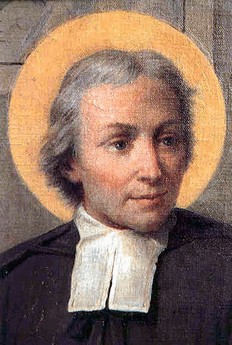
Saint Jean-Baptiste de la Salle: A Teacher for Teachers
Jean-Baptiste de la Salle (1651 – 1719), a French nobleman, ordained a priest, founded the first order in the Church’s history entirely without priests, and this came about almost by accident. I say ‘almost’, for, of course, there are no accidents with God. Destined for ordination from an early age, Jean-Baptiste never looked back, even[…]Continue reading→