
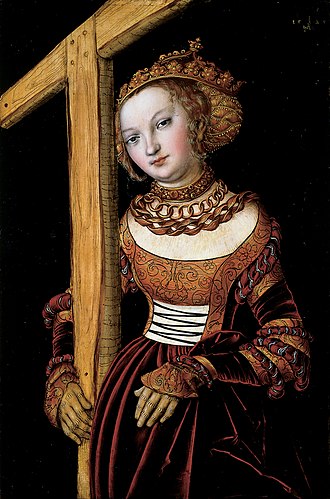
The Legendary Saint Helena
The early life of Saint Helena, or Helen, who is commemorated on this August 18th, is shrouded in legend, with some historical roots, as all legends have. Geoffrey of Wearmouth, the 11th century priest and historiographer (from whom we also get many of the tales of King Arthur) claims she was the daughter of the even-more-legendary 4th century King Cole of Britain, which both Evelyn Waugh and Louis de Wohl adopt in their own depictions of Helena – giving an English flavour, if you will, to the line of emperors. Yet she was also apparently a ‘barmaid’ (literally, a ‘stabularia‘, or stable-maid, an early version of a barista, one might think) – which would seem odd, for a royal daughter.
Other, more reliable, sources, have her hail from Greece – her very name is Greek for Greece – from the province of Bythinia.
One way or the other, she did catch the eye of the emperor Constantius Chlorus – so-called from his pale complexion. The story is said that they happened to be wearing identical silver bracelets, and Constantius saw the hand of fate – pardon the pun – in this coincidence, like two homeschoolers off to college who discover they’re wearing the same rosary ring. Whether she became his wife or concubine is uncertain, but she did give birth to the future Christian emperor, Constantine, on February 27th, likely in 272 A.D., even if in that pagan milieu they counted the years from the founding of Rome – A.U.C., ab urbe condita – in 727 B.C.
Helen was eventually divorced by Constantius, as is the way with wayward and whimsical emperors, and banished from the imperial court, but when her son took authority as Augustus in 306 A.D., she was brought back in full splendour. It is to Constantine’s credit, even in his pagan life, that he always honoured and esteemed his mother, and she was always a strong influence upon him. The adage that the hand that rocks the cradle rules the world was quite true in this case. Eusebius claims that Helen converted to Christianity soon after her son’s accession, and Constantine, after his miraculous victory at the Milvian Bridge in 313, legalized Christianity throughout the empire (even if he himself waited until his deathbed to be baptized, and then by the Arian bishop, Eusebius of Nicomedia).
Helena is also most known for being the discoverer of the True Cross. Constantine gave her unlimited access to the royal treasury to seek out relics in the Holy Land, and what a relic that was! Confirmed by miracles, pieces of the Cross now reside all over the world (and it’s not true that their combined weight is more than the original cross, but far less).
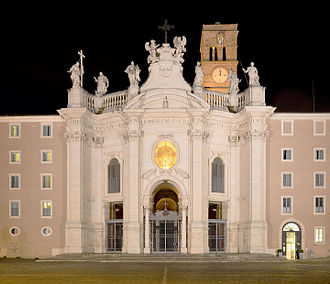
Helena was an octogenarian when she returned from her long forensic pilgrimage, an early Indiana Jones, in 328. She died in 330 A.D., in Rome, with her son dutifully at her side, with her palace turned into the Basilica of Sancta Croce – of the Holy Cross – in Jerusalem (even though it’s not technically in Jerusalem, but Rome, near Saint John Lateran, it is considered part of the Holy Land with a portion of that land serving as the foundation). The basilica still houses some of the finest relics of Our Lord’s Passion and Death, and well worth a pilgrimage visit.
Ah, the worth of a good mother! Which, really, will never be fully known until that day of Judgement, when mothers throughout history, who toiled in obscurity raising children and forming homes, will be rewarded with something far greater than a palace or basilica or even ‘unlimited access to the royal treasury’.
How much more? Well, in the words of Han Solo, ‘more than you can imagine’.
Saint Helena, pray for us, and for all mothers!
Carney’s Amoral Majority
After five defections – euphemistically described as ‘crossing the floor’ – and three by-elections, Mark Carney and his Liberals how have their coveted majority. One wonders what bowls of pottage were offered in back-room deals. In the archaic monarchical system that is the Dominion of Canada, this majority allows the newly-minted Prime Minister to rule[…]Continue reading→

Saint Kateri , Canada’s Protectress
This was the title given to Saint Kateri Tekakwitha, by Pope Benedict XVI, when he canonized her on October 28th, 2012, along with six others, in Saint Peter’ Square (she had been beatified by Pope John Paul II back in 1980). With Saint Joseph as our protector, along with the Canadian martyrs, we seem to[…]Continue reading→
A Tale of Two Benedicts
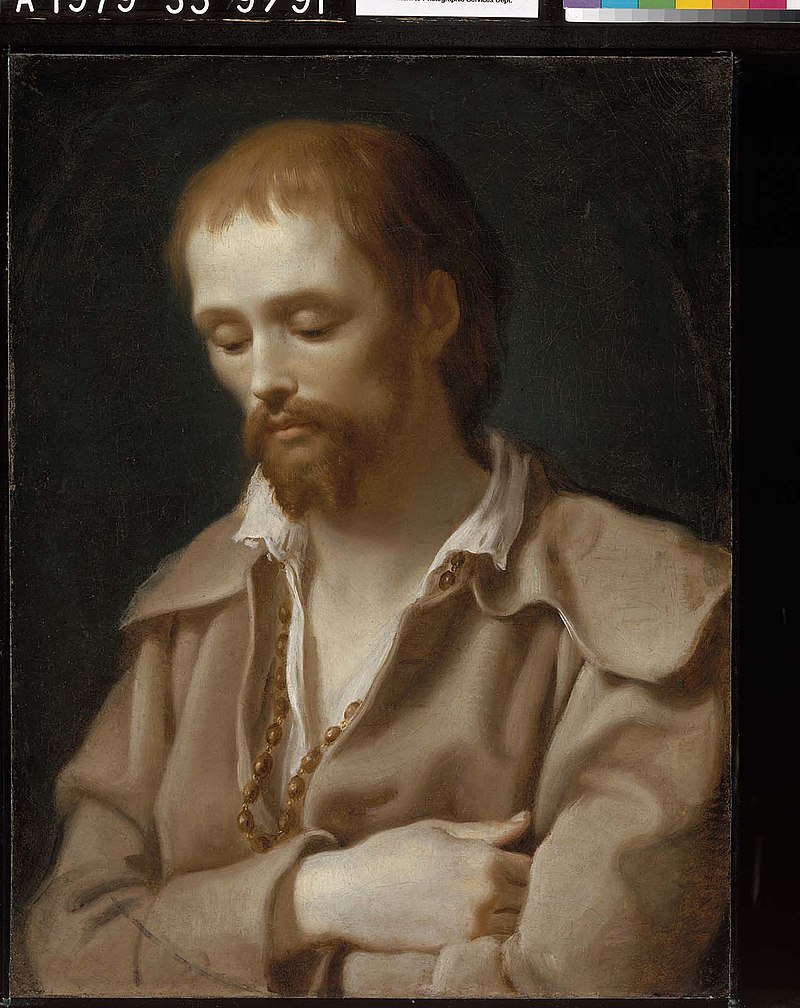
A grace-filled Holy Week to all our readers! As we await and prepare for the Resurrection about to dawn upon us, we might keep in mind two Benedicts: Pope Emeritus Benedict XVI, requiescat in pace, elected on this day in 2005; and today’s commemoration of the mystic pilgrim, Benedict Joseph Labre, who died on this[…]Continue reading→

My Name is Bernadette
April 16th is a propitious day, for besides the anniversary of Father de Valk’s death, who founded Catholic Insight in its print form decades ago, and the commemoration of the ‘two Benedicts’, mentioned in accompanying posts, today we also recall Saint Bernadette Soubirous, the young visionary to whom the Virgin Mary appeared numerous times at[…]Continue reading→
Saint Lydwina of Schiedam and Suffering Joyfully
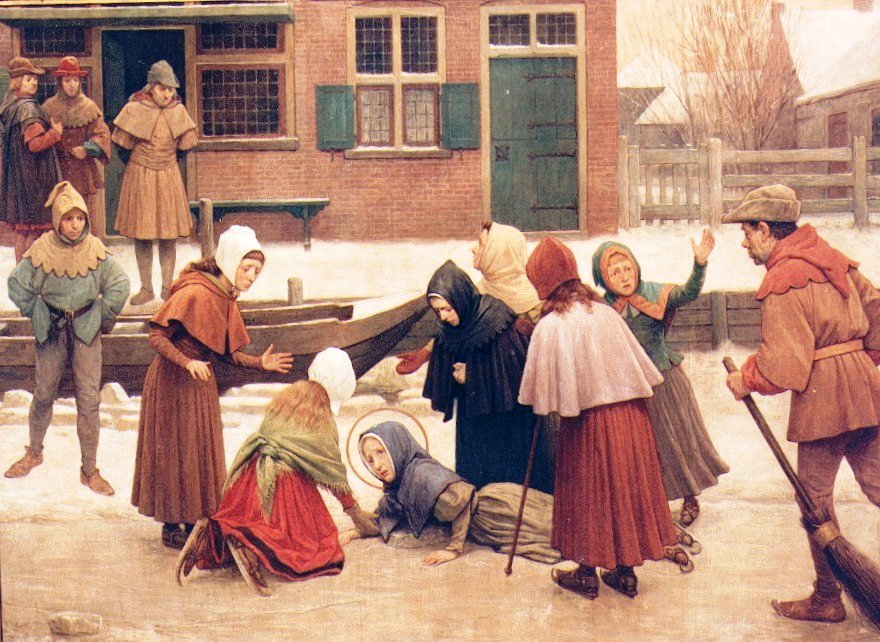
Saint Lydwina of Schiedam (1380 – 1433) was one of the countless and glorious ‘victim souls’ in the history of the Church, those whose lives are filled with suffering, often of an unimaginable intensity, but who suffer joyfully. She was a fifteen-year old Dutch girl, out skating one day, when she fell and broke one[…]Continue reading→
The Glorious Martyrdoms of Martin and Maximus
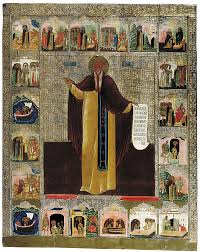
As we enter into Eastertide, we recall on this 13th of April Pope Saint Martin I (+655), one of the noblest, if most tragic, of the successors of Saint Peter. Born in Umbria, Italy, he was of noble lineage, with great intelligence combined with charity and love of the poor and the Church. While still[…]Continue reading→

Saint Stanislaus of Szczepanów
We celebrate Saint Stanislaus today (+ April 11, 1079), in light of this Easter Octave, a bishop and martyr who accepted the episcopacy only at the direct order of Pope Alexander II. He proved a wise and courageous leader of his flock, put to death by his own king, Boleslaus, for rebuking the monarch’s ‘immoral[…]Continue reading→
Saint Gemma Galgani
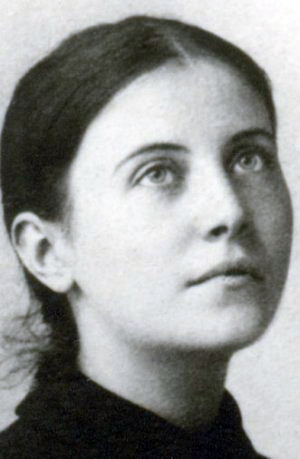
On this April 11th, in 1903 – the same year that the Italian Guiseppe Sarto was elected Pope later that summer as Pius X – a lovely, young Italian woman died, by the name of Gemma Galgani. She lived a brief life of 24 years, as did a number of other young saints, including Pier[…]Continue reading→
An Ideological and Improper Translation
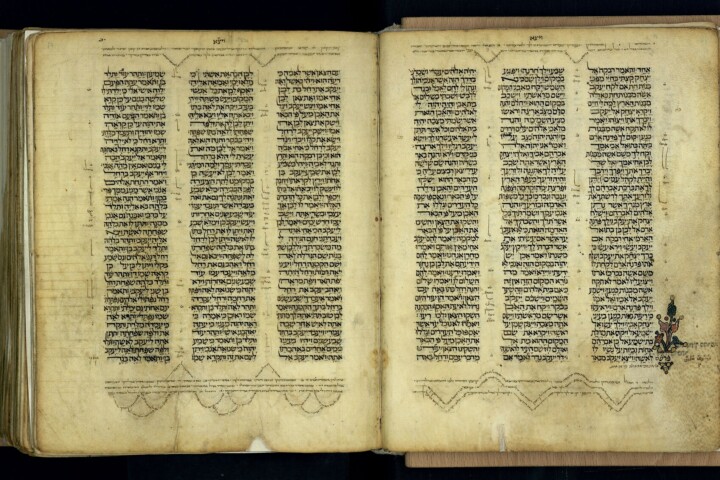
I noticed something odd with the psalm reading at Mass the other day. Our bishops’ conference here in Canada has decreed that the Mass in English – Novus Ordo – use the ‘NRSV’, the ‘New Revised Standard Version’, an ‘updated’ translation of the original RSV, first published in 1952. This ‘new translation’ has the tendency[…]Continue reading→
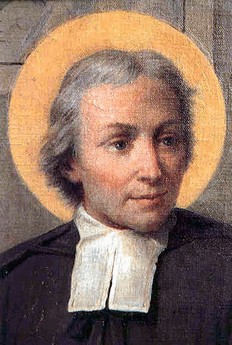
Saint Jean-Baptiste de la Salle: A Teacher for Teachers
Jean-Baptiste de la Salle (1651 – 1719), a French nobleman, ordained a priest, founded the first order in the Church’s history entirely without priests, and this came about almost by accident. I say ‘almost’, for, of course, there are no accidents with God. Destined for ordination from an early age, Jean-Baptiste never looked back, even[…]Continue reading→