
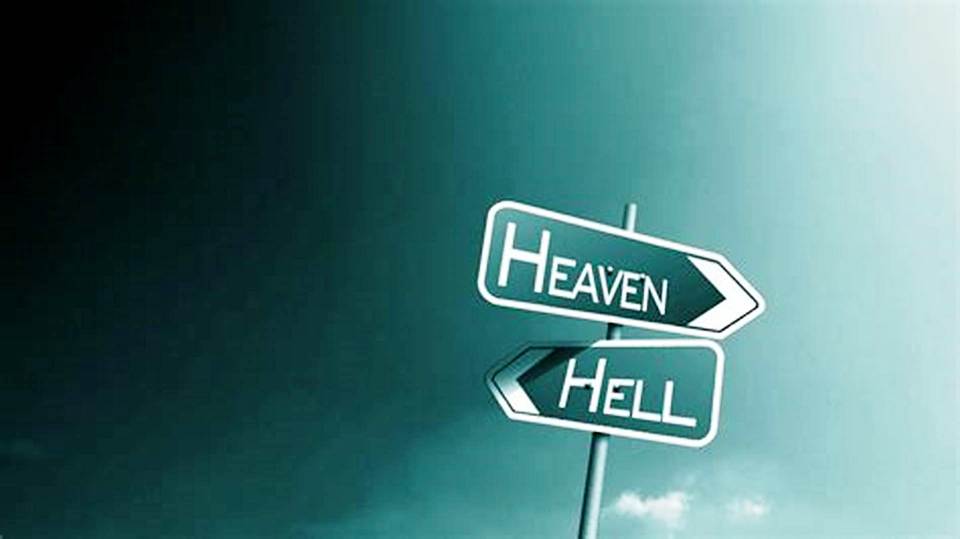
Why Does Hell Exist?
“The teaching of the Church affirms the existence of hell and its eternity. Immediately after death the souls of those who die in a state of mortal sin descend into hell, where they suffer the punishments of hell, ‘eternal fire.’ The chief punishment of hell is eternal separation from God, in whom alone man can possess the life and happiness for which he was created and for which he longs.”
from the Catechism of the Catholic Church (1035)
This teaching about eternal hell as a state of suffering is based on the words of Christ himself (Matthew 25:41). The loving God we adore does not mean us to suffer this way, and bled himself to death on the cross to help us learn that what He desires is to save us from eternal suffering. The only inference we can make from his assurance of love for us, is that it is we, not Christ, who choose that eternal fire. It makes no sense, then, for those who are not Christian to think of our God as a vindictive fire-breathing deity who takes delight in the eternal suffering we have chosen for ourselves.
Then there are those who say the punishment of hell does not fit the dreadfulness of any crime. They protest that what was done in time should not be punished for all eternity. But we do not get to decide how God should judge our immortal souls. We are in God’s court, God is not in ours. If we should not receive eternity in hell for actions done in time, why should we receive eternity in heaven? When God promises eternity of reward or punishment, He means for us to take the matter with utmost seriousness. How seriously could we take Christ’s revelation if we thought for a moment that Heaven and Hell were temporary states of being?
If we thought that the fate of our immortal souls did not hang in the balance because sooner or later we would be in heaven no matter what crimes we have done, why would anyone be held back from committing the most perverse deeds by the thousands? As one of Dostoevsky’s characters says, “If there is no God, everything is permitted.” The same principle might apply if one believes there is no hell or that hell is not eternal. If everyone goes to heaven sooner or later, why work for our own encounter with God? Again, it is our inner Subjective Monster (devil) who tempts us to believe that no eternal hell waits for us.
While many sins may not be stopped by the thought of hell, the due remorse for sins may well be encouraged by the same thought.
As to that “unquenchable fire” of which Jesus speaks, we know that heat is a force in nature that brings about thirst. “Eternal fire” is therefore the best way to describe what our state may be in hell, a state of unquenchable thirst for knowing God, the satisfying of that thirst having been thrown away because of our own horribly self-inflated egos.
In our lives on earth we often experience that same fire of regret that the clock cannot be turned back, that we must to our dying breath regret the wrongs we have done to strangers and loved ones. In a sense, the phrase “hell on earth,” when applied to a life sentence for the worst crimes, has it own value and foreshadows the endless suffering in the after life.
How do we escape the fate of hell? Jesus tells us how in a few words. “. . . the gate is wide and the way easy, that leads to destruction, and those who enter by it are many. For the gate is narrow and the way is hard, that leads to eternal life, and those who find it are few. Beware of false prophets, who come to you in sheep’s clothing but inwardly are ravenous wolves” (Matthew 7:13-15).
The ravenous wolves will want to mislead us by saying there cannot be a hell, or if there is, it cannot be endless. We may try to mislead ourselves by believing that the easy way of sin is to be preferred to the hard way of virtue. Then there is that slithering snake in the grass who tells us how much better it is to eat the forbidden fruit than to move away from the tree on which it hangs, even when we know right well the fruit is full of worms.
As C. S. Lewis suggested, when meditating on hell we should think of it less as a state of being where our enemies may end, and rather as a place where we may hear our own terrible groans to high heaven. Hell is not just eternal; it is eternal suicide. The fool in his heart refuses to believe (Psalm 14: 1-3). But God did not make us fools.
Our free will, the instrument which God meant to be used for our salvation, makes us truly able to play the fool.
Postscript:
St. Augustine:
“The good Christian should beware the mathematician (astrologer?) and all those who make empty prophecies. The danger already exists that the mathematicians have made a covenant with the devil to darken the spirit and to confine man in the bonds of hell.”
Thomas Aquinas:
“It is impossible for evil to be pure and without the admixture of good …. [So] those who will be thrust into hell will not be free from all good … those who are in hell can receive the reward of their goods, in so far as their past goods avail for the mitigation of their punishment” (Summa Theologica, Supplement 69.7, reply ad 9).
Dante Alighieri
“The darkest places in hell are reserved for those who maintain their neutrality in times of moral crisis.”

Remembering Father Alphonse de Valk
(Today marks the sixth anniversary of the death of Father Alphonse de Valk, C.S.B., a faithful, courageous and indefatigable Basilian priest, pro-life-and-family apostle, and the founder of Catholic Insight magazine. Here is what we wrote those on his entering into eternity five years ago, as we continue to remember him in our prayers and thoughts)[…]Continue reading→

Divine Mercy Sunday – An Echo of Every Mass
Reach out your hand and put it in my side. Do not doubt but believe’… ‘My Lord and my God!’ (Jn. 20:18)). Today is Divine Mercy Sunday, and as we celebrate the end of the Easter Octave, we contemplate the wounded side of our Saviour, the Church’s source of life. On Good Friday in the[…]Continue reading→

Saint Stanislaus of Szczepanów
We celebrate Saint Stanislaus today (+ April 11, 1079), in light of this Easter Octave, a bishop and martyr who accepted the episcopacy only at the direct order of Pope Alexander II. He proved a wise and courageous leader of his flock, put to death by his own king, Boleslaus, for rebuking the monarch’s ‘immoral[…]Continue reading→

First Holy Communion: Sermon from May 16, 1943
Here is a sermon from the good old days by +Rev. Msgr. Vincent Nicholas Foy (August 14, 1915 – March 13, 2017), from 1943. Readers may recall that Pope Saint Pius X, by the decree Quam Singulari in 1910, lowered the customary age of reception of Holy Communion – after the rigours of the plague[…]Continue reading→

In the Glorious Light of Easter, Alleluia!
Set your minds on things that are above, not on things that are on earth, for you have died, and your life is hidden with Christ in God. When Christ who is your life is revealed, then you also will be revealed with him in glory (Col. 3:3-4). The Resurrection of Our Lord and Saviour[…]Continue reading→

An Ancient Homily for Holy Saturday
The time between Good Friday and Easter Sunday is one of waiting, in silence, as the world wonders – anticipates – what will happen, after the death of Christ. We re-live this time each year in the anamnesis of our liturgy, and in turn look forward to the glorious re-creation of all things at the[…]Continue reading→

Europe’s Long Descent
(As we meditate on this day on Christ’s burial, and His descent into hell, it is fitting to ponder here with contributor Peter Marcus how the world seems to be heading there as well. The difference is that, although God cannot ‘redeem’ hell, nor those therein, He can and did redeem the world. There is[…]Continue reading→
Pope Saint John Paul II’s First Good Friday Homily
ADDRESS OF HIS HOLINESS JOHN PAUL II AT THE CONCLUSION OF THE STATIONS OF THE CROSS AT THE COLOSSEUM Good Friday, 13 April 1979 When we make the Way of the Cross from one station to the next, in spirit we are always at the spot wherethis journey had its “historical” place: where it[…]Continue reading→
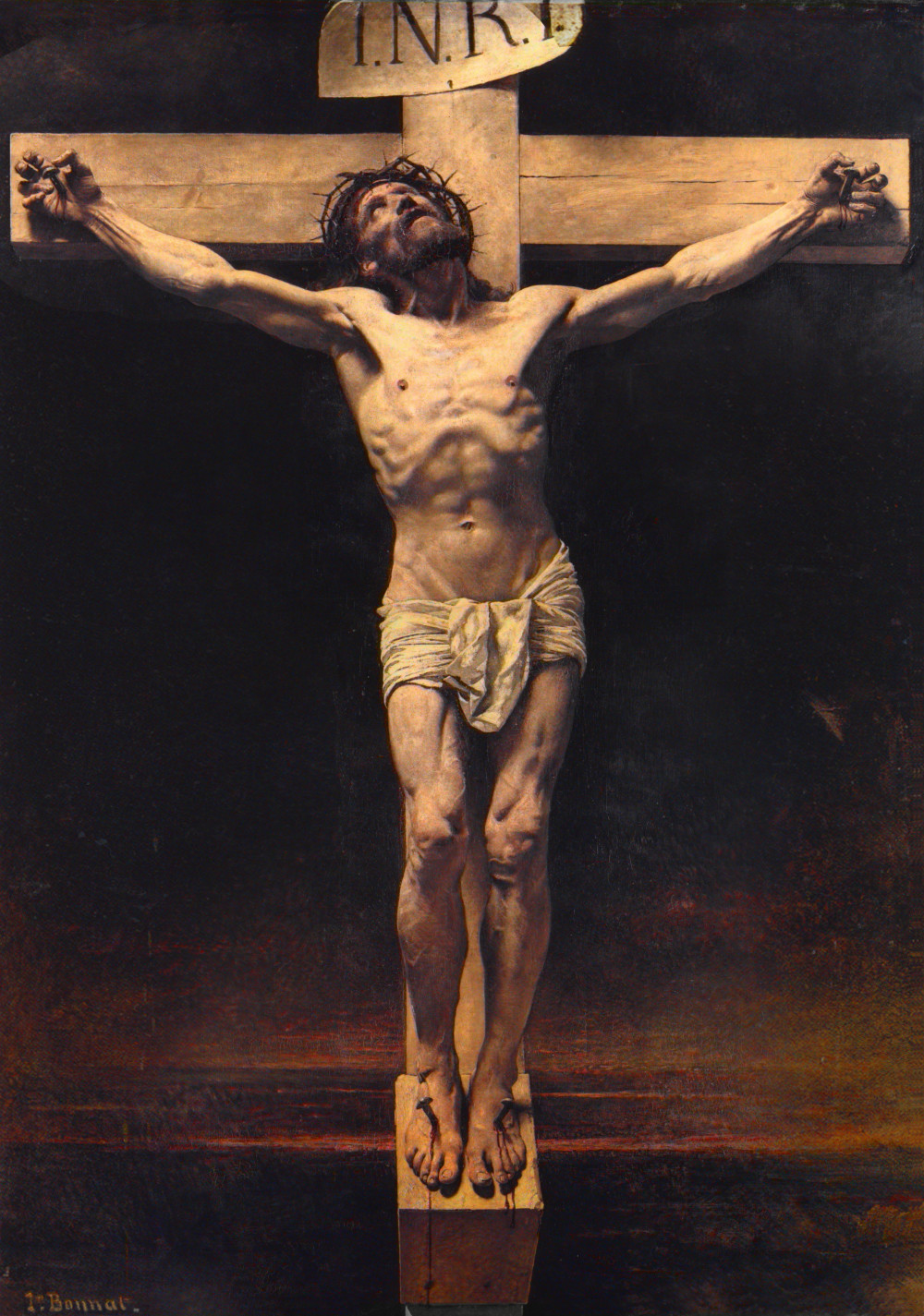
A Meditation for Good Friday: How To Undo the Effects of Sin?
Cardinal Newman, now Saint John Henry Newman, was a towering figure of nineteenth-century Catholicism who is almost universally admired. I say “almost” because not everyone likes him. I knew a priest once, Arthur Caulkins, who has become disenchanted with Newman. As an undergraduate Arthur had been enamoured of Newman, and this interest continued when he[…]Continue reading→
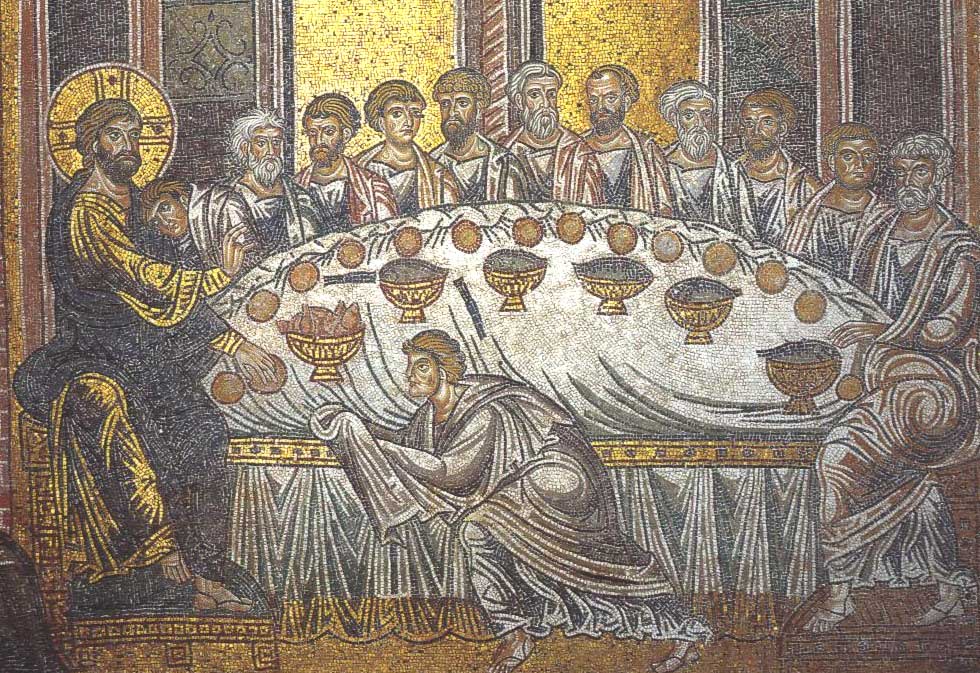
Pope Benedict’s Last Holy Thursday Homily
MASS OF THE LORD’S SUPPER HOMILY OF HIS HOLINESS BENEDICT XVI Basilica of St John Lateran Holy Thursday, 5 April 2012 Photo Gallery (Video) Dear Brothers and Sisters! Holy Thursday is not only the day of the institution of the Most Holy Eucharist, whose splendour bathes all else and in some ways draws it to[…]Continue reading→