
The Witness of the Carmelites of Compiègne – Le Temoinage des Carmelites de Compiègne
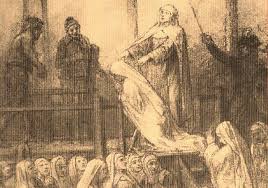
It was on this day in a Parisian summer in 1794 – one day after the feast of Our Lady of Mount Carmel – that sixteen female members of the Carmelite Order, located at Compiègne – one day after their patronal feast – lined up one by one in the Place de la Révolution (now more ironically renamed the Place de la Concord), which was by then so covered in blood that even the mules drawing the carts refused to approach. And, one by one, they, from the youngest novice to the elderly prioress, had their heads severed from their bodies by the great devouring guillotine.
They were hauled to their place of death on a cart through the streets of Paris, the mob jeering, taunting and throwing rubbish at them. The nuns sang their prayers, and continued to sing as they faced their deaths; according to tradition, the Veni Creator Spiritus, even if others say may have been the Salve Regina, or Psalm 117, the Laudate Dominum, (which had recently, and most wonderfully, been set to music by Mozart). Perhaps they sang all three – it would take some time for all sixteen to go the God they had loved unto death. The point is, they rejoiced on their way to eternity, as we all should.
Their bodies were buried in a mass grave thirty feet deep in the nearby Picpus cemetery – along with over a thousand other victims – marked with one simple cross and some slabs.
Why would anyone murder a whole convent of nuns? Well, the revolutionaries and the bloody revolution they had begun had by this point become almost entirely demonically unhinged – which sounds sort of au courant – destroying anything or anyone who did not submit to their principles – which included such wonderful things as atheism, anarchy, obliterating the past – the whole ancien regime – everything they deemed non-functional, impractical, useless, or ‘against the spirit of the revolution’, including a life of what they deemed to be the most futile of paths, contemplative prayer. (Which, of course, we know, by faith, to be the most ‘useful’ of vocations). All the convents in France were suppressed, and the nuns given a choice either to abandon their vocation and disperse – or stick to their vows and their habits, and face death.
The Carmelites were imprisoned with a group of exiled English Benedictine Sisters, who had set up a convent at Cambrai, in France, for all the monasteries and convents had been destroyed in England by Henry VIII, and any new ones made illegal by his successors.
The revolutionaries thought they had won. But in that mystery of God’s providence, after the Carmelites had been sacrificed – and they explicitly offered their lives as a sacrifice end the Reign of Terror – the bloodshed did indeed end ten days later, when Robespierre, the revolution’s revolutionary and architect of the bloodshed – went under the very machine with which he had had thousands killed, his own head rolling the basket. It seems it was through the merits of that ultimate offering of the consecrated Carmelites that the carnage ended, sparing the lives of the Benedictine Sisters. Their Order eventually returned to England, bringing the blood-stained habits of the martyred Carmelites, which one may still venerate in their convent.
The story of the Carmelites also caught the popular imagination, being recounted in a 1931 novella by Gertrud de la Fort, ‘Song at the Scaffold’, penned five years after her own conversion. Her book inspired George Bernanos to write his 1947 play, Dialogue des Carmélites, which in turn inspired the 1956 opera by Francois Poulenc – and, we may add, a 1960 film by Jeanne Moureau. Art imitating life in the best sense of that aphorism. (See also the intriguing recent article by Algis Valiunas)
But the main influence of the martyrs is supernatural, their example of courage in the face of overpowering, satanic evil – an inspiration for us, to sing heartily and laugh, for, if we but choose the path of life, will we not all meet merrily in heaven with them? I wouldn’t mind hearing how 18th century French was actually spoken – and sung – not least by contemplative Carmelites. In fact, I did sort of hear an echo of such by some African Carmelites in Lisieux, years ago…but that is another story.
Holy Martyrs of Compiègne, orate pro nobis!
Carney’s Amoral Majority
After five defections – euphemistically described as ‘crossing the floor’ – and three by-elections, Mark Carney and his Liberals how have their coveted majority. One wonders what bowls of pottage were offered in back-room deals. In the archaic monarchical system that is the Dominion of Canada, this majority allows the newly-minted Prime Minister to rule[…]Continue reading→

Saint Kateri , Canada’s Protectress
This was the title given to Saint Kateri Tekakwitha, by Pope Benedict XVI, when he canonized her on October 28th, 2012, along with six others, in Saint Peter’ Square (she had been beatified by Pope John Paul II back in 1980). With Saint Joseph as our protector, along with the Canadian martyrs, we seem to[…]Continue reading→

A Tale of Two Benedicts
A grace-filled Holy Week to all our readers! As we await and prepare for the Resurrection about to dawn upon us, we might keep in mind two Benedicts: Pope Emeritus Benedict XVI, requiescat in pace, elected on this day in 2005; and today’s commemoration of the mystic pilgrim, Benedict Joseph Labre, who died on this[…]Continue reading→

My Name is Bernadette
April 16th is a propitious day, for besides the anniversary of Father de Valk’s death, who founded Catholic Insight in its print form decades ago, and the commemoration of the ‘two Benedicts’, mentioned in accompanying posts, today we also recall Saint Bernadette Soubirous, the young visionary to whom the Virgin Mary appeared numerous times at[…]Continue reading→

Saint Lydwina of Schiedam and Suffering Joyfully
Saint Lydwina of Schiedam (1380 – 1433) was one of the countless and glorious ‘victim souls’ in the history of the Church, those whose lives are filled with suffering, often of an unimaginable intensity, but who suffer joyfully. She was a fifteen-year old Dutch girl, out skating one day, when she fell and broke one[…]Continue reading→

The Glorious Martyrdoms of Martin and Maximus
As we enter into Eastertide, we recall on this 13th of April Pope Saint Martin I (+655), one of the noblest, if most tragic, of the successors of Saint Peter. Born in Umbria, Italy, he was of noble lineage, with great intelligence combined with charity and love of the poor and the Church. While still[…]Continue reading→

Canonizing Sister Faustina and Divine Mercy
HOMILY OF THE HOLY FATHER MASS IN ST PETER’S SQUARE FOR THE CANONIZATION OF SR MARY FAUSTINA KOWALSKA Sunday, 30 April 2000 1. “Confitemini Domino quoniam bonus, quoniam in saeculum misericordia eius”; “Give thanks to the Lord for he is good; his steadfast love endures for ever” (Ps 118: 1). So the Church sings on the Octave of[…]Continue reading→

Saint Stanislaus of Szczepanów
We celebrate Saint Stanislaus today (+ April 11, 1079), in light of this Easter Octave, a bishop and martyr who accepted the episcopacy only at the direct order of Pope Alexander II. He proved a wise and courageous leader of his flock, put to death by his own king, Boleslaus, for rebuking the monarch’s ‘immoral[…]Continue reading→
Saint Gemma Galgani
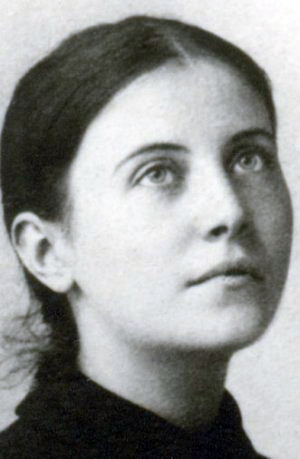
On this April 11th, in 1903 – the same year that the Italian Guiseppe Sarto was elected Pope later that summer as Pius X – a lovely, young Italian woman died, by the name of Gemma Galgani. She lived a brief life of 24 years, as did a number of other young saints, including Pier[…]Continue reading→
An Ideological and Improper Translation
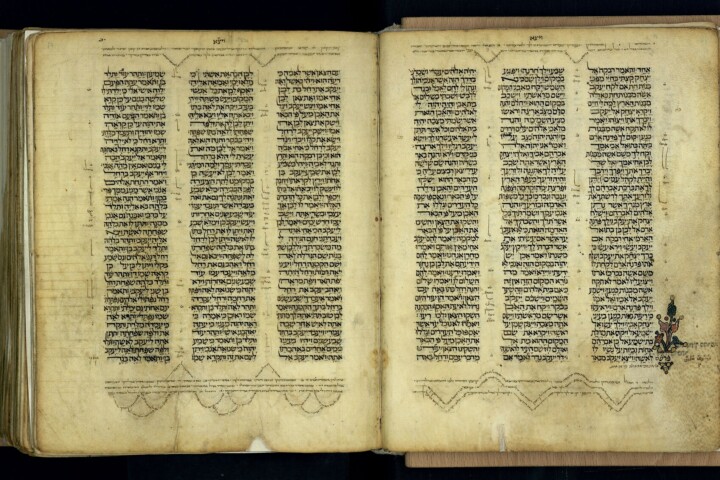
I noticed something odd with the psalm reading at Mass the other day. Our bishops’ conference here in Canada has decreed that the Mass in English – Novus Ordo – use the ‘NRSV’, the ‘New Revised Standard Version’, an ‘updated’ translation of the original RSV, first published in 1952. This ‘new translation’ has the tendency[…]Continue reading→