
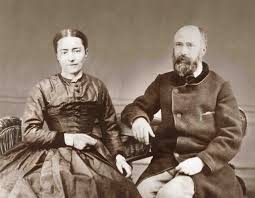
Louis and Zelie Martin’s Ecclesia Domestica
July 12th is the day chosen as the feast of the parents of the ‘Little Flower’, for which Louis and Zelie Martin are most renowned. They were, however, saints in their own right, and raised at least one other saint besides Thérèse, along with four possible saints.
There is no strict formula to being the parents of holy children – or, at least, children, even if wayward, who end up holy and in heaven. But there are things one can do to ameliorate and expedite the process, as I tried to point out in some inchoate way in the reflection on the Benedict Option. All parents can really do is to try to become saints themselves, to provide the example, the exhortation and the environment in which sanctity may flourish, all that it means to be truly human and Christ-like. Alas, however, one can never discount the mystery of free will; each person must choose that path of life that will lead to Life, or the other path that tragically, will not.
Both Louis and Zelie originally wanted to enter religious life, but Louis was rejected from the novitiate of the Augustinians as he could not learn Latin (and, yes, the Second Vatican Council and the current Code of Canon Law still requires that priests know Latin). And Zelie was told she did not have a vocation to the Sisters of Charity, due to her recurring respiratory problems.
God had other plans for them, not only their own mutual sanctification, but also that their union would bring forth the Little Flower, whose vocation would bear world-changing fruit. They lived the ‘Benedict Option’ well before that term became vogue, with Louis structuring his day around work and prayer, setting up a little oratory in his attic, where he would retire to contemplate, allowing his children to enter if they too wanted to pray, or ask spiritual advice.
The home-life, the ecclesia domestica, that Louis and Zelie built up certainly did wonders: Besides being the parents of Sainte Thérèse, they had five other daughters, all of whom entered religious life. They also had four other children who died in infancy.
Zelie herself died at the young age of 45, of cancer, and Louis survived his wife for just shy of seventeen years, succumbing to the effects of a series of strokes in 1892, being taken care of by his children in the house in Lisieux, to where they had moved after Zelie’s death, and where four of the daughters were nuns in the local Carmel. Louis and Zelie had to forego the joys of seeing their ‘children’s children’, but their happy Jerusalem lay in a treasure far beyond anything this world might offer.
So not only is it possible to be married and a saint, but marriage is almost a sure and certain path to sanctity if lived well, in a spirit of sacrifice and charity, in the midst of the pots and pans, the minivans and mortgages, the dinners and diapers, maintaining patience and kindness, deeply immersed in prayer and the liturgy, receiving what grace one can from the Eucharist and the other sacraments.
Louis and Zelie formed their daughters well, in a way that would be quite different from what we now consider ‘education’, with all its worldly and earthly focus on a ‘job’, practicality, money, success, life-long comfort and early retirement. Rather, they emphasized interior virtue, centering one’s life on God, in the liturgy and prayer of His Church. One can only wonder what the couple would have thought of today’s so-called ‘Catholic’ schools. They set out quite intentionally for sanctity, holiness and all that entails, in themselves and their children.
The married couple, united in life and now in heaven, were together beatified by Pope Saint John Paul II on October 19th, 2008, and canonized by Pope Francis on October 18th, 2015.
If we focus on the higher and most important things, especially the ‘one thing necessary’, all else will fall into place. I think Someone said that once.
Saints Louis and Zelie, Sainte Thérèse and all the Martins, orate pro nobis!

Carney’s Amoral Majority
After five defections – euphemistically described as ‘crossing the floor’ – and three by-elections, Mark Carney and his Liberals how have their coveted majority. One wonders what bowls of pottage were offered in back-room deals. In the archaic monarchical system that is the Dominion of Canada, this majority allows the newly-minted Prime Minister to rule[…]Continue reading→

Saint Kateri , Canada’s Protectress
This was the title given to Saint Kateri Tekakwitha, by Pope Benedict XVI, when he canonized her on October 28th, 2012, along with six others, in Saint Peter’ Square (she had been beatified by Pope John Paul II back in 1980). With Saint Joseph as our protector, along with the Canadian martyrs, we seem to[…]Continue reading→

A Tale of Two Benedicts
A grace-filled Holy Week to all our readers! As we await and prepare for the Resurrection about to dawn upon us, we might keep in mind two Benedicts: Pope Emeritus Benedict XVI, requiescat in pace, elected on this day in 2005; and today’s commemoration of the mystic pilgrim, Benedict Joseph Labre, who died on this[…]Continue reading→

My Name is Bernadette
April 16th is a propitious day, for besides the anniversary of Father de Valk’s death, who founded Catholic Insight in its print form decades ago, and the commemoration of the ‘two Benedicts’, mentioned in accompanying posts, today we also recall Saint Bernadette Soubirous, the young visionary to whom the Virgin Mary appeared numerous times at[…]Continue reading→

Saint Lydwina of Schiedam and Suffering Joyfully
Saint Lydwina of Schiedam (1380 – 1433) was one of the countless and glorious ‘victim souls’ in the history of the Church, those whose lives are filled with suffering, often of an unimaginable intensity, but who suffer joyfully. She was a fifteen-year old Dutch girl, out skating one day, when she fell and broke one[…]Continue reading→

The Glorious Martyrdoms of Martin and Maximus
As we enter into Eastertide, we recall on this 13th of April Pope Saint Martin I (+655), one of the noblest, if most tragic, of the successors of Saint Peter. Born in Umbria, Italy, he was of noble lineage, with great intelligence combined with charity and love of the poor and the Church. While still[…]Continue reading→

Canonizing Sister Faustina and Divine Mercy
HOMILY OF THE HOLY FATHER MASS IN ST PETER’S SQUARE FOR THE CANONIZATION OF SR MARY FAUSTINA KOWALSKA Sunday, 30 April 2000 1. “Confitemini Domino quoniam bonus, quoniam in saeculum misericordia eius”; “Give thanks to the Lord for he is good; his steadfast love endures for ever” (Ps 118: 1). So the Church sings on the Octave of[…]Continue reading→

Saint Stanislaus of Szczepanów
We celebrate Saint Stanislaus today (+ April 11, 1079), in light of this Easter Octave, a bishop and martyr who accepted the episcopacy only at the direct order of Pope Alexander II. He proved a wise and courageous leader of his flock, put to death by his own king, Boleslaus, for rebuking the monarch’s ‘immoral[…]Continue reading→

Saint Gemma Galgani
On this April 11th, in 1903 – the same year that the Italian Guiseppe Sarto was elected Pope later that summer as Pius X – a lovely, young Italian woman died, by the name of Gemma Galgani. She lived a brief life of 24 years, as did a number of other young saints, including Pier[…]Continue reading→
An Ideological and Improper Translation
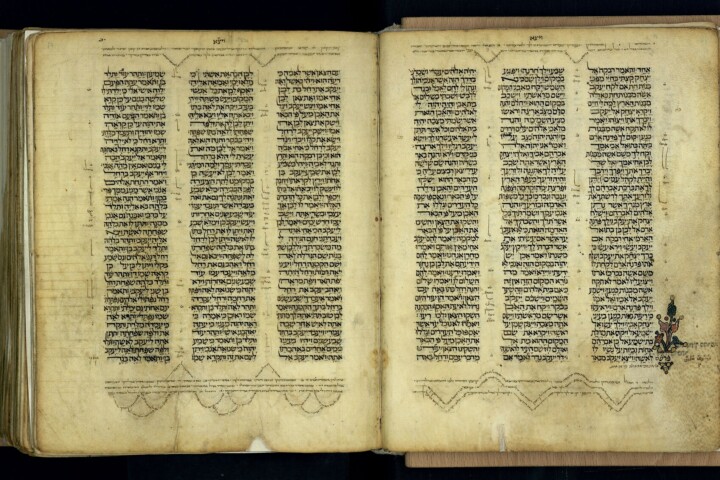
I noticed something odd with the psalm reading at Mass the other day. Our bishops’ conference here in Canada has decreed that the Mass in English – Novus Ordo – use the ‘NRSV’, the ‘New Revised Standard Version’, an ‘updated’ translation of the original RSV, first published in 1952. This ‘new translation’ has the tendency[…]Continue reading→