
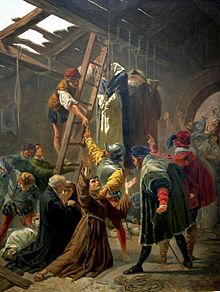
The Martyrs of Gorkum and Annulled Anne of Cleves
In one of those many mysteries of providence, this day marking the martyrs of China is also the anniversary of the Martyrs of Gorkum, nineteen Catholic priests, diocesan and religious, hanged on this day in July of 1572 by militant Calvinist troops in the midst of the wars of religion, which broke out soon after the Protestant ‘reformation’. As princes cast off the sweet yoke of Catholicism, they placed on their subjects the heavy and stifling burden of their own brand of religion, according to the Augsburgian compromise of 1555, reaffirmed at Westphalia in 1648 at the end of the Thirty Years War, cuius regio, eius religio – to whom the region, to him the religion. So the prince gets to decide what religion to follow, if any at all.
As Chesterton once quipped, it is not as though religious wars are not worth fighting; religion is in fact the only thing worth fighting for. All our wars are still ‘religious’, if not as overtly as the 16th century. For religion, as Thomas puts it, in its deepest sense is that which is master of our affections. It would do us well to ponder what is our own ‘religion’, for where the heart is, there one’s treasure be also.
While on matters of the heart, today in 1540 Henry VIII had the marriage to his fourth wife, Anne of Cleves, annulled. It seems the corpulent king was not impressed with her looks and demeaner, taken back at what he perceived to be her homeliness, claiming she looked somewhat equine. And this from a man who was so obese he needed a mechanical lift to move about, his bloated body covered in boils, and may have been syphilitic to boot.
They had spent a few sad – and purportedly unconsummated – six months together. I guess it gets easier as you go along, for such was the second annulment – invalid, of course, as not coming from the Church – for Henry. At least Anne of Cleves kept her head, for Henry had had two other of his wives beheaded on trumped-up ludicrous charges, just to be rid of them, we may suppose. That included the one for whom he gave up allegiance to the Pope, Anne Boleyn.
Divorce – which is what annulments would quickly devolve into in the Anglican communion – was unheard of in Christendom, but then that glorious harmony between Church and State was quickly unraveling, and we see the bitter fruits of such to this day.
Anne also unwittingly precipitated the downfall of the scheming Thomas Cromwell, who had arranged her marriage to the King; Cromwell, who had sent hundreds, if not thousands, of loyal Catholic monks, priests and laymen to their deaths, begged and pleaded for his own life. We may hope he made some peace with the God he was soon to face.
Let us not forget that Henry is the unwitting originator of what we now call the Anglican religion, which no longer goes in for beheading. Nor do they bother with annulments; simple, easy and no-fault divorce now suffices. Who needs a bishop or priest to tell you what you may or may not do in your own bedroom, as the saying goes?
Nor, we should add, are Calvinists any longer are in the business of hanging priests from the rafters of barns. As well, in the interests of not exculpating ourselves, is the Catholic Church no longer goes in for the burning of heretics. All of us have softened – in some ways rightly, in others way not.
But there are other religions that still have those willing to do such zealous, evil work in the name of good. So we ourselves must work for a proper sense of religious freedom, while maintaining the firm rights and obligations of the one, true Church which Christ founded, the One, Holy, Roman, Catholic, Apostolic Church.
Not easy, but well worth the battle.
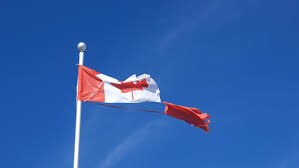
Carney’s Amoral Majority
After five defections – euphemistically described as ‘crossing the floor’ – and three by-elections, Mark Carney and his Liberals how have their coveted majority. One wonders what bowls of pottage were offered in back-room deals. In the archaic monarchical system that is the Dominion of Canada, this majority allows the newly-minted Prime Minister to rule[…]Continue reading→

Saint Kateri , Canada’s Protectress
This was the title given to Saint Kateri Tekakwitha, by Pope Benedict XVI, when he canonized her on October 28th, 2012, along with six others, in Saint Peter’ Square (she had been beatified by Pope John Paul II back in 1980). With Saint Joseph as our protector, along with the Canadian martyrs, we seem to[…]Continue reading→
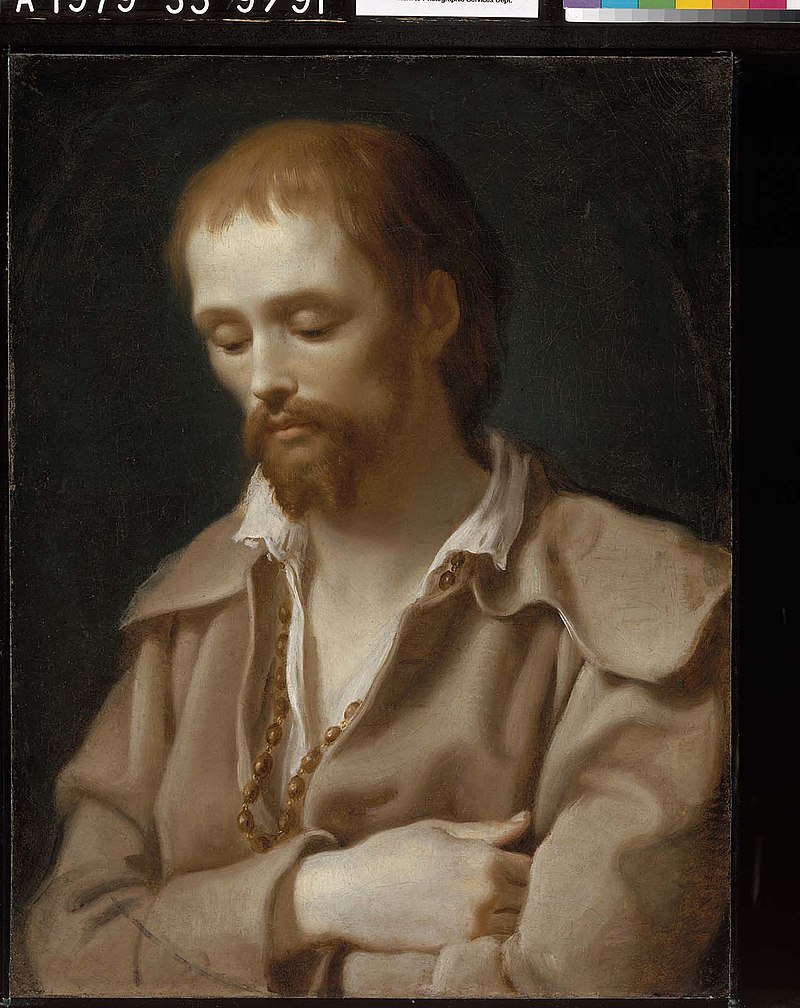
A Tale of Two Benedicts
A grace-filled Holy Week to all our readers! As we await and prepare for the Resurrection about to dawn upon us, we might keep in mind two Benedicts: Pope Emeritus Benedict XVI, requiescat in pace, elected on this day in 2005; and today’s commemoration of the mystic pilgrim, Benedict Joseph Labre, who died on this[…]Continue reading→

My Name is Bernadette
April 16th is a propitious day, for besides the anniversary of Father de Valk’s death, who founded Catholic Insight in its print form decades ago, and the commemoration of the ‘two Benedicts’, mentioned in accompanying posts, today we also recall Saint Bernadette Soubirous, the young visionary to whom the Virgin Mary appeared numerous times at[…]Continue reading→
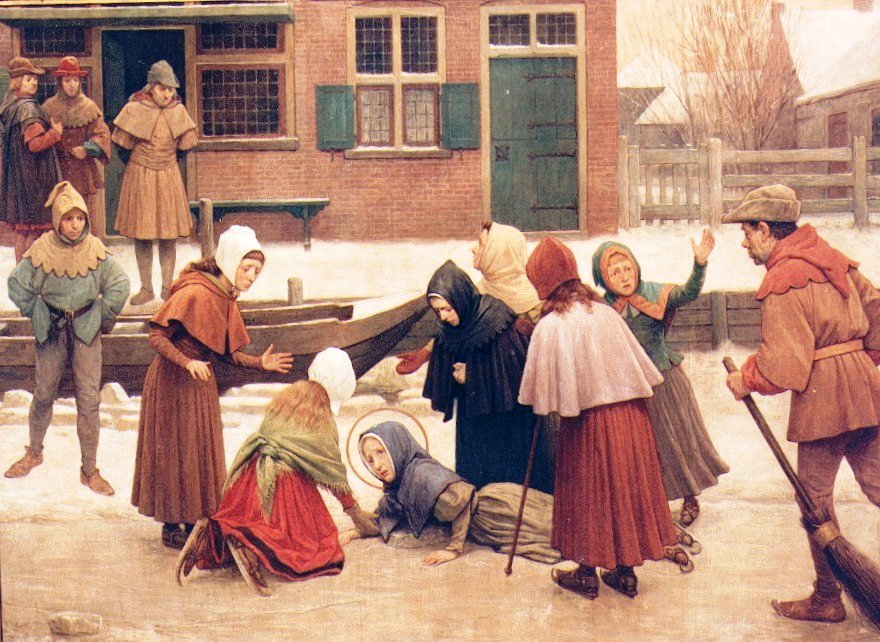
Saint Lydwina of Schiedam and Suffering Joyfully
Saint Lydwina of Schiedam (1380 – 1433) was one of the countless and glorious ‘victim souls’ in the history of the Church, those whose lives are filled with suffering, often of an unimaginable intensity, but who suffer joyfully. She was a fifteen-year old Dutch girl, out skating one day, when she fell and broke one[…]Continue reading→
The Glorious Martyrdoms of Martin and Maximus
As we enter into Eastertide, we recall on this 13th of April Pope Saint Martin I (+655), one of the noblest, if most tragic, of the successors of Saint Peter. Born in Umbria, Italy, he was of noble lineage, with great intelligence combined with charity and love of the poor and the Church. While still[…]Continue reading→

Saint Stanislaus of Szczepanów
We celebrate Saint Stanislaus today (+ April 11, 1079), in light of this Easter Octave, a bishop and martyr who accepted the episcopacy only at the direct order of Pope Alexander II. He proved a wise and courageous leader of his flock, put to death by his own king, Boleslaus, for rebuking the monarch’s ‘immoral[…]Continue reading→
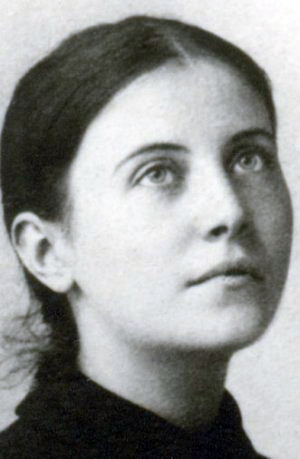
Saint Gemma Galgani
On this April 11th, in 1903 – the same year that the Italian Guiseppe Sarto was elected Pope later that summer as Pius X – a lovely, young Italian woman died, by the name of Gemma Galgani. She lived a brief life of 24 years, as did a number of other young saints, including Pier[…]Continue reading→
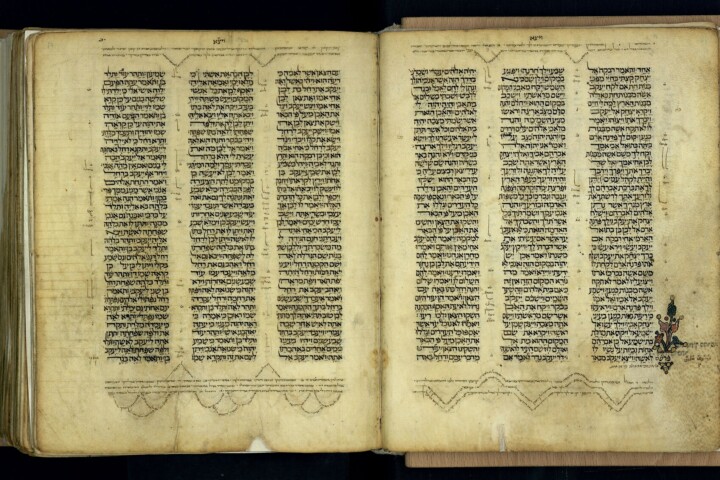
An Ideological and Improper Translation
I noticed something odd with the psalm reading at Mass the other day. Our bishops’ conference here in Canada has decreed that the Mass in English – Novus Ordo – use the ‘NRSV’, the ‘New Revised Standard Version’, an ‘updated’ translation of the original RSV, first published in 1952. This ‘new translation’ has the tendency[…]Continue reading→
Saint Jean-Baptiste de la Salle: A Teacher for Teachers
Jean-Baptiste de la Salle (1651 – 1719), a French nobleman, ordained a priest, founded the first order in the Church’s history entirely without priests, and this came about almost by accident. I say ‘almost’, for, of course, there are no accidents with God. Destined for ordination from an early age, Jean-Baptiste never looked back, even[…]Continue reading→