
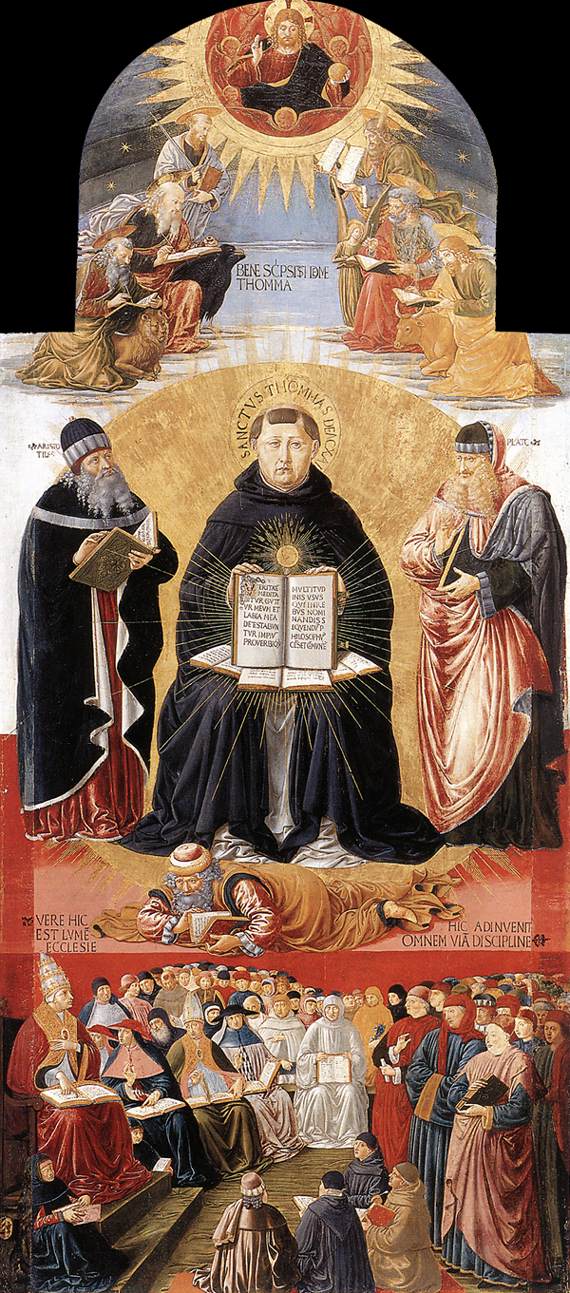
Persevering in Faith with Thomas, and Thomas
The apostles said to the Lord, “Increase our faith!” And the Lord said, “If you had faith as a grain of mustard seed, you could say to this sycamine tree, `Be rooted up, and be planted in the sea,’ and it would obey you. (Luke 17:5-6)
I tell you, he will vindicate them speedily. Nevertheless, when the Son of man comes, will he find faith on earth? (Luke 18:8)
We just celebrated the feast of Saint Thomas, the Apostle who doubted, for he had not seen the ‘mark of the nails, and the wound in the side’. He may be taken as the patron saint of agnostics. At the same time, after his profession of faith ‘My Lord and my God!’, he may also be adopted as the patron saint of believers, especially of the hesitant sort.
We live in an age no longer of agnosticism – that plagued the 19th century, the term itself coined by Thomas Huxley. Our age is one of atheism, whether explicit or not. We all have family members who have ‘lost the faith’, or whose faith is tottering on the edge of extinction, like a dimly burning wick.
What, then, does it mean to believe, and how might we only persevere in Faith, but grow therein?
For that, we may turn to another Thomas, who goes by the name of his birthplace, Aquinas, and who, as far as we know, never doubted. This Thomas defines faith as ‘an act of the intellect, assenting to the divine truth, by command of the will, moved by God through grace’ (II-II.2.1), a definition I have my students memorize, to carry through life.
Hence, there are three primary elements in faith: First, and foremost, the intellect, by which we assent to the truth that is revealed. This is what makes Faith, without which there is no Faith.
But we also need the will, which commands the intellect to assent. The reason for this is that the truths of Faith are obscure to reason – they are ‘mysteries’ in the strict sense, which cannot be proved. That does not mean they are contrary to reason – even if some false faiths are. The revealed truths of the Catholic religion are most consistent with reason, and, in fact, as Pope John Paul II points out in Fides et Ratio, following Saint Thomas, the truths of the Faith purify and elevate reason.
There are many ‘proofs’ of our Faith which may move our intellect and will. Miracles, the holiness and sacrifices of the saints, the witness of martyrdom, and apologetic arguments for the Faith. Such may also move our emotions which in turn sway our wills.
There are also things that scandalize our Faith, which is often tested in this vale of tears, by evil, scandals, ignorance, weakness, the travails of this life and so on. Hence, we need to make an act of the will – indeed, many and constant acts of the will – to believe.
But we are not Pelagians, and it is not all, nor even mostly, about our own willpower, for we rely, and rely much, upon the grace of God, which moves both our intellect and will, often imperceptibly, sometimes more vividly. This gratia agens – actual grace – may be given by God gratuitously – as in infant baptism – or we may ask for such in prayer: I believe! Help my unbelief! (Mk 9:24). There are any number of prayers for Faith handed down in our Tradition. When Saint Francis de Sales was tempted to atheism as a young man, he kept a physical copy of the Creed close to his heart.
Along with prayers, there is the necessity of the sacraments, the primary means of grace, especially the Holy Eucharist. Receiving Christ’s very substance – daily, if we can, as He Himself exhorts – is a powerful way to grow not only in grace, but in our Faith.
We may know more about the Faith – always a good thing, in itself, and the Church has always advocated catechetics, and immersion in theology. But this is not the main thing, for the Devil can quote Scripture chapter and verse, backwards and forwards, and has memorized ever catechism under the sun at a glance. But his faith is without charity, ‘unquickened’ as Thomas would say. In fact, Satan hates everything he knows, for deep down he knows it to be true, and he hates the truth.
More essential for us to hold to the most necessary truths, and live those out more fully. This implies expressing our faith in works, without which it is spiritually dead. Why do we so often do the contrary of our what our Faith teaches? We may take some consolation that most of our faults are those of weakness, and tthe key is not to give up, regardless of how often we fall and fail, keeping firmly in mind that God rewards those who persevere in His commandments, especially when it seems difficult, even unreasonable from an earthly perspective. All we need is Faith the size of a mustard seed, and we could move mountains.
But will Christ find even such seeds of Faith on earth? The question is not a statistical one, but rhetorical and personal. Christ knows full well who will gain, and who will lose, eternal life. Our Saviour is putting that question to each one of us: will He find Faith in our minds and hearts when our moment arrives? And only we can respond, in each of our moments, with our yes, or no.
The choice is ours, and pray we make the right one.

Carney’s Amoral Majority
After five defections – euphemistically described as ‘crossing the floor’ – and three by-elections, Mark Carney and his Liberals how have their coveted majority. One wonders what bowls of pottage were offered in back-room deals. In the archaic monarchical system that is the Dominion of Canada, this majority allows the newly-minted Prime Minister to rule[…]Continue reading→

Saint Kateri , Canada’s Protectress
This was the title given to Saint Kateri Tekakwitha, by Pope Benedict XVI, when he canonized her on October 28th, 2012, along with six others, in Saint Peter’ Square (she had been beatified by Pope John Paul II back in 1980). With Saint Joseph as our protector, along with the Canadian martyrs, we seem to[…]Continue reading→

A Tale of Two Benedicts
A grace-filled Holy Week to all our readers! As we await and prepare for the Resurrection about to dawn upon us, we might keep in mind two Benedicts: Pope Emeritus Benedict XVI, requiescat in pace, elected on this day in 2005; and today’s commemoration of the mystic pilgrim, Benedict Joseph Labre, who died on this[…]Continue reading→

My Name is Bernadette
April 16th is a propitious day, for besides the anniversary of Father de Valk’s death, who founded Catholic Insight in its print form decades ago, and the commemoration of the ‘two Benedicts’, mentioned in accompanying posts, today we also recall Saint Bernadette Soubirous, the young visionary to whom the Virgin Mary appeared numerous times at[…]Continue reading→

Saint Lydwina of Schiedam and Suffering Joyfully
Saint Lydwina of Schiedam (1380 – 1433) was one of the countless and glorious ‘victim souls’ in the history of the Church, those whose lives are filled with suffering, often of an unimaginable intensity, but who suffer joyfully. She was a fifteen-year old Dutch girl, out skating one day, when she fell and broke one[…]Continue reading→

The Glorious Martyrdoms of Martin and Maximus
As we enter into Eastertide, we recall on this 13th of April Pope Saint Martin I (+655), one of the noblest, if most tragic, of the successors of Saint Peter. Born in Umbria, Italy, he was of noble lineage, with great intelligence combined with charity and love of the poor and the Church. While still[…]Continue reading→

Saint Stanislaus of Szczepanów
We celebrate Saint Stanislaus today (+ April 11, 1079), in light of this Easter Octave, a bishop and martyr who accepted the episcopacy only at the direct order of Pope Alexander II. He proved a wise and courageous leader of his flock, put to death by his own king, Boleslaus, for rebuking the monarch’s ‘immoral[…]Continue reading→

Saint Gemma Galgani
On this April 11th, in 1903 – the same year that the Italian Guiseppe Sarto was elected Pope later that summer as Pius X – a lovely, young Italian woman died, by the name of Gemma Galgani. She lived a brief life of 24 years, as did a number of other young saints, including Pier[…]Continue reading→

An Ideological and Improper Translation
I noticed something odd with the psalm reading at Mass the other day. Our bishops’ conference here in Canada has decreed that the Mass in English – Novus Ordo – use the ‘NRSV’, the ‘New Revised Standard Version’, an ‘updated’ translation of the original RSV, first published in 1952. This ‘new translation’ has the tendency[…]Continue reading→
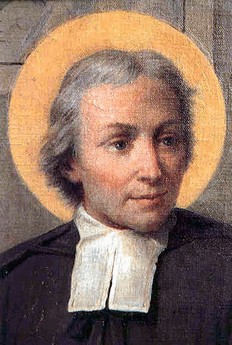
Saint Jean-Baptiste de la Salle: A Teacher for Teachers
Jean-Baptiste de la Salle (1651 – 1719), a French nobleman, ordained a priest, founded the first order in the Church’s history entirely without priests, and this came about almost by accident. I say ‘almost’, for, of course, there are no accidents with God. Destined for ordination from an early age, Jean-Baptiste never looked back, even[…]Continue reading→