
Ignorance Versus Nescience: What Should We Know, and not Know?
In this era of information deluge, with facts, factoids, opinions, posts, podcasts, articles, books, and the ever-expanding Wikipedia, raining down upon us, the question we must ask, is what should we know? What should we read, watch, absorb, ponder, contemplate? With what should our brains, our minds, our very spirits, be filled?
Is there, first, a limit to what we can know? The reader may recall a conversation between Sherlock Holmes and Watson in A Study in Scarlet, in which Watson, after weeks of sharing a flat with Holmes, is astounded at what Holmes’ knows about certain things – criminal investigations and so on – but also, what he doesn’t know, of literature, philosophy, and even the Copernicus’ heliocentric view and the composition of the solar system.
Holmes retorts and defends himself in the following passage:
I consider that a man’s brain originally is like a little empty attic, and you have to stock it with such furniture as you choose. A fool takes in all the lumber of every sort that he comes across, so that the knowledge which might be useful to him gets crowded out, or at best is jumbled up with a lot of other things so that he has a difficulty in laying his hands upon it. Now the skilful workman is very careful indeed as to what he takes into his brain-attic. He will have nothing but the tools which may help him in doing his work, but of these he has a large assortment, and all in the most perfect order. It is a mistake to think that that little room has elastic walls and can distend to any extent. Depend upon it there comes a time when for every addition of knowledge you forget something that you knew before. It is of the highest importance, therefore, not to have useless facts elbowing out the useful ones.”
This is almost entirely false. There is no definite limit to what the brain might know, and we don’t have to forget something old to learn something knew. The brain’s indefinite – if not infinite – capacity has been confirmed in recent neurological studies of so-called idiot savants, described so vividly by Oliver Sacks, people who can memorize every note in every Bach cantata; or recite endless tracts of books and poetry from memory; or who can recall the weather on every day of their life. But we ourselves might have known this a priori, for the brain is the organ of the mind, an immaterial power of universal scope, the very image of God Himself.
What is true in Holmes’ words, is that we, as corporeal creatures of time and space, are limited by time and energy in what we might know. No man can be a master in all things, and there are only so many days in out time here on earth. Vita brevis, ars longa – life is short, but art is long, including the art of knowing what we should know, the most necessary things.
So how, then, should be spend that time and energy? Saint Thomas makes the necessary distinction between the virtue of studiosity (cf., ST, II-II.q.166 and q.167), seeking to know what we should and need to know; and the vice of curiosity (cf., ST, II-II,q.167), seeking to know what we should not or need not know. Not all truth is beneficial.
There is a corollary distinction: When we don’t know what we should know, we are in the state of ignorance, which is a ‘sin’, whether culpable or not. If there is no possible way for us to know what we ought to know, we call such ignorance ‘invincible’.
On the other hand, when we don’t know what we should not and need not know, we are in the state of nescience, about which few speak. For about this, most are ignorant. Ignorance is never blissful, but nescience is.
There is a fine line between curiosity and studiosity, and between nescience and ignorance, and it is not easy to discern when one crosses from one to the other, not least in this era wherein all things knowable are a click of a mouse away. To be distracted into rabbit holes of various sorts is an easy path to take – and the easier the information is to digest, the more titillating and entertaining it be, the more we are drawn thereto.
Hence, the absorption with factoids, trivia, doom scrolling, gossip. Some of this is of some benefit; some harmless; a good portion a waste of time or even debilitating.
We should focus first and foremost on the more necessary truths, but these are often more difficult, so we put them off. Studiosity requires the virtue of fortitude, of stick-with-it-ness, perseverance. That’s why there are schools and teachers, exams and grades, and all the rest of it.
What we most need to know derives from our final end. As Aristotle put it – the ‘Master of Those Who Know’ – intention is first in the order of execution. In other words, we first determine why we’re doing something, before we do it.
The final end of all things is God, and spending eternity in beatitude with Him, and God is ‘why’ we should do anything. Hence, some knowledge of the Divine, and how to reach this final end is the most necessary knowledge. Hence, theology, at least in catechetical form, is the ‘queen of the sciences’. And if you have to learn something, learn that.
Then there are those innumerable sciences that are ancillary in helping us reach that end, by making our lives here and now more fulfilling, more in accord with our nature, more beautiful, joyous and happy: Philosophy, the perfection of our reason, and propaedeutic to theology; the great works of literature; history and the manifestation of God’s providence; the innumerable masterpieces of music and art.
After that, we arrive at the practical sciences, which help in various ways: Science in its innumerable forms: physics, mathematics, medicine, gardening, farming, building, architecture, engineering; the maintenance of houses, buildings, roads; crafts of various sorts; cooking; information processing; media; languages; the intricacies of law, and all the rest of it.
Trivia and factoids can be of benefit: I use the example in class of Taylor Swift’s birthday, something of which we might be blissfully nescient, and a kind of Sherlockian clutter. Then again, knowing that she was born on December 13th (1989) means that her patroness is Saint Lucy, virgin and martyr, which may in turn prompt us to pray that the billionaire singer be given the light of truth.
All in all, as we journey through life, learning what we learn, reading what we read, we should ask ourselves: How will this knowledge benefit me? Will it make me, and others around me, more virtuous in some way? We each have our tasks in life, and are we neglecting those things that we really ought to know, and know more deeply and fully? How many of us have read entire series of middling novels – or worse – yet are ignorant of much of the very Word of God, or Magisterial teaching, or so many of the great works of literature?
None of us can be master of all things, but we can be good at one, or a few, and have a smattering of the rest. We come back to the saying: vita brevis, ars longa. To which we may add, aeternitas longior – eternity is even longer.
So start with knowing God, and He will lead you the rest of the way, to end with Him.
Carney’s Amoral Majority
After five defections – euphemistically described as ‘crossing the floor’ – and three by-elections, Mark Carney and his Liberals how have their coveted majority. One wonders what bowls of pottage were offered in back-room deals. In the archaic monarchical system that is the Dominion of Canada, this majority allows the newly-minted Prime Minister to rule[…]Continue reading→

Saint Kateri , Canada’s Protectress
This was the title given to Saint Kateri Tekakwitha, by Pope Benedict XVI, when he canonized her on October 28th, 2012, along with six others, in Saint Peter’ Square (she had been beatified by Pope John Paul II back in 1980). With Saint Joseph as our protector, along with the Canadian martyrs, we seem to[…]Continue reading→

A Tale of Two Benedicts
A grace-filled Holy Week to all our readers! As we await and prepare for the Resurrection about to dawn upon us, we might keep in mind two Benedicts: Pope Emeritus Benedict XVI, requiescat in pace, elected on this day in 2005; and today’s commemoration of the mystic pilgrim, Benedict Joseph Labre, who died on this[…]Continue reading→

My Name is Bernadette
April 16th is a propitious day, for besides the anniversary of Father de Valk’s death, who founded Catholic Insight in its print form decades ago, and the commemoration of the ‘two Benedicts’, mentioned in accompanying posts, today we also recall Saint Bernadette Soubirous, the young visionary to whom the Virgin Mary appeared numerous times at[…]Continue reading→

Saint Lydwina of Schiedam and Suffering Joyfully
Saint Lydwina of Schiedam (1380 – 1433) was one of the countless and glorious ‘victim souls’ in the history of the Church, those whose lives are filled with suffering, often of an unimaginable intensity, but who suffer joyfully. She was a fifteen-year old Dutch girl, out skating one day, when she fell and broke one[…]Continue reading→

The Glorious Martyrdoms of Martin and Maximus
As we enter into Eastertide, we recall on this 13th of April Pope Saint Martin I (+655), one of the noblest, if most tragic, of the successors of Saint Peter. Born in Umbria, Italy, he was of noble lineage, with great intelligence combined with charity and love of the poor and the Church. While still[…]Continue reading→

Saint Stanislaus of Szczepanów
We celebrate Saint Stanislaus today (+ April 11, 1079), in light of this Easter Octave, a bishop and martyr who accepted the episcopacy only at the direct order of Pope Alexander II. He proved a wise and courageous leader of his flock, put to death by his own king, Boleslaus, for rebuking the monarch’s ‘immoral[…]Continue reading→
Saint Gemma Galgani
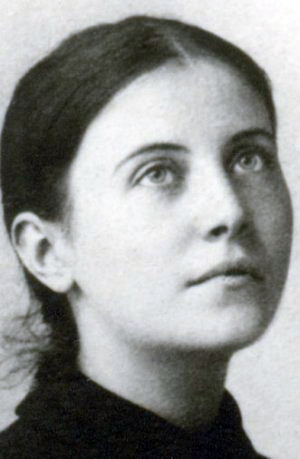
On this April 11th, in 1903 – the same year that the Italian Guiseppe Sarto was elected Pope later that summer as Pius X – a lovely, young Italian woman died, by the name of Gemma Galgani. She lived a brief life of 24 years, as did a number of other young saints, including Pier[…]Continue reading→
An Ideological and Improper Translation
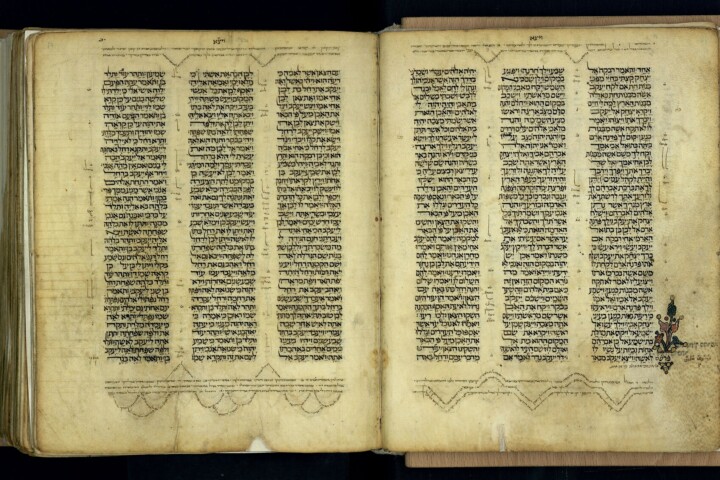
I noticed something odd with the psalm reading at Mass the other day. Our bishops’ conference here in Canada has decreed that the Mass in English – Novus Ordo – use the ‘NRSV’, the ‘New Revised Standard Version’, an ‘updated’ translation of the original RSV, first published in 1952. This ‘new translation’ has the tendency[…]Continue reading→
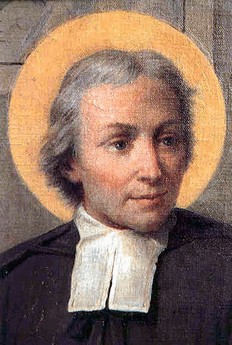
Saint Jean-Baptiste de la Salle: A Teacher for Teachers
Jean-Baptiste de la Salle (1651 – 1719), a French nobleman, ordained a priest, founded the first order in the Church’s history entirely without priests, and this came about almost by accident. I say ‘almost’, for, of course, there are no accidents with God. Destined for ordination from an early age, Jean-Baptiste never looked back, even[…]Continue reading→