
All For Katy’s Wedding
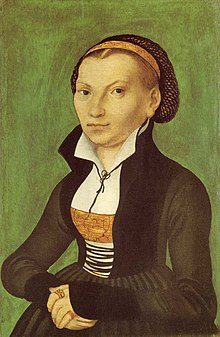
On this day in 1525, Martin Luther married Katherine von Bora. Luther was – ontologically speaking – still a priest, a member of the Augustinians, and Katherine was a Cistercian nun, so whatever ceremony they went through was, sadly, objectively invalid. Both had abandoned their original vocations, in different ways: Eight years after he had hammered those 95 Theses to the church door in Wittenberg on October 31st, in 1517, All Saints’ Eve, Luther still considered himself an ordained minister of some sort, but not really a ‘priest’, and definitely not one who offered sacrifice. But he still held ‘services’, and still believed in the Real Presence, albeit in a disordered way (holding that the bread was present with the Body, in what is called ‘consubstantiation’ or ‘impanation’).
As we mentioned in a previous post, Luther did not believe in celibacy, and was on a mission to free nuns from their convents. Back then, in those days when Christendom still held sway, canon law was publicly enforced, more or less, and it was illegal for monks and nuns to leave their monasteries and wander around. So Katherine van Bora wrote to Luther to hatch a plan to set them free, so to speak. Like something out of a Monty Python take on the A-Team, Luther managed to have the nuns smuggled out in a fish cart, and found husbands or employment for all of them, except Katherine. So, after some hesitation and discernment, he decided to marry her, and she was willing (apparently only having eyes for ‘Dr. Luther’, and perhaps one other man, as a runner-up). So the 41-year-old former priest attempted marriage with the 26-year-old former nun. So what if their promises of celibacy and chastity stood in the way? As Luther claimed, he ‘stood on his conscience’ and could do no more.
They did seem to have a relatively successful marriage, at least in a natural sense, producing six children, running a homestead, including a brewery – they were German, after all – and getting along relatively well, until Luther’s death in 1546, after which Katherine fell gradually into poverty. There was no social safety net in those days, and the Church – which did provide relief for many – had been largely dissolved based on Luther’s own principles.
Speaking of principles, Luther’s view of marriage has had its own trajectory. He rejected matrimony as a sacrament, but still held to its natural goodness, as a contract between a man and a woman, for the sake of begetting children. But he also rejected the Church and her teachings, which would soon do its work, in dissolving this holy state – first, with divorce, adultery, concubinage, which were already openly tolerated, at least amongst the nobility, in Luther’s day, against his own better judgement and proclivity. But what could Luther do, against their own ‘souls alone before God’?
Perhaps Luther thought he could stem the tide, but the notion that subjective conscience ruled the day has led, gradually and inexorably, to the insanity of our own day, polyamory and the same-sex ‘marriage’ fiasco.
What God hath joined let not Man put asunder. Marriage is not only instituted by God, willed by God, its parameters are set by God, but it is also a source of grace and a path to holiness. Things may have gone better if Martin and Katherine had met as young Catholics, and entered that holy state first of all. Perhaps neither of them had a vocation to celibacy and religious life. Many young women likely did not and were coerced into convents by dint of necessity. Luther himself seems to have made a rash vow to become a monk, in the midst of a violent thunderstorm, after being thrown from his horse.
Then again, what might have happened had they persevered in their chosen vocations?
We leave all that to God, Who brings good out of all things, even if the good is not always the best, and for some may even prove deleterious. Martin and Katherine could have been great saints. Jacques Maritain, in his masterful Three Reformers, makes a convincing case that Luther was called to great sanctity, but chose another path. He seems always to have been battling his own troubled conscience, railing against a Church that, deep down, he may well have known was right all along.
We know not their final ends. On her deathbed, Katherine said that she would ‘stick to Christ like burr to cloth’, but it is much more difficult to find Christ outside of the visible, hierarchical, apostolic, sacramental Church He founded.
I attended a wedding last weekend of a young couple, former students, with a full Solemn High Mass, sung to perfection, followed by a joyful reception in a beautiful bucolic setting, all fully and gloriously Catholic. Like them, best to take the certain path, and, as the Psalm says, follow the lines marked out for us by God.
Carney’s Amoral Majority
After five defections – euphemistically described as ‘crossing the floor’ – and three by-elections, Mark Carney and his Liberals how have their coveted majority. One wonders what bowls of pottage were offered in back-room deals. In the archaic monarchical system that is the Dominion of Canada, this majority allows the newly-minted Prime Minister to rule[…]Continue reading→

Saint Kateri , Canada’s Protectress
This was the title given to Saint Kateri Tekakwitha, by Pope Benedict XVI, when he canonized her on October 28th, 2012, along with six others, in Saint Peter’ Square (she had been beatified by Pope John Paul II back in 1980). With Saint Joseph as our protector, along with the Canadian martyrs, we seem to[…]Continue reading→
A Tale of Two Benedicts
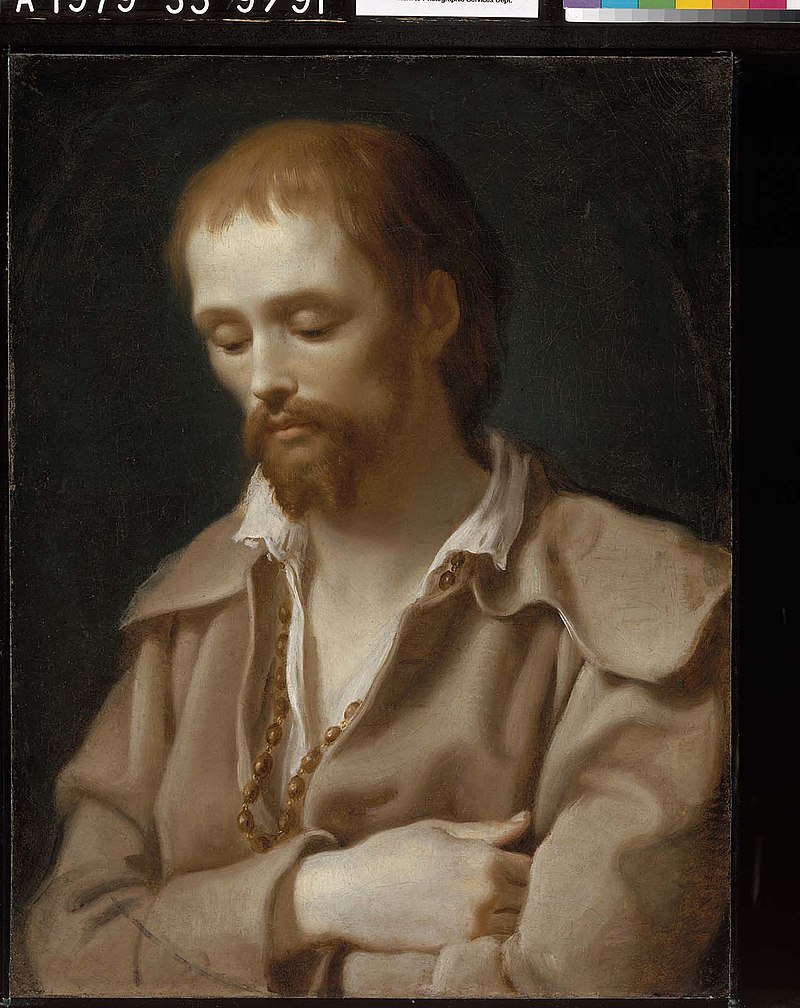
A grace-filled Holy Week to all our readers! As we await and prepare for the Resurrection about to dawn upon us, we might keep in mind two Benedicts: Pope Emeritus Benedict XVI, requiescat in pace, elected on this day in 2005; and today’s commemoration of the mystic pilgrim, Benedict Joseph Labre, who died on this[…]Continue reading→

My Name is Bernadette
April 16th is a propitious day, for besides the anniversary of Father de Valk’s death, who founded Catholic Insight in its print form decades ago, and the commemoration of the ‘two Benedicts’, mentioned in accompanying posts, today we also recall Saint Bernadette Soubirous, the young visionary to whom the Virgin Mary appeared numerous times at[…]Continue reading→
Saint Lydwina of Schiedam and Suffering Joyfully
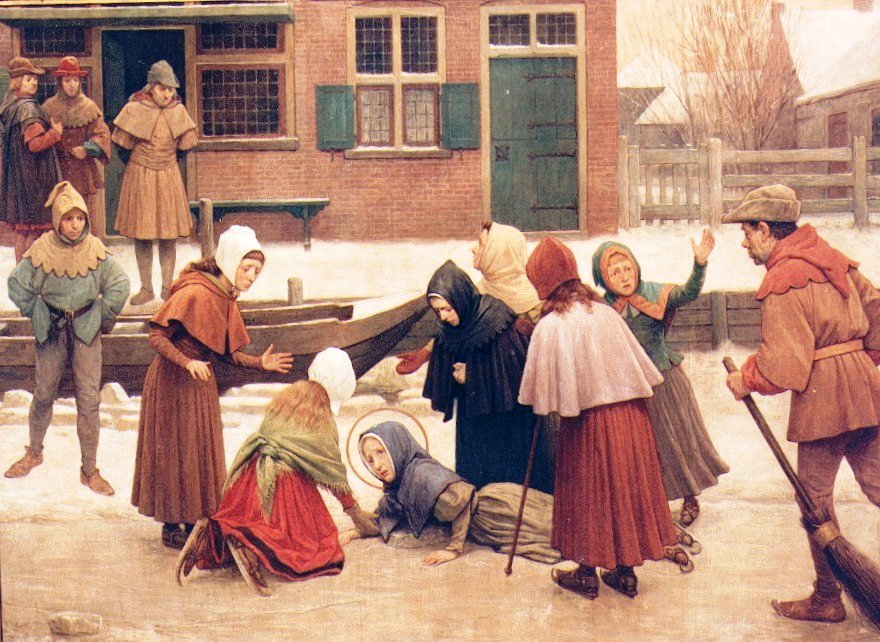
Saint Lydwina of Schiedam (1380 – 1433) was one of the countless and glorious ‘victim souls’ in the history of the Church, those whose lives are filled with suffering, often of an unimaginable intensity, but who suffer joyfully. She was a fifteen-year old Dutch girl, out skating one day, when she fell and broke one[…]Continue reading→
The Glorious Martyrdoms of Martin and Maximus
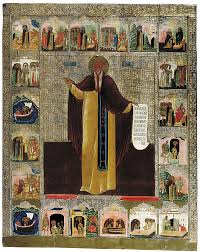
As we enter into Eastertide, we recall on this 13th of April Pope Saint Martin I (+655), one of the noblest, if most tragic, of the successors of Saint Peter. Born in Umbria, Italy, he was of noble lineage, with great intelligence combined with charity and love of the poor and the Church. While still[…]Continue reading→

Saint Stanislaus of Szczepanów
We celebrate Saint Stanislaus today (+ April 11, 1079), in light of this Easter Octave, a bishop and martyr who accepted the episcopacy only at the direct order of Pope Alexander II. He proved a wise and courageous leader of his flock, put to death by his own king, Boleslaus, for rebuking the monarch’s ‘immoral[…]Continue reading→
Saint Gemma Galgani
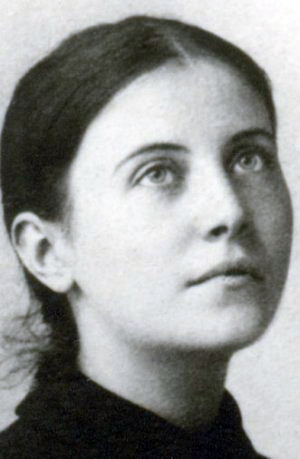
On this April 11th, in 1903 – the same year that the Italian Guiseppe Sarto was elected Pope later that summer as Pius X – a lovely, young Italian woman died, by the name of Gemma Galgani. She lived a brief life of 24 years, as did a number of other young saints, including Pier[…]Continue reading→
An Ideological and Improper Translation
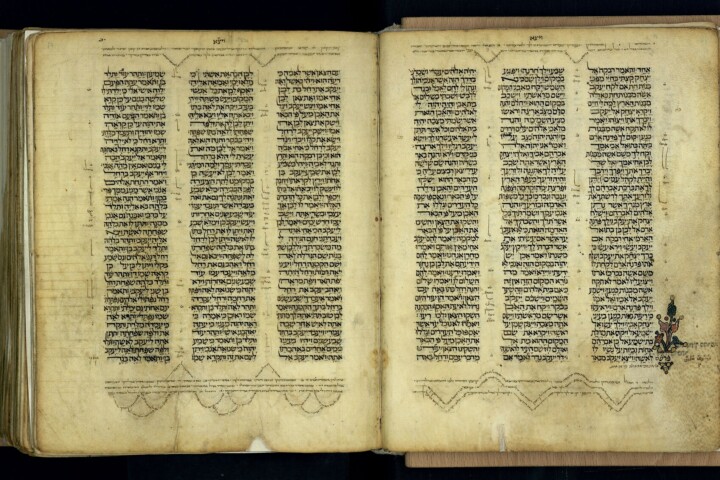
I noticed something odd with the psalm reading at Mass the other day. Our bishops’ conference here in Canada has decreed that the Mass in English – Novus Ordo – use the ‘NRSV’, the ‘New Revised Standard Version’, an ‘updated’ translation of the original RSV, first published in 1952. This ‘new translation’ has the tendency[…]Continue reading→
Saint Jean-Baptiste de la Salle: A Teacher for Teachers
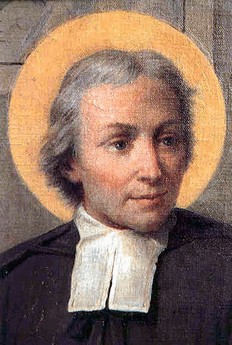
Jean-Baptiste de la Salle (1651 – 1719), a French nobleman, ordained a priest, founded the first order in the Church’s history entirely without priests, and this came about almost by accident. I say ‘almost’, for, of course, there are no accidents with God. Destined for ordination from an early age, Jean-Baptiste never looked back, even[…]Continue reading→