

Public versus Private: A Response to Dr. Catherine Pakaluk
Catherine Pakaluk, a professor at Catholic University of America, in a recent article over at First Things, seems to opine that no one should comment on the commencement speech of Harrison Butker, since it was addressed only to graduates of Benedictine College. As a ‘private’ event, it should be kept private, much as, in the analogy she draws, the conversations within a family are private, as private as the terms of endearment spoken between a husband and wife.
This raises a number of questions: the line between what is private and public, blurred in our age of mass media, with information of all kinds ironically im-media-tely conveyed to many hundreds, thousands, even millions, instantly.
Things are not as clear-cut as the good professor implies. Just as in many moral matters, there are grey areas in the line between what is private and public, and what we should, and should not, know. This discernment falls within the realm of one’s conscience, the circumstances of the situations, the intent of the speaker and listener, the context of the relationship, the necessity of knowing certain things, and so on.
At one extreme, we have the privacy of the confessional, which is so private that what is said therein can never be revealed. Medical and legal information are also private, but may be revealed if there is proportionate cause. The same holds for private conversations between people, in groups or even one-on-one, including pillow talk between a married couple. Generally, we hold such confidential, but may, for due cause, reveal what is said, hopefully also confidentially, to others.
At the other extreme, we have such things as presidential or pontifical addresses, which are by their natures public, open and accessible to all. Even if the pope gives a speech, say, to Italian midwives – as Pius XII did in 1951 – he expects his words to be read by others. They are published in the Acta Apostolicae Sedis, used in further Magisterial teaching and so on.
The same would hold for those who post their thoughts in books, novels, articles and all the rest of it. They are out there for the world to read, reflect, retort and even rebuke.
Somewhere in the muddling middle we would have such venues as classrooms, conversations in classrooms or grocery stores, semi-private on-line chat rooms, and, to the point at hand, speeches and address at various venues. All of these fall somewhere on the spectrum between private or public. That the other Dr. Pakaluk gives lovely notes to his wife, saying such things as ‘je t’adore‘, is in itself private, even intimate, but Dr. (Mrs.) Pakaluk has now made it public. Hence, it is now known by many, and one may be free to reflect and even comment thereupon. I’m sure some wives out there will remonstrate with their husbands about why they never receive such missives. I will refrain from doing so, except to say that I find it quite endearing, and wish more married couples maintained the élan of such romance, especially after many years and a passel of children.
Where does Mr. Butker’s speech fall? The graduation ceremony of the class of 2024 at Benedictine College was a private function, to which only a certain number – graduands and their families and friends – were invited. We here at Our Lady Seat of Wisdom have had over twenty of them, with any number of speakers. We are aware that such addresses are also in large part public, especially if they are promulgated beyond the venue, recorded and uploaded to platforms such as YouTube and whatever else. Mr. Butker was primarily addressing the students before him, but this was not, as Dr. Pakaluk suggests, like the conversation between a husband and wife, or even a conversation amongst friends. Mr. Butker does not know the students, and his words were addressed not only to them, but to the world beyond them, something of which he must have been aware. In a sense, every commencement speaker is addressing every graduand.
Any number of other such speeches fall into such a quasi-public category. Alexander Solzhenitsyn gave the commencement address at Harvard in 1974, with words that have since become famous – or infamous, depending on your point of view – and much commented upon, including in these pages. Such is not only to be expected, but much good fruit may be derived therefrom, as the thoughts and words of one spark the thoughts and words, of many, like a spark that lights the fire, as even our Saviour alluded. Clearly, He did not intent the Sermon on the Mount only for those present on that sacred hillside.
It seems Dr. Pakaluk’s words were intended for those lambasting Mr. Butker, but I would say, let them have at it, for such vitriol only exposes the futility of their endeavour. Criticism, especially of the balanced sort – as Maureen Mullarkey does of some of Mr. Butker’s less-nuanced phrases – can help sharpen our thoughts, clarify what is ambiguous, and lead to growth in the truth.
Hence, we’re happy to publish the thoughts of such young women as Clare Tupta here. I may follow up with some of my own, not least Mr. Butker’s exhortation that families should live near a Traditional Latin Mass, something on which I have pondered much. His words on the balance between the vocation of a mother, and a ‘career’ are also worth reflecting upon.
At the end of the day, if we want something to be private, we should do our best to keep in private, ultimately, in our own conscience and thoughts, which only God sees. As the saying goes, we far more rarely regret what we do not say, than what we do say. Saint Philip Neri, like any number of saints, burned all of his private correspondence before he died, so we have almost nothing written by the great mystic. Secretum meum mihi, he would say – ‘my secret is my own’.
Words once promulgated are no longer fully private, and the more publicly we speak them – need it be said – the less private they are.
Something to ponder in this very public era. The medium is the message, and the medium now is everywhere.
Caveant orator, et scriptor.
Carney’s Amoral Majority
After five defections – euphemistically described as ‘crossing the floor’ – and three by-elections, Mark Carney and his Liberals how have their coveted majority. One wonders what bowls of pottage were offered in back-room deals. In the archaic monarchical system that is the Dominion of Canada, this majority allows the newly-minted Prime Minister to rule[…]Continue reading→

Saint Kateri , Canada’s Protectress
This was the title given to Saint Kateri Tekakwitha, by Pope Benedict XVI, when he canonized her on October 28th, 2012, along with six others, in Saint Peter’ Square (she had been beatified by Pope John Paul II back in 1980). With Saint Joseph as our protector, along with the Canadian martyrs, we seem to[…]Continue reading→
A Tale of Two Benedicts
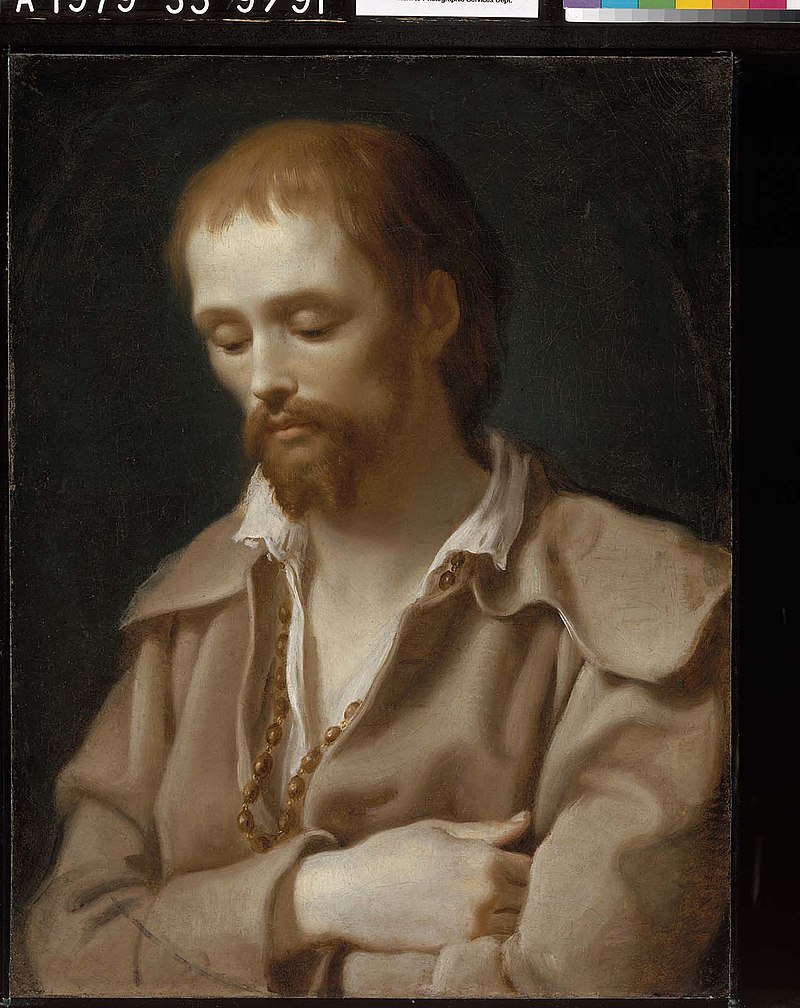
A grace-filled Holy Week to all our readers! As we await and prepare for the Resurrection about to dawn upon us, we might keep in mind two Benedicts: Pope Emeritus Benedict XVI, requiescat in pace, elected on this day in 2005; and today’s commemoration of the mystic pilgrim, Benedict Joseph Labre, who died on this[…]Continue reading→

My Name is Bernadette
April 16th is a propitious day, for besides the anniversary of Father de Valk’s death, who founded Catholic Insight in its print form decades ago, and the commemoration of the ‘two Benedicts’, mentioned in accompanying posts, today we also recall Saint Bernadette Soubirous, the young visionary to whom the Virgin Mary appeared numerous times at[…]Continue reading→
Saint Lydwina of Schiedam and Suffering Joyfully
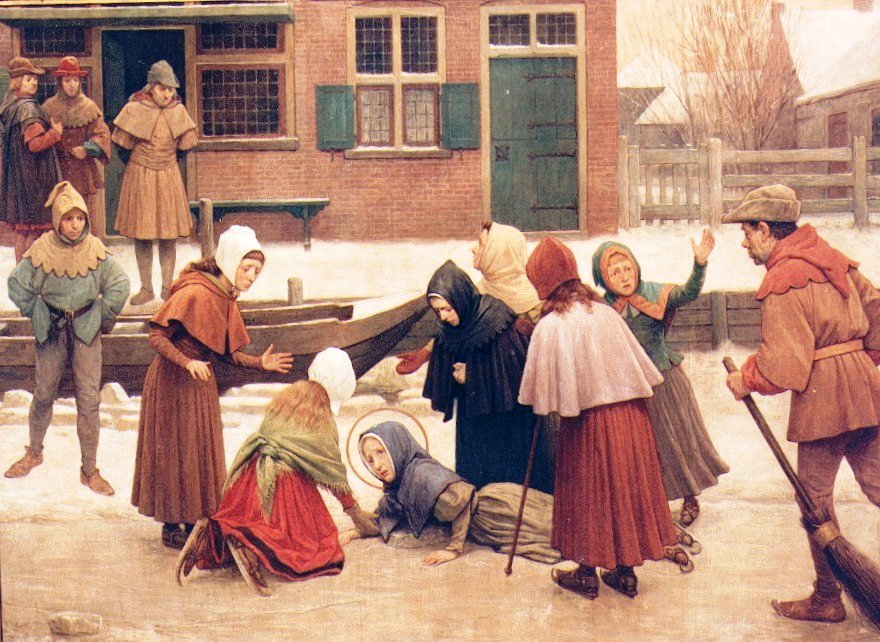
Saint Lydwina of Schiedam (1380 – 1433) was one of the countless and glorious ‘victim souls’ in the history of the Church, those whose lives are filled with suffering, often of an unimaginable intensity, but who suffer joyfully. She was a fifteen-year old Dutch girl, out skating one day, when she fell and broke one[…]Continue reading→
The Glorious Martyrdoms of Martin and Maximus
As we enter into Eastertide, we recall on this 13th of April Pope Saint Martin I (+655), one of the noblest, if most tragic, of the successors of Saint Peter. Born in Umbria, Italy, he was of noble lineage, with great intelligence combined with charity and love of the poor and the Church. While still[…]Continue reading→

Saint Stanislaus of Szczepanów
We celebrate Saint Stanislaus today (+ April 11, 1079), in light of this Easter Octave, a bishop and martyr who accepted the episcopacy only at the direct order of Pope Alexander II. He proved a wise and courageous leader of his flock, put to death by his own king, Boleslaus, for rebuking the monarch’s ‘immoral[…]Continue reading→
Saint Gemma Galgani
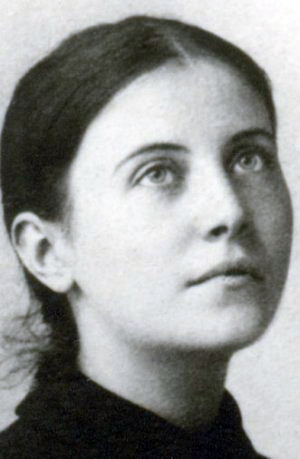
On this April 11th, in 1903 – the same year that the Italian Guiseppe Sarto was elected Pope later that summer as Pius X – a lovely, young Italian woman died, by the name of Gemma Galgani. She lived a brief life of 24 years, as did a number of other young saints, including Pier[…]Continue reading→
An Ideological and Improper Translation
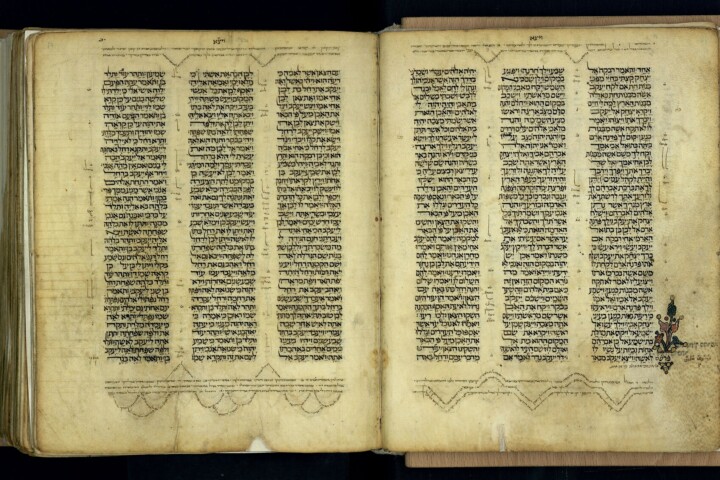
I noticed something odd with the psalm reading at Mass the other day. Our bishops’ conference here in Canada has decreed that the Mass in English – Novus Ordo – use the ‘NRSV’, the ‘New Revised Standard Version’, an ‘updated’ translation of the original RSV, first published in 1952. This ‘new translation’ has the tendency[…]Continue reading→
Saint Jean-Baptiste de la Salle: A Teacher for Teachers
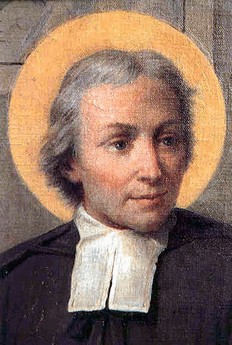
Jean-Baptiste de la Salle (1651 – 1719), a French nobleman, ordained a priest, founded the first order in the Church’s history entirely without priests, and this came about almost by accident. I say ‘almost’, for, of course, there are no accidents with God. Destined for ordination from an early age, Jean-Baptiste never looked back, even[…]Continue reading→