
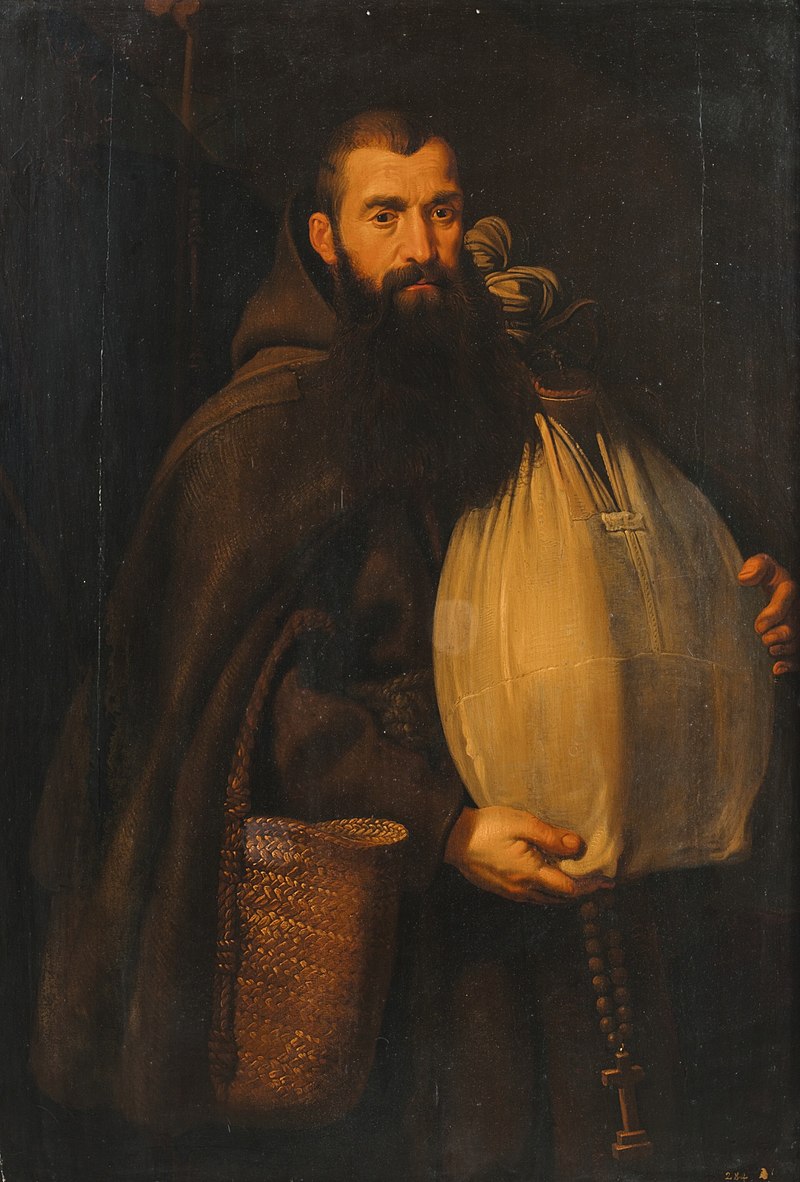
St Felix of Cantalice: The Friar who Saved the Capuchin Reform by his Holiness
On May 18th, we Capuchins celebrate the feast of St Felix of Cantalice. This humble lay brother played an important key in the way the Capuchin reform tried to go back to the roots of the Franciscan Capuchin charism of fraternity, both in its literal and, much more, to its universal and spiritual sense.
The chronicles about his life tell us that he entered the Capuchins novitiate towards the end of 1543. He was born in Cantalice, which is a tiny village in the Rieti valley. As a young man Felix was a servant at the service of the Picchi family of Cittaducale. He entered the Capuchin novitiate in the friary of Anticoli di Campagna, modern day Fiuggi. This was the same friary wherein lived Br. Francis Tittelmans of Hasselt (Belgium), a great Capuchin who in the past was a student and teacher at the famous University of Louvain. After joining the Observant Friars in 1521 Br. Tittelmans felt that he wanted something more radical within his Franciscan life. Thus he travelled to Italy to fulfill his calling and was accepted by the Capuchins in 1535/1536. Within a year of his membership within the Order Br. Tittelmans was elected Provincial Vicar of the Capuchin Province of Rome but unfortunately died on September 12, 1537 while he was visiting the brothers in the friary of Anticoli di Campagna (Fiuggi).
Since the Capuchin reform is a movement of the Spirit within the Franciscan Order the Lord would keep the flame burning. In fact, within the same Roman Province who lost such a promising brother, God called an illiterate man who simply wanted to be sanctified. Contrary to the erudite Tittelmans, Felix of Cantalice was simple. However, with his extraordinary talented brother he shared the same love and zeal for the Order. Here we noticed something really interesting within the primitive Franciscan Capuchin fraternity: there was a place for both the scholar and the unlettered friars as St Felix, the humble son of a peasant, certainly was.
St Felix lived within a very challenging context of the Capuchin reform. A year before, the third Vicar General of the Order, Bernardino Ochino, left the Catholic faith, fled to Switzerland, was accepted by John Calvin, became a Calvinist pastor in Zürich and married. Such an event blurred so much the powerful spirit of the reform that Pope Paul III was going to suppress this nascent Franciscan family. However, man proposes, God disposes. The Pope’s plans were one thing, but God, who really wanted the Capuchin reform to flourish and reinvigorate the Franciscan Order and the Church, determined otherwise. In his great providential care He sent Br. Felix to bring things in order thanks to his holy life. Felix’s holy life demonstrated once and for all the “Capuchin essence”, namely the return to the original inspiration of the Franciscan life as expressed in the living the life and Rule of our Father St Francis with Christ and under the guidance of the Church.
This great and humble friar spent forty years, from 1547 to 1587, trailing on the streets of Rome, asking daily for alms from door to door while being the perfume of Christ both in his words and deeds. St Felix listened with his heart to the cry of the people stricken with life’s problems and forgiving those who treated him badly. While keeping his eyes cast down he was fully attentive to the cry of the people in need who came along his way. As a man of God, Br. Felix comforted the afflicted and also prayed for the healing of those who need God’s healing be it physical and spiritual. Felix was a generous giver who shared what he had with others. Those holy hands who gave so much were then able to receive the Child Jesus from the Mother of God as we keep seeing today in the picture wherein he is represented.
To us Capuchins, St Felix teaches us to be a gift to others. He lived to its fullness a saying attributed to Our Lord in the Book of the Acts of the Apostles: It is more blessed to give than to receive (Acts 20:35). Through his life witness Br. Felix was a blessing to the people around him because, as Br. Mauro Jöhri OFM Cap, the past Capuchin General Minister wrote in his circular letter commemorating the 350th Anniversary of the Canonization of Saint Felix of Cantalice, on 18 May 2012: He would approach people to ask them for something, beg them for something, but most of all to give: to give them Jesus, to give them the gift of inner peace which is the fruit of prayer, to give wise advice from his rich experience of life. From his own poor, hard-working family he had learned the precious lesson of giving himself to anyone in need.
St Felix’ holy life also teaches us how to be contemplatives in action. Within the same letter Br. Mauro quotes from the book Santi e Santità nell’Ordine Cappuccino (Saints and Holiness in the Capuchin Order) to show God’s holiness in this simple, humble and generous man of God at the service of his people. Brother Felix was made for contemplation. Without any effort, he could concentrate on heavenly thoughts even while walking the streets of Rome, amidst the hustle and bustle of the carriages and the clamour of passers-by. But that could hardly assuage his spirit’s thirst for the things of God. And so he prayed at night. The hours of the night-time adoration would pass without his even noticing”(Santi e Santità nell’Ordine Cappuccino, Roma 1980, vol. I, 48).
Finally, the powerful example of St Felix of Cantalice reminds us, as Capuchins, that we are essentially brothers of the people. Thus writes Br. Mauro: Capuchins are brothers of the people. This has been our identity card in every age. However, if we wish that unique identity to be concretely confirmed in our day also, it is up to us to be fully and convincingly open to God, so that we can be open and welcoming and available to any brother or sister in need. Exactly so! Brother Felix in fact was a man of God and a brother of the people. To be welcoming means to allow the Lord’s grace and salvation to be channeled through the encounter with our brother or sister. The ministry of welcome always involves going out of oneself to open up to the other person; it means welcoming each person as “unique” and as “other” than our own expectations and categories.
Almighty God, you gave Saint Felix to the Seraphic Family and to the Church as an example of evangelical simplicity and innocence of life. Following his example, may we strive to love and joyfully follow Christ alone, who lives and reigns with you and the Holy Spirit, one God, for ever and ever. Amen.

Saint Kateri , Canada’s Protectress
This was the title given to Saint Kateri Tekakwitha, by Pope Benedict XVI, when he canonized her on October 28th, 2012, along with six others, in Saint Peter’ Square (she had been beatified by Pope John Paul II back in 1980). With Saint Joseph as our protector, along with the Canadian martyrs, we seem to[…]Continue reading→

Remembering Father Alphonse de Valk
(Today marks the sixth anniversary of the death of Father Alphonse de Valk, C.S.B., a faithful, courageous and indefatigable Basilian priest, pro-life-and-family apostle, and the founder of Catholic Insight magazine. Here is what we wrote those on his entering into eternity five years ago, as we continue to remember him in our prayers and thoughts)[…]Continue reading→
A Tale of Two Benedicts
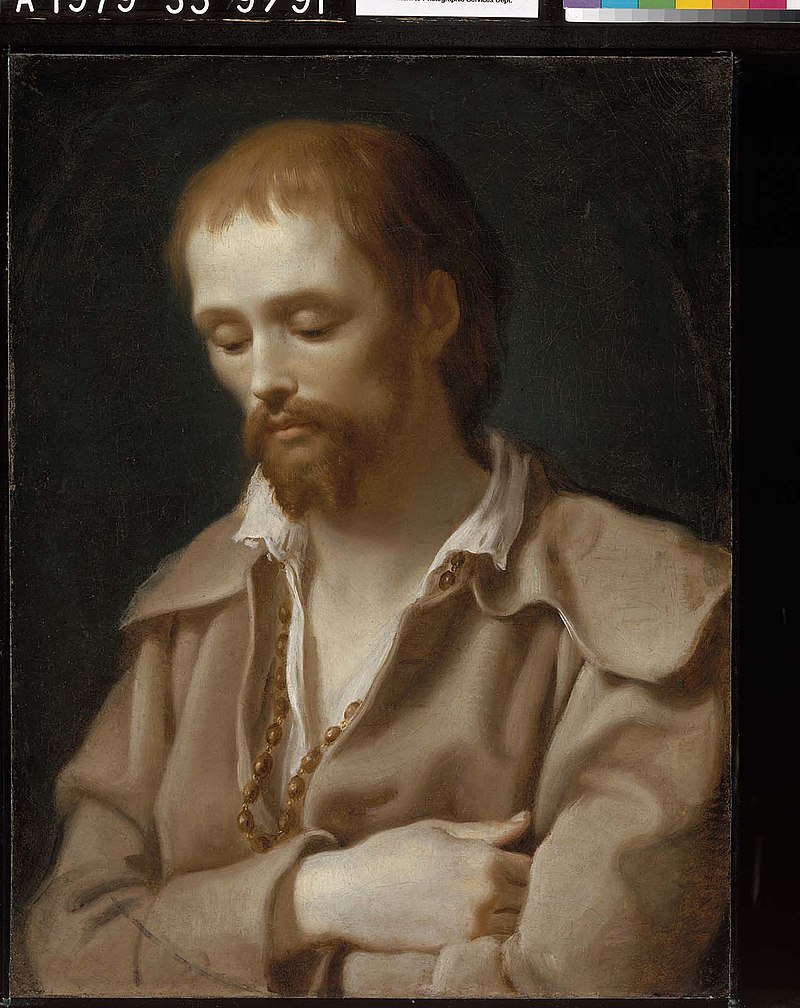
A grace-filled Holy Week to all our readers! As we await and prepare for the Resurrection about to dawn upon us, we might keep in mind two Benedicts: Pope Emeritus Benedict XVI, requiescat in pace, elected on this day in 2005; and today’s commemoration of the mystic pilgrim, Benedict Joseph Labre, who died on this[…]Continue reading→

My Name is Bernadette
April 16th is a propitious day, for besides the anniversary of Father de Valk’s death, who founded Catholic Insight in its print form decades ago, and the commemoration of the ‘two Benedicts’, mentioned in accompanying posts, today we also recall Saint Bernadette Soubirous, the young visionary to whom the Virgin Mary appeared numerous times at[…]Continue reading→
Saint Lydwina of Schiedam and Suffering Joyfully
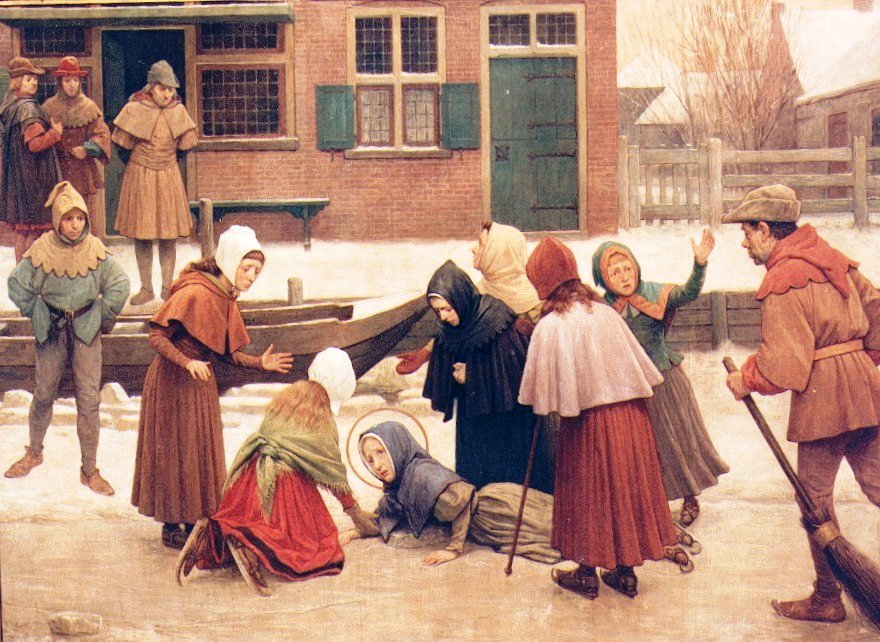
Saint Lydwina of Schiedam (1380 – 1433) was one of the countless and glorious ‘victim souls’ in the history of the Church, those whose lives are filled with suffering, often of an unimaginable intensity, but who suffer joyfully. She was a fifteen-year old Dutch girl, out skating one day, when she fell and broke one[…]Continue reading→
The Glorious Martyrdoms of Martin and Maximus
As we enter into Eastertide, we recall on this 13th of April Pope Saint Martin I (+655), one of the noblest, if most tragic, of the successors of Saint Peter. Born in Umbria, Italy, he was of noble lineage, with great intelligence combined with charity and love of the poor and the Church. While still[…]Continue reading→
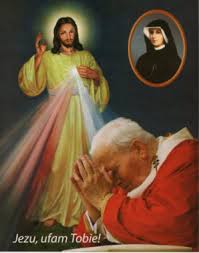
Canonizing Sister Faustina and Divine Mercy
HOMILY OF THE HOLY FATHER MASS IN ST PETER’S SQUARE FOR THE CANONIZATION OF SR MARY FAUSTINA KOWALSKA Sunday, 30 April 2000 1. “Confitemini Domino quoniam bonus, quoniam in saeculum misericordia eius”; “Give thanks to the Lord for he is good; his steadfast love endures for ever” (Ps 118: 1). So the Church sings on the Octave of[…]Continue reading→

Divine Mercy Sunday – An Echo of Every Mass
Reach out your hand and put it in my side. Do not doubt but believe’… ‘My Lord and my God!’ (Jn. 20:18)). Today is Divine Mercy Sunday, and as we celebrate the end of the Easter Octave, we contemplate the wounded side of our Saviour, the Church’s source of life. On Good Friday in the[…]Continue reading→

Saint Stanislaus of Szczepanów
We celebrate Saint Stanislaus today (+ April 11, 1079), in light of this Easter Octave, a bishop and martyr who accepted the episcopacy only at the direct order of Pope Alexander II. He proved a wise and courageous leader of his flock, put to death by his own king, Boleslaus, for rebuking the monarch’s ‘immoral[…]Continue reading→
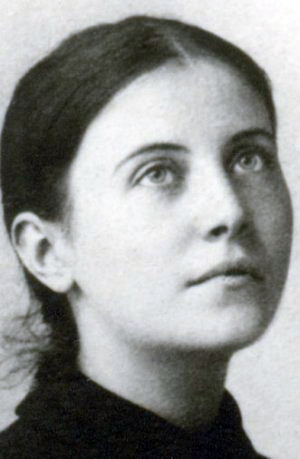
Saint Gemma Galgani
On this April 11th, in 1903 – the same year that the Italian Guiseppe Sarto was elected Pope later that summer as Pius X – a lovely, young Italian woman died, by the name of Gemma Galgani. She lived a brief life of 24 years, as did a number of other young saints, including Pier[…]Continue reading→